
A facilitator organizes participants’ opinions and guides discussions smoothly in meetings and workshops. Recent news reports state that youth advisors took on the role of facilitators, coordinating opinions within tables at cross-generational and gender-focused field events. Additionally, in AI agent payment structures, it was explained that facilitators serve as intermediaries, making trust essential. In Anyang City’s AI Future City discussions, facilitators helped groups share opinions and refine policy ideas. Let’s look specifically at how facilitators are utilized in these real-world settings.
What Is a Facilitator? A 2026 Field Application Guide

1. Where Is a Facilitator Needed?

At the 2026 field-based national events in the generational and gender sectors, which involved youth advisors, a facilitator sat at each table to organize young people’s opinions and run the meetings. In AI agent payment systems, it was pointed out that if only the endpoints are open, the facilitator plays an intermediary role, and trust between the parties to the transaction is a prerequisite. In Anyang City’s AI Future City policy discussions, participants divided into 10 groups shared opinions and refined ideas that could lead to actual policies, following the facilitator’s guidance. Mayor Choi Dae-ho noted that each group, with the help of facilitators, proposed key practical tasks to effectively utilize AI technology in citizens’ lives. These cases show that facilitators are needed in various fields, including conflict resolution, trust building, and idea generation.
Facilitators are active in fields requiring opinion coordination, such as youth events, AI payments, and local government policy discussions.
2. What Are the Core Competencies of a Facilitator?

First, active listening is fundamental. To keep discussions from becoming disorganized, one must accurately grasp what participants are saying and summarize or rephrase it. Second, time management skills are essential. Speaking time must be allocated for each agenda item, and off-topic conversations must be smoothly set aside. Third, a neutral stance is required. One should not support any particular position, treat all opinions equally, and mitigate conflict situations. Fourth, documentation and feedback skills are necessary. Discussion results should be concisely organized, and future action plans should be presented. These competencies are evaluated as practical skills that can be applied immediately in the field.
Listening, time management, neutrality, and documentation are the basic competencies of a facilitator.
3. How Can One Become a Facilitator?
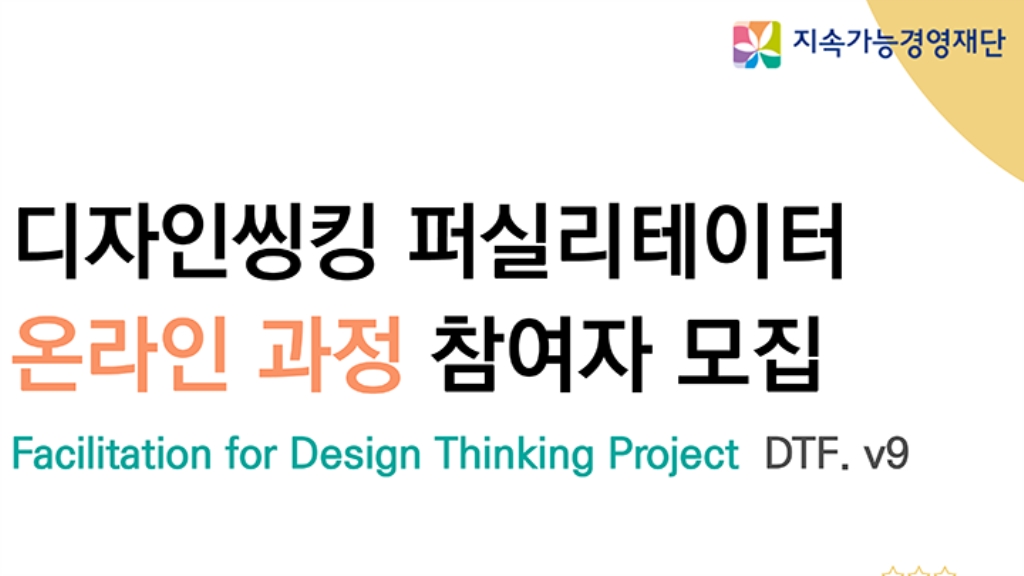
First, take relevant educational programs. For example, there are Leadership Facilitator courses and organizational development workshops. A Leadership Facilitator profile introduced on a blog mentioned building competencies by gaining experience in leading learning organizations. Second, gain experience by taking on supporting roles in real-world settings. Develop a sense of the process through tasks such as writing meeting minutes and assisting with small group facilitation. Third, obtain certifications or badges to enhance credibility. Some private institutions issue facilitator qualifications, which can be a plus in job applications. Finally, maintain a continuous feedback loop. It is important to develop the habit of identifying areas for improvement through participant surveys after each facilitation session.
Taking courses, gaining field support experience, obtaining certifications, and growing through feedback are the paths to becoming a facilitator.
4. What Should Be Considered When Facilitating?
First, do not insert personal opinions. Forcing your own solution during facilitation undermines neutrality. Second, avoid excessive intervention. Overly restricting speaking opportunities can lower participants’ motivation to engage. Third, lack of preparation is risky. If you do not understand the background of the agenda and the characteristics of the participants, the discussion will remain superficial. Fourth, check for conflicts of interest in advance. If there is a financial relationship with a specific organization, trust in the facilitation results will decrease. By checking for these pitfalls in advance, you can maintain the quality of the facilitation.
Excluding personal opinions, maintaining an appropriate level of intervention, sufficient preparation, and checking for conflicts of interest are conditions for successful facilitation.