
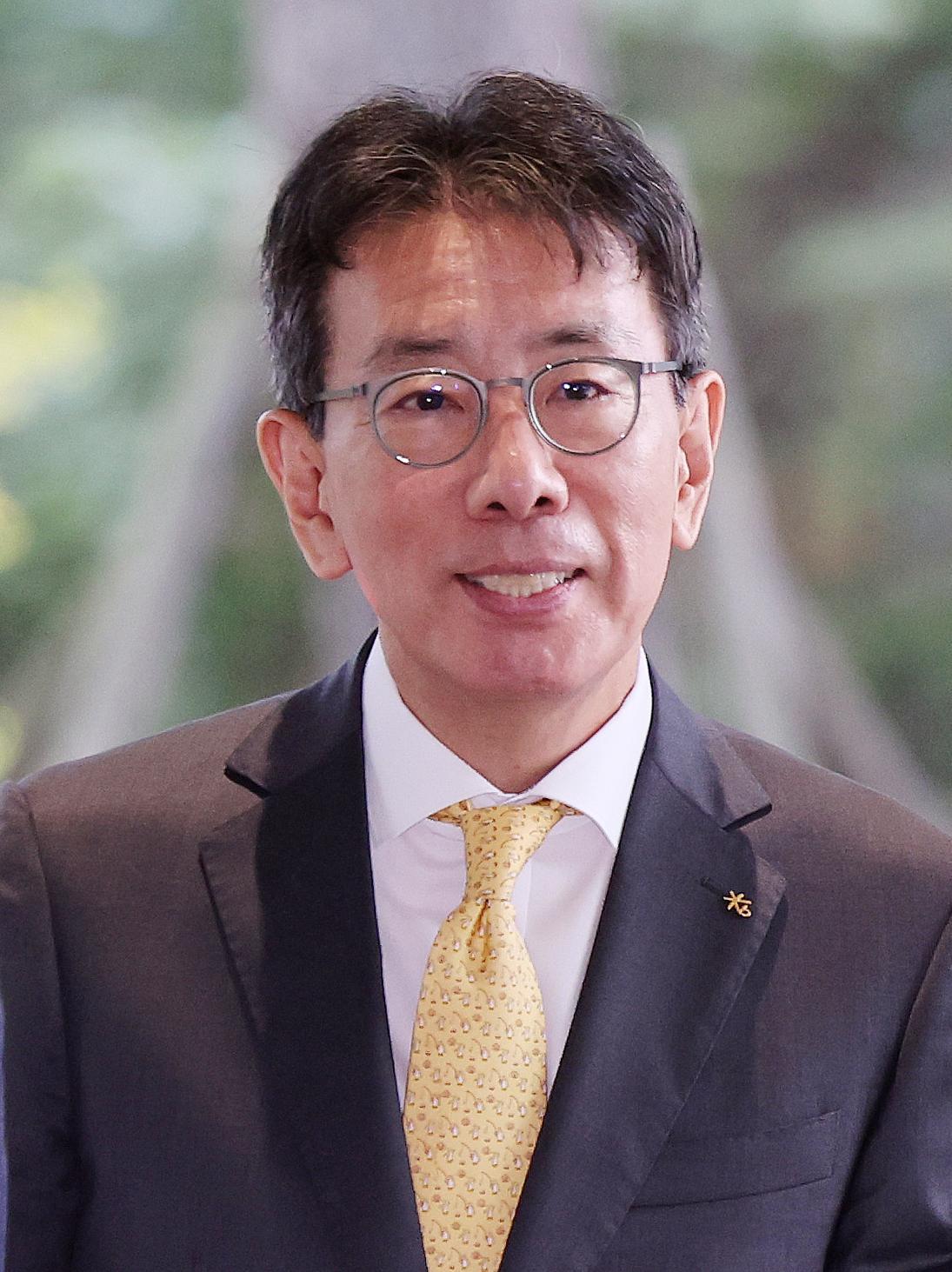
Lee Jae-geun, the division head nominated as the next leader of KB Financial Group, recently expressed his strong commitment to accelerating the adoption of artificial intelligence and digital transformation on his way to work. This clearly signals a strategic direction to reshape the financial ecosystem rather than resting on the group’s current outstanding performance. The financial market is currently facing massive waves of change, including the rapid advancement of AI technology, large-scale capital flows, and an aging population. At this juncture, it is assessed that the next few years will be a critical period determining the survival and future of financial groups. His past track record as a bank president, where he significantly increased the number of active users of mobile applications and drove various innovations such as extending business hours, is drawing attention. We will delve into how KB Financial Group will seize the lead in the future financial market under this new leadership.
=
Refusing to Rest on Laurels… KB Financial to Accelerate AI-Driven Digital Transformation

1. Subheading
The Card of Innovation and Leap Amidst Record Performance
KB Financial Group is currently achieving dazzling results in the market and solidifying its strong position. However, there is a deep-seated sense of crisis internally that resting on this number-one status could lead to obsolescence. Lee Jae-geun, designated as the next leader, directly addressed this point, interpreting the recent personnel decision as a stern warning and message not to be satisfied with the status quo. Given how rapidly the environment surrounding the financial industry is changing, a moment of complacency could result in falling behind instantly. In particular, the speed of change brought by technological innovation is exceeding expectations, necessitating a fundamental transformation of the organization’s constitution. We have reached a point where we must completely redefine the value provided to customers, going beyond merely maintaining profit scale. The determination to move beyond grand slogans to actual action is rapidly spreading throughout the organization.
It has been proven time and again that past success formulas do not guarantee the future. Therefore, this leadership change will serve as an opportunity to comprehensively revise the group’s survival strategy, going beyond a simple change of personnel. It has become an urgent task to foster a culture where all employees share this sense of crisis and are not afraid of new challenges. Employees on the ground also deeply empathize with the need for change and are awaiting new guidelines. This is also why the market is closely watching how effective the specific execution plans to be unveiled will be.
Committed to company-wide innovation to respond to changes in the financial industry without resting on current strong performance.
2. Subheading

Digital Innovation Connecting Mobile Apps and Online-Offline Channels
The various digital innovation initiatives pursued during his tenure as bank president have already received high praise from the market. A representative example is the significant increase in the monthly active users of Star Banking, the group’s core mobile application, to several million. The app was grown from a simple inquiry tool into a massive central platform connecting diverse financial services. Not stopping there, they successfully increased customer dwell time by organically linking non-financial services closely related to daily life. They also attempted radical changes in offline branches, extending business hours so that office workers could visit after work. By introducing mobile video consultation counters, they created an environment where customers who find it difficult to visit branches directly can easily handle their business. This flexible channel reform bridging online and offline became a decisive factor in maximizing customer convenience.
This experience is expected to serve as a solid foundation for leading the group’s overall digital transformation efforts. It embodies the philosophy that creating convenience that customers can actually feel takes precedence over anything else, going beyond simple technology adoption. As AI technology is fully integrated, customer-tailored asset management and loan review processes will become noticeably faster. Frontline practitioners are also accelerating preparations to skillfully handle new digital tools in line with this trend. Efforts to improve even minor inconveniences are accumulating to create the results of massive innovation.
Significantly expanded the user base of mobile applications and organically combined online and offline channels.
3. Subheading

Global Market Expansion and Stabilization of Overseas Operations
It is noteworthy that the group has left a clear footprint on the overseas stage beyond the domestic market, proving its global competitiveness. In Southeast Asia, they successfully acquired local subsidiaries and carried out bold restructuring and additional capital injections. In particular, the Indonesian subsidiary, which had been struggling in the red for a while, finally achieved a turnaround to profitability based on local accounting standards. In Cambodia, they demonstrated the resilience to integrate different local banks into a single, newly launched large commercial bank. This overseas business restructuring was possible due to a thorough localization strategy and bold decisiveness. Overseas subsidiaries are becoming a sturdy pillar responsible for the group’s future growth, going beyond the level of simple subsidiaries.
The understanding of overseas markets gained while serving as the division head overseeing global business will be a significant asset for future management activities. The challenge of gradually increasing the proportion of overseas revenue to overcome the growth limits of the domestic market always exists. Wisdom is needed to proactively respond to local regulatory environments, thoroughly manage risks, and seek stable growth. It is expected that the performance of overseas subsidiaries, which are already on track, will rise even more steeply in the future. Based on the success experience on the global stage, the group’s territorial expansion campaign is expected to unfold more aggressively.
Strengthened global competitiveness by driving successful integration and profitability turnarounds of overseas subsidiaries in Southeast Asia and other regions.
4. Subheading
Balanced Growth of Non-Bank Subsidiaries and Portfolio Strengthening
Increasing the performance contribution of non-bank subsidiaries such as insurance, securities, and cards is also a very important task alongside the banking division. Although the non-bank sector’s share of the group’s overall performance has reached a considerable level, there is still a long way to go. In particular, while the securities division is making a significant contribution, there is still much room for improvement in organic collaboration and synergy creation among the subsidiaries. Leveraging experience in overseeing the holding company’s financial planning, they are seeking ways to maximize the unique expertise of each subsidiary. The title of “Number One Financial Group” means securing a balanced advantage across all financial areas, not just leading in banking performance.
Since they already have a well-established diverse non-bank portfolio, the key is how harmoniously they can weave these together. Insurance, securities, and cards must be closely connected to provide customers with an integrated financial experience. They plan to strengthen communication with the heads of each subsidiary and actively reflect on-site voices to build a substantive collaboration system. By completing a robust revenue structure that does not lean on a specific sector, the group will build resilience against external economic shocks. Only when the strength of non-bank subsidiaries is added can it truly transform into a comprehensive financial group.
Must enhance the competitiveness of non-bank subsidiaries such as securities and insurance and maximize synergy within the group.
5. Subheading

Building a Sustainable Organization Through Decentralization and System-Based Management
Regarding the operational style of leading a massive organization, there is a plan to boldly shed the existing authoritarian framework. A structure where all authority and responsibility are excessively concentrated on a single top executive can be a poison in rapidly changing times. Therefore, the policy is to establish a decentralized organizational culture that operates based on more thorough processes and systems. They plan to significantly distribute appropriate authority to each department and subsidiary so that the decision-making process can be transparent and swift. This system-based management provides the strength to maintain business continuity and stability without being damaged even when the top executive changes.
The commonly used terms “generational change” or “young organization” do not simply mean that the members are young in age. They refer to a flexible and agile organizational structure capable of making decisions quickly and responsibly. The core is to reduce unnecessary reporting stages and grant the autonomy to judge and act directly on the ground. These changes naturally create an environment where employees can devote themselves to their work with a sense of ownership. Organizations backed by robust systems can remain unshaken and respond calmly when external crises arise.
Creating a sustainable organization through system-based management and decentralization to prevent power from concentrating on the top executive.
6. Subheading
A Financial Group Moving Toward the Future by Setting New Standards
A true leading financial group is not one that merely stays at number one in performance rankings, but one that creates new standards for the entire financial industry. Over the next few years, the development of AI technology and the aging population will completely change the landscape of the financial market. Amidst this massive wave, the group has taken on the role of a leader that defines the market’s rules itself, rather than a mere follower. A thoroughly prepared digital strategy and a robust non-bank portfolio will serve as powerful weapons to achieve this goal. If all employees unite with one heart to establish new standards, the future will inevitably be brighter.
Even in a rapidly changing economic environment, one must walk the right path without wavering, prioritizing customer trust as the top value. The ultimate goal is to provide the financial solutions that customers truly need, as quickly and accurately as possible. It is closely watched how the newly established management philosophy and specific practical tasks will bloom on the ground. The massive stride to lead the future of the financial industry has already begun, and its results will soon be proven in the market. Readers are also advised to closely observe this trend of change and prepare in advance for its impact on household economies.
Leaping forward as an innovative group that sets new standards for the financial industry and leads future changes.
Frequently Asked Questions
=