
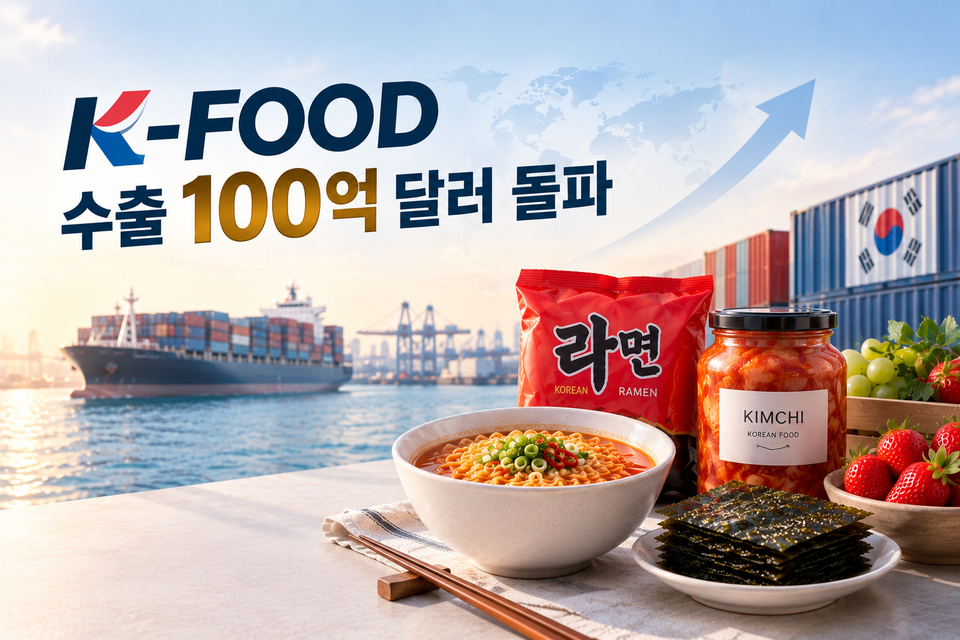
South Korea’s agricultural and seafood exports have surpassed the $10 billion mark in just 253 days, the fastest pace in history. This record is a full 19 days ahead of last year’s achievement, vividly demonstrating the rising status of Korean food on the global stage. Since first breaking the $10 billion barrier in 2021, the country has been writing a miracle by achieving this milestone earlier each year. This achievement is particularly meaningful because it reflects balanced growth across key and emerging markets, as well as both processed and fresh foods. Beyond instant noodles and seaweed commonly seen in supermarkets, fresh fruits have also captivated global palates, resulting in remarkable performance. Let’s take a closer look at which products are winning the hearts of overseas consumers and the specific support strategies prepared by the government and agencies for the second half of the year.
=
The Secret Behind K-Food’s Record-Breaking $10 Billion Export Milestone and Its Most Popular Products

1. The Significance of Surpassing $10 Billion in the Shortest Time Ever

This year’s agricultural and seafood export performance has shown exceptional momentum from the start, astonishing onlookers. By shattering the record set last year, the country achieved the $10 billion milestone in just 253 days. In the past, this goal was barely reached near the end of the year, but now it is comfortably achieved by early autumn, showcasing remarkable resilience. This astonishing speed proves that Korean food has taken deep root as part of local food cultures, going beyond a temporary trend. As consumers around the world seek out Korean cuisine, the export scene remains more vibrant than ever. This trend of setting new records annually can be interpreted as a signal that future growth potential is boundless. The Korea Agro-Fisheries & Food Trade Corporation (aT) has repeatedly emphasized that this achievement is not merely a fleeting hit for a single product. The share of Korean food is growing daily, from the shelves of large U.S. supermarkets to convenience stores in Southeast Asia. As local consumers increasingly seek out Korean products, distribution networks are becoming more robust. The balanced sales of processed foods commonly cooked at home and agricultural and seafood products requiring freshness preservation were key factors. Because this achievement is built on a solid foundation, reaching $10 billion carries even greater value. Anticipation is high for what new records will be written in the remaining period.
This year, K-Food exports surpassed $10 billion in 253 days, 19 days faster than last year, setting a new record for the shortest time ever.
2. The Stellar Growth of Top Export Destinations: The U.S. and China
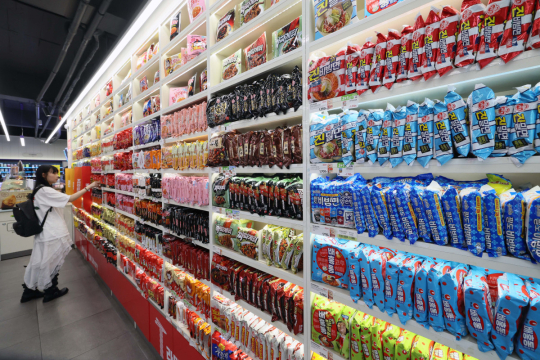
Looking at export performance by country, the performance of the United States, a traditional giant market, stands out. Exports to the U.S. reached $1.81448 billion, a 12.9% increase compared to the same period last year. Korean food has established itself as a healthy and delicious delicacy not only among the Korean diaspora but also among local residents, leading to an explosive increase in demand. Korean food sections are appearing in major retail stores, reflecting high popularity and very stable repurchase rates. Products that can be easily prepared at home have gained word-of-mouth popularity, and the sales network is rapidly expanding across the U.S. This local response provides a solid foundation for Korean food to penetrate more regions in the U.S. in the future. The Chinese market also recorded export performance of $1.66966 billion, showing a high growth rate of 14.0% year-on-year. The trust and affection of Chinese consumers, backed by their massive population, for Korean food show no signs of fading. In particular, sales methods through online shopping malls and live broadcasts have taken root, eliciting immediate reactions from younger demographics. Product launches tailored to local trends and fast delivery services have combined to keep sales on a steady upward curve. Because the two giant pillars of the U.S. and China provide stable support, overall export performance has maintained a solid upward trend. Success experiences in these two countries serve as valuable guides for expanding into other nations.
The top export destinations, the U.S. and China, recorded high growth rates of 12.9% and 14.0%, respectively, firmly driving overall growth.
3. The Rise of Emerging Markets: The UAE and the Netherlands
In addition to traditional key markets, the growth of emerging markets injecting new vitality is very steep. The United Arab Emirates (UAE), the center of the Middle East, recorded performance of $331.71 million this year, a sharp increase of 49.9% compared to last year. By passing the Middle East’s unique stringent standards, Korean food has been imprinted as a premium and safe food. Coupled with the Hallyu wave, a trend of making and eating Korean food has spread among local youth. This atmosphere has naturally led to purchases, becoming a decisive factor in expanding sales channels across the Middle East. The Middle East market is highly likely to position itself as a new golden egg with boundless potential. The Netherlands, known as the gateway to Europe, also recorded export sales of $229.55 million, achieving a growth rate of 14.4%. Since the Netherlands is a key hub for logistics spreading across Europe, success here signifies success for Europe as a whole. As local consumers begin opening their wallets to high-quality Korean food, word-of-mouth is spreading rapidly. This achievement in the notoriously picky European market proves that Korean food is a global food that works anywhere in the world. Such success in emerging markets is driving the expansion of markets worldwide, rather than being skewed toward specific countries. It is no longer an unfamiliar sight to encounter Korean food on the world map.
The UAE and the Netherlands grew by 49.9% and 14.4%, respectively, firmly establishing themselves as new export growth engines.
4. The Popularity of K-Noodles and Fresh Fruits, the Vanguard of Exports
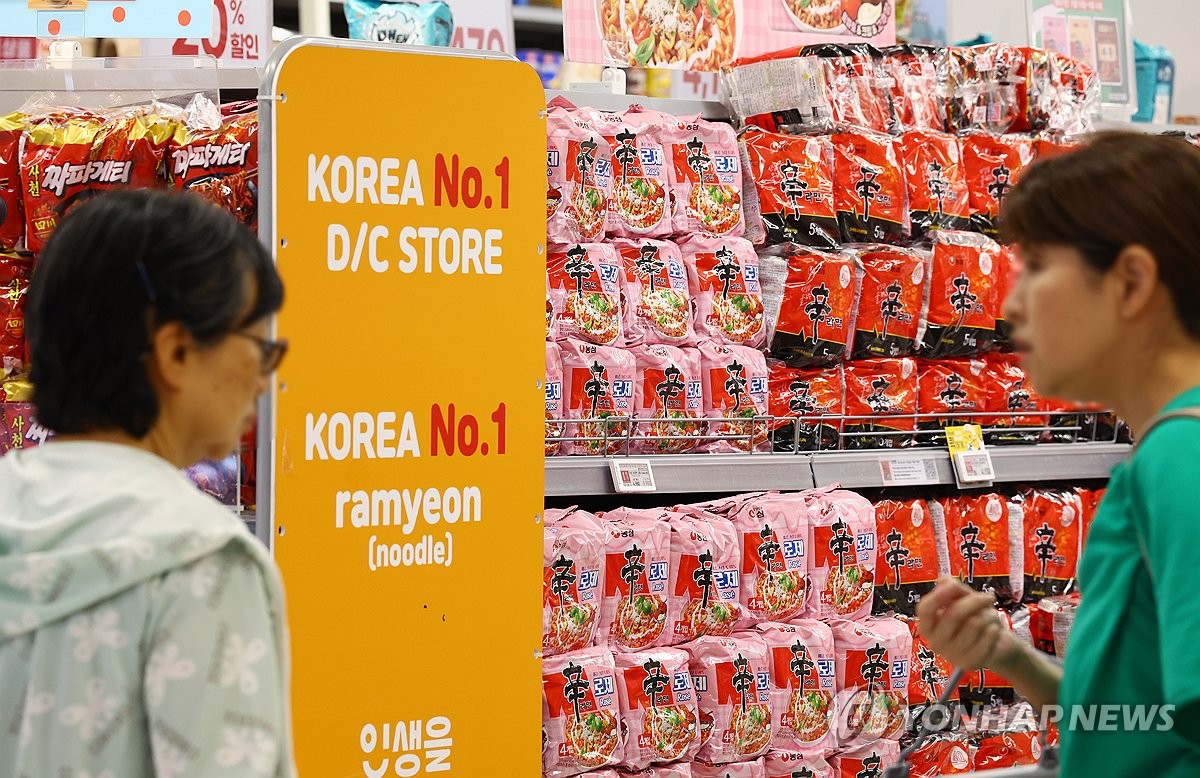
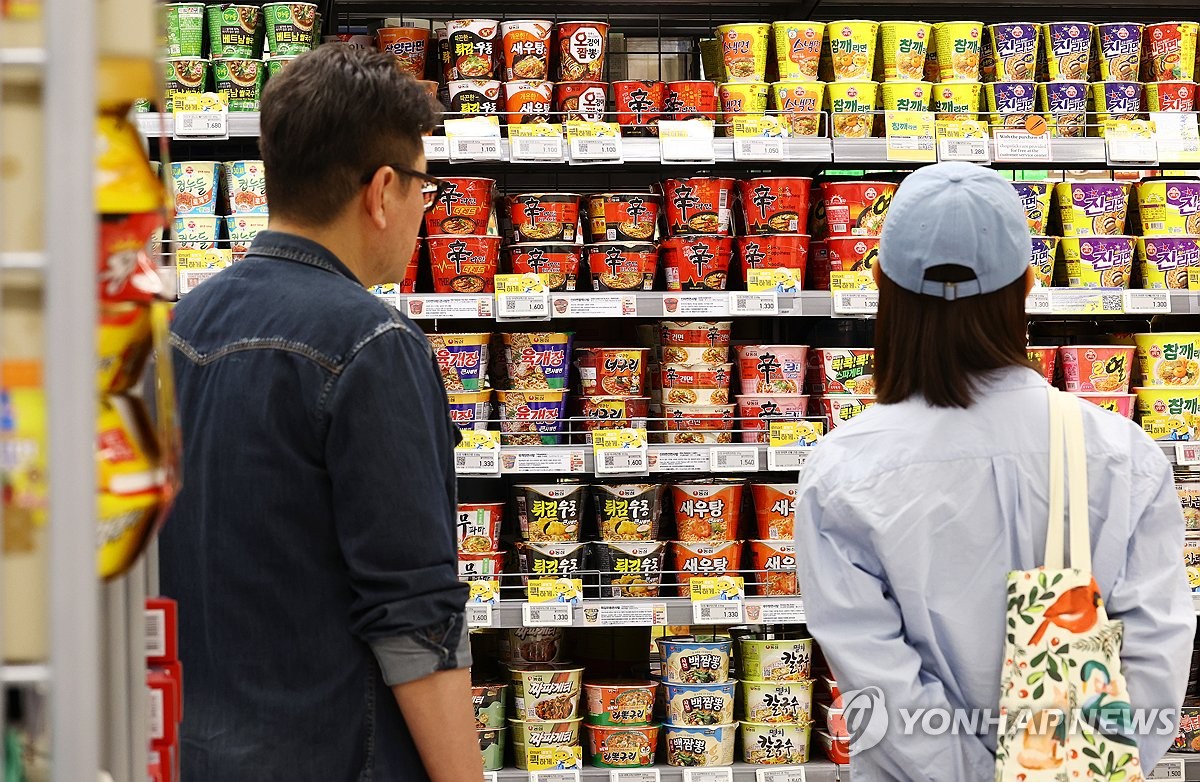
By product category, K-noodles led the charge with $1.3076 billion, showing an explosive growth rate of 27.2%. Consumers around the world are captivated by the appeal of spicy broth and chewy noodles, making instant noodles an essential emergency food. Every time a protagonist in a movie or drama is shown enjoying instant noodles, it strongly stimulates the purchase desire of overseas viewers. Products with various flavors and adjusted spice levels have captured local palates and occupy the best spots on supermarket shelves. This stellar record set by instant noodles reaffirms its status as the top money-maker representing South Korea. The popularity of instant noodles is expected to remain strong, further enriching the tables of people worldwide. Sweet and fresh Korean fruits are also expanding their export share by capturing the picky palates of overseas consumers. Strawberry exports increased by 15.5% to $60.98 million, while grapes surged by a whopping 64.6% to $45.18 million. This is the result of the unique crisp texture and high sugar content of Korean fruits starting to resonate in the overseas premium fruit market. They are hugely popular as gifts or desserts in local department stores and high-end supermarkets, despite their high prices. This valuable achievement was possible thanks to the technology that maintains freshness and safely delivers products over long distances. The future of our fruits, loved in global markets regardless of season, looks very bright.
K-noodles led growth with performance exceeding $1.3 billion, while fresh fruits like strawberries and grapes also recorded high double-digit growth rates.
5. The Performance of Seafood and Seasoned Seaweed Crossing the Seas
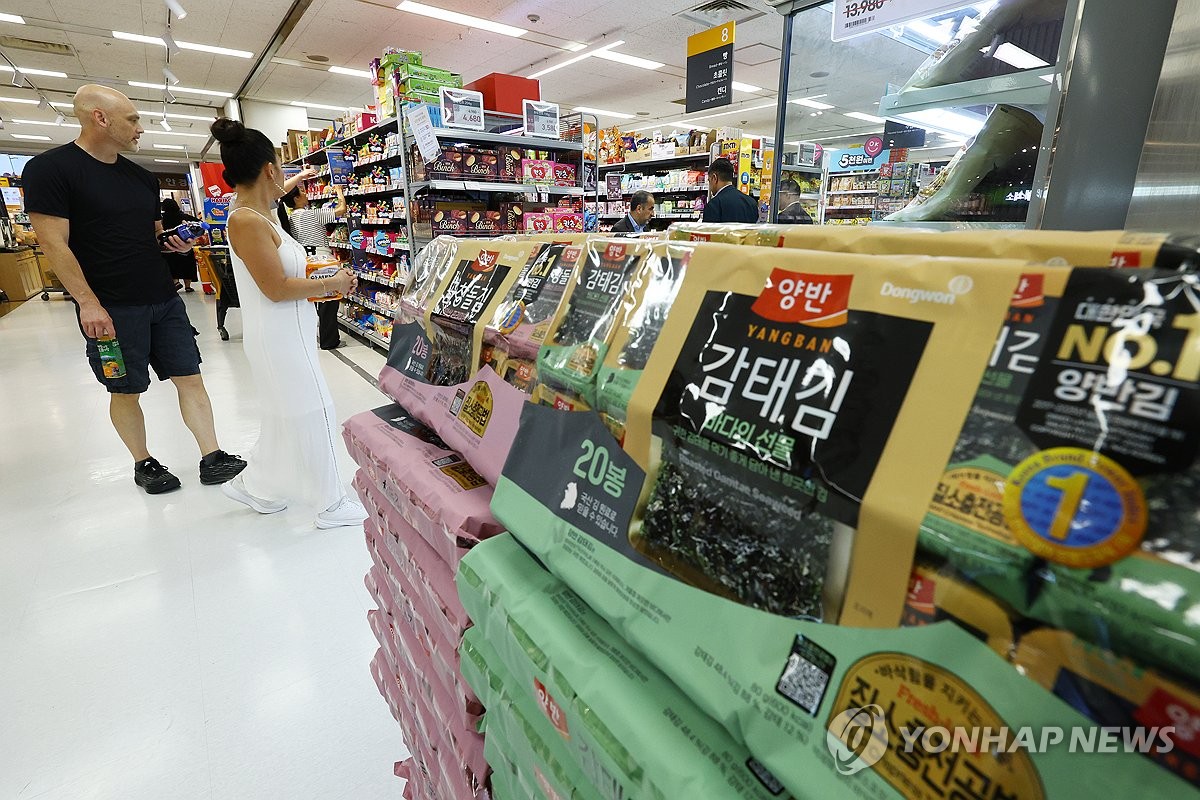
In addition to processed foods and agricultural products, seafood harvested from the sea is also serving as a sturdy pillar in the global market. Seasoned seaweed, which has already secured a firm position in the global market, recorded performance of $462.65 million, growing by 8.0%. Recognized by overseas consumers as a healthy, low-calorie snack beyond just a rice side dish, it has become an item that must go into the shopping cart at the supermarket. Products with a crispy texture and various seasonings are hitting local palates and recording steady sales. Thanks to the advantage of being enjoyable for people of all ages without burden, the consumer base is expected to expand further in the future. Seaweed boasts such powerful export power that it is now called the “semiconductor of the sea” representing South Korea. Oysters also recorded $65.60 million, growing by 8.2%, solidly supporting the overall growth trend of seafood exports. Thanks to strict hygiene management and processing technology that maintains freshness, it has gained high trust from overseas buyers and consumers. It shows a positive trend of increasing demand as it is processed and supplied in forms that suit local cuisine. The steady success in the seafood sector has greatly contributed to creating a healthy export structure that does not rely on specific products. In the future, various seafood products containing the nutrients of the sea will make the tables of people around the world more diverse. The value of our seafood on the world stage is shining brighter with the passage of time.
Seafood products such as seasoned seaweed and oysters also recorded stable growth, firmly supporting overall export performance.
6. The Second-Half BOOST Strategy and Future Outlook
The government and related agencies plan to make all-out efforts to provide concentrated support in the second half to achieve the highest export performance in history. To this end, they announced that they will implement comprehensive support measures centered on five key tasks, which are the strategy to maximize second-half export performance. The early achievement of $10 billion this time carries significance beyond just increased numbers, demonstrating the elevated status of Korean food. The plan is to expand the growth axis from a few hit products to various promising items. The vision is to expand sales channels not only in key markets but worldwide, ensuring that temporary interest turns into sustained consumption. If this systematic strategy is realized without issues, I am confident that new history will be written every year. Readers can also encounter our food, which has captivated the world, with greater pride in their daily lives. Simply paying attention to how our food is loved overseas provides great strength to the domestic food industry. Let us cheer together for the days when even more diverse Korean dishes will capture the palates of people around the world and lead global food culture. I hope you will taste the very products that have won over the world, available in supermarkets or online shopping malls, and feel the excellence of our food. Please listen to the diverse export news that will unfold during the remaining second half and enjoy our proud culture. I look forward to the joyful news of our food resonating in every corner of the world in the future.
The government and agencies are launching all-out support based on second-half strategic tasks to drive sustainable global consumption expansion.
Frequently Asked Questions
=