
If you can’t stop thinking about Papua New Guinea, it is likely due to the anthropological mysteries and dramatic historical moments held within this massive island. The moment in 1930 when Australian explorer Mike Ryan, searching for gold, discovered blue valleys hidden in the clouds and a highland population of one million was one of the most dramatic encounters in world history. Outsiders had assumed the region was an uninhabited expanse of rugged jungle and mountains, but within it breathed a vast human community that had independently cultivated agriculture for 10,000 years. The coast and the highlands lived in complete isolation from one another for thousands of years, separated by geographical barriers and the natural environment of malaria. This article delves deeply into the true history and surprising cultural background of Papua New Guinea, hidden behind fragmented images and sensational rumors. Through vivid moments of encounter captured in past exploration records and documentary footage, discover the true face of Oceania that we did not know.
=
Can’t Stop Thinking About Papua New Guinea: First Contact with an Unknown World in 1930

1. 1930: The Unknown Mountain Society Hidden in the Clouds
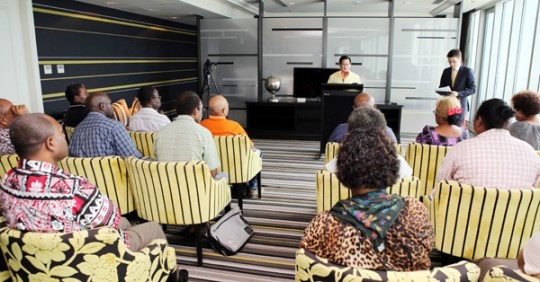
In 1930, the island of New Guinea was nominally ruled by the Netherlands in the west and Australia in the east, but actual administrative power and control were limited to parts of the coast. While coastal areas were somewhat mapped, the vast inland mountainous region was considered uninhabitable due to its ruggedness, featuring permanent snow and glaciers despite its proximity to the equator. The expansive tropical rainforests and malaria-ridden swamps along the coast acted as a massive natural defense wall, thoroughly blocking access by outsiders. This massive geographical secret was finally revealed to the world as Australian explorers, who had discovered gold in New Guinea in 1926, ventured deeper inland in search of more gold veins. What explorers like Mike Ryan encountered was not empty rocky mountains, but beautiful and peaceful valleys where approximately one million people had settled and were farming. Astonishingly, the isolation from the outside world was so complete that even when Australian patrol officers crossed the island from north to south, they failed to detect this massive highland society entirely.
Highland residents had developed independent agricultural techniques, including sweet potato and pig farming, as far back as 10,000 years ago, but due to their isolation, they had no knowledge of the ocean or the civilization of the outside world. Lacking pack animals, a written language, and relying on crops that were difficult to store, they did not develop into large-scale political unions or state systems, instead living in small clan-based communities. Wars and limited barter exchanges were constant among them, and to this day, tribal bonds remain much stronger than a common national identity that transcends clans. The island’s topographical features and diseases blocked the influx of outside civilizations, which became the decisive background for highland residents maintaining unique linguistic and genetic diversity up to the modern era. Even today, while a common lingua franca, Tok Pisin, is widely spread, numerous tribal languages coexist, each perfectly preserving its own traditions. This historical isolation, created by vast jungles and rugged mountain terrain, is cited as one of the most interesting and unique cases in the history of world anthropology.
Until gold prospecting in 1930, the existence of the one million highland residents was completely hidden from the outside world.
2. The Historic Moment of First Contact Captured on Camera
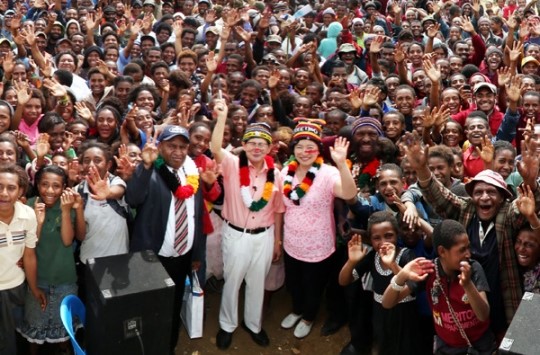
During his inland exploration, Mike Ryan actively used high-performance still cameras and movie cameras, leaving behind thousands of photographs and hours of video footage. The documentary “First Contact” vividly shows the shocking encounter of that time by weaving together these original videos with retrospective interviews from highland residents who were still alive in the 1970s. Residents who saw white people for the first time mistook them for ghosts of deceased relatives or sacred spiritual beings; they only realized they were human like themselves after secretly watching them defecate and checking the smell. The explorers gathered the residents in one place and demonstrated shooting pigs with guns to showcase their overwhelming military power and technological capability, while handing over curious items like mirrors and gramophones. The residents were amazed by the music coming from the gramophones and could not hide their surprise at seeing their own reflections in the mirrors; they even utilized discarded cereal boxes as their most precious head ornaments. The explorers took local children on planes to the coast, showed them the sea and outside civilization directly, and then sent them back, inducing them to spread the powerful strength of white people to the entire tribe.
At the time of first contact, residents considered white people to be ghosts, but they experienced shocking cultural shock as they encountered various artifacts.
3. The Massive Economic Chaos Triggered by Shell Money
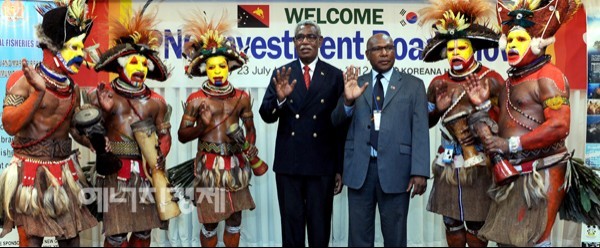
In highland society, shell money was an extremely rare and valuable treasure, the ultimate ornament indicating the status of a powerful figure, and effectively served as currency. Recognizing this, outside explorers used airplanes to bring in massive quantities of shell money to the highlands, using it as a means to obtain food and secure local labor. Initially, residents viewed this trade as very favorable, freely giving up almost all their precious possessions to obtain more shell money. However, as shell money continued to flow in from the outside, severe hyperinflation occurred instantly, causing prices to skyrocket uncontrollably. Shell money, which was once considered the wealthiest leader’s status if a clan possessed even just one, later became so common that even young children wore hundreds of them hanging on their bodies. Eventually, shell money completely lost its scarcity and value as currency, causing great confusion in traditional standards of wealth and regional economic order.
The massive influx of shell money caused severe inflation in highland society, collapsing the value of existing currency.
4. The History of 50,000 Years of Settlement and Independent Agricultural Development
Humanity first set foot on what is now the island of New Guinea a staggering 50,000 years ago, with people migrating from Southeast Asia by foot and canoe. At that time, New Guinea and Australia were connected as a single massive landmass, so some of those who crossed from the north moved south to become the ancestors of Australian Aboriginals. Some of the population that settled along the coast seeped into the rugged inland mountainous region, and starting about 10,000 years ago, they began independent agriculture, leading to an explosive population growth. New Guinea is one of the few independent cradles in world history where agriculture was invented without outside influence, holding very high anthropological value. Unlike other continents that relied on wheat or rice as staple foods, it bloomed with a unique agricultural culture centered on sweet potatoes and taro, but due to geographical isolation, this knowledge did not spread outside or fuse with other civilizations. This independent way of survival, which continued for tens of thousands of years until reuniting with the outside world in 1930, is a living textbook showing how humanity adapted in harsh natural environments.
Since human settlement 50,000 years ago, New Guinea is one of the few regions in the world to have developed agriculture independently.
5. Surprising Genetic Diversity Hidden Behind Fragmented Images
The images the public commonly associates with Papua New Guinea often focus on linguistic and genetic diversity or the uncertain population size that cannot even be accurately tallied. Currently, the island is home to over 1,000 different languages, accounting for about 12 percent of the world’s languages, and the population is estimated to be between 10 million and 17 million, making accurate statistics difficult to obtain. Furthermore, the genomes of local residents contain approximately 4.8 percent Denisovan DNA, holding a very important key in human evolution research. Sensational news in the past, such as bow and arrow battles in the West Papua region, traditional weapon clashes in the middle of cities, and the capital being rated as one of the most dangerous cities in the world, further reinforced these images. Kuru disease, a condition similar to mad cow disease that caused numerous deaths due to the past custom of eating relatives’ brains during funerals, has since evolved protective genetic mutations within a few generations and is studied as a representative case of human natural selection. While some scholars highly evaluate the survival abilities of those who endured harsh environments, these fragmented sensational stories alone make it difficult to fully understand the true historical depth of the highlands.
Papua New Guinea possesses unique diversity, including thousands of languages and a high Denisovan genetic ratio.
6. Papua New Guinea Moving Toward the Future Beyond Past Isolation
Papua New Guinea, long hidden in clouds and jungles, is now stepping out of its past complete isolation into the wave of rapid modernization. Although many remote areas still lack a nationwide transportation network or full administrative reach from the state, a strong wind of new change is blowing, centered on the younger generation. Past long-standing wars and feuds between tribes are gradually shifting to modern social conflict resolution methods, and the tourism industry and resource development utilizing unique cultural assets are seeking new economic avenues. It is solidifying its position in the global market as a major coffee-producing region, and efforts are being made in various ways to achieve sustainable growth while preserving diverse ecosystems and unique cultural heritage. The history of this land, which is an anthropological treasure and a living museum, will continue to thrill researchers and travelers around the world. The future of Papua New Guinea, holding the massive mystery woven by nature and humanity, will continue to develop with infinite possibilities, as proven by its astonishing history of survival in the past.
Papua New Guinea is moving toward modernization and new economic growth, overcoming its past geographical isolation.
Frequently Asked Questions
=