The reality faced by older women in the workplace in South Korea is still filled with cold, impenetrable walls. The numerous testimonies of women included in the Human Rights Watch report reveal a shameful self-portrait of a society that has long turned a blind eye. This is not simply because individuals have not tried hard enough, but because structural gender and age discrimination are intricately intertwined. The story of Ms. Choi Gap-rae, who moved to the capital at the young age of 13 and has worked her entire life yet still suffers from poverty, is not just one person’s tale. From here, we will delve deeply into the dark underbelly of the labor market that we have ignored and its causes. Let us carefully examine what we have overlooked in correcting this unequal structure.
=
The Reality of Structural Gender and Age Discrimination Faced by Working Women Due to Their Age and Gender
1. A Life of Unceasing Labor That Began in Childhood

Ms. Choi Gap-rae dropped out of school at the young age of 13 in 1972 and moved to Seoul, where she had to take on the responsibility of supporting her family. To support her parents and five siblings, she worked tirelessly as a nanny, factory worker, and in any other job she could find. Like many daughters of that era, all the money she earned went toward household expenses and even covered her older brother’s study abroad tuition. After marrying at 27, she raised children, but when her husband lost his job, she was forced to shoulder the burden of being the breadwinner again. From the age of 37, she moved between supermarket and restaurant jobs, holding onto low-wage positions, but her life did not improve.
At 55, when her youngest son was drafted into the military, she tried to find a job again, but there was nowhere that would hire an older woman. Her life, which ultimately forced her onto the streets to start a street stall, is a microcosm of the lives experienced by Korean women. The years in which opportunities for education were stolen and sacrifices were demanded for the sake of family have returned as the massive wall of old-age poverty. In a male-dominated economic structure, women’s labor has always been pushed to the periphery. Deep inequality is rooted in these ways of life that we have taken for granted. Ms. Gap-rae’s tearful story is the clearest evidence of how South Korean society has treated women’s labor.
Women who have worked to make a living since childhood are driven into old-age poverty after a lifetime of low wages and labor exploitation.
2. The Labor Reality of Korean Women Revealed by Field Research
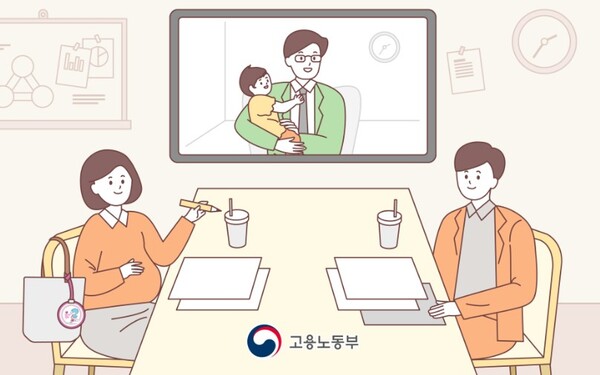
From 2024 to 2025, Human Rights Watch researchers met directly with 41 Korean women, ranging in age from 28 to 87, and listened to their deep stories. Their testimonies clearly reflected limited educational opportunities and blatant unfairness in the hiring process. Career breaks forced in the name of marriage and child-rearing ultimately led them to face the solid walls of limited promotion opportunities and the glass ceiling. In addition to workplace sexual harassment, gender-based wage gaps and pension discrimination have further squeezed women’s lives. As women age, their jobs become increasingly unstable, and they are pushed into low-wage labor that causes physical and mental harm, a pattern that has become the norm.
An even more serious issue is that at age 60, women are often forced out of the workplace due to the statutory retirement age system or have their wages reduced under the wage peak system. The majority of women who agreed to interviews did not recognize the injustices they experienced as structural discrimination, instead blaming themselves. However, all the pain they have endured is the result of solid structural gender and age discrimination created by our society, not by individuals. By their late 50s, women find themselves in a situation where they earn only half the average wage of their male peers. On this tilted playing field, female workers are engaged in a daily struggle for survival.
The discrimination faced by women of various ages stems from structural contradictions in our society, not from a lack of individual ability.
3. The Trap of Gendered Division of Labor Created by Employment Policies
Job listings on South Korea’s employment and labor support systems, such as Employment 24, are still trapped within the framework of gendered division of labor. Jobs recommended to women in their 30s to 50s are concentrated in beauty, care work, education, and relationship support fields. For women over 50, the only options are cleaning, kitchen work, low-wage care, and social welfare positions. Not only does the variety of jobs available decrease drastically with age, but employment forms and wage conditions also become extremely unstable. This phenomenon is not due to individual women’s choices or limitations in ability, but stems from deep-rooted social prejudices.
As employment policies and practices that push women into specific job categories combine, women’s position in the labor market becomes even narrower. They are far more likely to be exposed to low-wage non-regular jobs such as temporary positions or short-term part-time work rather than stable regular employment. The deterioration of labor conditions resulting from this process hinders women’s economic independence and accelerates the vicious cycle of poverty. The state must take active steps to improve this unequal employment structure, but effective measures are still lacking. In a society where there are limited places to work even for those who want to work, women are inevitably pushed to the margins.
Employment policies and social prejudices push women into specific low-wage jobs, worsening their labor conditions.
4. Older Women Trapped in the Blind Spots of the Pension System
Ms. Choi Gap-rae, who was 66 at the time of the interview, stated that she lives on a basic pension of 340,000 won per month. This amount is less than 16 percent of the minimum wage and is grossly insufficient compared to the poverty line. Even if she had been in a position to pay into the National Pension, the gender-based pension gap still acts as a massive barrier. In reality, the average monthly old-age pension received by women is only half that of men, and the system’s regulations themselves are disadvantageous to women. For women who have re-entered the workforce after career breaks, there is far too little time left to meet the full benefit eligibility requirement of 20 years of contributions.
It is common for women to fail to complete the period up to the upper age limit of 59 for National Pension contributions, resulting in significantly reduced benefits after retirement. The childbirth credit system also fails to benefit women, who are often the primary caregivers, and instead concentrates benefits on higher-income individuals. As a result, as of 2025, the proportion of women among childbirth credit recipients is less than 3 percent, a dismal outcome. The pension system, which should be a social safety net, is instead functioning as another means of discrimination against women. The reason women’s proportion in old-age poverty rates is overwhelmingly high is precisely due to these institutional flaws.
Disadvantageous pension systems and strict benefit conditions are driving women into the blind spots of old-age poverty.
5. The Challenges for Korean Society, Which Has Ignored Structural Discrimination
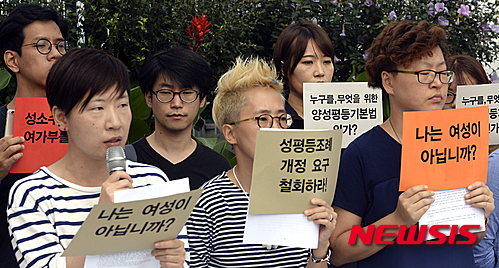
Korean society has lived under the grand slogan of economic development while silencing the voices of the marginalized. In particular, the double burden experienced when being older and being a woman overlap is like invisible violence. Despite the existence of laws and systems, the gender and age discrimination felt in the field remains firmly entrenched. Without resolving the structural contradictions of the labor market, we cannot bear the social costs associated with low birth rates and aging. Creating an environment where women can work with fair treatment is not a choice but a matter of survival.
Companies must eliminate invisible discrimination in hiring and promotion processes and provide fair opportunities. The government must also accurately confront the labor reality faced by women and formulate effective employment support policies. It is urgently necessary to implement customized labor policies tailored to each stage of the life cycle, rather than one-off support. No one’s labor should be undervalued or exploited on the grounds of age or gender. Only when we face the truth we have ignored will the path to a fair and equal society open up.
Active efforts by companies and the government to improve institutions are essential to resolving structural discrimination in the labor market.
6. The Path We Must Take Toward an Equal Workplace
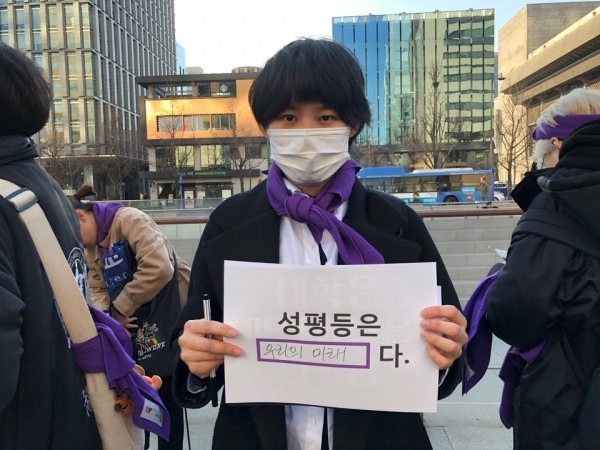
Creating a society where all workers are respected regardless of gender or age is a task for all of us. We must break down prejudiced employment practices and lay the foundation for everyone to work fairly. Going forward, the safety net allowing women to fully exercise their abilities without the fear of career breaks must become more robust. Readers are also asked to look around them and deeply consider the unequal structures of our society. Only when small acts of concern and voices come together can we drive massive institutional change. I sincerely hope that our steps toward creating an equal and fair workplace will never stop.
Social concern and action are needed to create an equal workplace where all workers are respected beyond gender and age.
Frequently Asked Questions
=