Individual pension savings are the most reliable means of preparing for retirement, offering tax refunds of up to 1.48 million won during the annual year-end tax settlement. While many people are often advised to join pension products, a significant number find it overwhelming to decide which financial institution to choose. Recently, investment-type products that allow individuals to directly select stock indices and Exchange-Traded Funds (ETFs) have become extremely popular, moving beyond simply depositing money. Since bank savings alone are difficult to keep up with inflation, it is now an era where individuals must actively manage their pensions. In this article, we will thoroughly examine tips for maximizing tax deduction limits and methods for transferring accounts to more advantageous institutions. By reading this content to the end, you will find a clear direction for growing your valuable retirement funds.
=
A Complete Guide to Individual Pension Savings Tax Deduction Limits and Fund Management
1. What is Individual Pension Savings and Why Start Now?
Individual pension savings are a representative savings product that the government strongly promotes with substantial tax incentives to prevent poverty in old age. By consistently paying a fixed amount monthly during your working years, you can receive living expenses in the form of a pension after retirement. In the past, the safe method of simply depositing money in banks was the norm, but recently, investing in various assets through securities firms has become the mainstream. This is because prices rise sharply every year, making it difficult to sustain life after retirement with deposit interest alone. In fact, looking around, many office workers in their 40s and 50s are actively opening accounts to prepare for their post-retirement life. If you do not start now, you may face a tax bomb or find yourself with insufficient retirement funds. To create a stable cash flow for the future, your top priority is to check your monthly expenses and open a pension account immediately.
Individual pension savings is an essential financial product that allows you to secure retirement living expenses and enjoy year-end tax settlement benefits simultaneously.
2. Filling the 9 Million Won Tax Deduction Limit to Receive Maximum Refunds
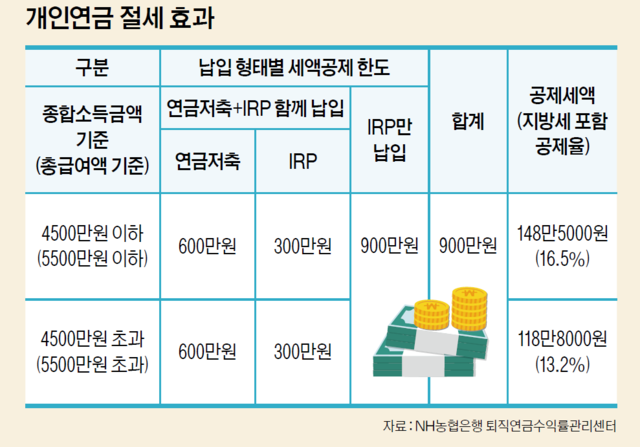
Interest among office workers is high as the combined annual tax deduction contribution limit for pension savings and retirement pensions has increased to a maximum of 9 million won starting this year. The pension savings account itself allows for deductions of up to 6 million won, and when combined with an Individual Retirement Pension (IRP), the limit can be filled up to 9 million won. For employees with a total salary of 55 million won or less, a 16.5% deduction rate applies, resulting in a refund of 1.48 million won when the 9 million won limit is fully utilized. Even if your total salary exceeds 55 million won, a 13.2% deduction rate applies, allowing you to receive a substantial refund of 1.18 million won. Mr. Kim, an office worker living in Seoul, often tops up his pension account with the remaining amount all at once to receive the refund as the year-end tax settlement period approaches. If you feel it is a waste for money to be deducted from your salary as taxes, filling the pension account contribution limit is far more beneficial than any other financial strategy. You must develop the habit of setting your monthly contribution amount in advance from January or making additional contributions at the end of the year to ensure the limit is always filled.
Contributing 9 million won annually to pension savings and retirement pensions combined can yield a powerful tax-saving effect of up to 1.48 million won in refunds.
3. What is the Difference Between Bank Deposits and Securities Firm Pension Savings Funds?
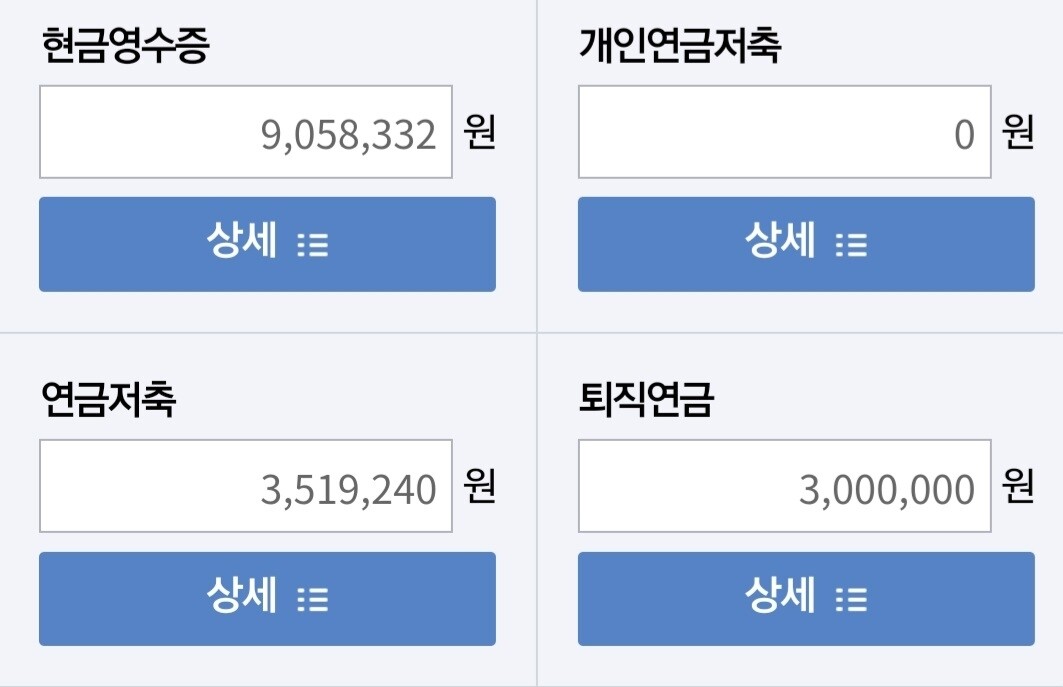
If you have decided to join a pension savings plan, you must seriously consider which institution to choose: a bank, an insurance company, or a securities firm. Bank pension savings trusts and insurance company pension savings insurance have the advantage of guaranteed principal and interest, but their low returns, which fail to keep up with inflation, are a fatal flaw. On the other hand, pension savings funds opened at securities firms allow subscribers to directly select Exchange-Traded Funds (ETFs), bonds, and equity assets to manage them aggressively. Given the nature of pensions, which require money to be kept for decades, securities firm fund accounts with excellent long-term investment performance are far more advantageous for asset growth. In fact, the explosive increase in pension reserves at securities firms over the past few years is due to the growing number of investors expecting higher returns. If you insist on bank products solely out of fear of principal loss, you may regret it when your real purchasing power significantly declines at retirement. You must carefully choose a financial institution that suits you after determining whether your investment style is stability-oriented or aggressive asset growth-oriented.
If you seek long-term asset growth, a securities firm pension savings fund, which allows you to directly choose various investment products, is a wiser choice than principal-guaranteed products.
4. How to Transfer to Another Financial Company Without Closing Your Account
It is common to feel frustrated when the fees of the financial company you joined without much thought are too high or when the desired investment products are unavailable. Fortunately, individual pension savings can be transferred to another financial company with the existing account intact, without the need to terminate it early and forfeit valuable tax benefits. You can simply fill out a transfer application by visiting a new securities firm or bank or using their mobile app, and all procedures will be handled automatically. When transferring, not only the accumulated reserves but also the history of tax deductions received are carried over, so there is no tax disadvantage. Mr. Lee, an office worker living in Gyeonggi Province, recently moved his entire insurance company product, which had low returns, to a securities firm to directly manage products he prefers. Like this, financial consumers have the legitimate right to switch to providers offering better services and lower fees at any time. If you decide to switch, do not close your existing account first; instead, proceed with the transfer application following the instructions from the new financial company you wish to use.
Individual pension savings can be easily transferred to another financial company while avoiding early termination tax penalties and maintaining existing benefits.
5. Smoothly Moving Maturity Funds from Your ISA to a Pension Account
The Individual Savings Account (ISA), known as the “all-purpose account,” offers both tax-exempt and separate taxation benefits once the mandatory 3-year or 5-year subscription period is completed. The crucial core point here is that simply transferring these matured funds to a pension account triggers a significant additional tax deduction. You can receive an additional tax deduction of 10% of the amount transferred to the pension account, up to an annual limit of 3 million won. Even if you have already filled the 9 million won limit, transferring additional matured funds creates a magical effect of increasing the deduction limit. Financial experts actively utilize this system to naturally push lump sums accumulated through regular deposits or stock investments into pensions. If you are an office worker who wants to save every penny on taxes, you must remember the strategy of linking ISA maturity funds to pensions. If you have an account reaching maturity, do not blindly withdraw it as cash; instead, use the pension account linkage system to secure additional tax-saving benefits.
Transferring ISA maturity funds to a pension account allows you to receive additional tax deduction benefits, resulting in larger tax refunds.
6. Practical Strategies and Outlook for Pension Savings That Will Change Your Retirement
Life after retirement is longer than expected and requires substantial funds, so establishing a systematic savings plan now is more important than anything else. You should set up automatic deductions of a fixed amount from your monthly salary and develop the habit of making additional contributions whenever you receive a bonus or have surplus funds. As an aging society becomes more severe, it is projected that public pensions guaranteed by the state will become insufficient to maintain even basic living standards. Therefore, only by increasing the proportion of private pensions prepared by individuals can one enjoy a comfortable life in old age without economic anxiety. Turn on your smartphone right now to check your pension subscription status and accurately assess how much more you need to contribute. Small attention and consistent practice will be the decisive turning point that completely changes your bank balance and post-retirement life decades from now. Keep in mind that the small savings plan you establish now can create an asset difference of tens of millions of won at retirement, and take action immediately.
Thorough pension asset management and consistent contributions are the most powerful weapons for achieving financial freedom at the approaching retirement age.
Frequently Asked Questions
=