As the public verification process for the 2026 second-half general awards for retired civil servants officially begins, the list of candidates who have served in public office for many years has been made public. This verification is designed to establish a transparent and fair government award system, allowing any citizen to review the candidates’ records and submit their opinions. For instance, if a section chief who has quietly dedicated themselves to their duties is nominated, citizens can directly participate in honoring their long-standing efforts. Given past controversies where individuals with misconduct or questionable backgrounds were not filtered out in certain parts of the public sector, the importance of this pre-verification cannot be overstated. Therefore, in this article, we will carefully examine the specific methods for participating in this public verification, the key schedule, and important matters to note. We ask for your interest and active participation in this process, which aims to enhance the integrity of the public sector and honor exemplary retirees.
=
Guide to the Public Verification Process for 2026 Second-Half General Awards for Retired Civil Servants
1. Background and Purpose of the Public Verification System
Government awards are the highest honor bestowed upon those who have made significant contributions to the development of the nation and society; therefore, the selection process must be above all else transparent. In the past, recipients were often determined solely through internal reviews, making it difficult for the general public or colleagues to verify the authenticity of the cited achievements. To address this issue, the Ministry of the Interior and Safety has established a system where candidates for major awards are disclosed in advance to undergo public verification. In fact, there have been cases where public officials who were controversial due to issues such as owning multiple properties or engaging in inappropriate conduct were nominated for awards but were excluded from receiving them thanks to opinions raised during the public verification stage. This is clear evidence that the system serves as a substantive self-correcting mechanism rather than a mere formality. Consequently, the 2026 second-half awards also reflect the government’s commitment to ensuring both fairness and credibility through rigorous public verification. The ultimate goal of this system is to elevate the authority of the awards and select only those who serve as role models for society through direct public participation.
Public verification is an essential procedure for citizen participation, aimed at enhancing the transparency of government awards and filtering out unqualified candidates.
2. Schedule and Eligibility for 2026 Second-Half Awards for Retired Civil Servants

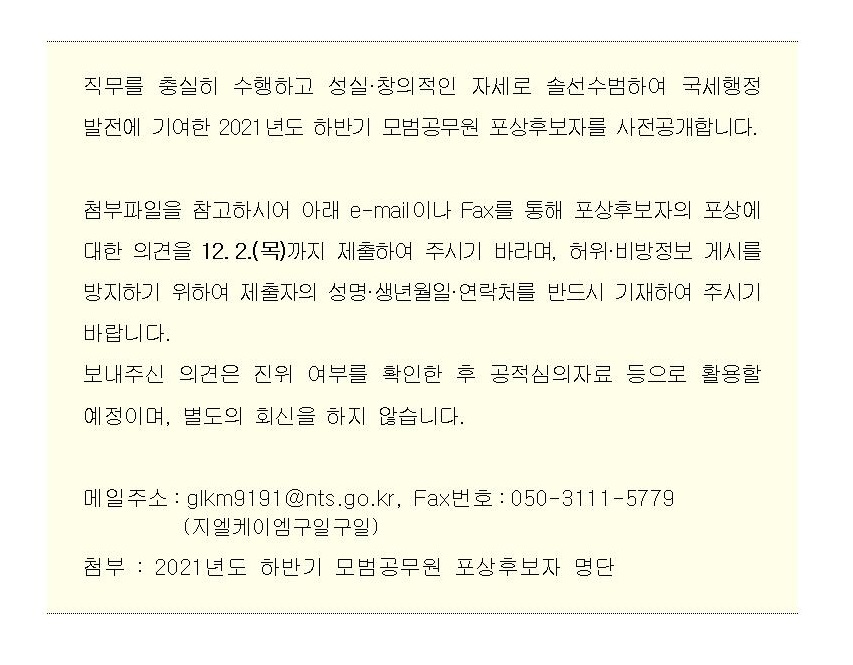
The award candidates disclosed this time are general civil servants who are scheduled to retire at the end of their term or take voluntary retirement in the second half of 2026. The targets are those who have worked hard on the front lines of administration for many years to serve the public, and they have been recommended after rigorous internal reviews by various ministries and local governments. Typically, the public verification period is operated by publishing the candidates’ names and summaries of their key achievements on the official website for a set period. For example, by visiting the “Notices and News” board on the Ministry of the Interior and Safety website, you can download and review the specific list and details of their achievements in PDF or document format. If no disqualifying reasons are found during this period, or if any raised opinions are deemed insignificant, the process proceeds to the final review stage leading to the award ceremony. Therefore, it is crucial not only for the candidates themselves and their affiliated institutions but also for the general public to verify the relevant information within the deadline. As these individuals conclude decades of public service, fair and objective verification is being carried out smoothly to ensure they are honored with this prestigious distinction.
The awards target general civil servants retiring in the second half of 2026, with candidate lists and achievements disclosed via the official website.
3. How to Review and Verify Candidate Achievements
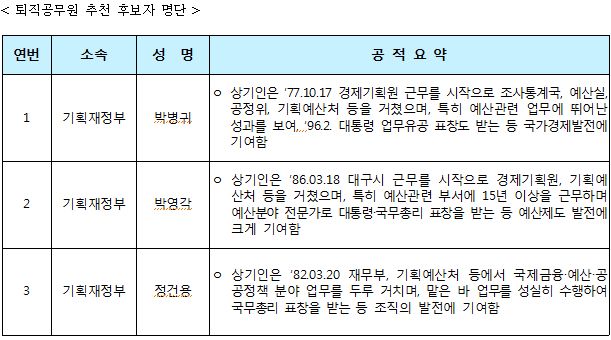
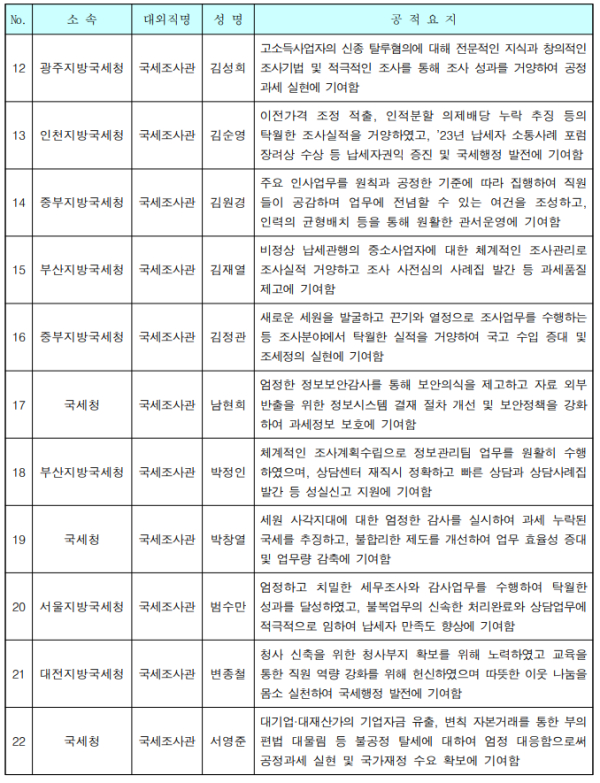
To examine the profiles of the candidates, it is essential to actively utilize the government’s official e-government website or the notice boards of their respective ministries. The posted materials contain detailed records of the candidates’ affiliations, ranks, summaries of their achievements, and major accomplishments, making them easily accessible to anyone. For example, if a civil servant has successfully resolved local residents’ complaints over a long period and contributed significantly to budget savings, such specific figures and details will be included in the achievement record. You, the readers, can also directly access the relevant pages to check if you recognize any civil servants from your community or if they have engaged in activities worthy of being a social role model. If you become aware that the achievement records contain false information or conceal serious misconduct, you can raise an objection following the established procedures. This process serves as a watchdog role, going beyond merely raising suspicions to safeguarding the ethics and transparency of the entire public sector. Carefully reading the publicly disclosed achievement records can be a meaningful time to discover and encourage the hidden contributors in our society.
You can verify candidates’ achievements and carefully review the details through the achievement records posted on the official website.
4. Guide to Opinion Collection and Objection Procedures
During the public verification period, if you have opinions or objections regarding a candidate, you can submit them to the responsible department according to the prescribed format. When submitting opinions, it is essential to attach objective facts or evidence rather than mere slander or speculative claims. For example, if you have documents or evidence proving that the stated achievements clearly differ from the actual facts, you can promptly notify the responsible party via email or phone. Received opinions undergo thorough fact-finding investigations by the responsible institution, and if necessary, procedures are conducted to hear explanations from the parties involved. If the raised objections are deemed valid, the candidate may be excluded from the award recommendation or subjected to a re-review. Therefore, since this is a very serious and responsible procedure where the public’s voice is directly reflected in administrative practice, participation must be cautious. Baseless slander can actually harm innocent parties, so a mature civic consciousness is required to submit only objective, fact-based opinions.
Objections or opinions regarding candidates must be submitted to the responsible department following established procedures, based on objective evidence.
5. Government Efforts and Challenges in Ensuring Fairness
Government agencies, including the Ministry of the Interior and Safety, are intensifying verification efforts and implementing multi-faceted security measures annually to enhance the fairness of the award system. Unlike in the past, public standards have risen significantly, meaning that even one unqualified recipient could damage the credibility of the entire government award system. Accordingly, systems are in place to thoroughly screen for criminal records, tax delinquencies, and any history of causing social controversy. For example, suspicions raised through internal whistleblowing or media reports are carefully cross-verified to ensure that no one is unjustly disqualified while those who are unqualified are excluded. These efforts also serve as a strong motivation for civil servants to maintain a diligent and exemplary attitude during their tenure. We hope that this public verification system will continue to develop, deeply rooting a culture of integrity and responsibility throughout the public sector. Only recipients selected through strict criteria and transparent procedures can truly enjoy the honor, and citizens can sincerely congratulate them.
It is crucial to maintain the fairness and credibility of government awards through thorough cross-verification and multiple confirmation procedures.
6. Future Outlook and the Importance of Citizen Participation

The public verification of candidates for the 2026 second-half general awards for retired civil servants will be a significant milestone in strengthening trust in the public sector of our society. Going forward, the government will continue to improve the system by disclosing the award process more transparently through various channels and listening to the voices of the people. If you, the readers, pay a little more attention to news about public officials in your community or government notifications, you can contribute to making our society one step fairer. A balanced perspective is needed to send warm encouragement to those who are about to retire and have their lifelong dedication recognized, while also correcting any improper aspects. We recommend that you do not miss this public verification period and visit the website directly to review the candidates’ achievements. Since mature citizen participation can help create a more trustworthy public sector, we hope many of you will add meaningful opinions this time. We support the goal that a fair award system, built together by citizens and the government, will be properly established and become a great source of pride for exemplary public officials.
Continuous interest and active participation from citizens are essential for the establishment of transparent public verification.
Frequently Asked Questions
=