Comparing expense reimbursement insurance is an essential step to reduce fixed monthly expenses and find coverage that suits your needs. With the recent surge in non-covered medical costs and system reforms, many people are struggling with whether to keep their existing older policies or switch to new ones. In fact, changes in the medical field are happening rapidly; for instance, physical therapy, which was commonly prescribed for shoulder pain until last year, has become more difficult to claim, leading to a “balloon effect” where patients shift to alternative treatments like jet plasma therapy. In this article, we will trace the evolution from the 1st to the 5th generation of policies, compare conditions from various insurance companies at a glance, and explore specific methods for making wise choices. We will detail the know-how for reducing premium burdens and securing only the necessary coverage efficiently.
=
Comparing Expense Reimbursement Insurance: 2026 Latest 4th vs. 5th Generation Differences and How to Lower Premiums
1. Evolution and Characteristics of Expense Reimbursement Insurance by Generation
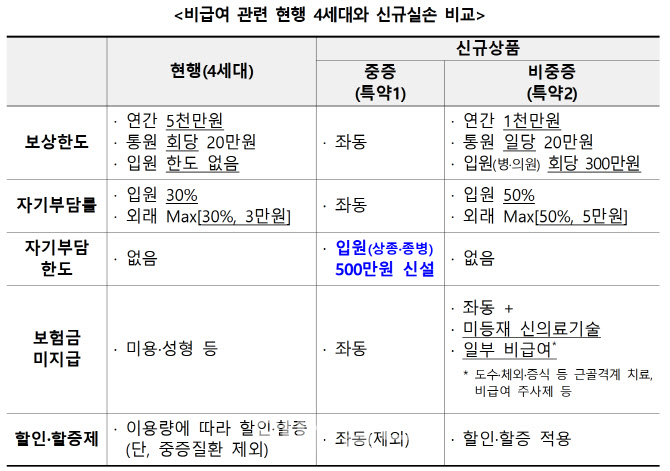
From the 1st to the 4th generation and up to recent new products, expense reimbursement insurance shows significant differences in deductibles and coverage scope depending on the enrollment period. Older policies have the advantage of robust coverage, but the soaring premiums at each annual renewal often become a major burden on household budgets. On the other hand, relatively newer products feature a rational structure that increases deductibles to prevent unnecessary overtreatment and offers premium discounts to those who rarely visit hospitals. Reviewing comparative disclosure data from the Korea Insurance Association reveals that loss ratios and premium increase rates vary significantly by generation. Therefore, rather than stubbornly insisting that older products are always better, it is wise to calmly assess your current health status and frequency of hospital visits.
In the past, nearly all medical expenses were reimbursed, which led to social issues regarding moral hazard and overtreatment. To address these problems, the government and insurance companies have continuously adjusted the system to make deductible ratios more realistic and strengthen controls on non-covered items. If you feel that it is a waste to pay monthly premiums while rarely visiting the hospital, and that you are the only one losing out, you need to accurately understand these generational differences. If you have heard complaints from people around you about their premiums rising too much, they are often still maintaining the old-style policies. Now, it is more important than ever to honestly compare your payment capacity with your actual number of hospital visits to choose the most suitable generation.
Expense reimbursement insurance varies significantly by generation in terms of deductibles and premium increase rates, so you should carefully compare options based on your hospital usage habits.
2. Restrictions on Physical Therapy and the Non-Covered Balloon Effect

Recently, due to strengthened government management, the number of claims for physical therapy, a representative non-covered item, has decreased significantly compared to the previous year. While the aim was to reduce household burdens and improve insurance companies’ deficits, voices of disappointment have grown as some severe patients are also subject to the same frequency limits. Interestingly, a clear “balloon effect” has been observed where patients, finding it difficult to receive physical therapy, are shifting to alternative treatments with similar effects, such as jet plasma therapy. With the total scale of non-covered medical costs approaching tens of trillions of won, new forms of non-covered items continue to emerge, driven by medical institutions’ desire to maintain revenue.
Due to this balloon effect, where squeezing one side causes the other to bulge, the loss ratio of expense reimbursement insurance is hard to control, ultimately leading to premium increases for all policyholders. This is why you should question whether the non-covered treatment recommended by a doctor for back or shoulder pain is truly necessary for you. Some medical institutions even use illegal methods like cashback to attract patients, so policyholders must become smart consumers. You should develop the habit of carefully checking receipts to determine whether your treatment is covered by national health insurance or is a non-covered item. Reducing unnecessary non-covered treatments is the most effective defense against the premium bomb you pay every month.
A balloon effect is occurring, with patients shifting to treatments like jet plasma therapy due to physical therapy restrictions, so you should be wary of unnecessary non-covered treatments.
3. How to Compare Direct Expense Reimbursement Insurance and Tips for Saving Fixed Costs
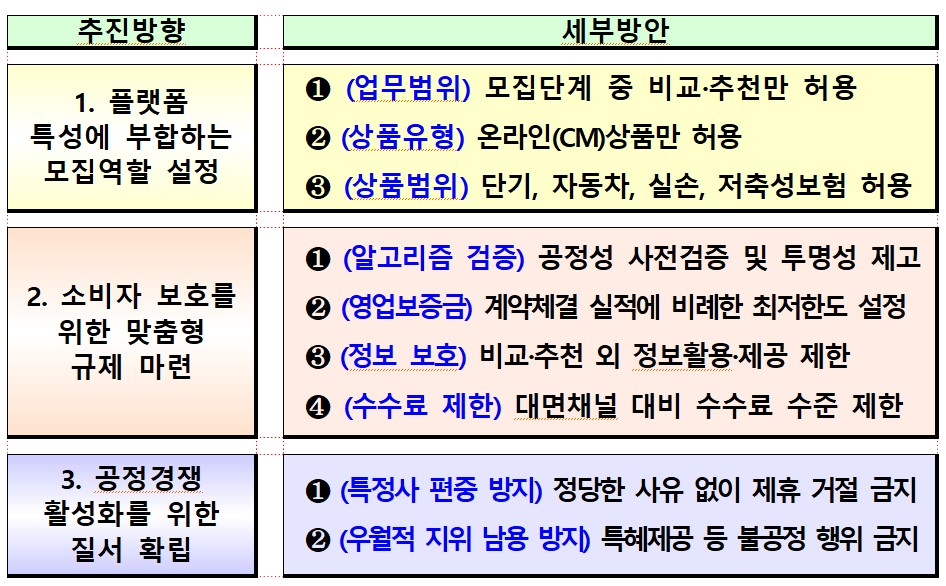
To reduce fixed costs automatically deducted from your account every month, it is advisable to actively utilize direct online enrollment rather than going through offline agents. Using certified comparison services that allow you to compare quotes from multiple insurance companies at a glance lets you immediately check reasonable price ranges without fee markups. When choosing a direct product, remember that you must select a pure protection type with no maturity refund to reliably lower your monthly expenses. If you greedily add multiple unnecessary riders, your premiums may rise to an unmanageable level, so the trick is to design a light plan focused on basic coverage.
Rather than being swayed by recommendations from acquaintances or marketing slogans, try practicing comparing conditions from several companies directly and keeping only the items you truly need. With just a few clicks on a smartphone or computer, you can calculate expected payments in real time, allowing office workers to easily check during their commute. By removing unnecessary riders and enrolling in a pure protection type, you can build a solid medical expense defense with a much lighter financial burden than you might think. If you cancel your expense reimbursement insurance because the annual renewal premiums are burdensome, you will have to bear the enormous treatment costs yourself if you get a serious illness later. Therefore, you need the wisdom to prioritize adjusting coverage or switching to a direct plan over canceling the policy.
By choosing a pure protection type and using internet comparison services, you can save on unnecessary fees and significantly reduce your monthly fixed costs.
4. The Decisive Differences Between 4th and 5th Generation Expense Reimbursement Insurance
Recently introduced new products are drawing attention from policyholders because they focus on balancing fairness between frequent hospital visitors and those who are not. The 4th generation product introduced a system where premiums are discounted or surcharged based on the usage of non-covered treatments, playing a role in controlling indiscriminate hospital visits. The newly introduced 5th generation product is also seeing a growing trend of voices comparing its coverage scope and deductible structure with previous generations from the moment of its launch. By examining the latest product conditions of each company based on Korea Insurance Association disclosure data, you can find the answer to which generation is most advantageous for your lifestyle. If you are generally healthy and rarely visit the hospital, the latest product with non-covered discount benefits can be much more beneficial in the long run.
Conversely, for policyholders with chronic illnesses or those who require regular hospital treatment, blindly switching to the latest model may not be the best option, so a cautious approach is required. Older policies have the advantage of lower out-of-pocket costs, reducing worry about medical bills, but the large annual renewal increases can become a heavy burden after retirement. On the other hand, the latest products are relatively cheaper in initial premiums but carry the double-edged sword of potentially large surcharges if non-covered services are used frequently. Therefore, rather than blindly following what others say is good, you should spread out your hospital receipts from the past year and do the math yourself. Objectively analyzing your medical expense patterns is the key secret to a successful insurance switch without failure.
The core of 4th and 5th generation expense reimbursement insurance lies in the discount and surcharge structure based on non-covered usage, so you should first check your frequency of hospital visits.
5. Why Expense Reimbursement Insurance Alone Is Insufficient for Diagnosis Benefits
Many people feel reassured, thinking that since they have expense reimbursement insurance, they will have no worries about medical costs even if they get a serious illness, but the reality may be different. In particular, for women in their 40s who are responsible for household finances while balancing child-rearing and housework, a diagnosis of a major disease like cancer can cause an unimaginable economic blow. Expense reimbursement insurance is structured to refund the remainder of the medical costs you actually bear after deducting the deductible amount, so it cannot cover the gap in living expenses that may arise during the treatment period. Loss of income due to taking time off work or additional costs like hiring a caregiver can only be resolved through diagnosis benefits or fixed-amount coverage. Even if the special calculation system of national health insurance is well-established, it is often grossly insufficient to perfectly cover non-covered medication costs or special treatment fees.
It is not uncommon to hear stories from acquaintances who, despite resolving treatment costs with expense reimbursement insurance, saw their households wobble because they could not work for several months. This is why more people are realizing that expense reimbursement insurance is not a universal sanctuary and are comparing supplementary products centered on diagnosis benefits. There are surprisingly many people who regret relying solely on expense reimbursement insurance because the total monthly premium was burdensome, only to face a crisis. You must prepare a safety net that fills the gaps in expense reimbursement insurance by comprehensively considering your job stability, family history, and surplus assets. Since insurance is a tool to prepare for uncertainty, it is wise to design it in a three-dimensional way to ensure your household does not collapse even in the worst-case scenario.
Expense reimbursement insurance only covers actual medical costs, so additional supplementary coverage such as diagnosis benefits is essential to cover income gaps or additional costs.
6. Final Checklist for Successful Expense Reimbursement Insurance Comparison
If you want to save on premiums, your top priority should be to carefully compare conditions from multiple companies to find the most advantageous path for you, rather than blindly canceling or neglecting your policy. Even now, non-covered medical costs continue to grow, and insurance companies are introducing various systems to reduce loss ratios. You must exercise the wisdom to keep a close eye on future medical trend changes, boldly tidy up unnecessary riders, and keep only core coverage. By actively using internet comparison services to do the legwork, you can save tens of thousands of won in fixed costs every month while maintaining solid coverage. I encourage you to start an objective comparative analysis today by spreading out your insurance policy and recent hospital usage records. Small attention and action will gather to become the strongest shield protecting your household economy.
Rather than being confused by changing systems, it is most important to set your own standards and calmly compare multiple options. You should make decisions based on certified comparative disclosures and your own actual experience, without being swayed by hearsay or uncertain rumors from others. If you blindly get rid of insurance just because the money going out every month feels like a waste, you may suffer greatly when medical costs become truly essential. Try going through the process of transparently comparing quotes from various places via direct channels and restructuring with a reasonably priced product. The wise first step toward a healthy future and a stable household economy begins with checking your insurance status right now.
You must prevent unnecessary expenses and build stable coverage assets through active comparative analysis and the use of direct channels.
Frequently Asked Questions
=