An investment strategy involving Exchange-Traded Funds (ETFs) that provide cash distributions twice a month has recently gained explosive popularity among the wealthy and individual investors. Mr. Kim, an office worker, says that receiving distributions twice a month, in addition to his salary, has significantly reduced his living expenses, and he actively recommends this approach to those around him. In the past, investors could only look forward to a single monthly distribution, but now an era has dawned where funds are managed efficiently by splitting the payout dates. In this article, we will specifically examine how to combine mid-month and end-of-month distribution products to create a stable cash flow. Please carefully review the tips for maximizing compound interest and the wisdom of reducing tax burdens. This article will serve as a guide for those dreaming of successful retirement fund preparation and cash generation.
=
How to Invest in ETFs for Twice-Monthly Distributions: Strategies for a Bi-Monthly Payout Plan
1. Basic Concepts of Twice-Monthly Distribution ETFs

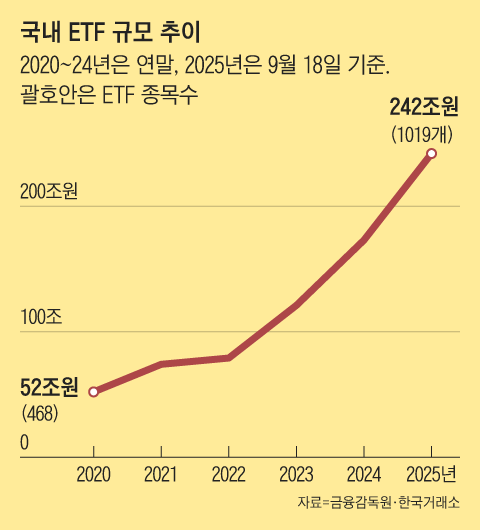
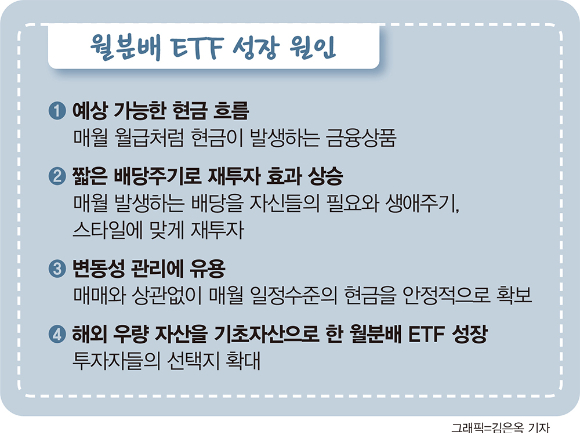
The hottest topic in the ETF market recently is undoubtedly the diversification of distribution-paying products that provide regular cash flow. While the standard structure in the past was to distribute profits only once a month, a flood of products with split payout cycles tailored to investor preferences has emerged recently. The advantage of receiving payments split between mid-month and the end of the month is that it makes financial planning much easier. For example, you can use the money received on the 15th of each month to pay utility bills and the money received on the last business day to pay off savings or loan interest, allowing for organized household budgeting. This approach is gaining significant traction not only among older adults nearing retirement but also among young office workers who urgently need cash flow. The psychological stability of receiving a bonus-like income on fixed dates each month, in addition to a salary, serves as a powerful motivation to maintain investment consistency.
The core of this investment method lies in organically linking products with different payout dates within a single account. Diversifying purchase dates rather than concentrating on a single product acts as a safety net against market volatility. Even when the stock market trends downward, the steady inflow of cash soothes investor anxiety and provides psychological comfort. Market experts also recommend approaching this from a diversified investment perspective rather than going all-in on a single product. Ultimately, the essence of this strategy is to structure your assets to work for you, creating income twice a month in addition to your salary. As financial institutions continue to attempt to further subdivide these cycles, investors can expect an even wider range of choices.
Combining products with payout dates split between mid-month and the end of the month makes household budgeting easier and enhances the stability of cash flow.
2. Principles and Application of the Covered Call Strategy
Most products that provide generous payouts twice a month adopt a special structure incorporating a call option selling strategy. This involves actually holding stocks while simultaneously selling the right to buy those stocks at a predetermined future price to others, thereby collecting premium income. This premium is the core source of the funds regularly distributed to investors. While there are some limitations in enjoying massive capital gains from stock price increases, the advantage is that it provides a certain level of defense even in a declining market and delivers substantial cash. The true value of this strategy is most clearly demonstrated when the market is sideways or in a gentle uptrend.
Many investors rush into these products solely based on high distribution figures without fully understanding the structure, often leading to disappointment. If the value of the underlying asset declines, principal loss may occur, so one should not blindly trust option income alone. Therefore, you must carefully examine which stock index or specific stocks the product you intend to invest in is based on. Recently, products that track the KOSPI 200 index while incorporating this strategy, in line with the flow of the domestic stock market, are receiving significant attention. They are positioning themselves as a smart alternative that allows investors to aim for both stable cash flow and capital gains from a rebound in the domestic market.
The structure combining stock holding and option selling secures stable income, but the risk of value decline in the underlying asset must also be considered.
3. Advantages of Combining Domestic Market-Based Products

Building a portfolio by combining products that track the domestic market offers the significant strength of fundamentally eliminating risks associated with exchange rate fluctuations. When investing in overseas assets, the value of the principal can easily fluctuate due to exchange rate movements, but domestic-based products are relatively free from such concerns. With the prevailing analysis that recent corrections in the domestic stock market have opened up opportunities for buying at low prices, the investment appeal of related products is rising daily. When the index stabilizes at the bottom and rebounds, you can also secure capital gains, enjoying a two-for-one benefit.
Indeed, looking around, the number of savvy investors who appropriately mix domestic index-linked products to reliably fill their accounts twice a month is increasing. The trend of improving dividend payout ratios among domestic companies and strengthening shareholder return policies also adds momentum to this investment method. For beginners who struggle with selecting specific stocks, it is wise to fill their basket primarily with safe products that track the entire index. Rather than being elated or depressed by foreign supply and demand or macroeconomic indicators, focusing on the steadily received distributions will eventually lead to facing a grown asset base. Investors who believe in the revival of the domestic stock market can build their own robust cash pipeline through this opportunity.
Domestic market-linked products are an excellent choice as they carry no exchange rate risk and allow for simultaneous pursuit of low-price buying and capital gains.
4. Tax Benefits of Pension Accounts and Individual Retirement Accounts (IRP)
No matter how much distribution you receive, if nearly half is taken away by taxes, investment efficiency will inevitably drop sharply. This is exactly where the wisdom of utilizing Pension Accounts and Individual Retirement Accounts (IRP) becomes absolutely necessary. By purchasing products through these special accounts, you can enjoy the tax deferral benefit of not paying dividend income tax immediately but postponing it. Since you do not have to pay taxes right away and can reinvest that money, there is no better environment for maximizing the compound interest effect.
When you later receive the money in the form of a pension, you are subject to a low-rate separate taxation that is much lower than the general tax rate, allowing you to avoid a tax bomb. In the case of an IRP, tax-exempt benefits are provided up to a certain limit, and a cheap separate taxation is applied to the excess amount, minimizing the investor’s burden. Mr. Park, an office worker, shared his experience of being shocked after receiving a tax notice while investing in a regular securities account, prompting him to quickly switch to a pension account. He said he gained a great realization when he saw that his perceived real return rate at year-end changed noticeably, even though he only changed the nature of the account. Actively utilizing the legal tax-saving framework provided by the state is the shortcut to becoming an investment expert.
Utilizing special accounts allows you to enjoy tax deferral and low-rate taxation benefits, maximizing compound interest and increasing real returns.
5. Enjoying the Compound Interest Effect by Reinvesting Received Distributions

Using the distributions deposited into your account immediately for living expenses versus using them to repurchase the product creates a huge gap over time. The magic of compound interest, which Einstein praised as one of humanity’s greatest discoveries, truly reveals its value in this reinvestment process. Please try to put the valuable funds received mid-month and at the end of the month back into your stock basket immediately, without skimping on even a small amount. It may seem insignificant at first, but after several years, you will be surprised by the snowballing size of your assets.
For young and middle-aged adults who are actively growing their assets rather than being on the verge of retirement, reinvestment is not an option but an essential survival strategy. If you can resist the temptation to consume and quietly accumulate assets with automatic purchase settings, you can reach financial freedom faster than anyone else. The point commonly emphasized in numerous investment success stories is precisely the importance of this thorough reinvestment. Do not treat distributions lightly as pocket money; treat them as diligent workers who will grow your assets for you. Never forget that the difference in small habits can completely change the numbers in your account balance a few years later.
To fully enjoy the magic of compound interest and grow assets rapidly, received distributions must be reinvested immediately rather than consumed.
6. Successful Twice-Monthly Distribution Investment Strategies and Outlook

Volatility in the asset market is expected to increase further in the future, and accordingly, the pace of investors seeking stable cash flow will quicken. Rather than blindly chasing products that others say are good just because they are trendy, you must find the optimal combination that suits your investment style and financial goals. The bonus-like distributions received twice a month will serve as a sturdy prop that helps you endure the difficult investment journey. If you manage your account based on thorough tax knowledge and consistently practice reinvestment, anyone can achieve successful retirement preparation without failure.
Even now, countless wise investors are building their own robust cash pipelines and preparing for the future step by step. You too should open a stock account today, carefully examine the details of mid-month and end-of-month distribution products, and take the first step. Small interest and execution power will gather to provide the miracle of enriching your account in a few years. The journey toward financial freedom is not far away, and all the answers are contained in the small practice of starting right now. I sincerely support you in becoming a wonderful investor who always maintains a clean and healthy investment mindset and moves forward unwaveringly.
In a volatile market, combining products based on your own criteria and consistently practicing will lead to the completion of successful retirement assets.
Frequently Asked Questions
=