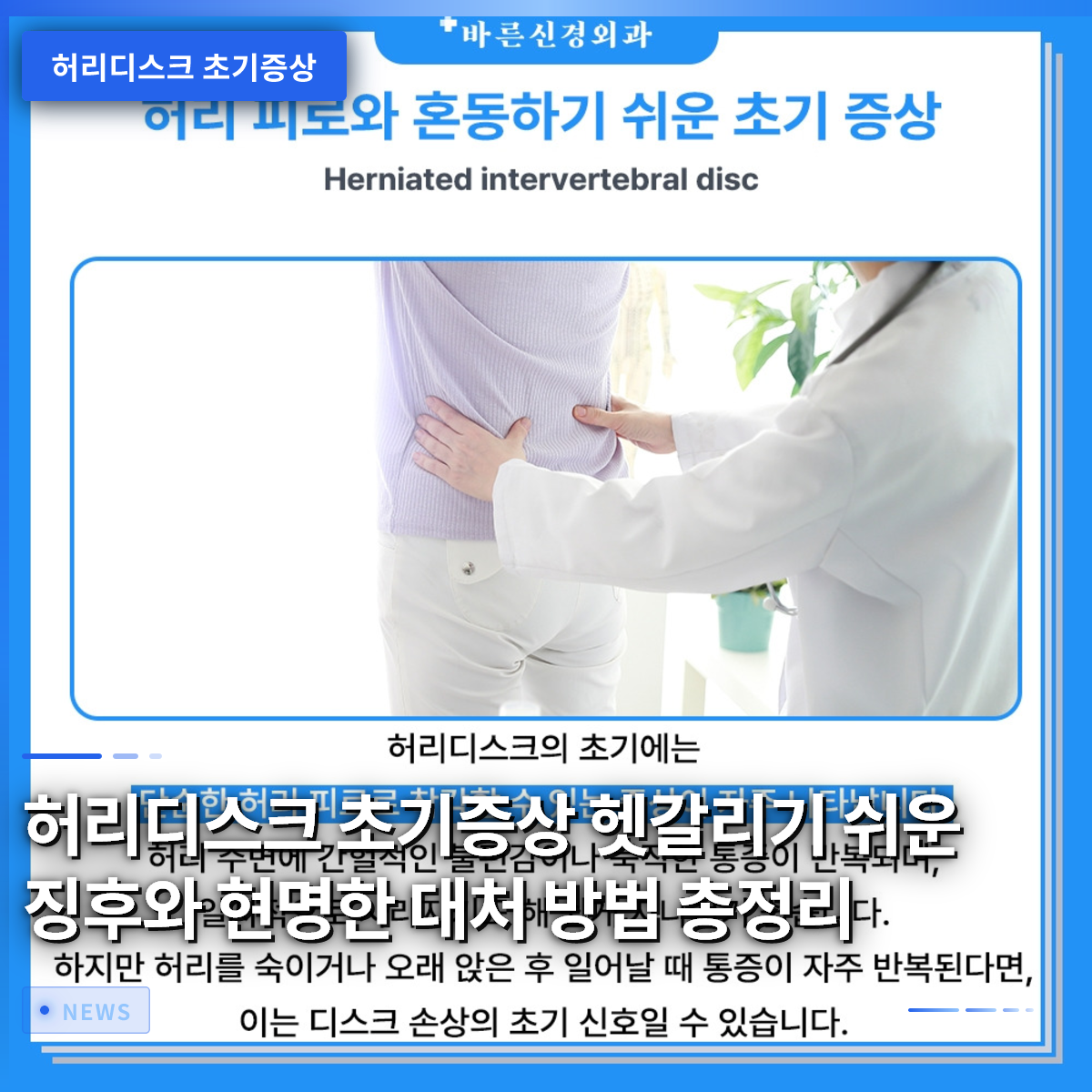
If you mistake the early symptoms of a herniated disc for simple muscle pain and ignore them, it can eventually lead to a situation where even walking becomes difficult. If you feel stiffness in your lower back or a tingling sensation in your buttocks when you wake up in the morning, there is a high probability that a minor issue has already developed in your disc. This is a common symptom experienced by office workers who drive for long periods during holidays or maintain a hunched posture while working. In this article, we will closely examine the subtle early signals of a herniated disc that often confuse many people and provide detailed guidance on how to manage them in daily life. Do not dismiss the pain just because it feels mild; you must pay attention to the warnings your body is sending.
=
Early Signs of Herniated Disc: Common Misconceptions and Smart Ways to Cope
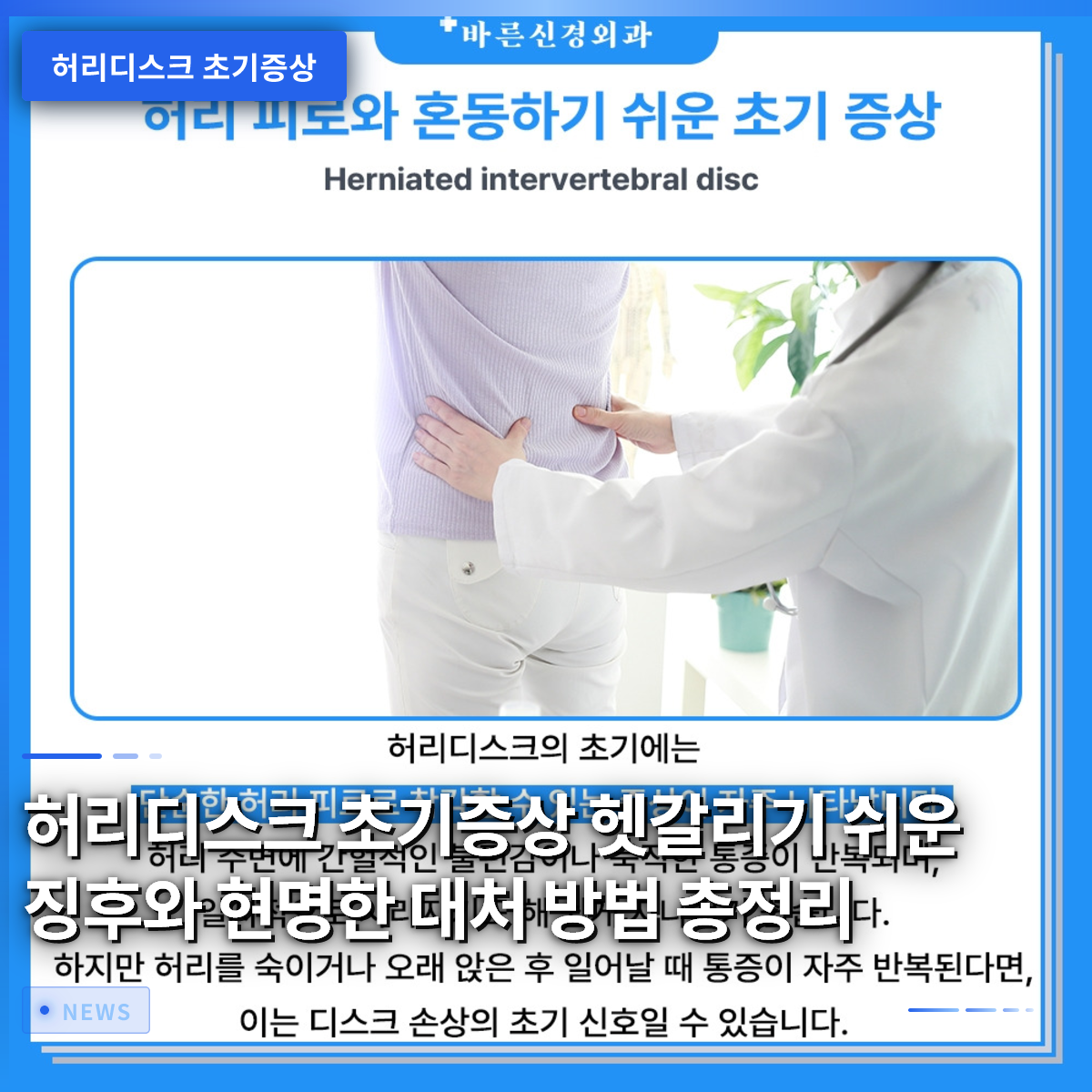
1. Stiff Lower Back Every Morning: Is It Just Muscle Pain?
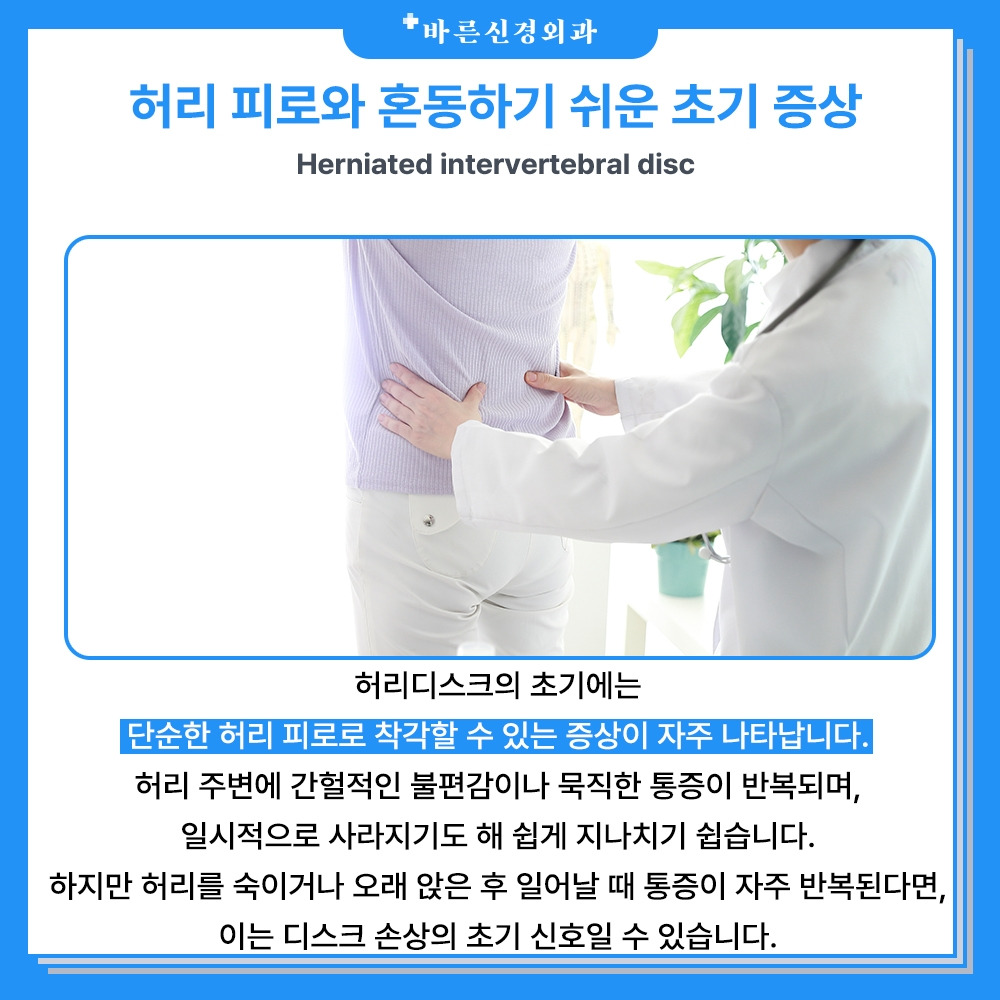
If your lower back feels stiff and sore when you wake up and get out of bed, you should consider the possibility of early-stage herniated disc symptoms. It is easy to assume this is simple muscle pain caused by overexertion during exercise or sleeping in an awkward position, but the nature of the pain is slightly different. Unlike general muscle pain, which usually disappears completely after applying a patch and resting for a day or two, early disc signals are characterized by a dull discomfort that persists for several days.
You might also feel a sharp, electric-shock-like sensation when bending over the sink to wash your face. When sitting at your desk at work, you may constantly feel a heavy weight in your buttocks or lower back, forcing you to change your posture frequently. If you experience a dull ache in your lower back when cleaning the house on weekends or lifting a slightly heavy object, it is a sign that the structures surrounding your spine have weakened. If you dismiss these recurring symptoms as insignificant, they can eventually cause significant interference with your daily life.
Persistent morning stiffness and pain when bending over may indicate early-stage herniated disc symptoms rather than simple muscle pain.
2. Why Your Legs Hurt More Than Your Lower Back
A significant number of patients with herniated discs report tingling or pulling sensations in their legs more intensely than pain in their lower back itself. This occurs because the herniated nucleus pulposus compresses the nerves passing around the spine, causing radiating pain (radiculopathy) that extends from the buttocks to the thighs and calves. If you feel a pulling sensation in the back of one leg when you stretch it out on the floor while watching TV on the sofa, you should observe this symptom carefully.
For instance, Mr. Kim, an office worker living in Yeongdeungpo, experienced tingling from his left buttock down to his toes while standing on the subway on his way home from work. Initially, he thought it was poor blood circulation in his legs, but he was shocked to receive a diagnosis of early-stage herniated disc after an orthopedic examination. If pain does not remain localized in the lower back but radiates downward, it is clear evidence that nerve compression is progressing. If you experience numbness in your legs or difficulty flexing your toes, you must seek immediate medical attention from a specialist.
Radiating pain characterized by tingling and pulling sensations in the buttocks and legs, even without lower back pain, is a typical early symptom of a herniated disc.
3. The Dangers of Self-Diagnosis and Excessive Exercise
Many people search for information on early herniated disc symptoms online and attempt to force themselves into stretching or high-intensity exercises without professional guidance. However, in countless cases, following YouTube videos without knowing the exact condition can actually irritate the nerves and severely worsen the pain. Although herniated discs and spinal stenosis may present similar external symptoms, their underlying causes and appropriate treatment methods can differ significantly.
If you arbitrarily bend or twist your lower back simply because it feels uncomfortable, the disc may herniate further. It is also extremely dangerous to self-diagnose and ignore the condition just because the symptoms seem mild. When minor nerve inflammation occurs, accurate imaging tests and professional diagnosis should take priority over excessive exercise. It is wise to put aside folk remedies or unverified exercise routines that do not suit your specific physical condition.
Relying solely on self-diagnosis and performing excessive stretching can actually worsen nerve inflammation and pain.
4. What Treatments Are Provided at the Hospital?
If you have been diagnosed with an early-stage herniated disc, you can rest assured that surgery is not always necessary. Only a very small fraction of all patients require surgery, and early-stage cases can often be sufficiently improved with non-surgical treatments alone. Hospitals carefully assess the patient’s pain intensity and the degree of nerve compression before creating a customized treatment plan.
First, anti-inflammatory pain relievers are prescribed to reduce inflammation, combined with physical therapy to relax tense muscles. In cases where pain is more severe, nerve injection therapy can be used alongside medication to directly soothe minor nerve inflammation. It is crucial to consistently continue rehabilitation therapy, which involves maintaining proper posture and strengthening core muscles, in conjunction with these conservative treatments. Even if symptoms improve, you must not become complacent; correcting bad habits in your daily life is essential to prevent recurrence.
Early-stage herniated discs can be sufficiently improved with conservative treatments such as medication, physical therapy, and injections, without the need for surgery.
5. Rules for Protecting Your Lower Back in Daily Life
If you are experiencing early symptoms of a herniated disc or wish to prevent one, the key is to strictly correct your daily habits. When sitting in a chair, keep your back firmly against the backrest and sit deep enough to keep your spine straight. If you drive for long periods or work on a computer, you should get up at least once an hour to perform light stretches to loosen stiff muscles.
When lifting heavy objects, do not bend only at the waist and lift them abruptly. Instead, develop the habit of bending your knees and keeping the object close to your body as you stand up. When lying in bed, avoid sleeping on your stomach; instead, lie on your back with a small pillow placed under your knees to significantly reduce strain on your lower back. You must also avoid hunching your head over your smartphone or crossing your legs, as these postures disrupt the overall balance of your spine. Small changes in habits collectively form the strongest shield to protect your valuable lower back health.
Maintaining proper posture, regular stretching, and using correct techniques when lifting heavy objects are essential for protecting lower back health.
6. The Importance of Early Response to Avoid Serious Consequences
Herniated discs are a condition where faster early response leads to shorter recovery periods and a smoother return to daily life. If you dismiss minor stiffness or temporary tingling as insignificant and ignore them, you may suffer from chronic pain or even experience paralysis. From now on, it is wise to visit a nearby orthopedic clinic for an accurate assessment as soon as you detect any subtle abnormal signals in your lower back.
Maintaining a healthy spine is the most fundamental condition for enjoying an active old age and a fulfilling daily life. Please remember the early symptoms and coping methods discussed today, and offer warm advice to family members or friends who complain of lower back pain. Do not forget that the attitude of listening to the small warnings your body sends will determine your lifelong health. We encourage you to regain a strong and flexible lower back through consistent management and proper treatment.
Since early response determines the prognosis of a herniated disc, even mild symptoms should be addressed proactively.
Frequently Asked Questions
=