If you are currently looking into a 400 million KRW loan ahead of a home purchase or a jeonse (long-term rental) contract, you must carefully assess your income and the property price criteria. With recent interest rate volatility, borrowers who chose variable rates are facing significant financial pressure as their monthly payments have increased by hundreds of thousands of won. For example, when borrowing around 400 million KRW with a 30-year repayment term, even a slight increase in interest rates causes the monthly principal and interest burden to snowball. Therefore, rather than simply maxing out the loan limit, it is wise to prioritize comparing government-supported policy products or fixed-rate options. In this article, we will examine in detail the conditions of various 400 million KRW loan products and realistic ways to reduce the interest burden.
=
A Complete Guide to 400 Million KRW Loans: Conditions and Interest Burdens, from Newborn Special Loans to Mortgages
1. How to Secure Up to 400 Million KRW with the Newborn Special Loan
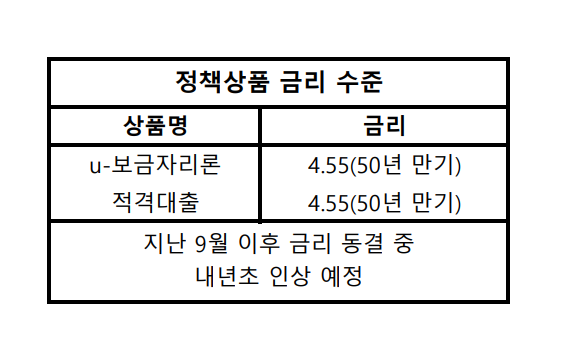
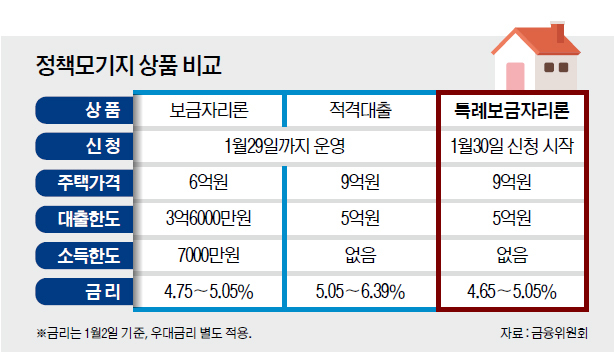
If you are expecting a child or have recently had a baby, you should prioritize the government-supported Newborn Special Loan. By utilizing the Newborn Special Stepping Stone Loan for home purchases, you can secure up to 400 million KRW, significantly alleviating the financial burden. Since it offers much lower interest rates compared to general mortgage loans, it has been extremely popular among young couples. In reality, in land transaction permit zones or regulated areas, general loan limits are often insufficient to buy a home, but this program provides a lifeline. It effectively provides a ladder for housing stability for families raising children, so you must verify your eligibility. If you meet the income criteria or property value limits, choosing this program is always more advantageous than general products. Introduced as part of the government’s low birth rate countermeasures, the Newborn Special Loan drastically reduces housing costs for families with newborns. Compared to the interest rates on general mortgage loans from commercial banks, the monthly interest difference is substantial, providing significant relief to household finances. You can easily hear stories from people who saved tens of millions of won in interest by utilizing this system when buying a home after having a child. However, since there are upper limits on the area and price of eligible properties, you must thoroughly verify these details through a licensed real estate agent or the Fund e-Deundeun website before signing a contract. Occasionally, people miss out on benefits because they do not fully understand the specific requirements, so it is important to familiarize yourself with the relevant information in advance.
The Newborn Special Loan allows you to borrow up to 400 million KRW at a low interest rate, significantly reducing the housing burden for families with newborns.
2. Increased Monthly Payments Due to Rising Variable Rates and Countermeasures
When borrowing around 400 million KRW with a mortgage, even a 0.5 percentage point increase in interest rates results in a significant difference in the amount deducted from your account each month. In fact, those who took out a 30-year loan at an initial rate of 3.8% per annum have experienced their monthly payments jumping from 1.95 million won to 2.25 million won during periods of rate hikes. If the fixed monthly outflow increases by more than 300,000 won, it inevitably deals a heavy blow to the living expense budget of an average office worker’s household. During periods when the trend of base rate cuts is uncertain, you should choose hybrid or periodic fixed rates over variable rates to defend against risk. If you are exposed to rising rates without protection, it can lead to household debt distress, making thorough preparation essential. You should also adopt a strategy of reviewing your expenditure structure and making early repayments of the principal whenever you have surplus funds to reduce the total interest amount. It is necessary to develop the habit of periodically checking the interest rate structure currently applied to your loan through bank consultations and exploring whether you can refinance under more favorable conditions. Once loan interest begins to occupy a significant portion of your income, your quality of life drops sharply, so you should avoid excessive “all-in” purchases. Rather than being swept up in the surrounding atmosphere and taking out large, unplanned loans, it is safer to prepare repayment plans for various future interest rate scenarios. You should also set aside emergency funds to handle sudden interest rate hikes or income reductions flexibly.
For loans in the 400 million KRW range, monthly payments vary significantly with interest rate fluctuations, making the use of fixed rates and a thorough repayment plan essential.
3. Tips for Jeonse Scam Victims and Utilizing the Special My Home Loan
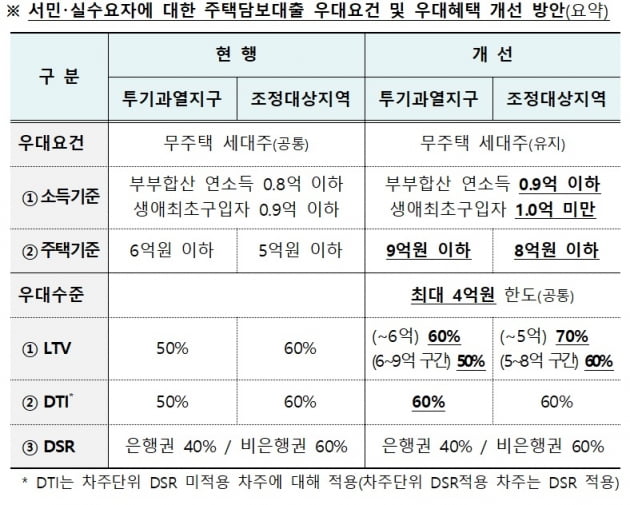
A Special My Home Loan product with a limit of up to 400 million KRW is being operated as a support measure for victims suffering from unexpected jeonse scams. Compared to the general My Home Loan, the limit is increased by 40 million won, providing practical assistance in restoring housing stability. It is also useful in exceptional situations where victims must directly purchase the property at auction, as flexible review criteria are applied. These relief systems established by the government and related agencies serve as a last resort for those who have been denied loans by commercial banks. Every time I hear a heartbreaking story from around me, I realize anew how important it is to understand the system properly and apply for it. It frequently happens that jeonse contracts are nearing expiration, but the landlord fails to return the deposit, leaving victims in a desperate situation. If loans are blocked due to friction with a new landlord or breach of contract terms, there is no way to raise the huge sum of 400 million KRW in a short period. In such cases, you must carefully record special clauses in the rental contract from the drafting stage to ensure the contract becomes void if the loan is denied. You should understand the specific eligibility requirements for victim relief programs or special guarantee products in advance so that you can quickly escape from a crisis. Actively utilizing legal advice or the help of housing welfare centers can help smoothly navigate complex procedures.
Jeonse scam victims or those eligible for special support can utilize policy funds with an increased limit of 400 million KRW, which is higher than general products.
4. Loan Limits and Gap Investment Restrictions in Regulated Real Estate Areas
In areas designated as land transaction permit zones or regulated areas, gap investment is completely blocked, and loan limits are strictly restricted. In these areas, even if market prices are high, the actual amount of loan you can receive is often capped around 400 million KRW. This is precisely why it is as difficult as pulling a star from the sky for younger generations or newlyweds to find a home in major areas of Seoul or the metropolitan area. As the government’s loan regulation stance continues, the sighs of actual demand buyers who tried to purchase homes by going “all-in” have grown deeper. Purchasing an apartment worth over 1.4 billion KRW requires mobilizing a huge amount of funds, so those with insufficient asset formation hit a barrier to entry. Many people who ignored the characteristics of regulated areas and recklessly gathered funds end up in a predicament on the day they have to pay the balance. As the financial authorities’ household loan management measures are strengthened, regulations on loan limits relative to individual income become tighter. Therefore, when planning a home purchase, you must conservatively estimate the maximum possible loan amount and create a funding schedule. You should seek advice from on-site licensed real estate agents or financial experts to accurately understand how changed regulatory policies affect your situation. Rather than relying on indiscriminate information, you need the wisdom to manage funds safely based on official guidance from public institutions.
When buying a home in a regulated area, loan limits are strictly restricted, making a conservative funding plan and understanding of regulations essential.
5. Project Financing, Partner Company Funding Shortages, and the Weight of Loans
In situations such as unpaid construction costs on construction sites or wage defaults by corporate partners, the amount of 400 million KRW becomes a critical indicator that determines survival. While hundreds of billions of won in additional costs arise from loan interest and fees due to delayed construction payments on large sites, subcontractors suffer from extreme funding shortages. In reality, a representative who has operated a partner company for a long time may face a tragic outcome by using loans to cover employee wages and severance pay after failing to receive progress payments. In this process, the scale of required operating funds or unpaid wages hovers around 400 million KRW, leading to a tragedy where personal assets and even family wedding funds are drained. The flaws in corporate loans or project financing structures ultimately transfer the pain to workers and small business owners on the front lines. When macroeconomic cash flows are blocked, not only general households but the entire corporate ecosystem shakes, inevitably increasing dependence on loans. The growing phenomenon of on-chain financial markets or decentralized loan sizes also reflects the limitations of traditional fundraising. Taking out additional loans in a state of cash depletion is merely a temporary patch and increases the risk of fundamental debt default. Each economic agent must thoroughly manage cash flow and establish a system to prepare for rapid legal action when unpaid amounts occur. Excessive debt extension can ultimately lead to irreversible bankruptcy, so calm and realistic judgment is required.
Amidst funding tightness in the corporate and construction sectors, unpaid amounts and loans of 400 million KRW pose a serious risk to survival.
6. Core Summary and Future Outlook for Managing 400 Million KRW Loans
As we have seen, a 400 million KRW loan can fulfill the dream of homeownership, but it is also a dangerous double-edged sword that threatens households during interest rate hikes or income decreases. Even with expectations of future rate cuts, volatility risks remain, so you must always prepare for the worst-case scenario. The wisdom to actively discover favorable conditions suitable for you, such as the Newborn Special Loan or policy-supported products, determines successful asset management. Rather than an excessive “all-in” approach, managing funds safely within your repayment capacity is the most reliable long-term investment strategy. Based on the content summarized today, please check your current loan status and develop a safer repayment strategy. A smart financial consumer does not waver under surrounding rumors but executes loans by accurately analyzing their own income and expenditure patterns. Comparing interest rates and limits of various products through online platforms before visiting a bank is no longer optional but a mandatory process. Please have the leisure to periodically check macroeconomic trends and secure emergency funds to prepare for interest rate fluctuations. Since the housing market and loan systems will continue to change, you need to make an effort to keep up with the latest information. I sincerely hope that you will achieve both stable housing and asset growth based on solid financial health.
Only the management of 400 million KRW loans based on thorough prior comparison and consideration of repayment capacity can protect households in a rapidly changing economic environment.
Frequently Asked Questions
=