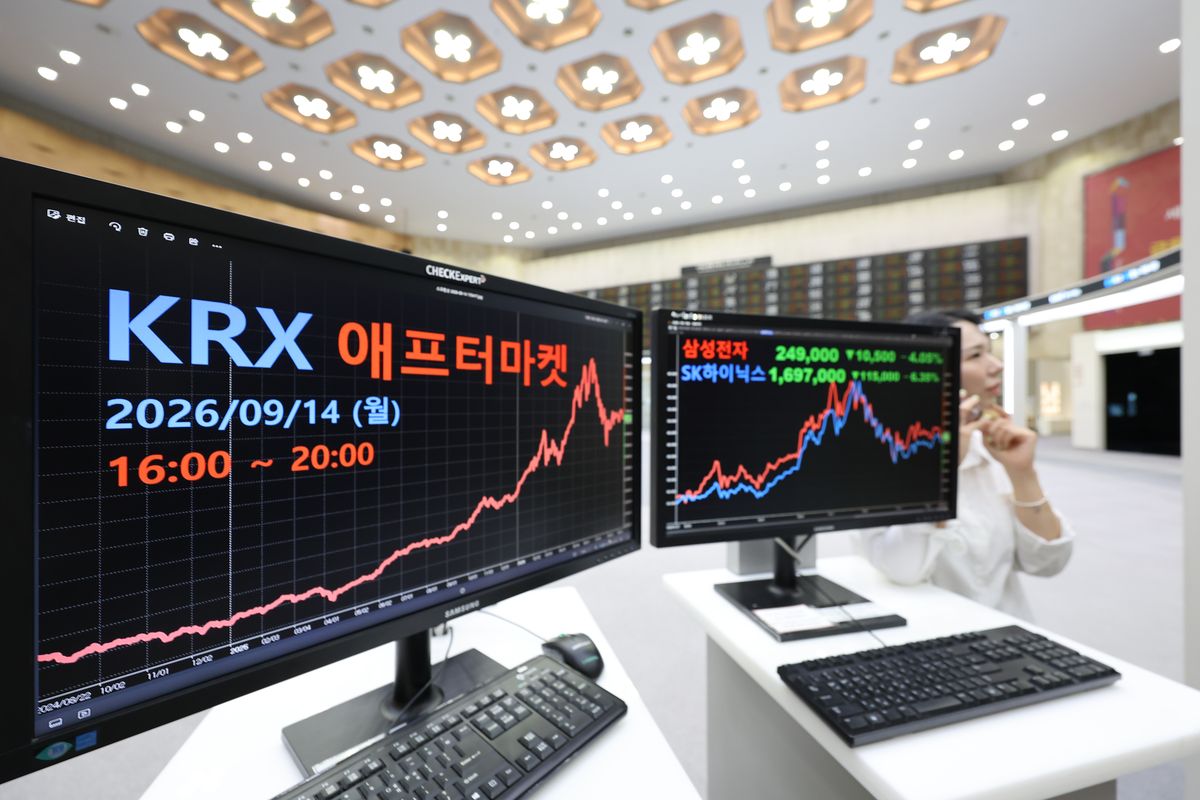
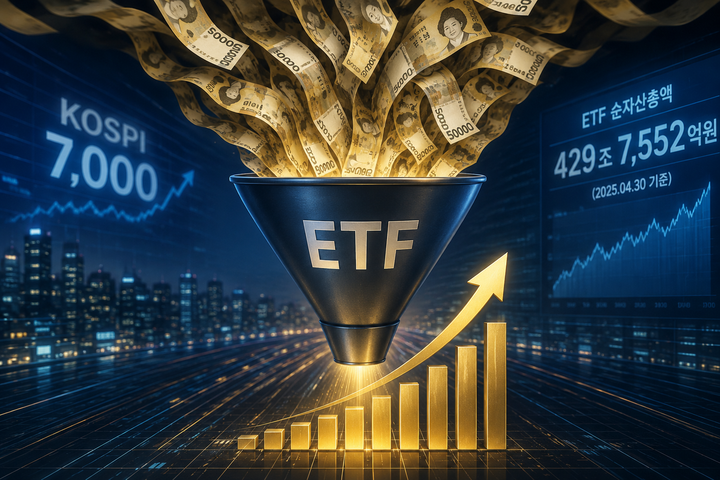
As the domestic Exchange-Traded Fund (ETF) market has exploded in growth, surpassing 500 trillion won in total net assets, it is now imperative to swiftly update outdated regulations regarding product launches and fund management to align with market changes. We are at a critical juncture where institutional reforms are essential to move beyond a structure dominated by a few large asset management firms, offering new opportunities to smaller and mid-sized firms while simultaneously achieving investor protection and market innovation. In fact, with the market size nearly tripling over the past two years, an unprecedented volume of diverse capital has flowed in, bringing with it a corresponding rise in side effects and limitations. While ordinary individual investors, like Mr. Kim, a typical office worker, are choosing these products as a core means of managing their retirement funds, rigid legal frameworks and irrational tax systems continue to hold them back. In this article, we will examine the correct direction for institutional improvements for the domestic stock market and ETF sector, which are currently facing a massive test, and thoroughly analyze what needs to be fixed for our capital market to take the next step forward.
=
ETF Market Grows to 500 Trillion Won: Urgent Need to Overhaul Product Launch and Management Regulations
1. A Market Facing Explosive Growth
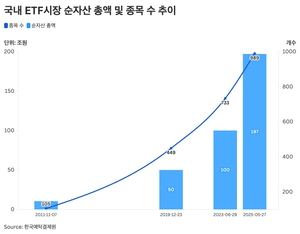
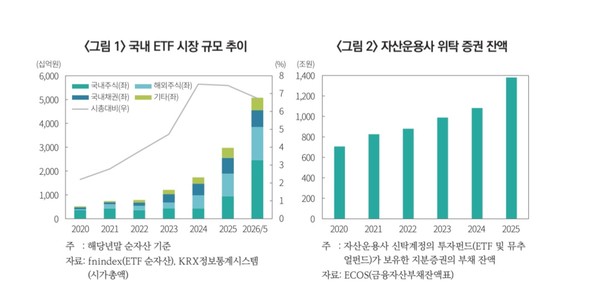
The domestic ETF market has traced a steep upward curve over the past few years, firmly establishing itself as a core indirect investment vehicle in the South Korean capital market. According to data from financial investment industry statistical portals, total net assets have nearly tripled in recent years, finally reaching the massive milestone of 500 trillion won. The market’s presence has become incomparably more powerful than in the past, attracting not only individual investors participating in the stock market but also pension funds from the older demographic preparing for retirement. An era has opened where the diverse asset allocation strategies once enjoyed only by a few professional investors or the wealthy can now be easily executed by anyone with a single smartphone app. However, the prevailing criticism is that despite this rapid increase in size, the internal legal standards and management systems remain stuck in the past. It is like fitting tractor parts into a high-speed sports car; the market desperately needs new “clothing” that matches its expanded size. While the market’s growth has highlighted the advantage of easy accessibility, the shock that general investors face when market volatility increases is also snowballing. The recent massive disruption caused by the “Samjeonix” leverage incident serves as a painful testament to how fragile the market’s management system was. Experts unanimously agree that to prevent the current growth from bursting like a bubble, structural adjustments to strengthen the market’s fundamentals must be pursued alongside external expansion.
The ETF market, having surpassed 500 trillion won in net assets, has achieved remarkable growth, but it is now urgent to strengthen its fundamentals and refine its institutions to match its scale.
2. Management from Listing to Delisting
To solidify market trust, a consistent and transparent management system must be established covering the entire lifecycle of a product, from its initial listing to its operation and eventual delisting. Currently, voices are constantly raised that the procedure for launching new products is somewhat chaotic, or conversely, that the criteria for maintenance and delisting are ambiguous, making it very difficult for investors to predict future scenarios. Asset management companies, which operate these products, must demonstrate post-management capabilities that take full responsibility for the impact and risks their products have on the market, rather than merely rushing to raise funds. Just as individual stocks in the stock market undergo delisting procedures, ETFs must also have underperforming products filtered out in a timely manner according to clear criteria to maintain the soundness of the entire market. If this management system does not function properly, the damage will inevitably fall on individual investors who lack sufficient information. In fact, in the past, repeated unfortunate incidents have occurred where numerous retail investors lost their principal or suffered significant losses overnight due to some high-risk products that were launched indiscriminately. Accordingly, financial authorities and exchanges must rigorously refine the product review process and improve disclosure systems to help investors accurately grasp their asset status in real-time. Asset management companies must also strengthen internal controls and make self-purification efforts to avoid incomplete sales and excessive marketing competition to earn genuine investor trust.
Transparent and consistent standards must be established across the entire process, from new listings to post-management and delisting, to secure both investor protection and market trust.
3. Outdated Management Regulations and Physical Bonds
To meet diverse investment demands and take the market to the next level, outdated management regulations that have held the industry back for decades must be boldly overhauled. One of the most frustrating issues for the asset management industry is the inefficient regulations regarding the inclusion of physical bonds, which prevent government bond investment products from being brought to market in a timely manner. According to the current Enforcement Decree of the Capital Markets Act, collective investment schemes are strictly limited in their investment ratios in bonds issued by OECD member countries and China. Due to these rigid legal provisions, it is nearly impossible to launch high-quality products that can agilely respond to rapidly changing global interest rate environments or bond market trends at the appropriate time. Investors want safer and more profitable bond products, but the legal framework is blocking this, causing regret. The government and the National Assembly must face the rapidly changing financial environment and either relax these irrational investment limit regulations to match reality or conduct a comprehensive review. Only when innovative products utilizing various underlying assets can be freely created can the South Korean capital market leap from an Asian to a global level. If regulations continue to hinder innovation, domestic asset management companies will be left behind in global competition, ultimately leading to the side effect of investors fleeing to overseas markets.
Rigid physical bond inclusion regulations and outdated legal provisions are blocking the launch of diverse products, necessitating rapid regulatory innovation aligned with global standards.
4. Pension Investments and Tax Imbalances

The convergence of pension accounts, which hold the valuable retirement funds of South Korean office workers, and the ETF market has already become a massive trend, yet institutional hurdles still act as barriers. The scale of assets managed within pension accounts is estimated to far exceed tens of trillions of won, representing a significant proportion. However, a contradiction exists: while trading domestic equity products in a general stock account offers tax-exempt benefits, funds managed through a pension account are subject to taxation upon withdrawal. This tax imbalance creates a side effect where, rather than signaling investors to keep long-term funds in the domestic stock market, it encourages them to circumvent the system or seek other investment destinations. If the government aims to encourage stable retirement living for its citizens and promote long-term growth of the capital market, it must boldly remove these irrational tax hurdles. In a situation where policy incentives for long-term investment are severely lacking, it is difficult to drive active participation from investors no matter how good the financial products are. In particular, for the massive liquidity of pension funds to settle stably in the market, it is essential to significantly expand tax benefits and restructure the tax system to be more investor-friendly. Financial authorities should actively put pension-related tax reform proposals on the table for discussion from the perspective of growing the overall capital market pie, rather than worrying about reduced tax revenue.
To ensure citizens’ retirement funds remain stably in the market, the tax imbalance within pension accounts and the lack of incentives for long-term investment must be resolved.
5. Correlation Coefficients and Fair Competition
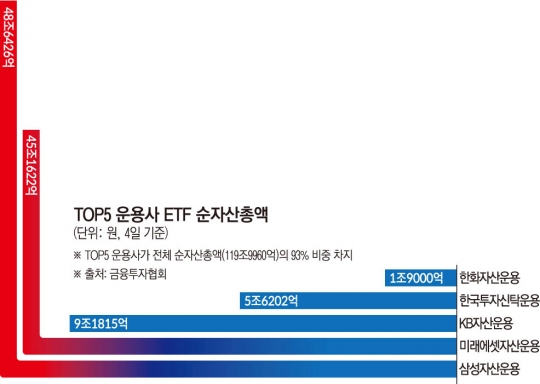
Among the detailed operational rules of the current market, the most representative regulations hindering active products are the correlation coefficient constraints with the underlying index and the strict tracking error evaluation system. Passive products must maintain a certain level of correlation, and active products are also bound by constraints, making it difficult for fund managers to fully exercise their discretion. Market experts point out that these uniform correlation coefficient constraints actually harm market diversity and tie the hands of experts with superior management capabilities. Furthermore, since the market landscape has been dominated by large firms for the past 20 years, an environment must be created where small and mid-sized asset management companies can compete fairly with their differentiated capabilities. Under the current structure, a few large firms with strong capital power monopolize most of the market pie, making it very difficult for smaller firms to challenge them with fresh ideas. Policy consideration is needed to transparently refine the exchange’s listing review criteria and alleviate monopolistic structures so that all asset management companies can compete on merit on a fair footing. Creating a robust ecosystem where open-end funds and ETFs can coexist and grow together, rather than being competitors that kill each other, is also an urgent task. Only when small and mid-sized firms are active will the entire market gain vitality, and investors will be provided with more diverse and attractive investment options.
True market diversification is only possible by removing outdated correlation coefficient constraints and creating an ecosystem where large and small/mid-sized firms can compete fairly.
6. The Korean Stock Market on the Testing Ground

In conclusion, the domestic ETF market, which has expanded to a massive scale of 500 trillion won, stands at a critical testing ground that will determine whether the South Korean capital market takes the next step forward or stagnates. If we do not boldly break through the framework of outdated practices and rigid regulations, our stock market will inevitably lose competitiveness and be ignored in the rapidly changing global financial environment. This is precisely why financial authorities, the Korea Exchange, and the asset management industry must pool their efforts to refine the management process from listing to delisting and address irrational tax and management regulations. Individual investors, too, should cultivate the insight to accurately understand institutional changes and the essence of products, rather than blindly following trends, and exercise wisdom in protecting their own assets. It is time for the active interest and reform-mindedness of all market participants to help our capital market break out of its shell and transform into a more mature and transparent investment destination. The coming years will be a decisive period for the fate of the South Korean stock market, and the level of institutional completeness achieved during this process will determine success or failure. Investors must keep in mind that these institutional changes, which they have only encountered in the news, are directly linked to their actual account returns, and they should closely monitor market trends. We also strongly expect the government to actively reflect on-the-ground voices and prepare effective policy alternatives to firmly lay the foundation for a trusted capital market.
For the ETF market in the 500 trillion won era to grow sustainably, the government, industry, and investors must join forces to achieve comprehensive institutional improvements.
Frequently Asked Questions
=