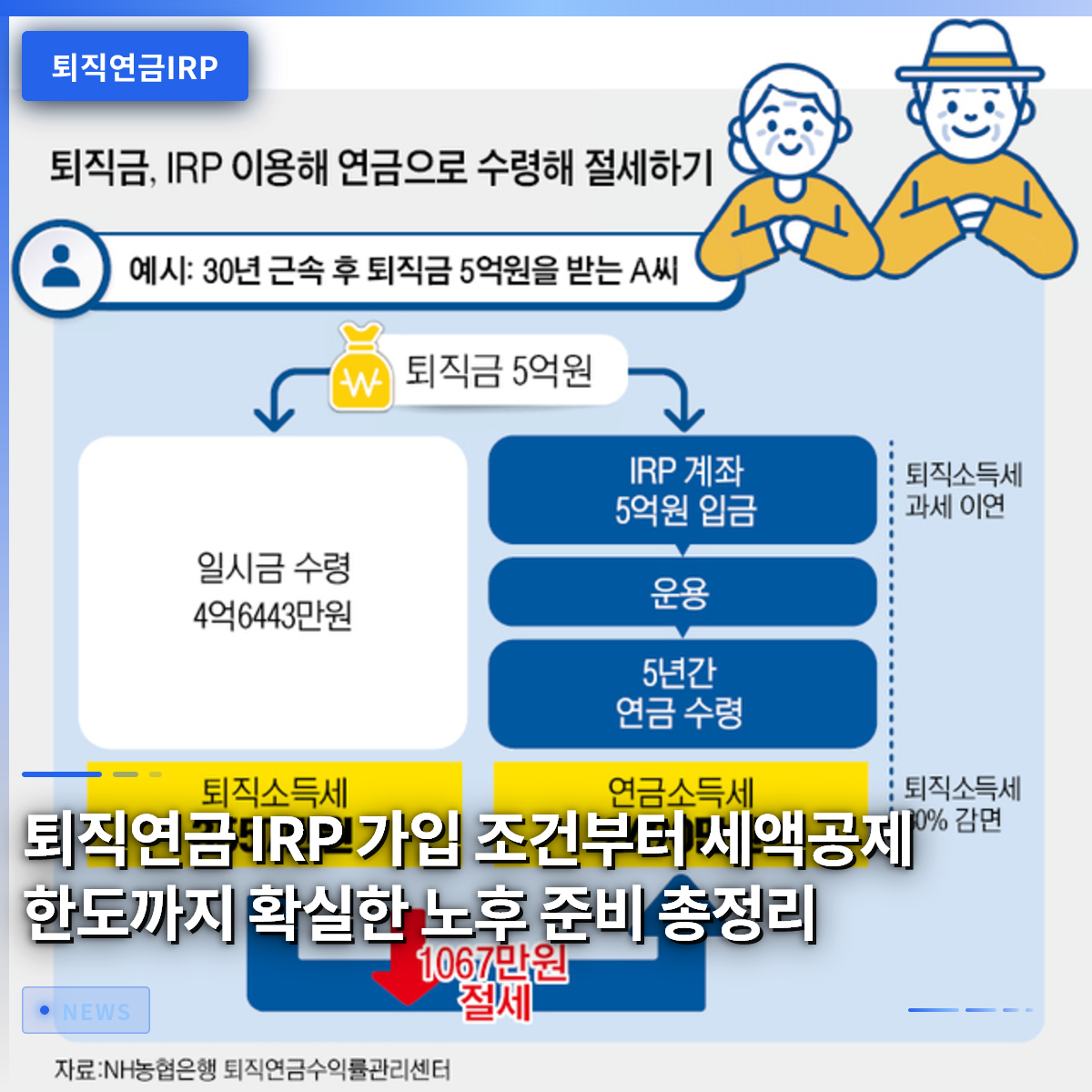
If you still haven’t opened an Individual Retirement Pension (IRP) account, you are missing out on the opportunity to receive a tax refund of several hundred thousand won during your annual tax settlement every year. This individual account, available to anyone with income, including employees and self-employed individuals, is an essential financial tool that not only secures your retirement but also significantly reduces your immediate tax burden. There is no need to envy colleagues who avoid the “tax bomb” during their year-end tax settlement and actually receive a substantial refund. In reality, by making consistent contributions annually, you can build your retirement assets while simultaneously enjoying significant tax deduction benefits. In this article, we will thoroughly explain everything from the exact enrollment conditions and limits of an IRP account to effective asset management tips, making it easy for anyone to understand.
=
A Complete Guide to IRP Retirement Pensions: From Enrollment Conditions to Tax Deduction Limits for a Secure Future
1. What is an IRP Retirement Pension?

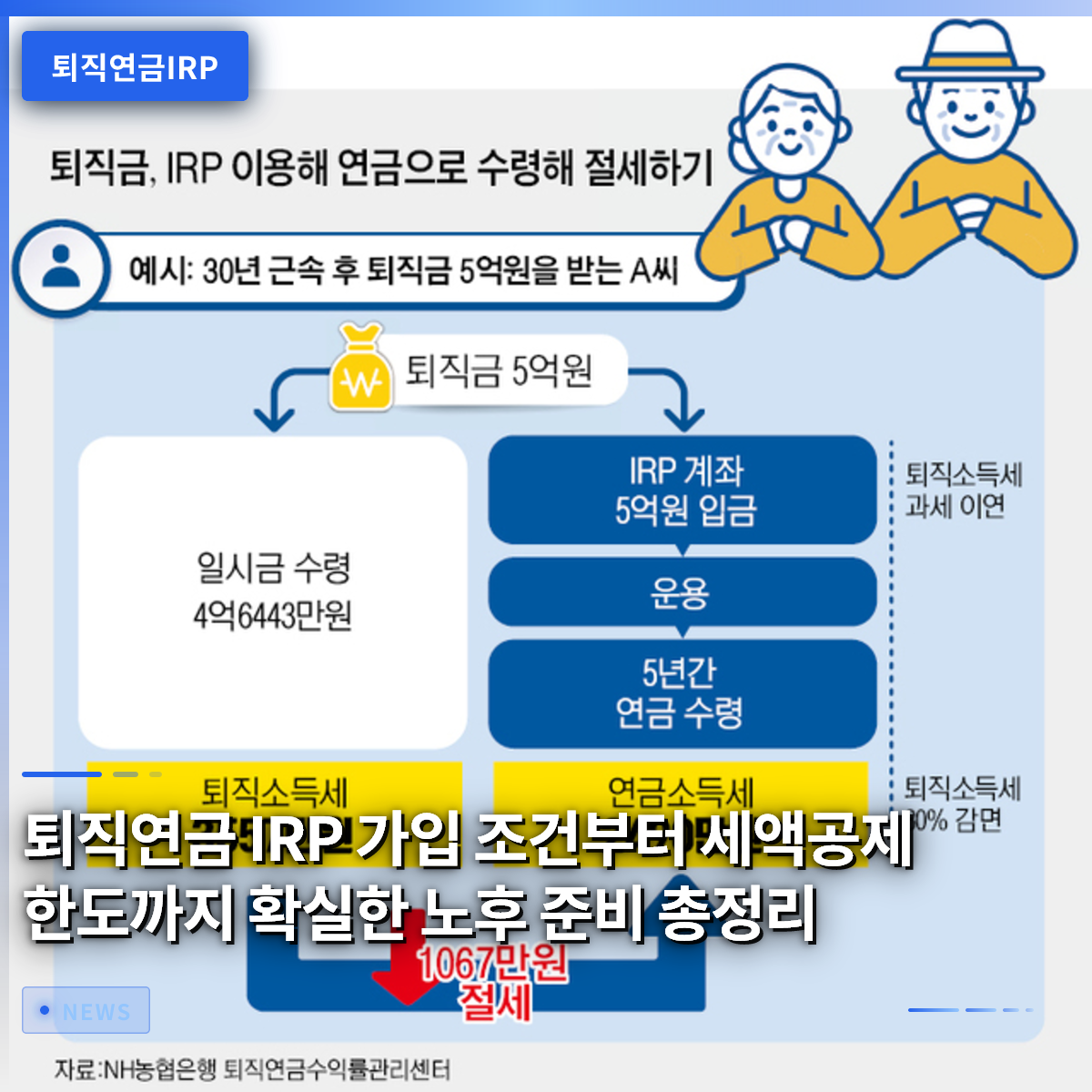
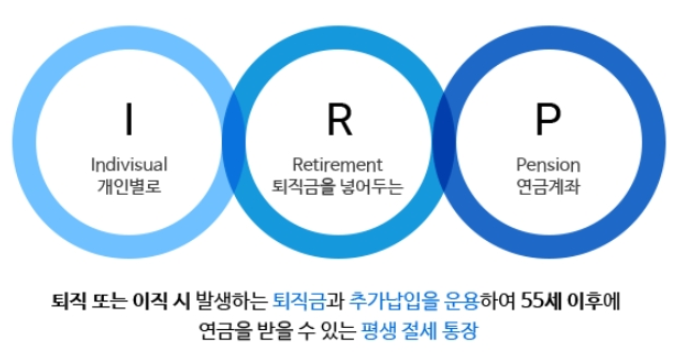
The Individual Retirement Pension (IRP) is a customized account that allows employees to consolidate their severance pay, received upon changing jobs or retiring, into a single account to manage as retirement funds. A key advantage is that, in addition to the retirement pension contributions made by the company each month, subscribers can make additional direct contributions to build a more substantial retirement asset. While it was once considered primarily for employees, eligibility has expanded to include self-employed individuals and freelancers with income. If you leave your job, you are required to transfer your severance pay to this account, so it is wise to know how to open one in advance. It is not merely a safe for storing money but an active asset management tool that allows you to pursue returns by investing in various financial products such as stocks, bonds, and funds.
You can easily enroll through various financial institutions and freely choose from principal-guaranteed products to performance-linked products according to your investment style. Mr. Kim, an employee, had left his severance pay from his previous job untouched until he eventually transferred it to an IRP account and began actively managing his assets. By consolidating severance pay, which is easily neglected, in one place and managing it systematically, you can design a much more stable life after retirement. Even without complex financial knowledge, you can build a portfolio suitable for your age and disposition with the help of experts or guidance from bank counters. Additionally, if you regularly deposit small amounts of surplus funds earned during your working life into this account, you can enjoy the benefits of compound interest over the long term.
An IRP is a personalized pension account that consolidates severance pay and allows individuals to make additional contributions to prepare for retirement.
2. Enrollment Conditions and Benefits Available to Everyone
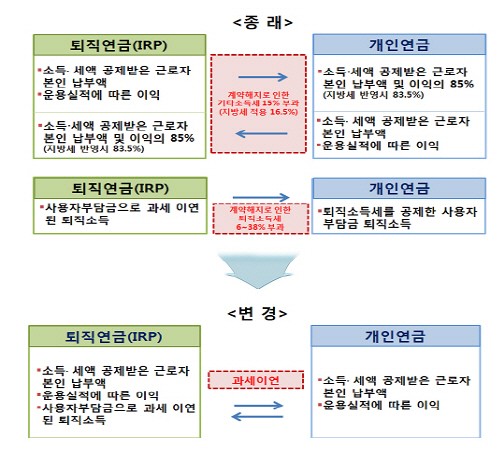
Anyone with employment income or business income, including employees and self-employed individuals, can open and enroll in an IRP account regardless of age. In the past, eligibility was limited primarily to regular employees, but through system improvements, most economically active individuals generating income can now meet the requirements. Even employees of small and medium-sized enterprises that have not introduced corporate retirement pensions, or short-term workers, can voluntarily enroll to enjoy tax benefits. If you have the capacity to make consistent monthly contributions, you are essentially securing a sturdy shield for your future, regardless of your income level.
Due to these broad eligibility criteria, it has established itself as a representative financial product utilized by a wide range of people, from young professionals just starting their careers to middle-aged and older individuals approaching retirement. Mr. Park, a freelancer, does not receive a regular salary but prepares for the future by making flexible contributions whenever he has surplus funds. Thanks to these lenient enrollment conditions, many people are taking the first step toward retirement preparation without barriers to entry. As long as you can verify your income, you can open an account in just a few minutes via a smartphone app without visiting a branch. Therefore, if you have not yet opened an account, it is wise to check your eligibility and complete the process immediately using a mobile app today.
Anyone with income, including employees and self-employed individuals, can enroll, and accounts can be easily opened via mobile devices.
3. Year-End Tax Settlement Deduction Limits and Refund Calculations
The reason IRP accounts attract significant attention from employees during the year-end tax settlement season is the generous tax deduction benefit applied to the maximum annual contribution amount. You can receive a tax deduction on contributions up to a combined annual maximum of 9 million won for both pension savings and IRP accounts, making it an essential financial product. Employees with a total annual salary of 55 million won or less are eligible for a high deduction rate of 16.5%, allowing them to receive a tax refund of up to 1.485 million won. Even if your total annual salary exceeds 55 million won, you can receive a refund of up to 1.188 million won with a deduction rate of 13.2%.
If you want to ensure a substantial “13th-month salary,” the most reliable strategy is to consistently save money each month to reach the 9 million won limit by year-end. Mr. Lee, an employee, recalls being delighted after receiving a refund of over 1 million won during his year-end tax settlement thanks to his diligent contributions last year. It offers tax-saving effects that are incomparable to simply depositing money in a bank savings account, making it a must-have for asset management. If you reinvest the tax refund amount, you can accelerate the growth of your assets. Simply maxing out the annual contribution limit each year yields an effect equivalent to saving a significant portion of the average employee’s monthly salary.
You can contribute up to 9 million won annually (combined with pension savings) and enjoy tax deductions of up to 16.5%.
4. Safe and Effective Asset Management Methods
Just as important as opening the account and making contributions is deciding how to allocate your funds across financial products. Within an IRP account, you are required to hold at least 30% in safe assets, while the remaining 70% can be invested in equity funds, exchange-traded funds (ETFs), and other products. Conservative investors who are extremely averse to principal loss can build a portfolio focused on fixed deposits or bond products to steadily accumulate interest. On the other hand, younger investors benefit from a strategy that increases the proportion of stocks to actively pursue returns, trusting in the compound interest effects of long-term investing.
Recently, convenient management tools that utilize artificial intelligence to automatically monitor assets and assist with rebalancing have emerged. Even young professionals lacking financial knowledge can use these automated management systems to adjust their portfolios according to market conditions. Properly diversifying assets to respond actively to stock market downturns or inflation periods is key to defending long-term returns. Rather than blindly following products that others say are good, you must accurately assess your retirement timeline and risk tolerance. It is necessary to periodically check the status of your account, refer to expert advice, and gradually adjust your asset allocation ratios.
You should appropriately allocate the ratio of safe assets to risky assets according to your investment style and manage them periodically.
5. Precautions and Penalties for Early Termination
Since this account is designed for retirement funds, terminating it early or withdrawing money can result in significant financial costs. If you are forced to terminate the contract, a miscellaneous income tax of 16.5% is immediately imposed on the amount of tax deductions previously received and the investment returns. You may end up facing a “tax bomb” and losing principal if you rashly terminate the account for urgent cash needs, despite having enrolled to save on taxes. It is beneficial to maintain the account unless there are exceptional reasons legally recognized, such as increasing a deposit for a rental home or sudden large medical expenses.
In reality, many employees who terminated their accounts to put out immediate financial fires have experienced the regret of having to return their tax deductions during year-end settlement. Therefore, you should contribute only within the range of surplus funds, with the mindset that the money in the account must not be touched until at least your retirement. If unexpected expenses arise, it is wiser to first look into collateral loans or partial withdrawal systems permitted by relevant laws rather than terminating the account. If you hastily press the termination button without fully understanding the system, the tax-saving effects you have built up will be wiped out in an instant. You need the patience to maintain the account from a long-term perspective, viewing it as a sturdy piggy bank for your future self.
Early termination requires returning the tax deduction benefits received, so it is important to maintain the account until retirement.
6. Advice for Successful Retirement Preparation
The IRP retirement pension is more than just a savings product; it is an essential lifeline for retirement in the era of super-aging and the most powerful tool for tax savings. You should not be satisfied with just the immediate year-end tax refund but focus on creating a stable cash flow for decades after retirement. If you practice consistent annual contributions and maintain a rational asset allocation strategy that is not shaken by market conditions, a secure retirement life awaits. Based on the information learned today, please review your income and expenditure structure and plan to open an account and make additional contributions immediately. Never forget that a prosperous life in the future is only completed through thorough preparation and small, consistent actions.
It is expected that various pension-related systems will continue to be improved for greater convenience in line with changes in the financial environment. Those who quickly adapt to changing trends and find and execute the most advantageous method for themselves will ultimately be the winners in retirement. Remember that if you continue to hesitate, the valuable opportunities for tax benefits and asset growth will continue to slip away. Let us start a bold leap toward a successful retirement by setting a monthly contribution amount and beginning regular asset checks starting today.
IRP is an essential tool for securing both retirement and tax savings, so you should make a plan and act on it immediately.
Frequently Asked Questions
=