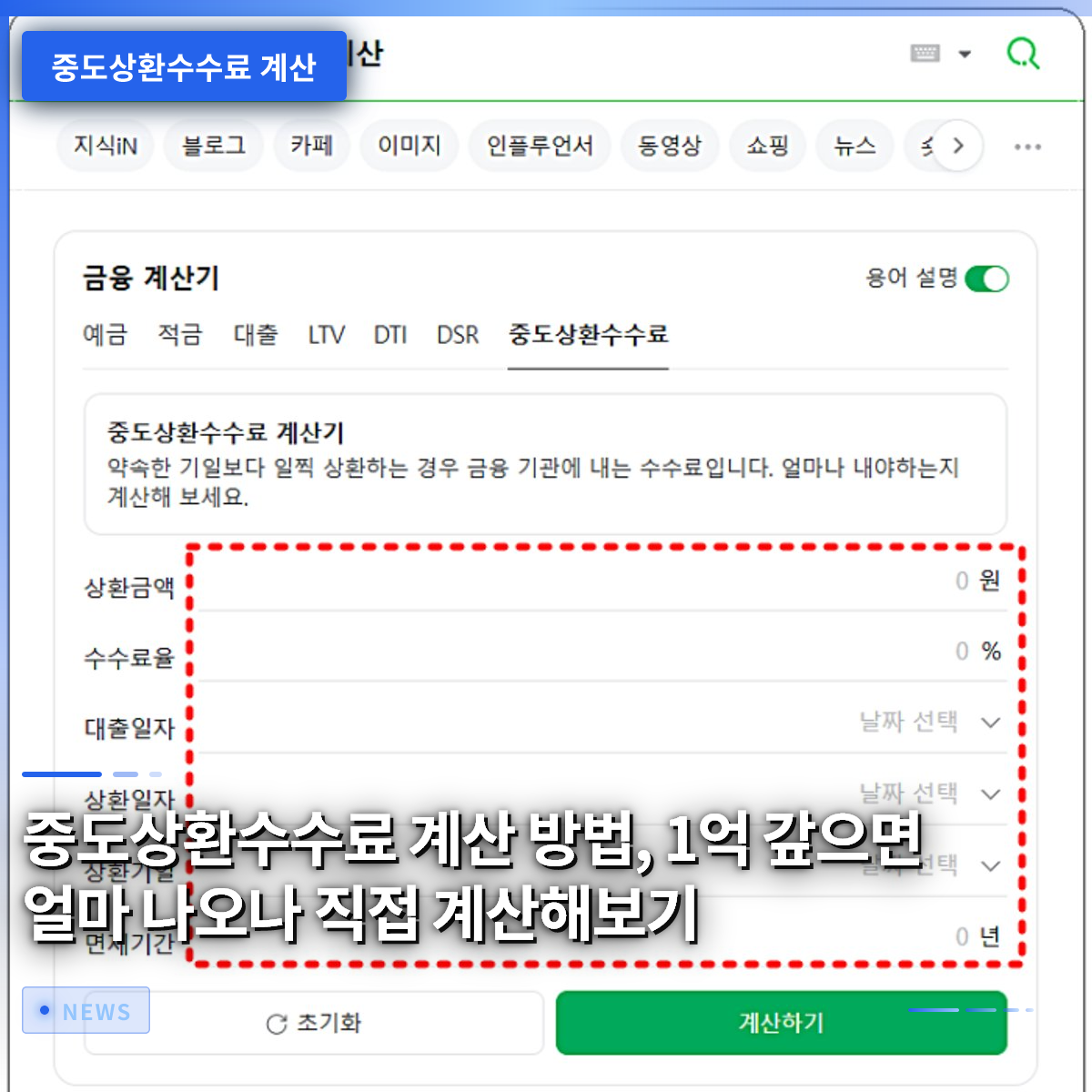
Prepayment fees are calculated by multiplying the repayment amount by the fee rate and the remaining days, then dividing by the total loan term. In most cases, you do not pay this fee if more than three years have passed since you took out the loan. Even for the same repayment amount of 100 million won, the fee can vary significantly depending on whether you are in the early or late stages of the loan. Therefore, the logical order is to calculate the fee first before deciding whether to refinance.
How to Calculate Prepayment Fees: How Much Will It Cost to Pay Off 100 Million Won? A Direct Calculation
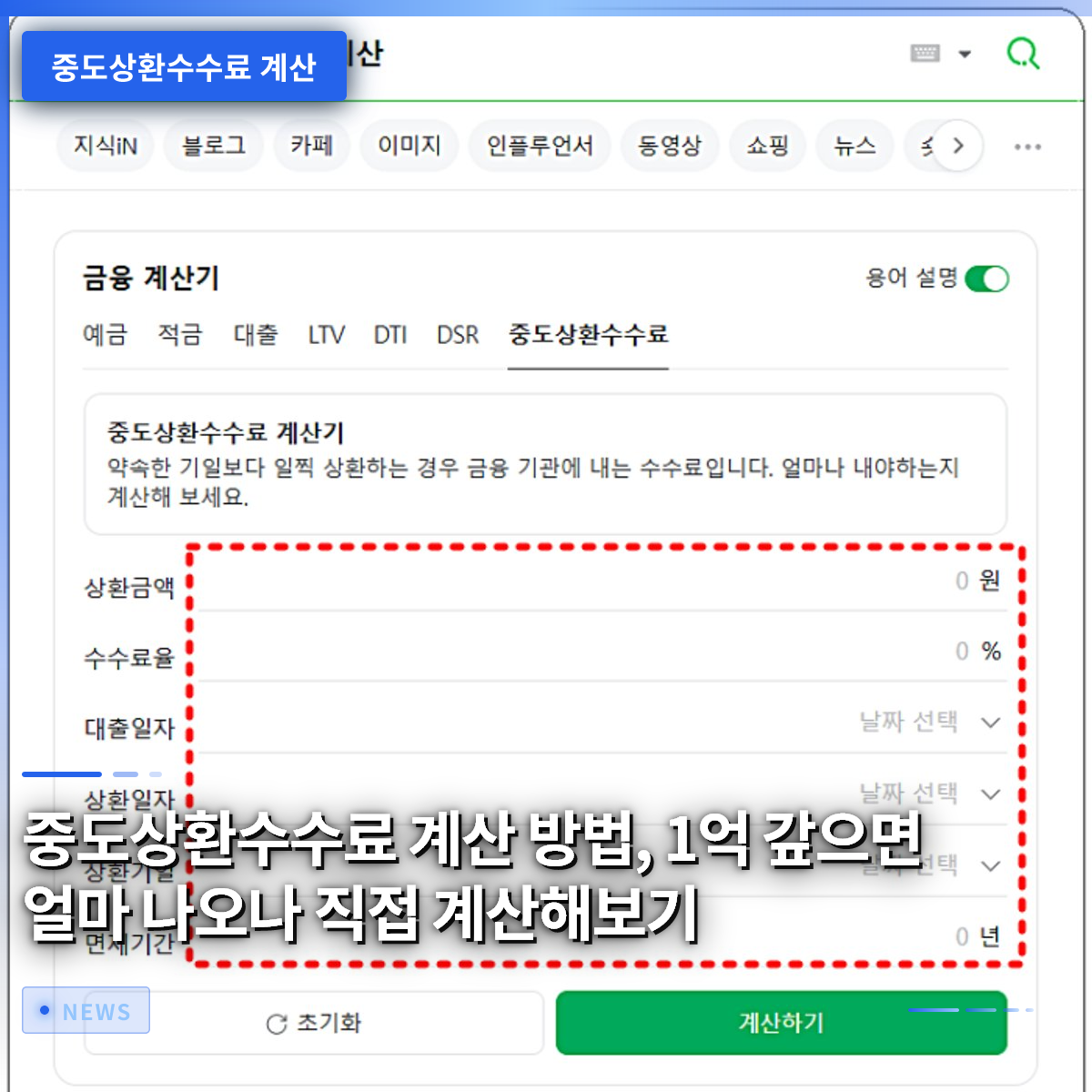
1. How Prepayment Fees Are Calculated

There is only one formula. You multiply the prepayment amount by the fee rate, and then multiply that result by the ratio of remaining days in the loan term. The structure is such that the fee decreases as the remaining period shortens, so the burden becomes lighter as you approach maturity. Fee rates vary by bank and product. Mortgage loans typically have rates in the 1% range, while credit loans often have lower rates, but the exact figures are listed under the “Prepayment Fee” section of your loan contract or product description. Do not rely on memory; check your specific contract directly.
Use the fee rate exactly as written in the contract, and calculate the ratio of remaining days based on the loan start date.
2. How Much Do You Actually Pay to Repay 100 Million Won?

For example, let’s assume you have a loan with a 1.4% fee rate and a 3-year term (1,095 days), and you decide to repay the full 100 million won with 1 year (365 days) remaining. 100 million won × 1.4% = 1.4 million won. Multiplying this by the remaining period ratio of 365/1,095 (which is one-third) results in approximately 467,000 won. Under the same conditions, if you repaid with 2 years remaining, the fee would be two-thirds of 1.4 million won, which is approximately 933,000 won. Even delaying the repayment by just one month can reduce the fee by tens of thousands of won, so adjusting the date is a viable strategy if you are close to maturity. The figures above are hypothetical for illustrative purposes; actual amounts will vary based on your contract terms.
3. There Are Cases Where No Fee Is Charged at All

Most products do not charge a fee if more than three years have passed since the loan execution date. Some products allow fee-free repayment up to a certain percentage of the principal each year, even if the repayment occurs within the first three years. Additionally, some financial institutions have specific exemption criteria. Since these conditions vary by product and can change, the most accurate approach is to ask your bank’s app or customer service center about the “prepayment fee exemption conditions for my loan” before making a payment. A single phone call can save you hundreds of thousands of won.
4. Determine if Refinancing Is Worth It Using the Break-Even Point
When refinancing at a lower interest rate, compare the prepayment fee with the interest savings. If the interest rate drops by 0.5 percentage points on a remaining balance of 100 million won, your annual interest payments will decrease by approximately 500,000 won. If the prepayment fee is 467,000 won, you will start seeing a net benefit after about 11 months. Be sure to include additional costs such as stamp duty and guarantee fees for the new loan in your calculation. If the remaining loan term is shorter than the break-even point, it is better not to refinance.
Fee ÷ Annual Interest Savings = Number of years to break even.
5. Check These Steps in Order Before Repaying
First, find the fee rate and exemption conditions in your loan contract. Next, use the repayment simulation feature in your bank’s app or contact customer service to check the exact fee for a repayment made today. Finally, calculate the break-even point by factoring in the interest rate and additional costs of the new loan. Following these three steps will help you avoid the situation where you repay and find the fee was higher than expected. If the amount is significant, compare the terms from two or three financial institutions before repaying.