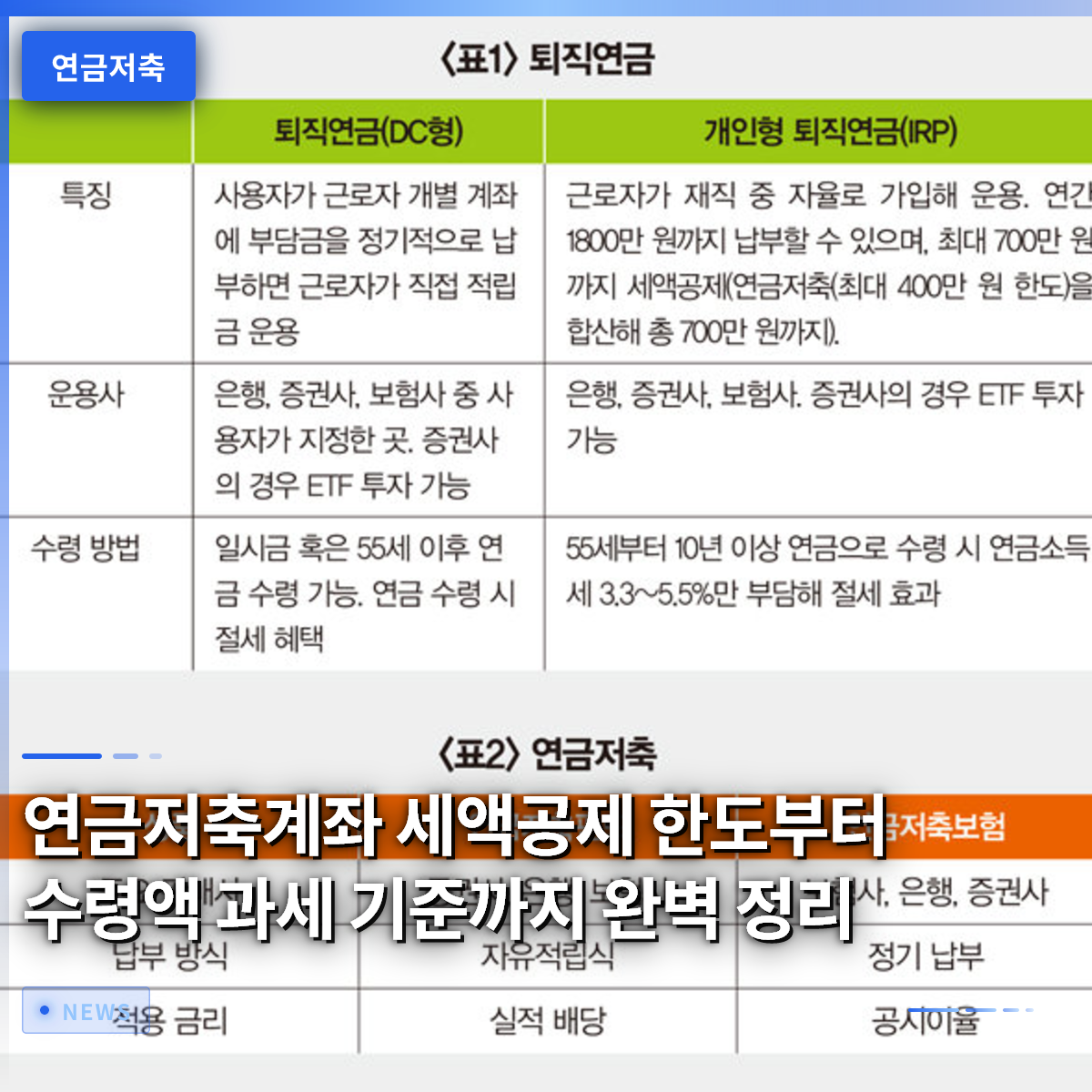
Pension savings accounts are the ultimate tax-saving financial product that every employee should prioritize. The tax benefits received during the annual year-end tax settlement are substantial, making them widely utilized by everyone from fresh graduates to middle-aged individuals approaching retirement. Many people open these accounts simply because they are recommended by peers, but they often leave them neglected because they do not fully understand the specific benefits or how to manage them effectively. Through this article, you will gain a clear understanding of everything from pension savings contribution limits and tax deduction criteria to investment strategies for maximizing returns. Let’s explore each aspect step by step.
=
A Complete Guide to Pension Savings Accounts: From Tax Deduction Limits to Taxation on Payouts
1. Pension Savings Account Tax Deduction Limits and Benefits

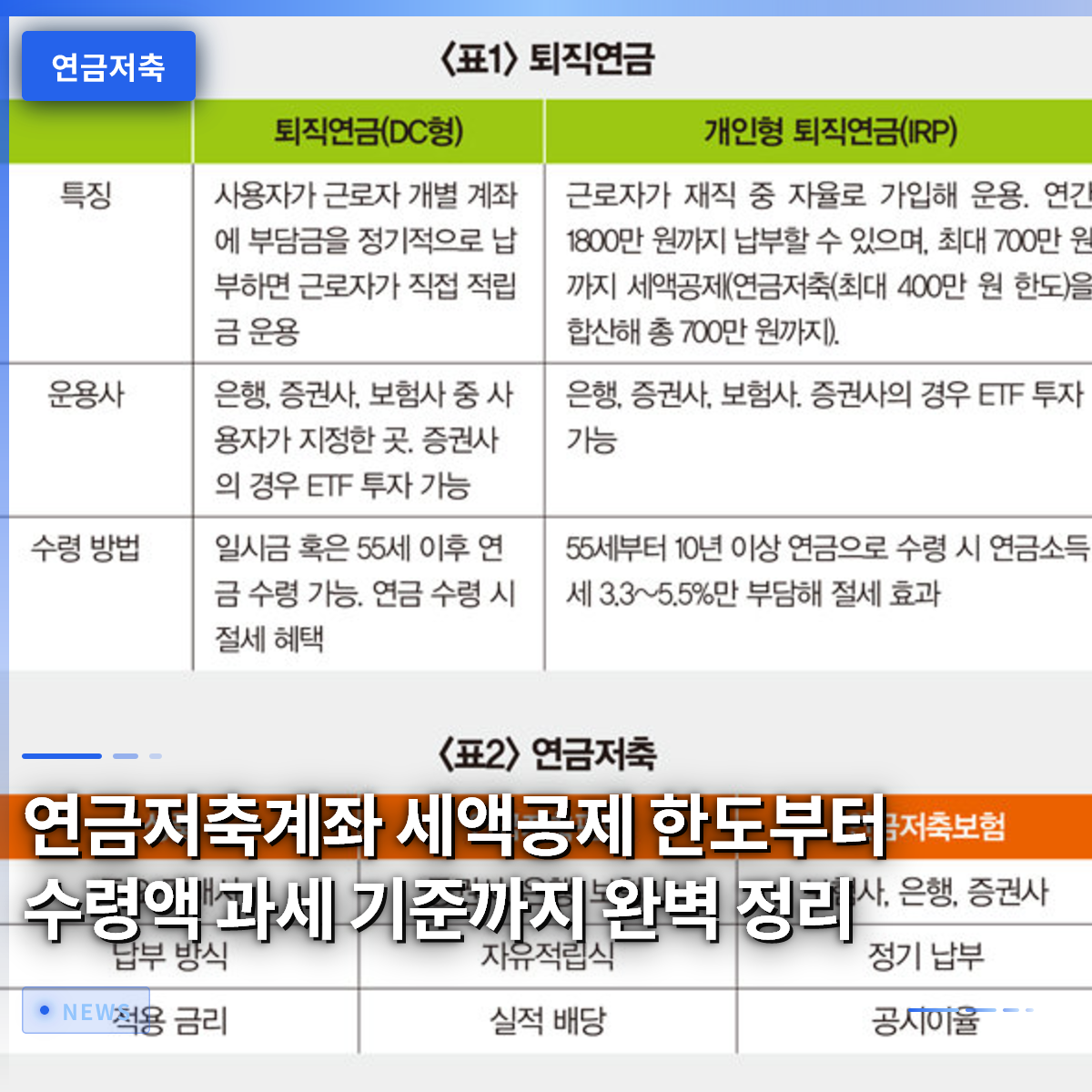
Pension savings accounts are a representative tax-saving product that refunds a certain percentage of taxes on the amount contributed annually. Employees with a total annual income of 55 million won or less can receive a tax deduction of 16.5% of their contributions. For those with a total annual income exceeding 55 million won, a deduction rate of 13.2% applies. The maximum annual contribution eligible for this benefit is 6 million won. Therefore, if you contribute the maximum limit of 6 million won, you can receive a tax refund of up to 990,000 won based on the income bracket of 55 million won or less. Additionally, when combined with an Individual Pension Account (IRA), you can enjoy tax deduction benefits on up to 9 million won annually. By consistently saving monthly while also saving on taxes, you achieve a two-for-one benefit.
If you feel that contributing a large amount every month is a burden due to limited disposable income, it is best to set your monthly contribution amount according to your income level. For example, if you consistently contribute 500,000 won per month, you will have saved exactly 6 million won over the course of a year. This allows you to maximize your refund by filling up to the highest limit at the time of year-end tax settlement. Many colleagues prepare in advance to avoid a “tax bomb” during the year-end tax settlement season. The secret to receiving hundreds of thousands of won more in tax refunds than others during the annual year-end tax settlement lies right here. Opening an account immediately and setting up automatic transfers, even for small amounts, is a wise first step.
Pension savings accounts allow contributions of up to 6 million won annually, with tax deduction benefits of up to 16.5% depending on income level.
2. Differences Between Pension Savings Funds and General Savings

Many people think of pension savings trusts sold by banks or insurance company products, but pension savings funds managed by securities firms are currently the trend. Opening a pension savings fund account grants you the eligibility to invest directly in equity index funds or bond products. Unlike bank products that focus solely on high-interest rates, a major advantage is the ability to make long-term investments in the growth of the stock market. In fact, it is easy to find cases around you where employees have grown their assets by consistently investing in index funds over a decade of working life. This becomes a core means of actively growing retirement funds rather than merely keeping them at the level of inflation defense.
An increasing number of investors are regularly purchasing products that track the US Nasdaq or S&P 500 indices through securities accounts. By setting up automatic purchases on a specific date each month, you can enjoy the effect of buying more when prices are low and less when they are high, without being shaken by market fluctuations. As you continue long-term investing, the effect of compound interest adds up, creating assets that are much larger than expected. If you invest in a general securities account, you must pay 15.4% tax on your profits, but within a pension account, taxation is deferred. Since you do not have to pay taxes until retirement and can reinvest that money, the speed of asset growth is overwhelmingly faster.
Pension savings funds are accounts that allow investment in equity products through securities firms while simultaneously enjoying tax deferral benefits and long-term compound interest effects.
3. Taxes on Pension Payouts and the 15 Million Won Threshold
When you start receiving your pension in old age, whether your total annual payout exceeds 15 million won becomes a very important tax criterion. If the total annual payout from private pensions, such as pension savings and retirement pensions, exceeds 15 million won after retirement, it becomes subject to comprehensive income tax. If it does not exceed 15 million won, you only need to pay a low pension income tax rate ranging from 3.3% to 5.5%, depending on your age. However, the moment you exceed this threshold, you face a situation where you must pay comprehensive income tax at a higher rate on the entire amount or choose separate taxation. Therefore, when designing your post-retirement cash flow, it is wise to adjust the monthly payout amount so that it does not exceed the limit.
Many retirees develop strategies to extend their payout period or adjust withdrawal timing to ensure they do not exceed the 15 million won figure. Fortunately, public pensions such as the National Pension and Basic Pension are not included in this 15 million won calculation, so you only need to consider private pensions. If you accurately understand the tax law criteria, you can avoid unnecessary tax burdens and manage your retirement funds effectively. In some cases, funds from non-tax-qualified products or principal that has already been taxed may be excluded from this limit calculation. It is safe to consult with financial institutions or experts to simulate your expected payout amounts while preparing for retirement.
If the annual private pension payout exceeds 15 million won, the taxation method changes, so a strategy to distribute payout timing is necessary.
4. Multiple Securities Accounts and Transfer Methods
As you invest, you may find yourself wanting to diversify pension accounts across multiple securities firms or switch to a firm with better terms. Many people worry about whether they need to sell all their accumulated investment assets for cash before transferring them. To answer directly, using the account transfer system allows you to move your existing stocks or index funds to a new account without selling them. Since assets from your previous securities firm are transferred intact to the new account, you can avoid unnecessary trading fees or losses. Comparing fees and event benefits carefully before switching to a more advantageous securities firm is a smart financial tip.
The process of consolidating accounts is not as complicated as it seems; you can apply online or visit a new securities firm, and they will handle the rest. Integrating accounts scattered across multiple places makes asset management much easier and allows you to see at a glance whether you have reached your target amount. However, trading may be temporarily restricted during the transfer period, so it is best to check market conditions in advance. When moving to another financial institution, tax deduction history and contribution principal information are all carried over, so there is no concern about disadvantages in tax benefits. Even if you need to change securities firms during long-term investing, do not panic; simply utilize the account transfer system.
When transferring a pension savings account to another securities firm, you can utilize a system that transfers held products without selling them.
5. Combination Strategies with Other Tax-Saving Accounts
If you are an employee in South Korea, you should be well-versed in the structure of the “Big Three” tax-saving accounts: the Individual Asset Management Account (ISA), pension savings, and retirement pensions. There is a system that allows you to receive additional tax deduction benefits by transferring matured funds from an ISA to a pension savings account. For example, if you convert a portion of your matured ISA balance to a pension account, you can receive an additional deduction of up to 3 million won, limited to 10% of the amount. This significantly increases your tax refund, accelerating the speed at which you accumulate assets. There are many experts who organically link these two types of accounts to grow their funds from the early stages of their careers.
When you receive an annual bonus or have extra money, it is more advantageous to fill the remaining limit of your tax-saving accounts rather than putting it into a general stock account first. This is because the amount contributed to pension savings returns to you as an immediate cash reward during this year’s year-end tax settlement. If you reinvest this refunded amount directly, your asset size will snowball. The habit of saving in your youth becomes the most powerful weapon in determining your economic freedom ten or twenty years later. While friends around you may be distracted by short-term trading gains and losses, the person who steadily fills their tax-saving accounts will ultimately be the winner.
Converting matured ISA funds to pension savings allows you to receive additional tax deduction benefits, maximizing the tax-saving effect.
6. Practical Steps for Successful Retirement Preparation
Preparing retirement assets is not something that happens overnight; it is a long-term race completed through consistent patience and practice over a long period. Putting hundreds of thousands of won into a pension account every month might feel like an expense and seem like a waste at first. However, imagining the stable monthly cash flow entering your account upon retirement will help you realize its value. Starting now, open your main bank or securities app, create a pension savings account, and apply for automatic transfers. This small practical step will serve as the most reliable safety net protecting the prosperous life of your future self and family.
Looking at numerous successful financial management cases around us, there is no special secret; the core is long-term investing that stays true to the basics. It is all about carefully securing tax benefits, investing regularly in global index products, and maintaining a steady mindset. No matter how rapidly the world changes or how economic indicators fluctuate, you must not stop your steady steps toward retirement. From this moment, check the status of your pension savings account and spend a productive day filling up any remaining contribution limits. A prosperous and leisurely retirement depends entirely on your choices and actions right now.
Preparing for retirement through pension savings should not be postponed; the most important thing is to start immediately with small automatic transfers today.
Frequently Asked Questions
=