The key to understanding how to receive your retirement pension is that receiving it in installments as a pension is far more tax-efficient than taking it all at once as a lump sum. Many employees, upon reaching retirement, find themselves hit with a massive tax bill the moment they receive a large sum of money, only to regret their decision later. In fact, there was a case of a colleague who, after working diligently for over ten years, quit their job, withdrew their entire severance pay to help with a deposit on a house or to buy a new car, and ended up paying several million won in taxes, leaving them in a state of shock. If that colleague had carefully considered the tax deferral benefits and transferred the money to a pension account at the time, they could have preserved much more of their retirement funds. Through this article, we will carefully examine specific strategies to protect and grow your severance pay wisely. From here on, we will strip away complex legal jargon and difficult financial terms to share practical wisdom that anyone can easily implement.
=
A Complete Guide to Receiving Your Retirement Pension: How to Use Pension Savings Accounts to Save on Taxes
1. Types of Retirement Pensions and Checking Your Accumulated Balance
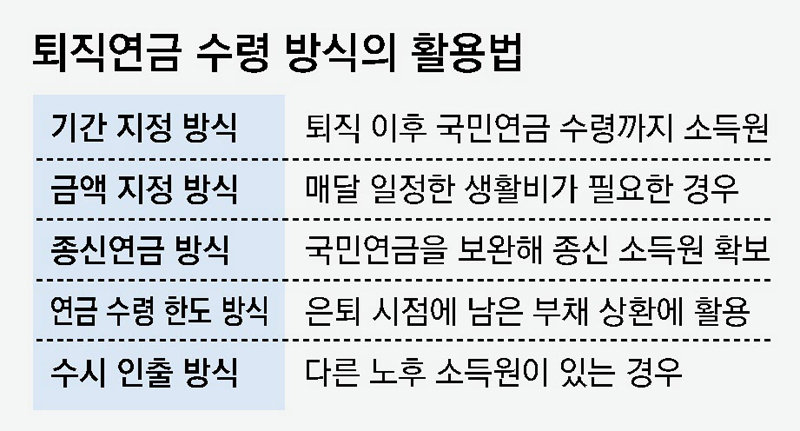
To properly understand how to receive your retirement pension, the first priority is to accurately identify the type of plan you are enrolled in. There is the Defined Benefit (DB) plan, where the company manages the funds and provides a predetermined salary, and the Defined Contribution (DC) plan, where employees directly choose investment vehicles to grow their accumulated balance. Recently, with the addition of the Individual Pension (IRP), which allows individuals to manage their own funds, the options have become even more diverse. Many people focus solely on their work duties and are shocked when they finally open their account statements upon retirement. If they had kept the monthly notices sent by their company instead of casually discarding them, they could have estimated the scale of their accumulated balance in advance.
You can only draw up a complete blueprint for your retirement planning if you know your exact accumulated balance and length of service. You should make it a habit to log in to your company’s HR department or the website of the responsible financial institution to check your current balance and estimated payout. For example, Mr. Kim, who had diligently saved through a Defined Contribution plan for ten years, visited a financial institution directly before his retirement to check the detailed records. In the process, he discovered that the interest accrued was much higher than he had imagined, which gave him a great sense of relief. This attitude of regularly checking your assets is the key to unlocking a successful retirement life.
Before receiving your retirement pension, you must first verify the type of product you are enrolled in and your exact accumulated balance.
2. Comparing Tax Differences Between Lump-Sum and Pension Payouts
The most important criterion to consider when choosing how to receive your retirement pension is the magnitude of the tax burden. If you receive your severance pay as a lump sum, you will have to settle and pay the retirement income tax on all the income accumulated over that period at once. On the other hand, if you transfer the funds to an individual pension account and receive them in installments as a pension, you can significantly reduce your taxes. To encourage income security in old age, the government offers a generous benefit that reduces the retirement income tax by up to 70% for those who receive it as a pension.
The principle behind saving on taxes is as follows: it is more advantageous to transfer the full amount of money, without any tax deducted, to a pension account to let it grow, and then withdraw small amounts monthly while paying a lower pension income tax rate, rather than paying taxes on a lump sum and depositing the remainder in a bank. In reality, Mr. Park received 50 million won in severance pay as a lump sum and was immediately deducted several million won in taxes, leaving him feeling dejected. However, his colleague transferred the same amount to a pension account to defer the taxes and received it in installments over ten years, thereby reducing the tax burden by more than 50%. As you can see, even with the same amount of money, the final amount left in your account can differ vastly depending on how you receive it.
By using a pension account to receive payments in installments, you can receive a significant reduction in retirement income tax compared to a lump sum.
3. Procedures for Transferring to Pension Savings Accounts and Individual Pensions

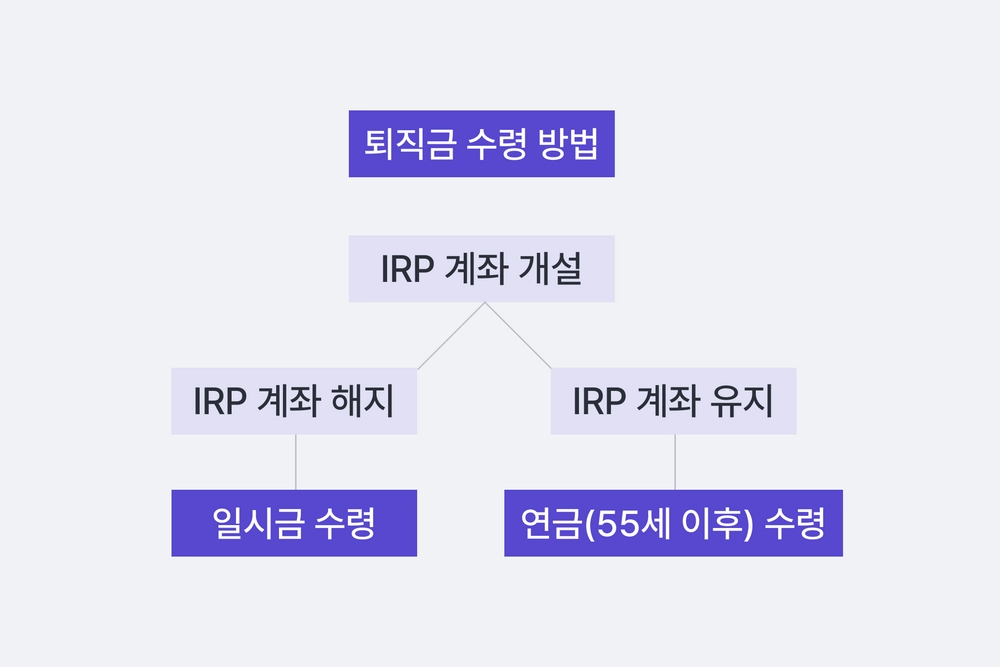
To begin the most recommended method of receiving your retirement pension as a pension, you must first open an Individual Pension (IRP) account or a Pension Savings Account. When applying for severance pay payment while still employed, you must specify the number of your newly created pension account, not your regular personal account. Financial institutions do not automatically transfer funds between each other; therefore, the subscriber must directly visit a securities firm or bank, or use non-face-to-face channels to open the account. When opening the account, you must clearly state the purpose as being for pension receipt to prevent any future tax disadvantages.
It often happens that people make practical mistakes during the transfer process and end up paying a huge amount in taxes. For example, if you receive your severance pay in your regular main bank account first and then try to transfer it to a pension account, it is too late because the National Tax Service has already deducted the retirement income tax. You must request that the company directly transfer the severance pay to the pension account for the tax deferral benefit to be fully applied. The case of Mr. Lee, a former freelancer who struggled for days due to a lack of knowledge about this procedure and ultimately had to pay the full tax amount, serves as a great lesson for us. You must communicate closely with financial institution counselors or company personnel to verify the order of account transfers.
Severance pay must be transferred directly to a pension account through the company to fully receive the tax deferral benefit.
4. Wise Choices for Pension Receipt Timing and Payment Cycles
Once you have decided on how to receive your retirement pension, you need to design the specific cycle of how much you will receive and when you will start. In principle, pension receipt can only officially begin when the subscriber is at least 55 years old and has completed a 10-year enrollment period. This is a safety measure set by the government to prevent people from spending all their money too early, so you must calculate this period carefully. It is common to receive a fixed amount on a specific day each month, but it is also possible to set it up to be received quarterly or semi-annually to match your living expense cycle.
Immediately after retirement, there are often many expenses requiring large sums of money, such as children’s weddings or health checkups, so there is a tendency to set the receipt amount slightly higher for the first few years. As one ages, the strategy shifts to extending the receipt period to prepare for increasing medical expenses, maintaining a stable monthly cash flow. In reality, Mr. Choi, who received 300,000 won monthly for three years after retirement and struggled when the funds ran out, extended the period to 15 years and received equal monthly installments when designing his second pension account. This requires the wisdom to carefully analyze your actual living patterns and expected expense scale to flexibly adjust the receipt cycle.
You should flexibly set the pension receipt period and payment cycle considering your age and future expense plans.
5. Precautions for Early Withdrawal and Cancellation in Unavoidable Cases
Even while considering how to receive your retirement pension, you may encounter situations where you need a large sum of money immediately due to sudden hospital bills or house purchases. Fortunately, early withdrawal is possible if there are special reasons allowed by law, such as purchasing a house as a non-homeowner or long-term treatment for yourself or family members. However, if you completely cancel your pension account for simple change of heart or entertainment expenses without these special reasons, you will suffer enormous financial losses. This is because you will have to return all the tax benefits received so far, and a high tax rate will be imposed under the name of miscellaneous income tax.
In reality, Mr. Jung, who had dreamed of expanding his business, fully cancelled his retirement pension early to cash it out, only to face a tax bomb and have to give up his dream. He shed tears, saying that the money in his hand was much less than he had originally thought, and all that remained was a heavy tax notice from the National Tax Service. Therefore, unless it is a truly unavoidable crisis, maintaining your pension account until the end is the most certain way to grow your assets in the long term. If you urgently need money, it is much wiser to withdraw only a partial amount within the legally permitted scope or utilize the agreed loan system rather than canceling the entire account.
Early cancellation of retirement pension without special legal reasons incurs high taxes, so decisions should be made carefully.
6. Long-Term Investment and Prospects for Retirement Asset Management
After properly understanding how to receive your retirement pension and transferring the money to a pension account, you must consider how to manage the assets within the account. Simply keeping the money in a savings account is difficult to keep up with inflation, so it is better to appropriately mix stable bonds and high-quality equity products. Just because retirement is approaching does not mean you should hold all your assets in cash; doing so poses a significant risk of asset depletion during the remaining decades of retirement. In the coming era of an aging population, life after retirement may be longer than working life, making continuous efforts to grow assets essential.
Experts strongly recommend periodic asset rebalancing within pension accounts to flexibly respond to market changes. It is necessary to regularly check your portfolio, decisively clean up products with low returns, and invest in new growth drivers. You must build a system where your assets work for you even after retirement to truly enjoy a prosperous old age. Starting today, please carefully examine the status of your retirement pension account and complete the best receipt strategy that reduces taxes while increasing returns.
Do not neglect the severance pay transferred to a pension account; you must protect the value of your retirement funds through active asset management.
Frequently Asked Questions
=