“Income deduction pension savings” is not an official legal term; rather, it is a colloquial expression referring to personal pension accounts opened to receive tax credits during year-end tax settlement. Every winter, it becomes a highly popular financial tool among office workers looking to boost their thirteenth-month salary. While many people still use the term “income deduction” based on past memories, the benefit is currently provided in the form of a tax credit. In this article, we will examine the exact deduction rates and limits for pension savings products and detail how to enroll to receive the maximum refund. Instead of just envying colleagues who get hundreds of thousands of won back during their year-end tax settlement, let this be the opportunity to take action yourself starting today.
=
A Complete Guide to Tax Deduction Pension Savings: Year-End Tax Settlement Limits and How to Enroll
1. The Exact Concept of Tax Deduction Pension Savings

The actual name of the financial product commonly referred to as “income deduction pension savings” is a pension savings account. While it previously operated under an income deduction system, tax laws have changed, and it now operates as a tax credit system where a certain percentage of contributions is directly deducted from taxes. Therefore, the accurate term is “tax credit pension account,” though it is still frequently referred to by its previous name in many contexts. Any citizen of South Korea with employment income or business income can open this account regardless of age.
It is not merely a tool for saving on taxes but also a powerful means of securing stable living expenses for retirement. When opening an account at a financial institution, you can choose forms such as pension savings funds or pension savings insurance, so you should select the one that best fits your preferences. To receive the tax credit benefit, you must contribute for at least 5 years, and you can receive the funds in the form of a pension starting from age 55.
The correct name for income deduction pension savings is a pension savings account, which is a product that offers tax credit benefits on contributions.
2. Understanding Year-End Tax Settlement Limits and Deduction Rates

Amounts you personally contribute to a pension savings account provide significant tax-saving benefits during year-end tax settlement. For pension savings alone, the annual contribution limit eligible for tax credits is 6 million won. If you additionally utilize an Individual Retirement Pension (IRP) account, you can increase the total deduction limit to a maximum of 9 million won by combining the two. Employees with a total annual salary of 55 million won or less can receive a high deduction rate of 16.5%, allowing them to get back up to 1.485 million won.
Even for high-income employees with a total annual salary exceeding 55 million won, a deduction rate of 13.2% allows them to save up to 1.188 million won in taxes. Simply making consistent monthly contributions, similar to a savings account, can lead to substantial tax benefits at year-end. If you were upset about a heavy tax burden last year, you should aim to fill this limit this year. You need to accurately verify your annual contribution records through the National Tax Service’s Hometax portal and submit the necessary documents to your company.
By combining pension savings and retirement pensions, you can contribute up to 9 million won to receive a maximum tax credit of 16.5%.
3. Differences Between Pension Savings Funds and Pension Savings Insurance
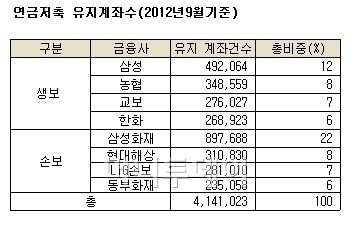
Many people are unsure whether to choose a fund or an insurance product when enrolling in a pension savings product through a financial institution. Pension savings insurance is a suitable choice for those who want to accumulate a fixed amount monthly at a guaranteed interest rate for stability. On the other hand, pension savings funds are opened through securities firms and allow direct investment in various financial assets such as stocks and bonds.
In times like now, with rising prices and a low-interest-rate environment, pension savings funds that offer potential investment returns are gaining popularity. In fact, there is a trend among office worker communities and financial planning groups to prefer securities accounts for aggressive asset allocation. However, since there is a risk of principal loss, you must carefully consider your investment style and risk tolerance. Regardless of which method you choose, the year-end tax settlement tax credit benefit is applied equally, so you should choose the method that is most convenient for you.
Choose insurance for stability or funds for profitability, but note that the tax credit benefit is the same for both methods.
4. Important Precautions to Check Before Enrolling
Before enrolling in tax deduction pension savings, you must be aware of several critical restrictions to avoid future difficulties. The first point to remember is that if you terminate the account midway after receiving tax benefits, you must return all the tax credits you have received.
In addition, a heavy penalty in the form of miscellaneous income tax is imposed, which can cause significant financial damage if you need emergency funds. Therefore, a wise financial planning tip is to set your contribution amount only with surplus funds that you will absolutely not need to withdraw midway. Also, when receiving the funds as a pension after age 55, pension income tax is applied, but at a much lower rate than the general comprehensive income tax rate. However, if you withdraw a large sum at once exceeding the pension receipt limit, you may face a heavy tax burden, so caution is required.
Since you must return the benefits received if you terminate the account midway, you must contribute long-term using only surplus funds.
5. Practical Enrollment Methods and Document Submission Procedures
The process of enrolling in tax deduction pension savings is simpler than you might think and can be completed in a few minutes through non-face-to-face smartphone channels. After launching your primary bank or securities firm app, select the pension savings account opening menu, complete identity verification, and the account will be opened immediately. Once the account is created, you can freely transfer the desired amount to complete your contributions by December 31, the reference date for year-end tax settlement.
Setting up automatic transfers allows you to continue saving consistently without worrying about it monthly, which is very convenient for office workers. As the year-end tax settlement season approaches, you must issue a pension account contribution certificate from the financial institution’s website or app and submit it to the relevant department at your company. Recently, with the consent for the simplified service, records are automatically retrieved from the National Tax Service’s Hometax, but since omissions can occasionally occur, it is safer to check in advance.
Open an account easily via a mobile app, contribute by the end of each year, and use the certificate for your year-end tax settlement.
6. Future Outlook: Securing Retirement Preparation and Tax Savings Simultaneously
The government is continuously expanding tax benefits to encourage citizens to voluntarily form retirement funds in preparation for the entry into a super-aged society. In the future, there is a high possibility that the contribution limits or deduction rates for pension accounts will be adjusted according to inflation rates and changes in the economic environment. Therefore, opening a pension account and starting to contribute from the early stages of your career will determine the success or failure of your lifelong asset management.
Creating a stable monthly cash flow after retirement is an essential strategy for survival, and saving on taxes is a shortcut to building wealth. I recommend that you immediately check your annual income and contribution records today, and if you have not reached the limit, top up the remaining amount. Small efforts and actions will eventually bring you two rabbits: a year-end tax settlement refund in your bank account and a comfortable retirement.
Early enrollment and consistent contributions are the best financial secret for ensuring both definite tax savings and a secure retirement.
Frequently Asked Questions
=