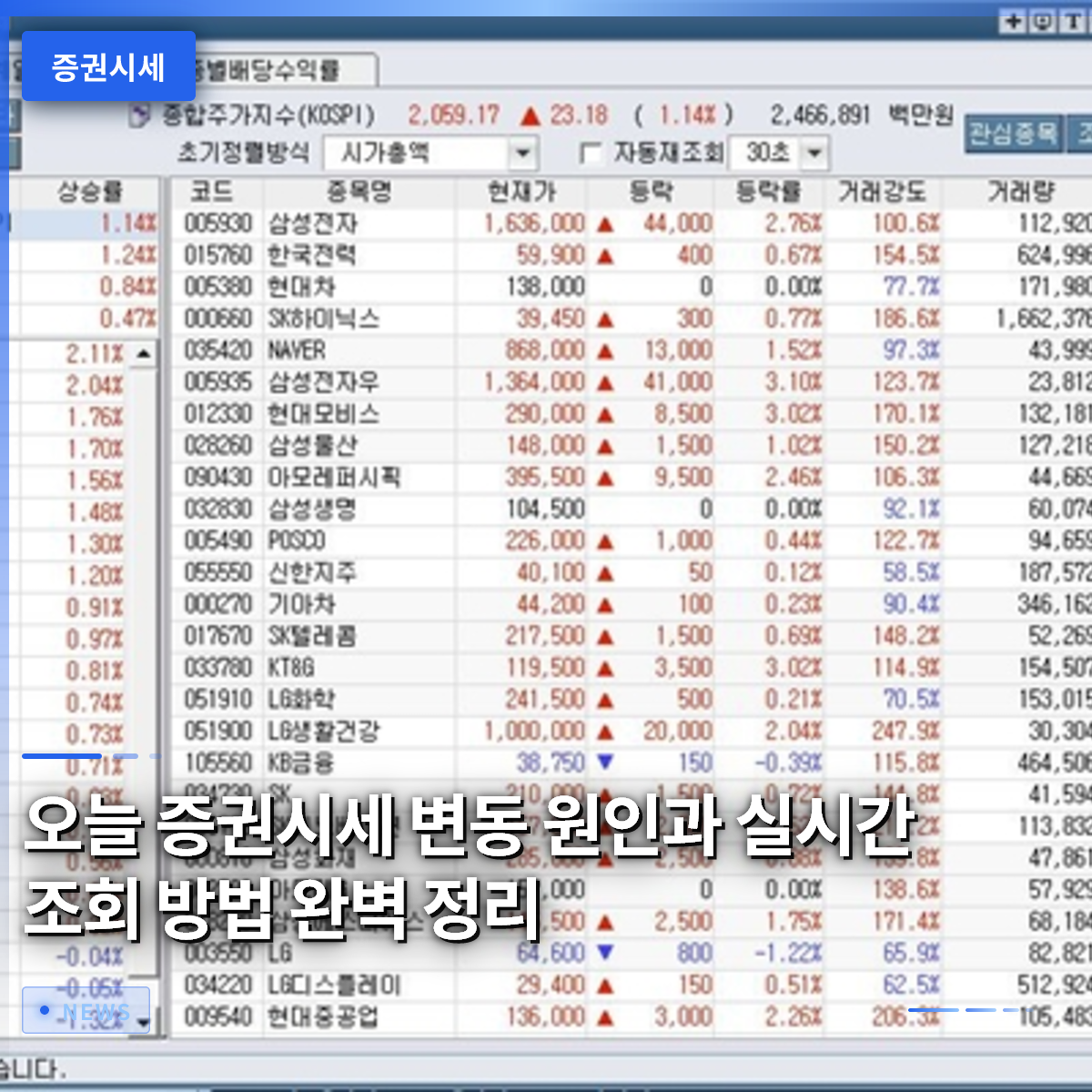
Many investors are often caught off guard by unexpected stock price fluctuations when checking today’s securities market. In a market where there is no clear leading stock, it is common to see specific thematic stocks surge while large-cap stocks stall due to regulatory issues. In this article, we will examine in detail how to read the overall market trends and the correct investment direction for dealing with volatility. If you are someone who turns on your phone every morning to check the stock price window, this content will definitely help you sharpen your perspective on the market.
=
A Complete Guide to Today’s Stock Market Fluctuations and Real-Time Lookup Methods
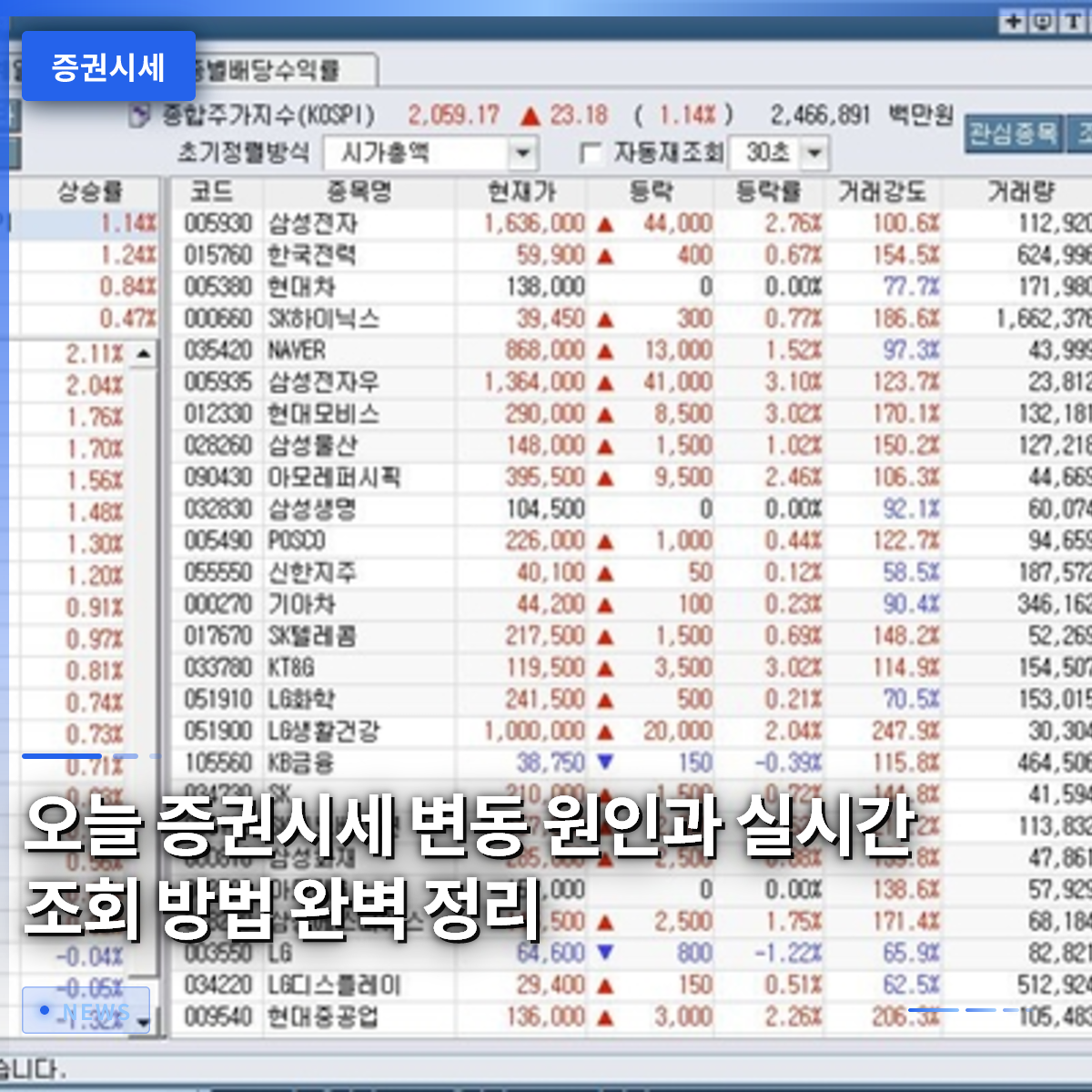
1. Today’s Securities Market Trends and KOSPI Movements
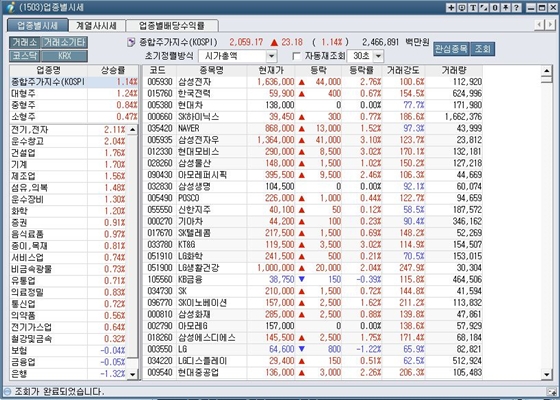
Looking at today’s securities market, there is a clear atmosphere of caution, with investors unable to focus on any particular side. As large-cap stocks that typically lead the market fail to establish a clear direction, the index is generally showing a narrow range of fluctuation. News from Yeouido (the financial district) regarding inheritance tax issues for large corporations or movements to amend laws related to treasury shares also acts as a sensitive variable for the market. Beginners entering the stock market should be most careful about blindly following the crowd in such a rotation trading environment. If you buy at the wrong timing, you could incur losses overnight, so it is necessary to have the composure to observe the market calmly. If you cannot read the overall waves of the stock market, it is easy to chase stocks that others say are good. However, by patiently observing the index trends, you can grasp where the money is flowing. The habit of checking daily market prices through a brokerage window is the first step toward successful investing. It is important to adopt an attitude of examining stock prices alongside macroeconomic indicators rather than being swayed by immediate ups and downs.
Today’s securities market features rapid rotation trading in the absence of a leading stock, necessitating thorough observation and analysis.
2. How to Check Real-Time Quotes Using Naver Securities
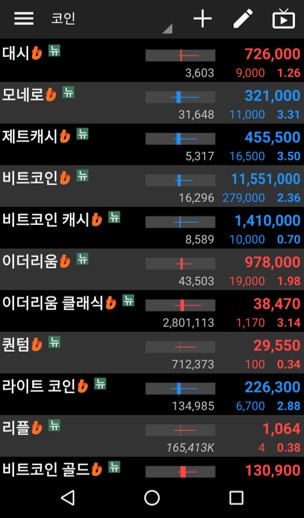
One of the most representative ways to check real-time stock prices and stock information quickly is to utilize the securities services of portal sites. By entering a specific stock name in the search bar, you can grasp the current intraday price, trading volume, and the trading trends of foreign and institutional investors at a glance. Many investors also lightly display quotes through a web browser window to check the flow when it is inconvenient to launch a stock app on their smartphone screen. When you enter the detailed stock page, daily, weekly, and monthly charts are visually well-implemented, making it easy to compare past price fluctuation trends. When looking at the order book, observing how buy and sell orders accumulate allows you to indirectly read the current market sentiment. If there are stocks surging, you must always check related news and disclosures to understand why buying pressure is concentrated. You need to cultivate the ability to infer the underlying corporate value and market reaction hidden behind the numbers, rather than just looking at the figures. Making real-time lookups a habit allows you to detect quote changes faster than others and seize opportunities.
Utilizing the securities menu on portal sites allows you to check real-time quotes and related news in the fastest and most intuitive manner.
3. The Impact of Interest Rates and the Bond Market on the Stock Market

Recently, the securities industry has been paying close attention not only to stocks but also to the movements in interest rates of bonds, which are considered safe assets. This is because foreign capital inflows or outflows in the domestic stock market react sensitively every time US Treasury yields rise or fall. It is also clear that funds unable to find a suitable investment vehicle in the stock market are moving to the bond market, where interest income is relatively attractive. Investment strategies aiming to secure stable cash flows are gradually gaining traction over those pursuing aggressive short-term capital gains. During periods when interest rates remain high, corporate financing costs increase, making it easy for the stock prices of companies without solid performance to fluctuate. Therefore, when investing in stocks, one should not only focus on today’s stock price rise but also consider the direction of interest rates in the macroeconomy. Wisdom is needed to allocate assets appropriately by comparing returns with alternative products such as bank deposits and bonds. Understanding the massive flow of the market allows you to handle temporary stock price drops calmly without anxiety.
Changes in interest rates and the bond market directly impact capital flows in the stock market, so macroeconomic indicators should be examined together.
4. Professional Discretionary Investment and Risk Management Strategies
It is realistically very difficult to monitor fluctuating stock prices in real-time every day while working a full-time job. For this reason, many investors choose to seek professional help rather than insisting on selecting stocks and trading on their own. Utilizing verified model portfolios provided by securities firms or professional asset management institutions can significantly enhance market responsiveness. It may be safer to entrust assets to professionals with systematic risk management processes rather than worrying about short-term price fluctuations of individual stocks. The most powerful weapon for surviving in the stock market for a long time is thorough loss management and diversification. Experts trade based on principles without being swayed by emotions, reducing the mistakes commonly made by individual investors. You must accurately assess whether your investment tendency is aggressive or stable and then construct a portfolio that matches it. You must absolutely avoid the reckless act of investing your entire fortune in a single stock just because of information that sounds appealing to others.