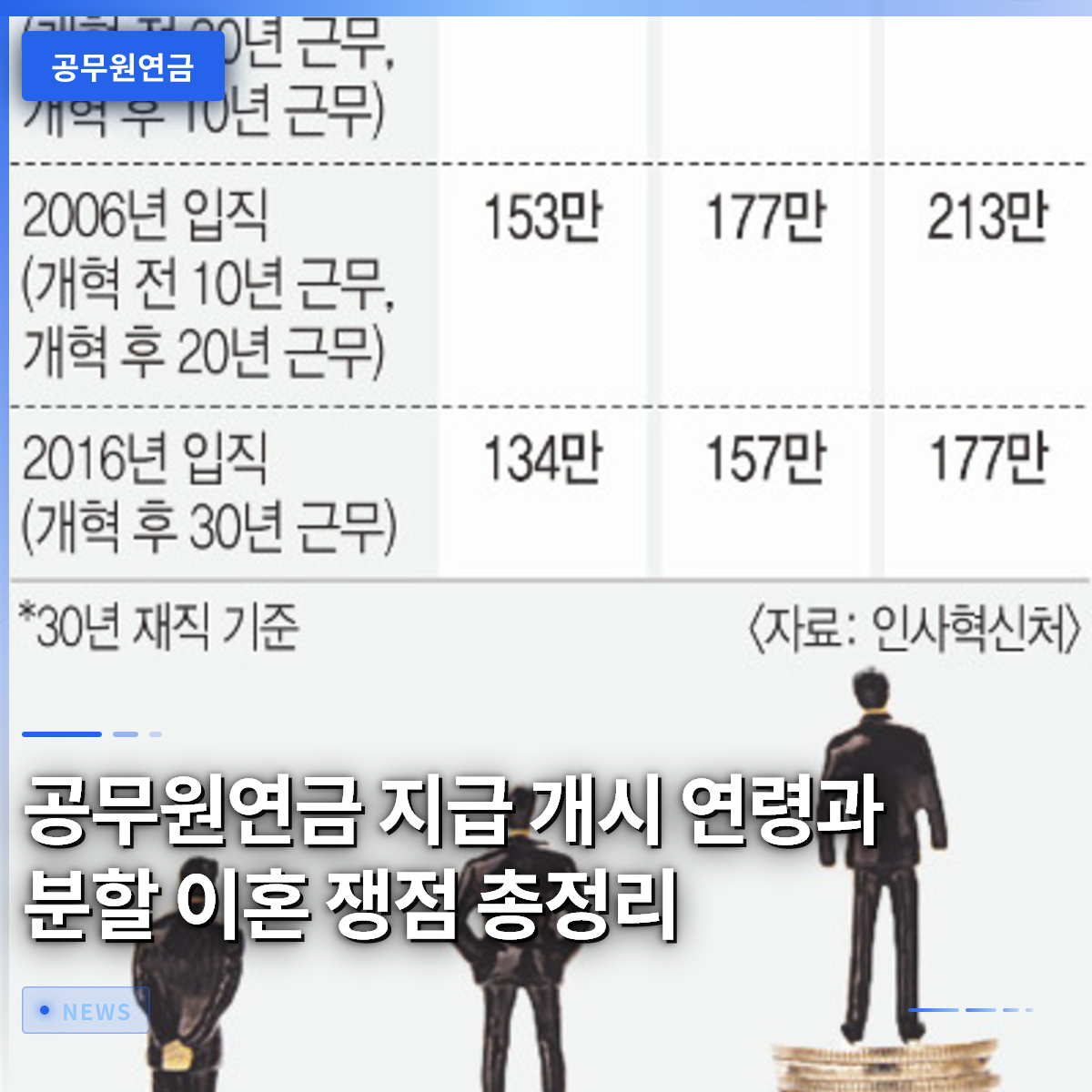
As the eligibility age for receiving civil servant pensions gradually increases, more retirees are experiencing a gap in income for several years after reaching the mandatory retirement age. In the past, pensions began immediately upon retirement, but due to recent legal amendments, the start date now varies by birth year, necessitating a complete overhaul of post-retirement financial plans. It is common to see acquaintances who have retired at the mandatory age struggling to find part-time jobs or dipping into savings to cover living expenses because they cannot yet receive their pensions. Some retired civil servants have even filed lawsuits claiming this situation is unfair, but the courts have dismissed these cases. Today, we will thoroughly examine the changes in payment timing, issues regarding pension division between spouses, and key points to note. If you are approaching retirement, I encourage you to read through this content and prepare a contingency plan in advance.
=
A Comprehensive Guide to Civil Servant Pension Eligibility Age and Divorce-Related Pension Division
1. The Income Gap After Mandatory Retirement

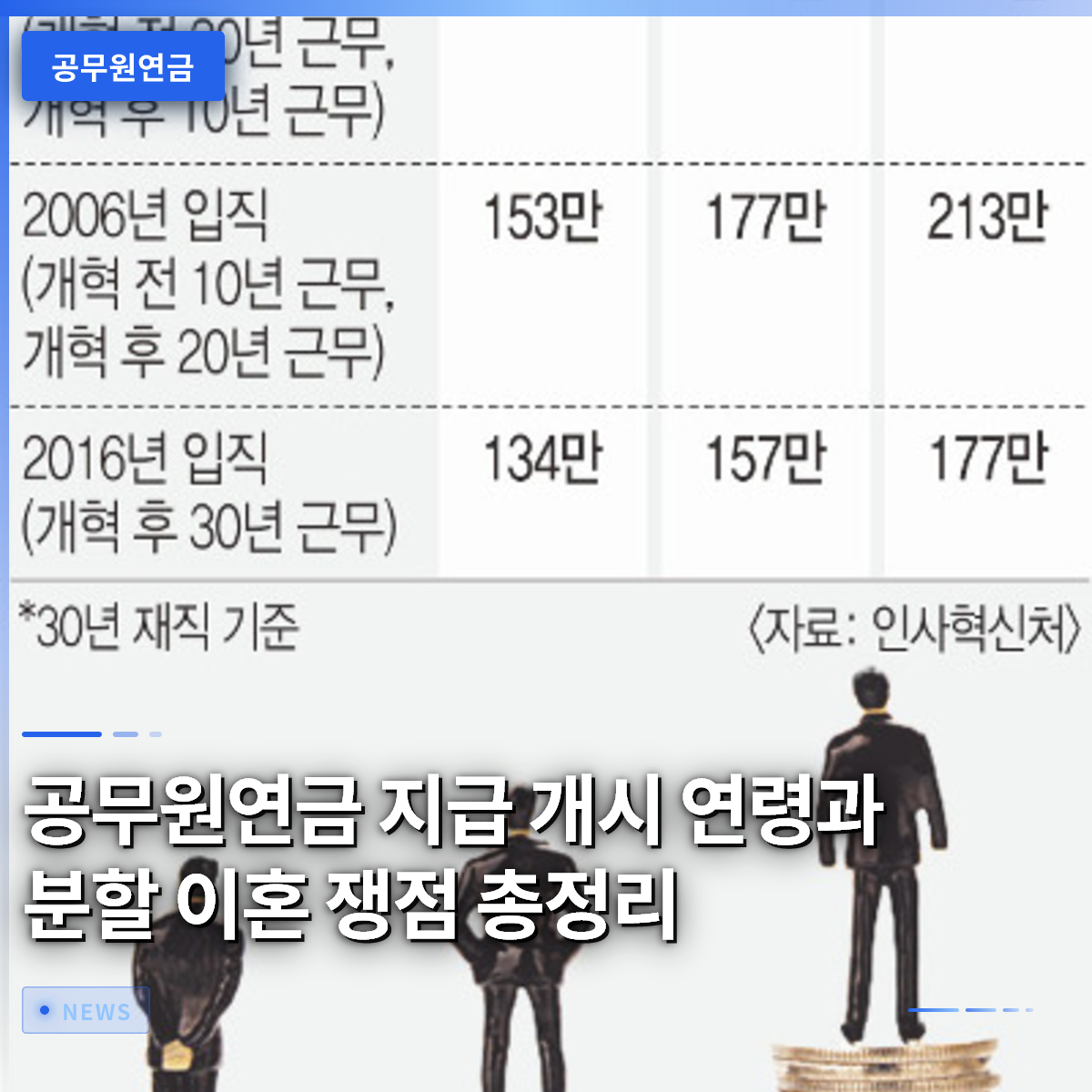
The gradual increase in the civil servant pension eligibility age has made it a reality that many cannot receive their pension immediately after mandatory retirement. Before the legal amendments, pensions could be received simultaneously with retirement, but the start date has been phased out to ensure the financial stability of the pension system. Consequently, retired civil servants are facing periods of zero income lasting from one to several years. It is not uncommon to hear sighs from retirees who, despite a dignified retirement, are caught off guard by a lack of living funds.
One retired civil servant even filed a lawsuit, arguing that the state’s refusal to pay the pension immediately after retirement violated their rights to property and equality. However, the court ruled in favor of the defendant, stating that this measure was a necessary reform to ensure the sustainability of the pension system. The court determined that the public interest in maintaining intergenerational equity and fiscal soundness outweighed individual claims. Therefore, civil servants approaching retirement should focus on creating a financial plan to bridge the income gap rather than relying solely on legal remedies.
Since the pension eligibility age is increasing, creating an income gap after mandatory retirement, advance preparation is essential.
2. Criteria for Claiming Pension Division in Civil Servant Divorces
When civil servant couples divorce, one of the most fiercely contested assets is the division of future pension benefits. If a couple who has been married for more than five years divorces, they can divide the portion of the spouse’s civil servant pension corresponding to the duration of the marriage. In the past, it was difficult to legally recognize the contribution of one spouse who supported the family, but this is now clearly guaranteed by law. According to consultation cases with divorce-specialized lawyers in the Sejong City area, pensions are frequently a central issue in property division for civil servant couples.
For instance, Mr. A, who chose to divorce after a long marriage to a civil servant, filed a lawsuit demanding half of his ex-spouse’s retirement pay and pension. The court highly valued Mr. A’s contribution to maintaining the household and supporting his spouse’s career during the marriage. However, pension division is not paid as a lump sum; instead, it is distributed monthly in line with when the ex-spouse receives their pension. Therefore, if you are considering divorce, it is crucial to accurately assess your spouse’s length of service and expected pension amount and seek legal assistance.
If a civil servant couple married for more than five years divorces, they can claim a proportional division of the spouse’s pension.
3. Civil Servant Pension Amounts and the Reality for High Earners
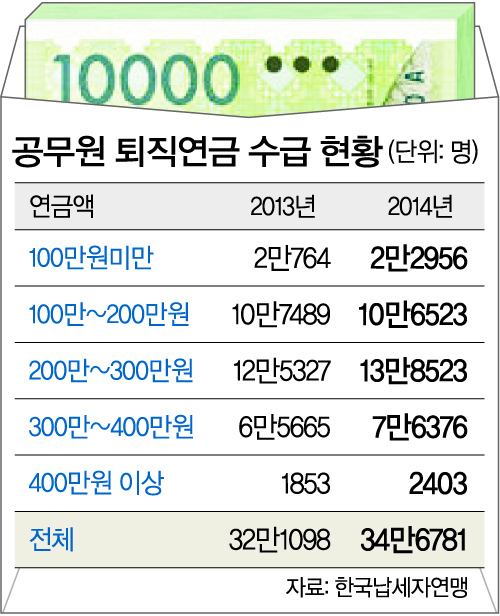
Civil servants, often synonymous with stable employment in South Korea, enjoy a comfortable retirement supported by robust pensions. In cases where both spouses worked diligently as civil servants until retirement, their combined monthly pension can reach 7 to 8 million won. Compared to general National Pension participants, their benefits are relatively higher, which often attracts envy and becomes a subject of social debate. They are frequently cited as prime examples of retirees who can enjoy a leisurely old age without having to rely on their children.
However, it is important to remember that these high-pension recipients represent only a small upper tier of all civil servant pension members. The majority of lower-ranking civil servants must make do with amounts that are not as substantial as one might think, requiring meticulous financial management. Due to structural limitations that fail to fully reflect inflation, their real purchasing power may decline over time. Therefore, to maintain a stable life after retirement, civil servants should prepare supplementary measures such as personal pensions or reverse mortgages in addition to their civil servant pension.
While some civil servant couples receive high pensions, general members must prepare additional retirement funds.
4. Pension Penalties for Disciplinary Actions and Dismissal
Even if you have worked diligently for many years, receiving a disciplinary action or being dismissed just before mandatory retirement can severely impact your pension. If you receive a severe penalty such as dismissal or removal from office due to misconduct, your retirement pay and pension amount will be significantly reduced. Many retired civil servants who consult grievance review lawyers express concern about the financial losses caused by disciplinary actions. The fruits of a lifetime of public service can be ruined by a single mistake or misunderstanding.
For example, Mr. B, who was dismissed due to involvement in a scandal just a few years before retirement, was shocked to receive a notice of pension reduction. Mr. B immediately attempted to lower the severity of the penalty through grievance review and administrative litigation, but overturning the legal standards proved difficult. Under the Civil Servant Pension Act, pension benefits can be reduced by up to 50% depending on the reason for the penalty, making disciplinary actions inherently devastating. Therefore, the best defense is to always keep the anti-corruption and integrity standards of the public sector in mind and conduct oneself with utmost care.
Receiving severe penalties such as dismissal or removal from office before retirement results in significant reductions to the civil servant pension.
5. Enhancing Transparency and the Social Role of the Civil Servant Pension Fund
The Civil Servant Pension Fund (CSPF) is the primary body responsible for operating the civil servant pension system stably and ensuring the welfare of its members. Recently, at its headquarters in Jeju, the Fund meticulously reviewed the implementation results of its anti-corruption and integrity promotion plans alongside citizen integrity auditors. As a public institution, it is strengthening its internal control systems to enhance transparency and become an organization that earns the trust of the public. It also demonstrates its contribution to the public interest by engaging in “Warmth Sharing” activities, visiting marginalized neighbors ahead of traditional holidays.
These efforts by the Fund serve as a significant milestone in raising the integrity of the entire public sector, going beyond mere fund management. For the pension system to be sustainable, it must be built on the trust of the public, making transparent operations by the Fund essential. From the perspective of members, trust in the system depends on the belief that their contributions are managed transparently and fairly. We hope the Fund will continue to faithfully perform its critical role in preventing corruption and safeguarding the soundness of the pension fund.
The Civil Servant Pension Fund is enhancing the reliability and transparency of the system through rigorous anti-corruption checks and integrity activities.
6. Future Outlook for Civil Servant Pensions in a Super-Aging Society
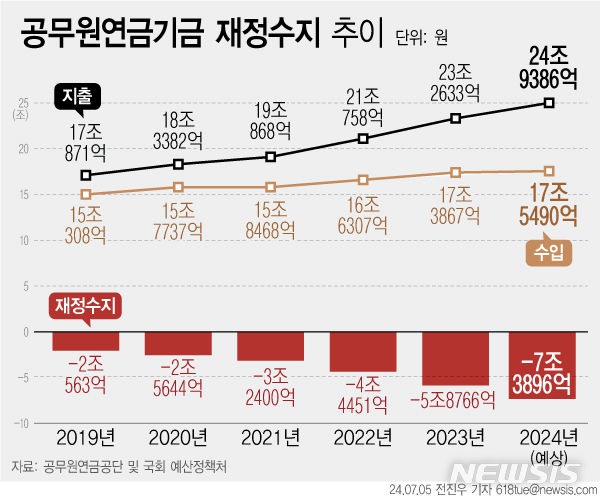
As South Korea rapidly enters a super-aging society, pressure to reform all public pension systems, including the civil servant pension, is intensifying. The low birth rate is shrinking the working-age population that contributes to the system, while the number of beneficiaries is surging, triggering warnings about fiscal soundness. Although the government and political circles continuously discuss pension reform, finding a consensus is difficult due to conflicting interests between generations. The quality of life for civil servants approaching retirement will vary significantly depending on how the system is reformed in the future.
Workers preparing for retirement and current civil servants must regularly monitor these trends and respond swiftly. The era when the state fully guaranteed a comfortable old age is fading, and the wisdom to diversify personal assets is now required. As pension eligibility ages are delayed and pressure to adjust benefit amounts increases, it is essential to build a robust safety net through personal pensions and savings. If you want to face life after retirement with ease and confidence, start calculating your expected pension amount accurately today.
Amidst fiscal pressure on pensions due to the super-aging society, current workers must prepare thorough individual retirement asset strategies.
Frequently Asked Questions
=