To revitalize manufacturing, the foundation of the national economy, and achieve substantive regional balanced development, it is essential to actively restore productive finance through AI transformation funds alongside the promotion of large-scale projects. As the traditional international division of labor, which focused primarily on cost reduction, collapses and security-centered value chains become a global trend, our economy stands at a critical crossroads. Amidst U.S. technology controls on China and the restructuring of supply chains, productivity innovation and structural improvement leveraging artificial intelligence have become urgent tasks for the survival of traditional manufacturing and small and medium-sized enterprises (SMEs). However, many SMEs in the field are stuck, unable to bear the risks of multi-year R&D with their own funds alone. Therefore, this article will explore in detail how AI transformation funds linked to the three major mega-projects can inject vitality into regional economies and create opportunities for a new leap forward. It will be a valuable time to deeply consider the direction our regional manufacturing sites should take amidst the government’s massive policy movements.
=
Alongside the ‘3 Major Mega’ Projects… We Must Seize Opportunities for Regional Balanced Development Through AI Transformation Funds
1. The Era of Supply Chain Restructuring
As the global trade order rapidly restructures into security-centered value chains, the environment facing our manufacturing industry has changed completely. While cost reduction was the most important value in the past, the stability of advanced technologies and supply chains directly linked to national security has now become the top priority. The United States is solidifying a supply chain that excludes China based on dual-use technologies such as AI chips, while China is responding by emphasizing technological self-reliance. In this rapidly changing trade structure, fundamental structural improvement beyond simple imitation is essential for domestic manufacturing to survive. We are one of the few countries that still maintain manufacturing bases and skilled labor capable of replacing China. Although manufacturing supports a significant portion of the GDP, listening to voices from the field reveals that the sense of crisis has reached its peak. Major industrial cities in the regions are suffering from the dual burdens of rapid population outflow and aging due to youth job aversion and the concentration of resources in the metropolitan area. Shipyards and major factories are increasingly relying on foreign labor as they struggle to find skilled workers. If these structural problems are not resolved, the very roots of manufacturing, which have been a sturdy pillar of our economy, will inevitably shake.
Overcoming the crisis of traditional manufacturing in the midst of security-centered supply chain restructuring requires fundamental structural improvement and new strategies.
2. The Absence of Productive Finance
Since the foreign exchange crisis, excessive emphasis on market autonomy has caused traditional industrial finance that supported the real economy to gradually disappear. Real estate-centric consumer finance, which offers guaranteed collateral and short-term returns, quickly filled the void, making the economy’s structure even more vulnerable. The financial criteria that should discover the future value of companies and lead structural reforms have been trapped in the narrow framework of short-term performance and avoiding non-performing assets. As a result, core manufacturers that have supported the national economy for decades have suffered from capital droughts every time a crisis hit. The fact that shipbuilding and semiconductor-related companies, which were once pushed to the brink due to low-profit structures, were later re-evaluated as national strategic assets is highly significant. At the time, we nearly abandoned valuable production bases based solely on short-term financial indicators, but their true worth has only now been revealed amidst the U.S.-China power struggle. The tacit knowledge and production infrastructure on the ground, which cannot be converted into margin rates or short-term results, are the true sources of national competitiveness. If we cannot overcome the limitations of existing finance obsessed with short-term performance, it is nearly impossible to secure a leading position in the uncertain future ecosystem.
It is urgent to move away from a short-term performance-centric financial structure and restore productive finance that supports the real economy.
3. Technology Gap and Field Limitations
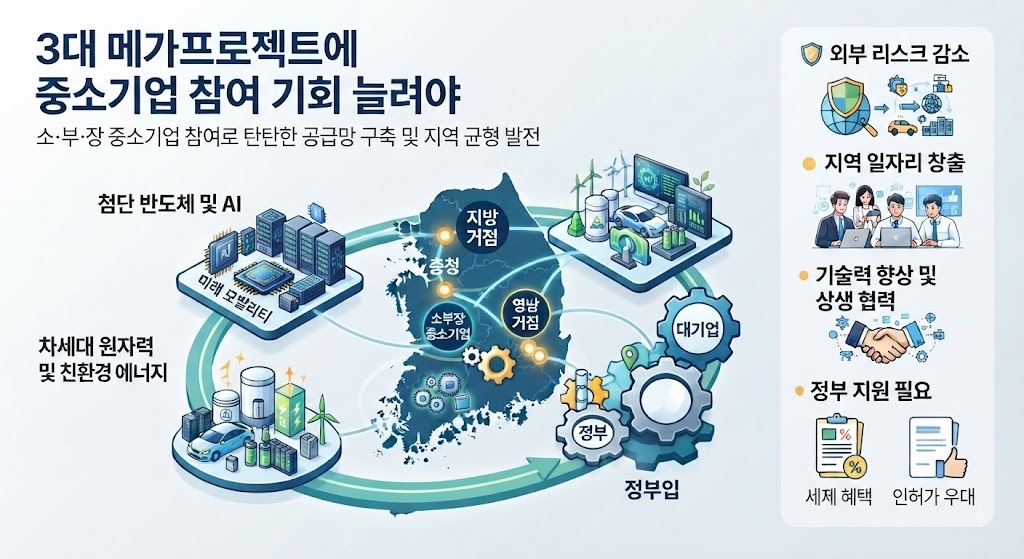
Compared to large information and communication corporations, the maturity of AI transformation in manufacturing SMEs still shows a significant gap, which is widening over time. The majority of mid-sized and small enterprises are unable to even consider basic R&D, let alone adopting AI technology, due to a lack of internal funding. A regrettable situation repeats where aging management hesitates to take on new challenges, and successors turn their backs on the manufacturing field, seeking only private equity or sale. Existing support methods focused on simple working capital or facility loans do not provide practical help to fields on the verge of collapse. Instead, these methods act as excessive repayment pressure on companies years later, tightening the vicious cycle. To support the actual capabilities of the field and induce future-oriented technology adoption, a financial support policy of a completely new paradigm is desperately needed. A structure where the government and the private sector share risks must be created to allow for bold challenges without fear of failure. We cannot survive in global competition if we fail to build capabilities covering the entire process from data to services and remain confined to specific areas.
A new financial paradigm beyond existing loan-based support is needed to close the AI transformation gap in small and medium-sized manufacturing.
4. The Need for Structural Transformation Funds
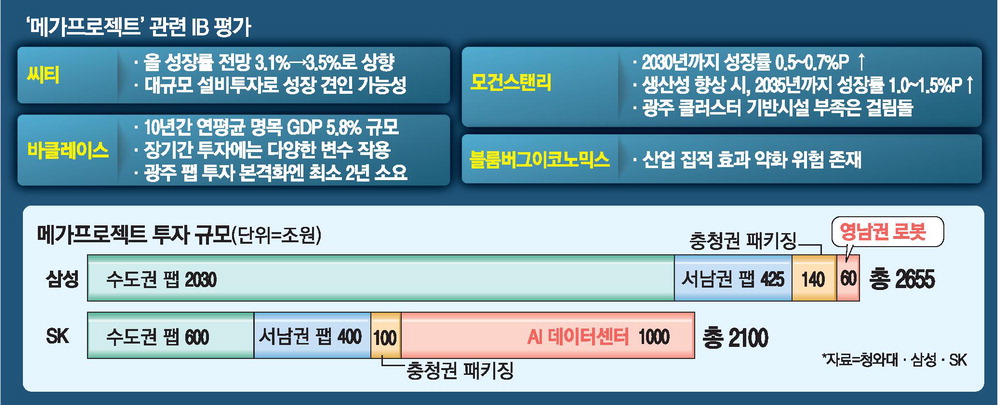
To overcome these realistic limitations, the introduction of structural transformation funds that diversify investment structures according to risk levels is strongly demanded. A meticulous division of roles must be designed, ranging from stable senior investments involving pension funds, to medium-risk, medium-return structures by commercial banks, to junior equity investments involving policy finance and large corporations. Actively utilizing non-voting preferred shares and various hybrid investment instruments can ensure management stability while smoothly promoting the adoption of new technologies. This will be an investment of mutual growth that shares the fruits of growth, rather than a method that burdens companies with heavy debt. The role of the government and financial authorities should focus on creating a healthy ecosystem where the private sector can participate autonomously, rather than on unreasonable intervention. We must play a reliable catalyst role that allows companies with potential to change their structure themselves, moving away from the approach of unconditionally restructuring distressed companies. If structural transformation funds where the public and private sectors share risks are established, SMEs with eased funding constraints can actively engage in technological innovation. Only when a physical AI environment is created where voices from the field are reflected in real time can the completion of autonomous AI be achieved.
Structural transformation funds utilizing risk-based investment diversification and equity instruments must become the core execution means for manufacturing innovation.
5. Opportunities for Regional Balanced Development
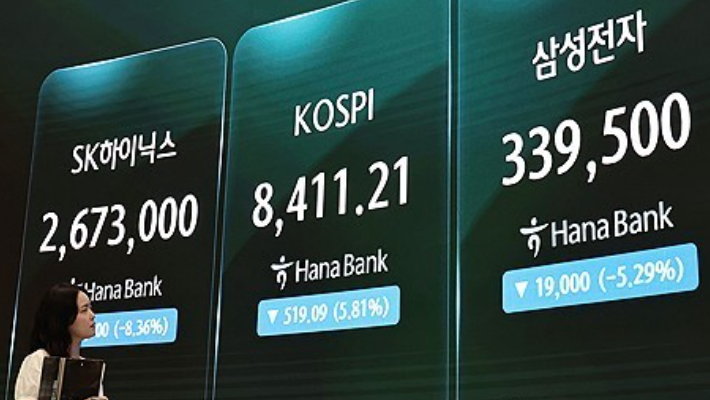
The restoration of productive finance through AI transformation funds is a key to reviving the foundations of declining regional manufacturing hubs, going beyond simple corporate support. To break the phenomenon where all resources and young talent concentrate in the metropolitan area and for local cities to gain self-sufficiency, a definite industrial driving force is essential. Regional-specific AI transformation organically combined with the three major mega-projects will be an opportunity to improve the quality of regional jobs and bring back the youth. When regional small and medium-sized manufacturing factories become smart, a high-value-added industrial ecosystem will naturally be built, and the entire regional economy will become vibrant. True balanced development can only be completed when companies rooted in the regions stably upgrade their technology and acquire global competitiveness. Only when the government’s policy support and the meticulous execution power of local governments mesh together can we achieve substantive results in reducing the gap between the metropolitan area and the regions. The reason why customized fund management that accurately reflects the characteristics of regional industries and field situations, moving away from uniform support methods, is urgent lies here. Regional balanced development is not achieved through slogans alone, but only becomes reality through field-centered substantive investment and technological innovation.
AI transformation funds are a catalyst that prevents metropolitan concentration and revives regional manufacturing hubs, leading to substantive regional balanced development.
6. Future Outlook and Execution Tasks
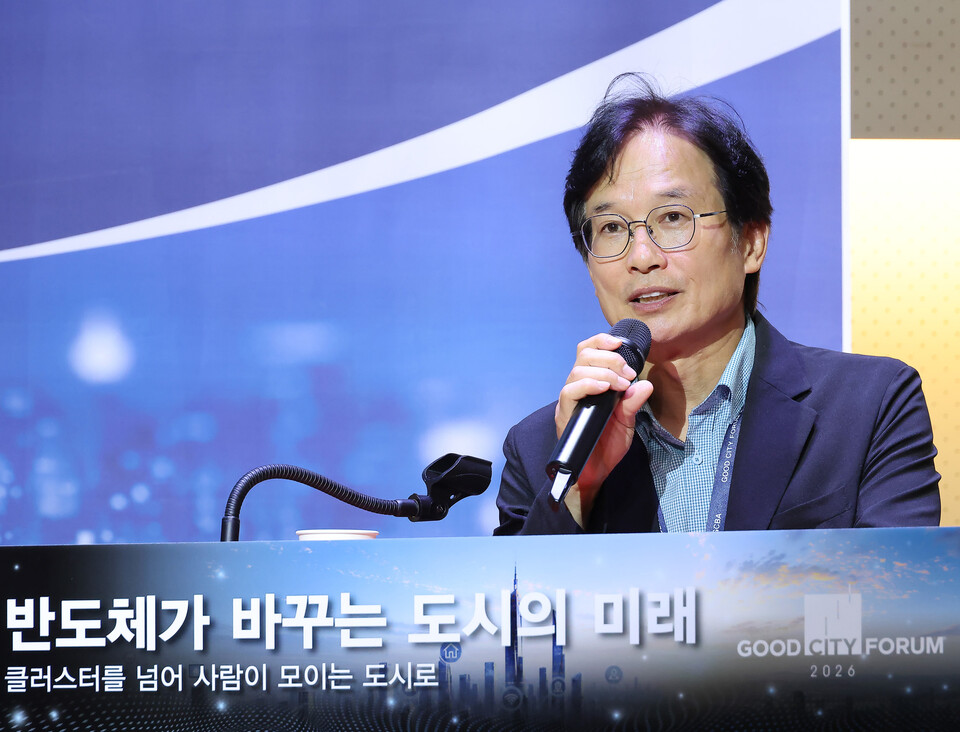
For our economy to overcome the massive waves of the global trade environment in the future, the government’s mega-projects and field AI transformation must move in the same direction. It is more important than ever to boldly abandon short-term performance-centric thinking and make long-term, bold decisions to secure a leading position in the future ecosystem. The harmony between a spirit of challenge that does not fear failure and policy finance that reliably supports it is the most certain shield guaranteeing the coming future. I sincerely hope that the numerous small and medium-sized manufacturing companies across the country will transform into strong, small enterprises leading the AI era through this opportunity. I also encourage readers to pay close attention to the trends in our region’s manufacturing and AI transformation and carefully observe changes around them. Small interests and attempts at change can come together to rebuild the solid foundation of the South Korean economy and complete a future of balanced development where everyone prospers together. Please continue to send support and encouragement so that our companies can confidently demonstrate their competitiveness in the new trade environment to be unfolded. When wise policies and practices that listen to the voices of the field continue, the second golden age of South Korean manufacturing will surely arrive.
We must prepare for a new future for South Korean manufacturing based on bold long-term investment and field-centered execution power.
Frequently Asked Questions
=