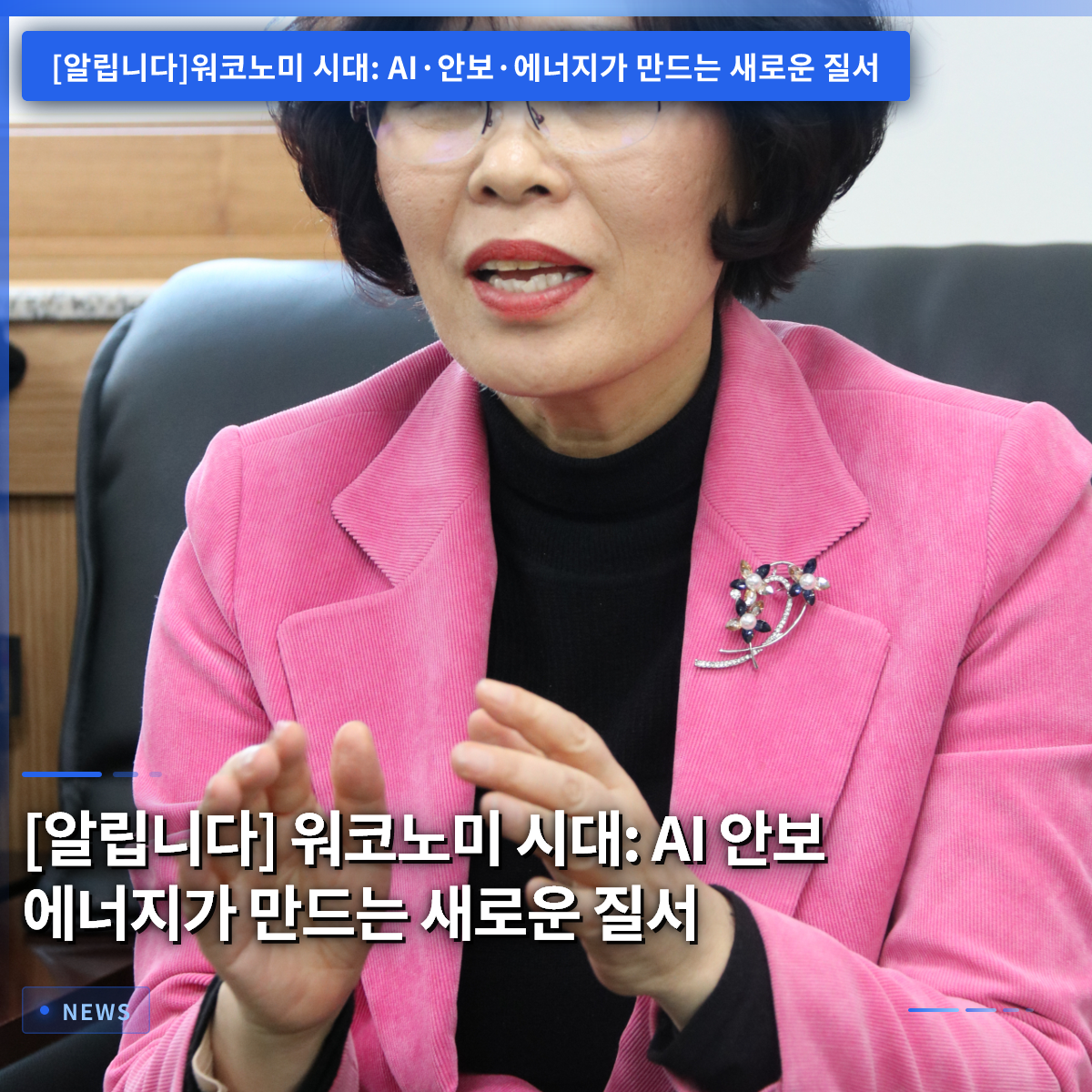
The 2026 Chairs Forum, hosted by Channel A and Dong-A Ilbo, is scheduled to be held on October 7th in the Grand Ballroom of the Westin Josun Hotel in Jung-gu, Seoul. The era of “Warconomy,” where ongoing armed conflicts and geopolitical crises around the world are inflicting severe damage on national economies, is fully unfolding. Amidst this rapidly changing environment, our country faces a critical situation where it must swiftly develop thorough strategic response measures that go beyond merely overcoming the crisis. This event is an opportunity to seek concrete solutions for the sustainable future growth of the Republic of Korea under the grand theme of “The Warconomy Era: A New Order Shaped by AI, Security, and Energy.” World-renowned scholars and top domestic experts will gather to present the direction we should take amid the shifting international landscape. For those who have always taken a keen interest in rapid changes in the global economy and future industrial trends, this forum will be a highly beneficial opportunity. As numerous economic actors face a massive transition period, now is the decisive moment to gain multi-faceted insights and establish thorough preparation strategies.
=
[Announcement] The Warconomy Era: A New Order Shaped by AI, Security, and Energy
![[Announcement] The Warconomy Era: A New Order Shaped by AI, Security, and Energy](https://pub-e310bf4303744c7295d9b556111ff394.r2.dev/thumbnails/1790106076805_61g4gt.png "[Announcement] The Warconomy Era: A New Order Shaped by AI, Security, and Energy")
1. The Arrival of the Warconomy Era and Rapid Changes in the International Order
Recently, the world has fully entered a “Warconomy” system where geopolitical risks deliver direct blows to the real economy. In the past, wars or local conflicts were considered issues limited to specific regions, but they have now become the primary cause of global supply chain disruptions. With restricted logistics and volatile raw material prices, companies are being pushed to the brink of survival overnight. This phenomenon is not limited to large corporations; it directly impacts small and medium-sized enterprises and even the cost of living for general consumers. Governments are strengthening their self-centered approaches and raising trade barriers, which is rapidly dismantling the existing order of free trade. Therefore, we must accurately understand the essence of these structural changes and formulate new survival strategies to remain viable. Leaders and economic analysts from around the world are assessing the current situation not as a temporary downturn, but as the prelude to a structural transformation. Modern conflicts, unfolding in a manner entirely different from the Cold War era, have become more complex due to the combination of economic weaponization and the struggle for technological hegemony. As core industrial resources such as semiconductors, rare earths, and batteries are directly linked to national defense and security, uncertainty in corporate management has reached its peak. In an environment where unpredictable variables erupt simultaneously, the limitations of individual corporate efforts are clear. This is why strategic support at the national level and the establishment of a close public-private cooperation system are more urgently needed than ever.
The Warconomy era is a phenomenon where geopolitical conflicts shake the real economy, demanding new survival strategies for both nations and companies.
2. The Future Industrial Landscape Reshaped by Artificial Intelligence
The rapid development of artificial intelligence technology has become a core variable that shakes not just daily convenience, but national security and the entire economic structure. AI is quickly being integrated as a core capability in national defense, ranging from the formulation of military tactics to the control of advanced weapon systems. In the civilian sector, it serves as a key driver by analyzing vast amounts of data in real-time to derive optimal business solutions. However, the competition between nations to secure technological hegemony in this field is becoming increasingly fierce, triggering a new form of technological Cold War. Countries that fail to secure their own AI infrastructure face a significant risk of falling into a dependent position in the global market. Therefore, governments and private companies must join forces to make every effort to strengthen their independent AI capabilities. This forum will deeply analyze the seismic shifts AI will bring to industries as a whole and discuss specific countermeasures. In particular, top experts from home and abroad will speak to vividly convey the impact of AI on actual industrial sites and security environments. Rather than simply listing technological advancements, it will present solutions on how South Korean companies can create value amidst this massive wave. It will serve as a practical guide for companies hesitating to adopt AI and a valuable time for policymakers to gain insight. It will provide a clear opportunity to identify the tasks we must prepare for immediately to lead the coming future.
AI is a core technology changing the landscape of security and industry, and securing independent capabilities is essential in the competition for technological hegemony.
3. The Convergence of Security and Economy: The Need for New Strategic Responses
In the past, national defense and security were considered the exclusive domain of diplomats and military personnel, but they have now become the frontline of the economy, directly tied to corporate survival. In situations where supply chains are shaken and the import and export of key resources are controlled, creating a stable security environment is the ultimate economic policy. As non-traditional threats such as cyber terrorism and infrastructure destruction increase, companies are investing massive resources in security and risk management. Inter-national alliances are also evolving beyond the military dimension into the form of economic security alliances, shaping a new international order. If we fail to read these trends and remain stuck in traditional security habits, national competitiveness will plummet in an instant. The government and the industrial sector must abandon the outdated view that sees security and the economy as separate domains and urgently adopt an integrated approach of close cooperation. In fact, major advanced countries abroad are already operating permanent cooperation systems between security departments and economic ministries to proactively respond to supply chain crises. We too must build an effective system where the public and private sectors organically share information and can be activated immediately when a crisis occurs. This forum will be a meaningful venue that responds to this era’s demand for the convergence of security and the economy by seeking realistic alternatives. Sharp analyses reflecting voices from the field and effective suggestions are expected to resonate deeply with attendees.
Security and the economy can no longer be separated, and an integrated national strategy for supply chains and resource acquisition is required.
4. The Energy Transition and Solutions for Sustainable Growth
Energy security is the most sensitive and important crossroads that determines the success or failure of the Warconomy era, as well as the key to future growth. As traditional fossil fuel-centric energy supply chains are frequently shaken by conflicts or political interests, the importance of energy independence has grown. Coupled with the massive global challenge of carbon neutrality, the transition to renewable energy has emerged as an absolute survival task rather than a choice. Without securing large amounts of stable and eco-friendly energy, it is impossible to maintain future industries such as advanced manufacturing and AI data centers. An era has arrived where power shortages lead directly to the paralysis of the national economy, making radical innovation in energy policy urgent. This forum will analyze the changing landscape of the energy market and focus on South Korea’s strategy for securing eco-friendly energy. It will also discuss efficient energy distribution and the construction of next-generation power grids to match the surging power demand of the AI era. Realistic support measures for small and medium-sized manufacturing sites suffering from rising energy costs, as well as long-term supply and demand stabilization plans, will be thoroughly addressed. It will clearly reveal the breakthrough we must find amidst the contradictory task of achieving both environmental goals and growth. Since those who control energy will hold future economic power, the world’s attention is focused on the outcomes of this forum’s discussions.
Energy security and the transition to renewable energy are essential conditions for maintaining future industries and determine national survival.
5. Key Programs and Speaker Introductions for the 2026 Chairs Forum
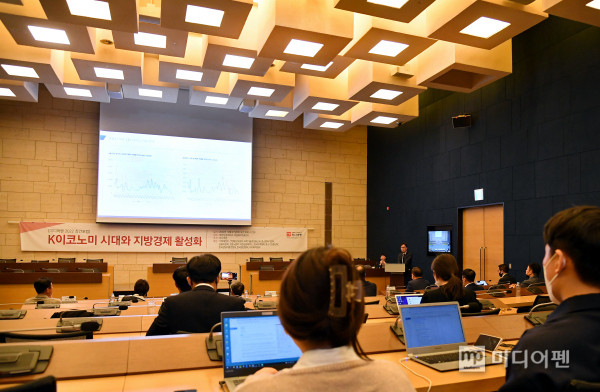
The event is scheduled to be grandly held from 8:30 AM to 12:00 PM on October 7th in the Grand Ballroom of the Westin Josun Hotel in Jung-gu, Seoul. This forum, co-hosted by Channel A and Dong-A Ilbo, has assembled a stellar lineup of speakers to break through the complex crises facing the Republic of Korea. First, Jason Feng, a world-renowned futurist and President of Prestige Economics, will deliver the keynote speech, outlining the trends of the global macroeconomy. Following this, Yang Ki-wook, Director of the Industrial Resources Security Office at the Ministry of Trade, Industry and Energy, will explain the government’s policy direction, and Moon Jung-bin, a professor at Korea University, will add a sharp academic perspective. Additionally, Kim Ji-hyun, Vice President of the SK AI Committee, will vividly convey AI innovation strategies from the frontline of private enterprise. This will be a rare opportunity for top experts representing various fields to gather, engage in mutual discussion, and communicate with the audience. Those wishing to participate can apply through the official homepage, and inquiries can be made via a dedicated contact number or email. We strongly encourage the active interest and participation of business leaders, researchers, and policymakers who seek a clear compass amidst the rapidly changing international situation. All preparations have been thoroughly made to ensure that attendees can gain deep insights even amidst their busy daily lives through the packed schedule starting early in the morning. We hope that many will join this valuable gathering to share the wisdom needed for the South Korean economy to take the next step forward.
The 2026 Chairs Forum, hosted by Channel A and Dong-A Ilbo, brings together top domestic and international experts to discuss solutions for future growth.
6. The Path Forward for South Korea in a New Order
The new global order created by the entanglement of war and economy, AI and security, and energy is both a crisis and a massive opportunity for us. Rather than retreating out of fear of the wave of change, we must take proactive investment and institutional reform based on cool-headed analysis. Only when the government, academia, and industry work together as a trinity in organic cooperation can the Republic of Korea lift the veil of uncertainty. This 2026 Chairs Forum will play a pivotal role in opening the way for such cooperation and presenting a practical blueprint. We sincerely hope that the discussions to be held at the Westin Josun Hotel on October 7th will become a sturdy shield and wings for growth for the South Korean economy. It is a time when we must all watch closely with deep interest to wisely navigate the waves of the coming Warconomy era. The future belongs to those who prepare, and the strategic decisions we make now will determine the national fortune of the Republic of Korea for the next several decades. In the harsh reality where countries around the world are pursuing their own survival, our country must also build independent technological capabilities and robust security strengths. We hope you will attend this forum to share the insights of experts and establish specific action guidelines for your organization and individual. Small interests and participation will gather to create massive change, ultimately becoming the foundation for a better tomorrow for the Republic of Korea. Through this upcoming event, we will once again confirm the resilience of South Korea, which will stand tall and win amidst the rapidly changing world order.
To turn the crisis of the Warconomy era into an opportunity, organic public-private cooperation and thorough preparation for the future are essential.
Frequently Asked Questions
=