The KOSPI has finally reclaimed the 7,000 mark, driven by an explosive surge in semiconductor exports and a strong rebound in large-cap stocks led by Samsung Electronics. The market achieved a refreshing reversal after a few days of declines that had left investors anxious. The index closed at 7,007.72, up 113.49 points from the previous trading day, instantly washing away market concerns. Notably, despite individual investors dumping nearly 3 trillion won worth of shares as the index approached the 7,000 level, strong buying from institutional investors and other corporations provided solid support. Behind this dramatic rebound lie record-breaking export indicators and a recovery in investment sentiment related to artificial intelligence. In this article, we will examine in detail the specific background of the KOSPI reclaiming the 7,000 mark and future market outlooks.
=
Background of KOSPI Reclaiming the 7,000 Mark Driven by Strong Semiconductor Exports and Samsung Electronics’ Rally
1. The 7,000 Mark Recovery Led by Semiconductor Exports
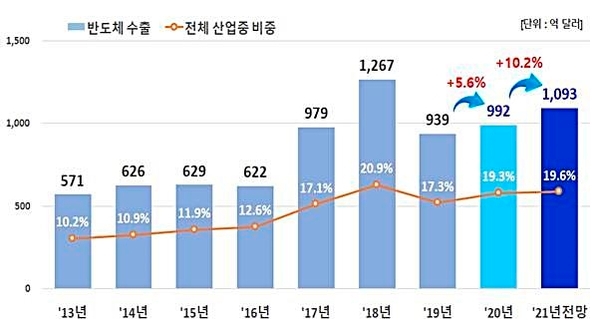
The KOSPI’s reclamation of the 7,000 mark was primarily driven by the semiconductor sector’s dazzling export performance. Total exports from September 1 to 20 reached $71.4 billion, surging 78.3% year-on-year to set a new all-time high. Among these, semiconductor exports alone amounted to $34.1 billion, a staggering 259.4% increase compared to the same period last year. This figure, nearly half of total exports, proves how powerfully the core engine of our economy is running. Much like a colleague mentioning recent bonuses and an improved company atmosphere, the warmth of the real economy is quickly permeating the stock market. This export boom is not a temporary phenomenon but a structural trend sustained by the convergence of AI server and next-generation memory demand. Experts unanimously emphasize that these export indicators carry significance beyond mere statistics. As manufacturing-centric companies earn more dollars, expectations for the performance of small and medium-sized enterprises and partners supplying related components are also rising. In fact, an individual investor met at a securities firm in Seoul sighed with regret, saying they had not expected semiconductor stocks to be this strong. Since the stock market always reflects future value first, this record-breaking export performance is a key driver that brightens future corporate earnings outlooks. Therefore, investors need to focus not just on index gains but on the fundamentals of export companies that generate substantial profits.
Semiconductor exports surged by over 250%, accounting for half of total exports, providing a strong real-economic foundation for the KOSPI’s rise.
2. The Secret Behind Samsung Electronics’ 4%+ Surge
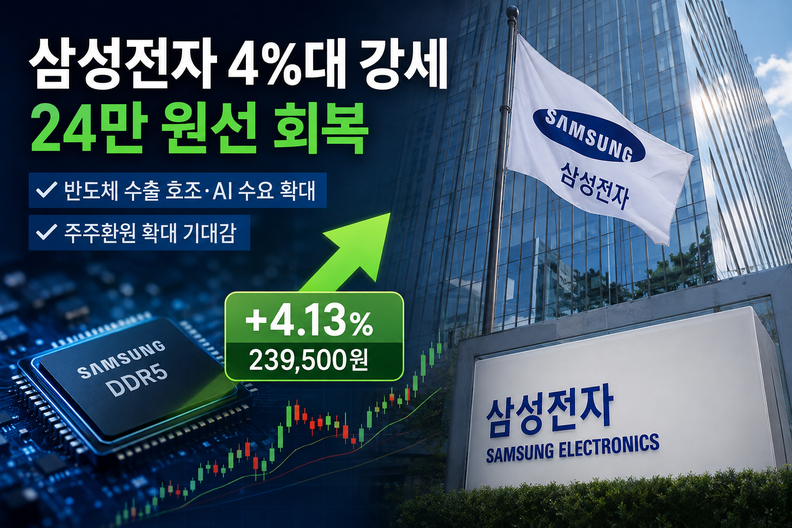
The most notable player in the process of re-treading the KOSPI 7,000 mark was undoubtedly the market leader, Samsung Electronics. On this day, Samsung Electronics closed at 274,000 won, up 4.98% from the previous trading day, sharply driving the overall index upward. SK Hynix, the other twin pillar of the semiconductor industry, also showed a stable trend, recording 186,800 won, a 0.59% increase. The rally in large-cap stocks was so welcome that one could almost hear cheers from around, saying Samsung Electronics had finally risen refreshingly. For shareholders who had suffered during the index correction, this was truly a godsend, instantly melting away investment anxieties. In terms of supply and demand from foreigners and institutions, a significant inflow of funds into Samsung Electronics was clearly observed. It is widely analyzed that foreign investors bought over 1 trillion won worth of Samsung Electronics shares in a single day, showing strong confidence. Positive factors included the consecutive good trend of semiconductor-related tech stocks in the US market and growing expectations for AI chip and infrastructure investments. Even office workers who were usually uninterested in stocks were so focused on the market that they considered whether to buy Samsung Electronics again after seeing the news. This explosive power of the market leader was sufficient to instill confidence that the KOSPI could break out of its box range and leap to a higher level.
Samsung Electronics recorded a surge of nearly 5%, and concentrated foreign buying strongly drove the KOSPI to settle at the 7,000 mark.
3. Individual Investors’ Massive Selling and Institutional Defense
As the index approached the 7,000 mark, individual investors dumped a massive amount of shares, nearly 3 trillion won, into the market. This was the result of investors who had incurred losses or were waiting to break even during the tedious decline and correction phase moving to take profits and manage risk. In fact, community bulletin boards were filled with posts confirming that they had sold to secure cash as the 7,000 mark was reached. It can be inferred that a psychology of anxiety, feeling uneasy even with a slight rise after a long period of stagnation or correction, was at play. However, the massive volume thrown by individuals was fully absorbed by strong net buying from institutions and other corporations. Institutions bought over 1.49 trillion won worth of shares in a single day, easily defending against the individual selling offensive. In the tug-of-war among market participants, supply and demand from institutions and some foreigners firmly supported the bottom of the index. For individuals, buying inflows continued tenaciously until the closing call auction, leading to regret of not holding on a bit longer. This supply and demand battle is evidence that the KOSPI has the healthy stamina to seek further gains rather than just a temporary rebound.
Although individuals dumped 3 trillion won worth of profit-taking shares, institutions actively absorbed them, achieving both index defense and rise.
4. International Oil Price Stability and Macroeconomic Environment
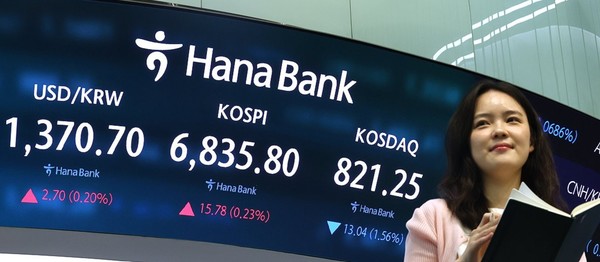
The KOSPI’s recovery of the 7,000 mark in 7 trading days was also positively influenced by favorable domestic and international macroeconomic indicators. Experts analyze that the recent stabilization of international oil prices eased inflation concerns, allowing the stock market to breathe. As raw material prices calmed, the burden of production costs for companies decreased, which directly translated into expectations for improved performance. Additionally, with exchange rate volatility somewhat mitigated, foreign investors’ view of the domestic stock market became much more comfortable. Mr. Kim, an office worker who checks economic news on his commute every morning, sighed with relief, saying he feels at ease as oil prices fall and the exchange rate stabilizes. Along with this, expectations regarding the direction of the US Federal Reserve’s monetary policy and the global AI investment boom converged. As major US tech stocks maintained a solid trend, a virtuous cycle was created where warmth was transmitted to the entire domestic semiconductor ecosystem. In the past, the KOSPI would shake helplessly at small external variables, but now, with its export resilience being so robust, it absorbs external shocks well. This macroeconomic stability clearly explains why one should accumulate quality stocks from a medium-to-long-term perspective rather than being elated or depressed by short-term stock price fluctuations. This market phase fully demonstrated how quickly the stock prices of companies backed by performance recover when the economic environment improves.
International oil price stability and a gentle exchange rate trend reduced macroeconomic burdens, providing a favorable environment for the KOSPI’s rise.
5. Brokerage Stock Rebound and KOSDAQ Market Atmosphere
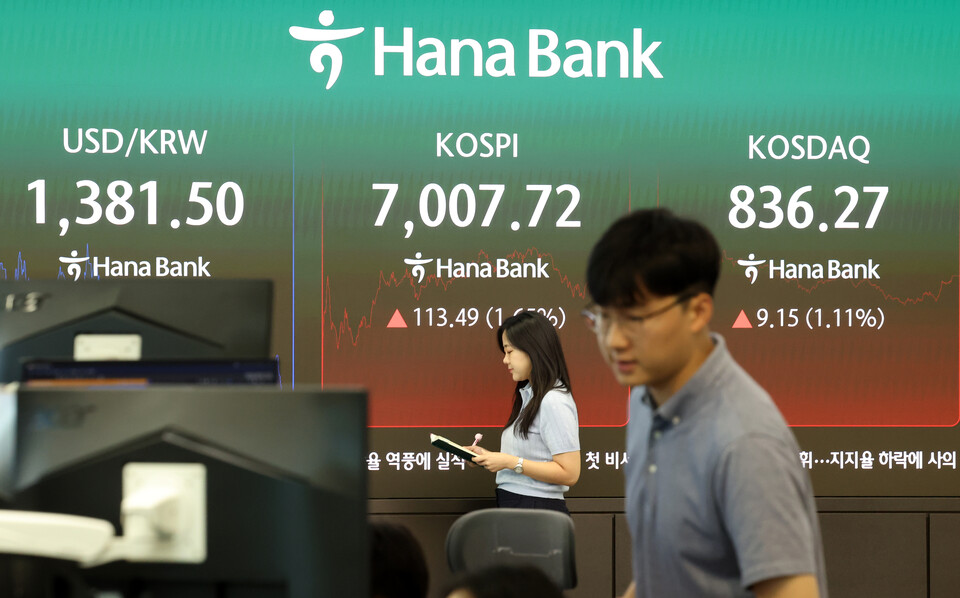
On the day the KOSPI reclaimed the 7,000 mark, the financial sector, including brokerage stocks, also showed a notable rebound. The KRX Securities Index, which had been stagnant along with the KOSPI’s decline and reduced trading volume, rose significantly, regaining vitality. The securities industry forecasts that as the index settles above 7,000, investment sentiment will revive and trading volume will increase, leading to improved performance for securities firms. An investor met at a stock investment gathering expressed expectations, saying that seeing brokerage stocks bottom out and rise makes it seem like the entire market has definitely come alive. Meanwhile, the KOSDAQ index also closed at 836.27, up 9.15 points, fully inheriting the warmth of the KOSPI’s rise. Despite net selling by foreigners and institutions, individual investors recorded net buying of about 140 billion won, pushing the index up. Selective buying inflows among small and mid-sized bio and core materials/equipment companies in the KOSDAQ market proved that investor enthusiasm was not cooling down. Thanks to the rare lively market where both KOSPI and KOSDAQ rose together, smiles spread across the faces of market participants. This all-around upward trend suggests that the market’s overall quality is improving, rather than funds concentrating only on specific market leaders.
Driven by the KOSPI’s recovery of the 7,000 mark, brokerage stocks rebounded in tandem, and the KOSDAQ also closed higher amid individual buying.
6. Future Stock Market Outlook and Wise Investment Strategies
With the KOSPI dramatically reclaiming the 7,000 mark in 7 trading days, investor interest in the future direction of the stock market has reached its peak. Experts assess that the index’s downside rigidity has become very solid, as the semiconductor export boom is likely to continue for some time. However, since the index has risen significantly in a short period, volatility due to individual profit-taking and external variables may occur frequently. Therefore, a strategy of narrowing the portfolio to focus on proven quality semiconductor stocks and leading sectors is wiser than investing recklessly with borrowed money. Rather than being swayed by rumors, the habit of carefully checking corporate fundamentals and export indicators is the shortcut to successful investing. Just as the stock market always brings sweet rewards after trials, this reclamation of the 7,000 mark is an occasion to reconfirm the resilience of our economy. For office workers checking their portfolios before a holiday, it is time to calmly reflect on whether their investment assets are in truly growing industries. Wisdom is needed to continue regular investment based on belief in long-term growth, rather than being elated or depressed by short-term stock price fluctuations. It is advisable to keep a close eye on companies with high export ratios and excellent performance in preparation for the upcoming quarterly earnings season. We sincerely hope that all investors will achieve abundant investment returns, using this KOSPI rebound as a stepping stone.
Thorough stock selection based on performance, backed by strong semiconductor exports, and a long-term perspective on split buying strategies are needed.
Frequently Asked Questions
=