With the final election of People Power Party Representative Kim Hee-jung as the Chair of the Education Committee for the second half of the 22nd National Assembly, attention from the political and diplomatic circles is intensifying. Having previously served as the Minister of Gender Equality and Family under the Park Geun-hye administration, she has taken on the key position of standing committee chair immediately upon her return to the National Assembly after eight years. Given that education is a field directly linked to the future of parents and children, her leadership is more crucial than ever. In this article, we will take a detailed look at how Representative Kim Hee-jung’s impressive political career and her experience as a minister will influence her performance as the Chair of the Education Committee. If you have always been interested in education policy, you will easily understand the significance of this appointment. Let us track together what changes her return to the center of politics, after navigating a period of political upheaval, will bring to our children’s classrooms.
=
Background of Rep. Kim Hee-jung’s Election as Chair of the National Assembly Education Committee and Summary of Key Career Profile
1. The Significance of the Election as Education Committee Chair and Her Remarks
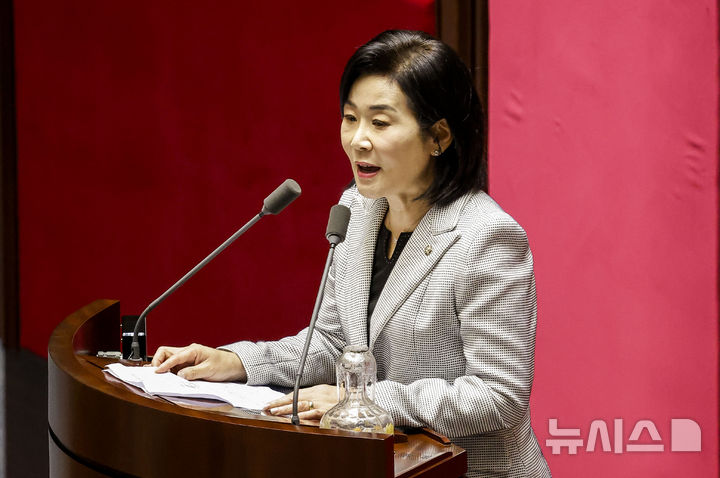
Representative Kim Hee-jung was recently elected as the Chair of the Education Committee in a plenary session of the National Assembly, taking on a weighty mission. At the party’s general meeting, she emphasized that education is a field where every politician and citizen must have their own distinct philosophy. In particular, she expressed a strong ambition to fulfill a substantive policy role that genuinely understands the hearts of parents. This pledge received significant attention amid growing calls for restoring trust in public education and reforming the college entrance examination system. She specifically presented a concrete blueprint for further strengthening communication with parents in their 40s and 50s. The intent is to drive changes that parents actually raising children can feel, moving beyond armchair policy debates. Indeed, political circles unanimously agree that broadening the connection with the parent generation is the key to resolving current issues. Expectations are already building on how Chair Kim will mediate conflicts in the education field based on this communication ability.
In her remarks on being elected as Chair of the Education Committee, Representative Kim Hee-jung promised to strengthen communication with parents in their 40s and 50s and to formulate substantive policies.
2. Career as Minister of Gender Equality and Family under the Park Geun-hye Administration
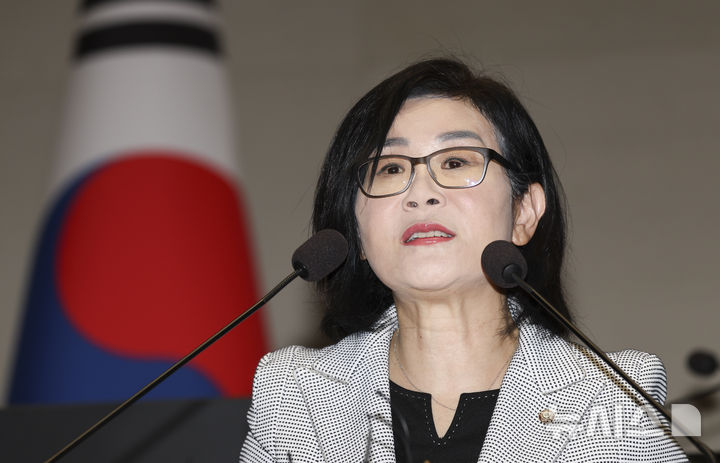
Representative Kim Hee-jung has a history of serving as the Minister of Gender Equality and Family from 2014 to 2016 during the Park Geun-hye administration. At the time, she led the framework for family policies and various projects aimed at enhancing women’s social participation and rights. The rich administrative experience she accumulated while serving as a minister will be a solid foundation for leading the Education Committee in the future. The experience of coordinating budgets and enforcing policies across ministries is a significant asset in understanding national governance. After leaving her ministerial post, she served as a Distinguished Professor at the International Graduate School of Busan National University, gaining experience in both academia and practice. As someone who has experienced both theory and the field, there is great expectation that she will not take the complex voices in the education field lightly. Attention is focused on whether her unique tenacity and drive, demonstrated during her time as a minister, will be equally effective in the education sector. The fact that a politician who has mastered both administration and legislation is leading education is worthy of high marks in terms of policy execution.
Her experience as Minister of Gender Equality and Family under the Park Geun-hye administration and as a university Distinguished Professor serves as a powerful asset for performing her duties as Chair of the Education Committee.
3. Record as the Youngest Female Member of the National Assembly in South Korea
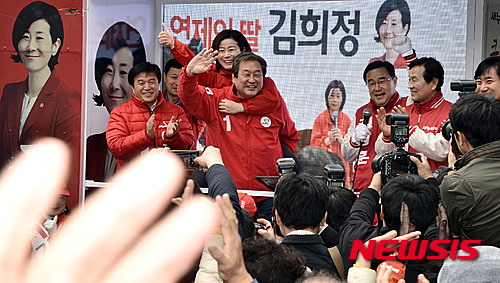
Representative Kim Hee-jung set a major record as the youngest female member of the National Assembly in South Korean legislative history when she was elected from the Yeonje District of Busan in the 17th general election in 2004. At the time, she was only 33 years old and dug into current issues with youthful vigor and passion amidst senior politicians. Her image of studying day and night and analyzing materials while working as a legislative assistant is still talked about among political insiders. The solid local constituency base she built since her first term was the driving force that allowed her to remain steadfast despite political storms. Following her victory in the 19th general election, she won again in the current 22nd general election, rightfully rising to the ranks of a senior third-term member. The fresh shock of her first term has now transformed into a central figure leading a standing committee from the heart of the National Assembly. She has quietly honed her own political philosophy while enduring the turbulent periods of Korean politics with her whole being. This personal narrative will be a great help in communicating with various generations in the education field, going beyond just a title.
After being elected as the youngest female member of parliament at the age of 33, she successfully won the 17th, 19th, and 22nd general elections, establishing a solid political foundation.
4. Experience as Blue House Spokesperson and Director of KISA
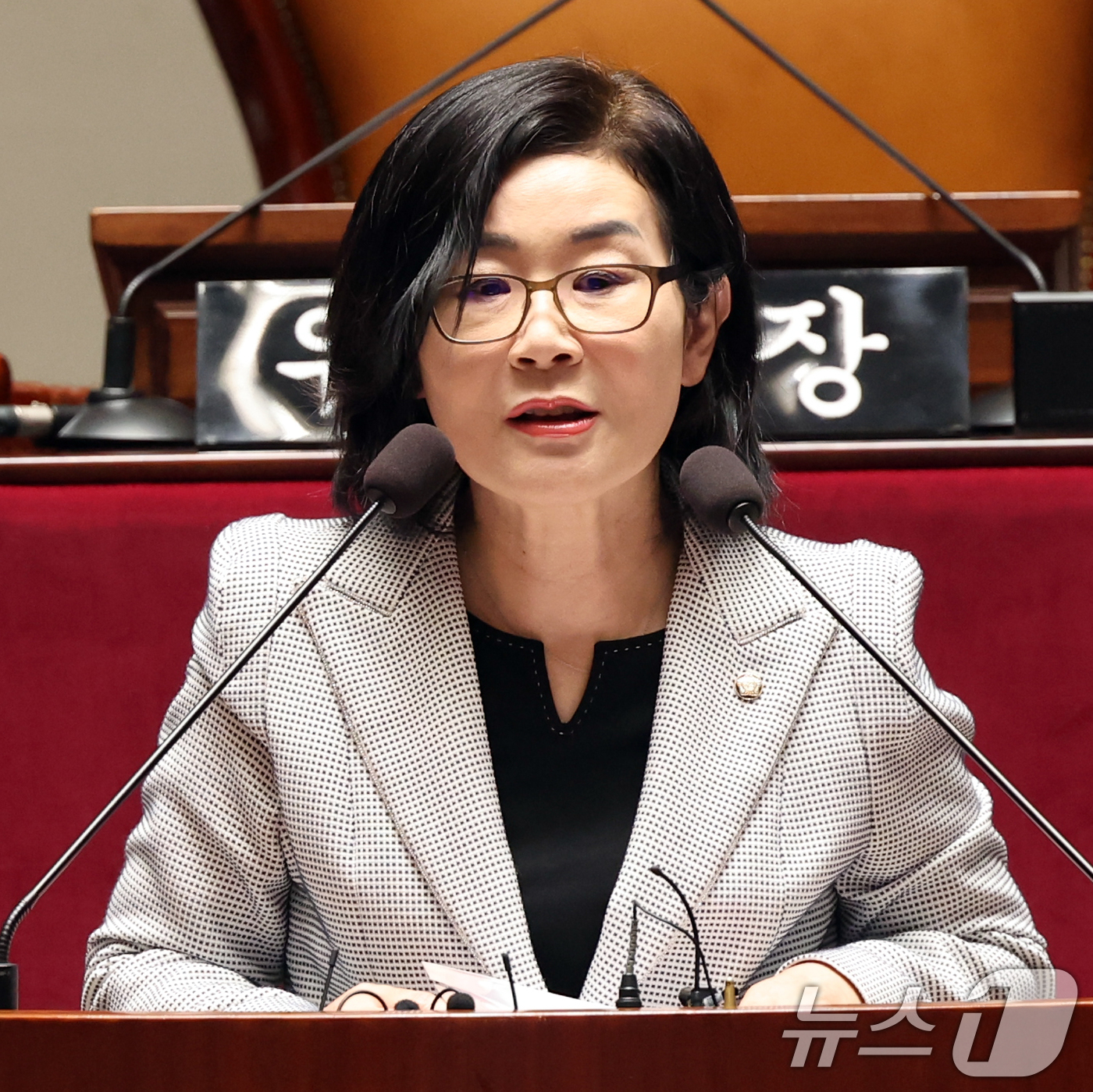
In addition to her roles as a member of the National Assembly and a minister, Representative Kim Hee-jung has solidified her political sensibility by going through various key positions in national governance. From 2010 to 2011, during the Lee Myung-bak administration, she served as the Blue House Spokesperson, accurately conveying the government’s policy messages to the public. She smoothly fulfilled the role of a bridge between the media and the people, proving her ability to communicate externally without wavering even in crisis situations. Additionally, in 2009, she served as the inaugural director of the Korea Internet & Security Agency (KISA), fully demonstrating her expertise in the information and communications field. This background is expected to shine even brighter in the rapidly changing education environment. As artificial intelligence and advanced technologies enter the classroom, expertise in information and communications can create significant synergy in formulating education policies. Having a figure who possesses both political sensibility and technical understanding as the head of education becomes an opportunity to accelerate the digital transformation of the education sector. The know-how she learned in the Blue House and government ministries will lead to efficient communication in the operation of the National Assembly Education Committee.
Through her experience as Blue House Spokesperson and Director of KISA, she has acquired both political sensibility and expertise in future technology fields.
5. Future Challenges Facing the Education Committee Chair

The National Assembly Education Committee, to be led by Chair Kim Hee-jung, faces major difficult issues such as the decline in the school-age population and the improvement of the college entrance examination system. The on-the-ground implementation of AI textbooks and the construction of a digital education environment are urgent tasks that can no longer be postponed. To resolve these current issues, she has prioritized listening unreservedly to the voices of parents and field teachers above all else. It is a will to create policies that actually breathe in the classroom, rather than those made up at a desk. Since education is a major issue spanning generations, wisdom is needed to reach consensus by looking only to the future of children, setting aside partisan interests. The unique drive and coordination ability she demonstrated during her time as a minister must be fully proven in this Education Committee as well. There is a historical lesson that education reform always ends in failure if it fails to present substantive alternatives that parents can feel. The public is watching with a hawk’s eye how the Education Committee led by Chair Kim will smoothly unravel these long-standing tasks.
It is urgent to formulate substantive alternatives to resolve the pile of education issues, including improving the college entrance examination system, responding to the decline in the school-age population, and introducing digital textbooks.
6. Return to Politics and Expected Future Role
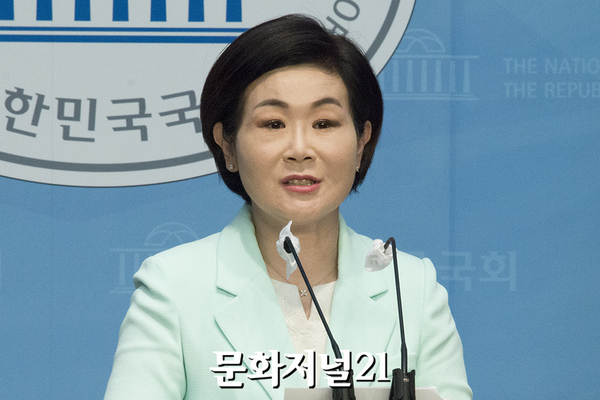
Representative Kim Hee-jung’s move to become the Chair of the Education Committee, following her grand return to the National Assembly after eight years, will be an important indicator for future political operations. For the People Power Party, it is interpreted as a very strategic move to solidify support from the parent demographic and expand its base. The public hopes that she will set aside complex political calculations for a moment and unfold policies tailored to the perspective of students and parents. Her full capabilities should be concentrated on healing conflicts in the education field and creating a future-oriented education ecosystem. In the midst of rapidly changing global education trends, the support of the National Assembly is absolutely necessary for South Korea to maintain its status as an education powerhouse. We believe that the National Assembly Education Committee, led by a chair who possesses both academic knowledge and rich national governance experience, will firmly hold the center. We expect that the various education reform bills to be proposed in the future will become effective solutions rather than tools for political strife. We sincerely cheer for the blueprint of education policies drawn by Representative Kim Hee-jung to be the key to opening a better tomorrow for our children.
Her return to the National Assembly after eight years and her role as Chair of the Education Committee will be a crucial turning point for changes in education policy and securing parental support.
Frequently Asked Questions
=