In the recruitment process for new hires at banks, artificial intelligence technology is rapidly evolving from a simple auxiliary tool into a core evaluation instrument that discerns candidates’ actual job suitability. This shift is driven by the increasing number of applicants using generative AI to draft their applications, which has made it difficult to identify top talent through traditional document reviews alone. Furthermore, quantitative metrics such as GPAs and language test scores have proven limited in fully reflecting the communication skills and problem-solving abilities required in today’s rapidly changing work environment. Consequently, major financial institutions are introducing video interviews where candidates view questions on a screen and respond, as well as sophisticated competency assessments, to enhance the discriminatory power of their selection process. Technology, originally introduced to block recruitment fraud, has now transformed into an advanced verification mechanism for selecting candidates with genuine skills. This article will take a detailed look at the changing trends in AI-based selection in the financial sector, the concerns faced by job seekers, and future prospects.
=
Banks Evolve AI Hiring to Rigorously Verify Job Competencies
1. The Limits of Document Screening Discriminatory Power and the Background of Technology Adoption
With the surge in job seekers using generative AI to write their self-introduction letters, traditional document evaluation methods have faced a serious crisis of losing their discriminatory power. Since anyone can now polish their applications with smooth and perfect sentences, it has become impossible to distinguish a candidate’s true writing ability or critical thinking based solely on word count or document content. Traditional quantitative indicators, such as GPAs and certified language test scores, have also shown clear limitations in predicting how flexibly a candidate can handle real-world work situations. Unforeseen incidents at sales counters or complex communication processes are areas that cannot be measured by numbers on a paper alone. For these reasons, financial institutions began to deeply question the effectiveness of document screening and eventually turned their eyes toward new evaluation systems. The erosion of trust in the document screening stage became the decisive catalyst for introducing new, technology-based verification methods. As applicants’ documents became increasingly similar, voices grew among HR managers that a new filter was needed to screen for genuine competencies. In the past, selecting candidates with excellent academic records or specifications was considered the right answer, but now the focus has shifted to finding talent with strong practical skills. The administrative resources spent reviewing documents that lack discriminatory power have also reached a significant level. To address these issues, each financial company has begun to lower the weight of document screening and research multi-faceted evaluations that combine technology. Among job seekers as well, a consensus has formed that methods allowing them to demonstrate practical competencies directly are needed, rather than the one-size-fits-all approach to writing self-introductions. Ultimately, the financial sector’s efforts to overcome the limitations of documents and the goal of practical-focused recruitment have converged, establishing technology-based evaluation as the mainstream.
The increase in AI-generated self-introductions has reduced the discriminatory power of documents, prompting the financial sector to seek new evaluation tools.
2. Current Status of Video Interview and Competency Test Implementation

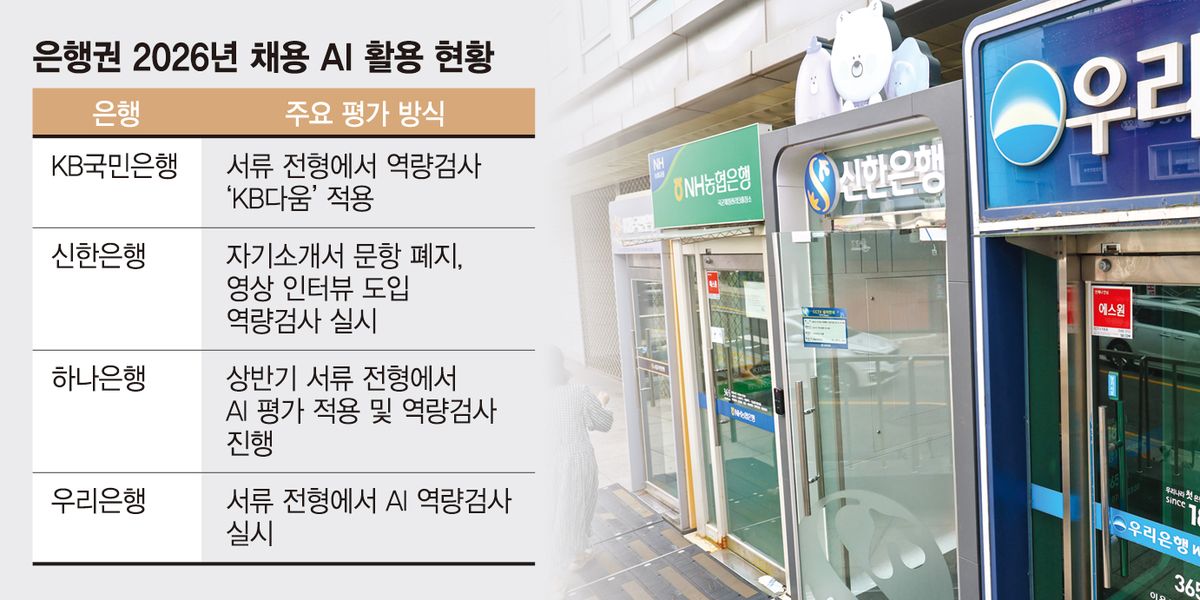
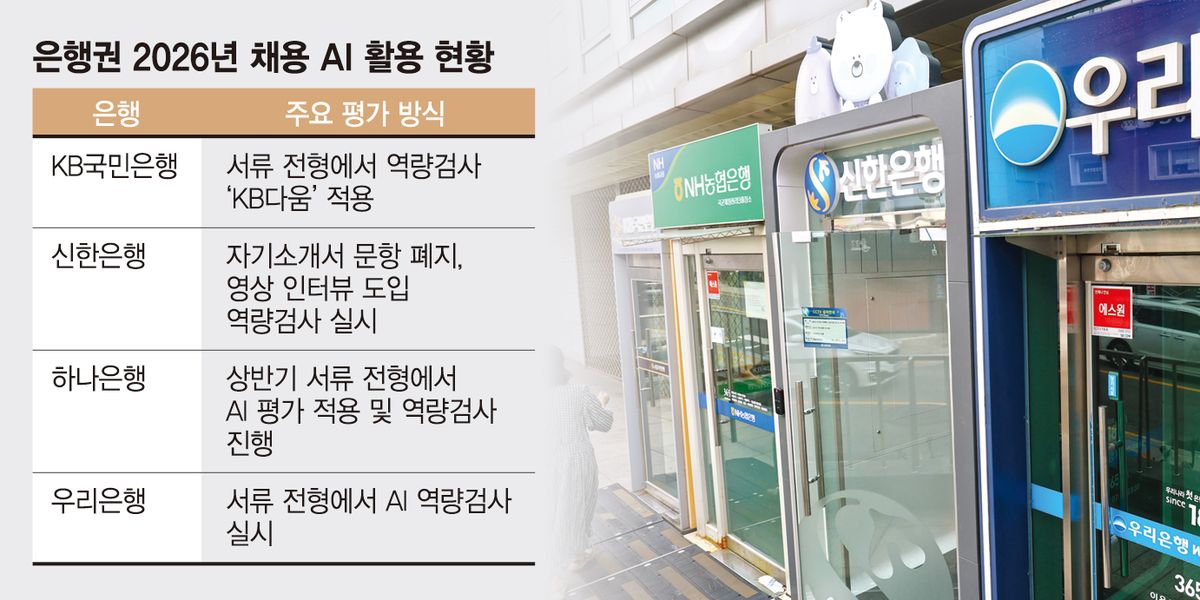
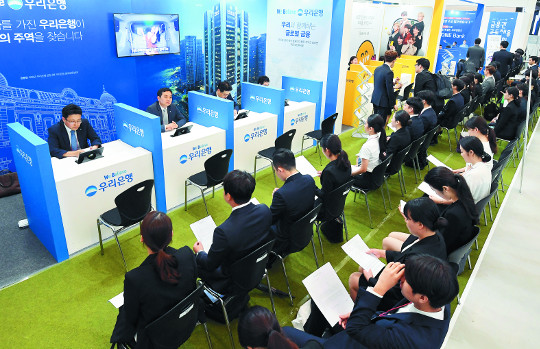
Shinhan Bank radically introduced video interviews in its second-half new graduate recruitment this year, completely eliminating the traditional self-introduction letter questions. In this process, candidates view questions on a screen and record their responses, which the technology then analyzes in detail to determine initial eligibility. To ensure fairness, a safety mechanism is in place where human reviewers manually re-check the cases of candidates who fail the first round. Woori Bank is also actively utilizing the competency tests it introduced in the second half of last year for its current recruitment cycle, meticulously assessing practical suitability. The tests adopted by these institutions have reached a level that goes beyond simple mock interviews, comprehensively analyzing candidates’ facial expressions, tone of voice, and the logic of their answers. In this way, commercial banks are measuring candidates’ attitudes and problem-solving tendencies in a three-dimensional manner, aspects that cannot be discerned through documents or written tests alone. Job seekers who have experienced video interviews or competency tests unanimously report feeling a completely different kind of tension compared to traditional interviews. Since they must provide logical answers within a set time while looking directly at the camera, it is easy to be flustered if they have not practiced speaking sufficiently. The unpredictability of questions and the need to align with invisible evaluation criteria behind the screen act as significant burdens. However, from the financial institutions’ perspective, it is a highly efficient tool that allows for the objective comparison of the attitudes and quick thinking of numerous candidates in a short time. Because it allows for the filtering of unsuitable candidates and the efficient narrowing down of top talent before the in-person interview stage, its utility is increasing day by day. It is expected that this precise, non-face-to-face diagnostic method will spread rapidly not only in the financial sector but also in other industries.
Major financial institutions, including Shinhan Bank and Woori Bank, are evaluating candidates’ practical suitability from multiple angles through video interviews and advanced competency tests.
3. History of Evolution from Initial Auxiliary Tool for Fairness
The financial sector’s adoption of technology in the selection process is not a new phenomenon, and its history holds a painful past. KB Kookmin Bank was the first in the industry to introduce technology into its online interview process in 2018, using it to analyze candidates’ characteristics and suitable job groups. The decisive background for the rapid spread of such technology at the time was the recruitment fraud scandal. When the Financial Supervisory Service inspected several banks, numerous suspected cases of recruitment fraud were detected, leading to a major social shock that resulted in prosecutorial investigations and trials. As voices grew demanding that external requests or subjective biases of evaluators be fundamentally blocked, technology capable of objective judgment emerged as an alternative. Other major institutions, such as Hana Bank, also actively introduced technology into the document screening stage to ensure fairness. In the initial stages, the adoption of technology focused on serving as a shield against human errors or improper requests. Introduced to meet the social demand for fairness, this auxiliary device became an opportunity for the technology itself to improve in quality over time. While it was once at a level of simply assigning scores and ranking candidates, it now reads even subtle changes in facial expressions that are difficult for the human eye to detect. Technology, which was once a defensive measure to block external undue pressure, has evolved into an offensive weapon for selecting superior talent. This change was possible because the technology gained trust as being excellent not only in preventing fraud but also in verifying actual job capabilities. A small attempt started to uphold fairness has completely transformed the selection culture of the financial sector today.
Technology, once an auxiliary tool to prevent recruitment fraud, has developed into an active evaluation tool for discerning talent’s practical competencies.
4. Correlation Between Reduced Recruitment Scale and Advanced Evaluation Criteria
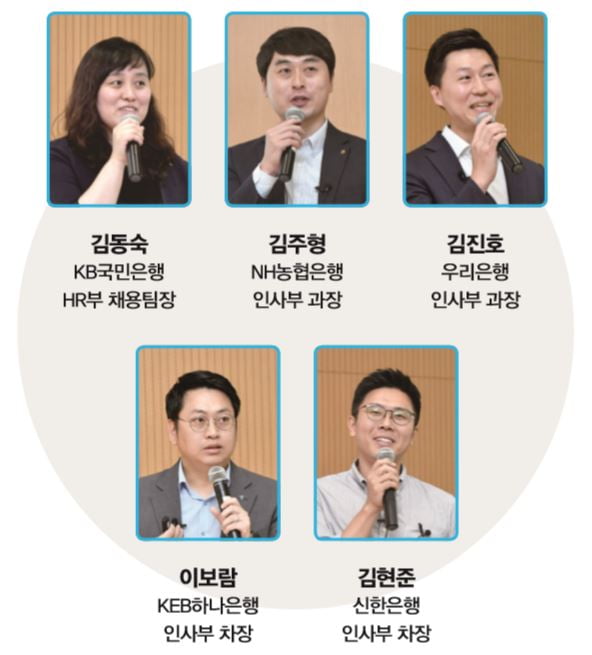
Over the past few years, the overall recruitment scale of major commercial banks has noticeably decreased, further fueling changes in evaluation methods. The number of new hires in the first-half public recruitment at the four major commercial banks—KB Kookmin, Shinhan, Hana, and Woori—decreased significantly compared to the previous year, and a similar trend of reduction is continuing in the second half. As the total number of hires decreases while the number of applicants remains high, the competition has become incredibly fierce. It was clear that existing methods had limits in fairly and accurately ranking candidates who must pass through this narrow gate. HR managers inevitably faced deepening concerns about needing to increase discriminatory power to select a small number of truly competent talents. As the number of hires shrinks, the need for precise evaluation tools to minimize errors and find talent that perfectly fits the job becomes even greater. The reduction in recruitment scale has ultimately led to a result where in-depth verification for each job seeker is strengthened. In the past, when large numbers of people were hired in bulk, many candidates could be filtered out through written tests or simple documents. However, in the current era of selecting a small elite group, candidates’ potential and job suitability must be scrutinized in great detail from the initial stages. In this market situation, technology-based evaluation methods have established themselves as an essential alternative for selecting a limited number of personnel rationally. For job seekers, this means they face the challenge of effectively proving their unique competencies according to the evaluation criteria required by technology to cross the lowered threshold. Ultimately, the reduced number of hires and advanced evaluation methods are inextricably linked, driving the current changes.
As recruitment scales shrink and competition intensifies, evaluation methods have become stricter to precisely discern candidates’ true competencies.
5. Confusion and Voices of Job Seekers
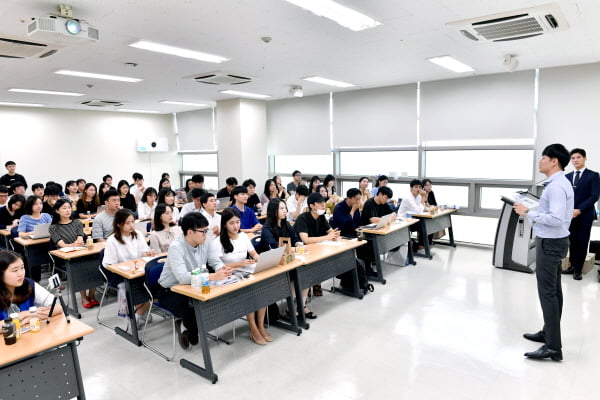
Due to selection methods that change difficultly and unpredictably every year, the confusion and fatigue of job preparation students have reached their peak. In particular, for interviews or competency tests conducted via screen, it is difficult to know the clear criteria for what actions or tones of voice will result in high scores. Complaints continue to be posted on internet communities and job-seeking cafes, expressing frustration that despite multiple attempts, they cannot gauge the evaluation criteria. The fact that a machine, rather than a human looking them in the eye, determines initial eligibility acts as an enormous psychological pressure on candidates. Many job seekers fear that their true passion or human appeal may not be properly captured by the cold eyes of a machine. The fact that the scope of preparation is too broad and there is no single correct answer is a major factor further exhausting job preparation students. In response to this anxiety, financial institutions actively explain that the machine does not make the final decision. They maintain that the technology serves only as a reference for initial screening, and final eligibility is determined by humans through a supplementary review process. However, from the job seeker’s perspective, if they fail the initial machine evaluation, they do not even get the chance for human review, making it difficult to shake off their anxiety. While voices demanding transparent disclosure of evaluation criteria are growing, companies are maintaining a cautious attitude due to concerns about the security of their evaluation systems and potential negative effects. This difference in perspective between companies and job seekers will remain an important challenge to be resolved as the selection system evolves. Ultimately, job seekers are facing the double burden of adapting to mechanical evaluation methods in line with changing trends while simultaneously building their own differentiated practical experience.
Job seekers are experiencing significant confusion and psychological pressure due to machine-based evaluation methods with unclear criteria.
6. Prospects for Advanced Technology Adoption and Job Seekers’ Response Strategies
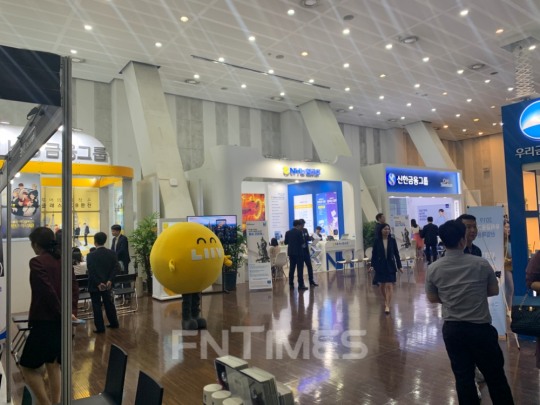
In the future, the selection process in the financial sector will completely transition from simple document screening to a more sophisticated and multi-faceted technology-based verification system. As the accuracy of technology improves daily, the precision in assessing candidates’ job suitability and potential is expected to increase. However, efforts to balance the fairness advantages brought by mechanical evaluation with the inclusiveness of human-centered evaluation will also proceed in parallel. Financial institutions need to consider providing more specific guidelines on evaluation criteria or expanding communication channels to reduce candidate confusion. In this massive trend, job seekers should not complain about the changes of the times but rather accurately understand and prepare for the characteristics of the new evaluation methods. Practicing the ability to convey one’s sincerity and practical competencies logically without being flustered in front of a machine has become an essential condition for job success. To survive in the rapidly changing selection market, it is most important to build job-specific expertise that is valid in the actual field, moving beyond formal self-introduction writing. One must cultivate the ability to communicate naturally in non-face-to-face interview settings and the problem-solving ability to remain calm in unexpected situations. Simply memorizing correct answers can actually be a factor for point deduction in machine evaluations, so it is necessary to logically organize one’s own vivid experiences. Additionally, one must remember that while technology does not dominate the entire process, the final judgment is made by humans, and therefore should not lose an attitude that inspires human trust. To avoid being left behind in fierce competition, the wisdom to quickly read trend changes and respond flexibly is required. With thorough preparation and a flexible mindset, it is entirely possible to smoothly cross the threshold of future recruitment.
Technology-based evaluations will become more advanced in the future, and job seekers must thoroughly prepare focusing on practical competencies and non-face-to-face communication skills.
Frequently Asked Questions
=