The cost of cataract surgery varies significantly, ranging from several hundred thousand to several million won, depending on the type of intraocular lens (IOL) used and the policies of the medical institution. I remember being taken aback by the complex lens price lists and additional examination items when I took my mother to the ophthalmologist last year. I was even more confused by conflicting advice from those around me: some said monofocal lenses are cheaper but require reading glasses, while others claimed multifocal lenses are expensive but offer freedom from glasses. With recent stricter review standards from the Health Insurance Review & Assessment Service (HIRA), it is now crucial to carefully consider whether medical expense insurance will apply. Rather than simply chasing the lowest cost, the wisest approach is to select the lens that best fits your specific eye condition. In this article, we will thoroughly break down all the factors influencing cataract surgery costs in an easy-to-understand manner.
=
Cataract Surgery Costs: A Complete Guide to Lens Prices, Types, and Insurance Claim Conditions
1. The Truth About Price Differences Between Monofocal and Multifocal Lenses
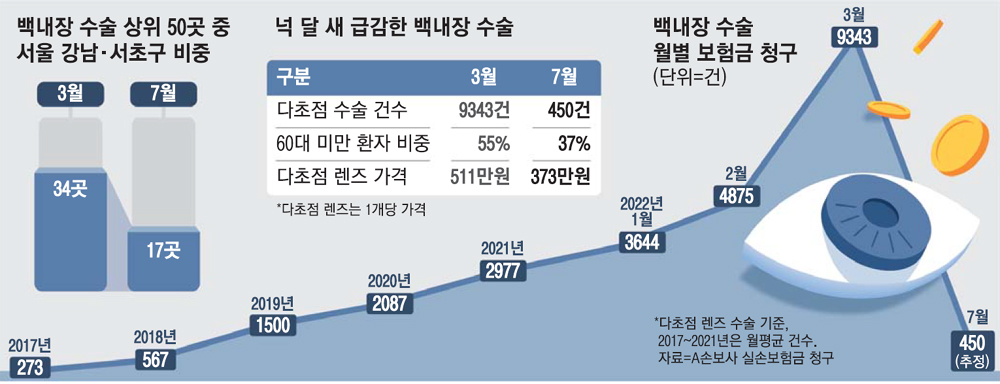
The most critical factor determining the cost of cataract surgery is the type of intraocular lens (IOL) implanted in the eye. Traditionally, monofocal lenses are widely used and covered by national health insurance, resulting in a relatively lower financial burden. However, since they focus on either distance or near vision, patients often still need to wear reading glasses after surgery. On the other hand, premium lenses such as multifocal or extended depth of focus (EDOF) lenses are classified as non-covered items, leading to significantly higher costs. When both eyes are operated on, the total cost can exceed several million won, which may place a considerable burden on household finances.
However, it is important to remember that the most expensive lens is not necessarily the perfect answer for your daily life. If you frequently drive at night or have a job requiring precise work, the glare and halos associated with multifocal lenses can actually cause discomfort. In fact, a friend of mine chose a multifocal lens despite the high cost but eventually gave up night driving due to persistent light scattering. Rather than making an impulsive decision based solely on the price list, you should consult thoroughly with your doctor to assess your retinal health and lifestyle habits. I strongly emphasize that finding a smart balance between cost and convenience is paramount.
Intraocular lenses should be selected based on a comprehensive evaluation of individual lifestyle patterns and eye health status, not just cost.
2. Medical Expense Insurance Application and Stricter Claim Conditions

The biggest variable in cataract surgery costs is whether medical expense insurance will reimburse the expenses and the strict review criteria of insurance companies. In the past, it was relatively easy to get coverage for multifocal lens costs through medical expense insurance, but recently, insurance companies have become particularly strict in their reviews. According to HIRA guidelines, it must be proven that hospitalization is necessary based on a doctor’s clear opinion, rather than for the simple purpose of vision correction. Cases where insurance claims are rejected due to formalistic admission/discharge records or hospitalization periods falling below the required standard are becoming increasingly common.
When preparing for my mother’s surgery, I repeatedly received advice from insurance agents to carefully check the document formats in advance. In addition to the diagnosis certificate, you must have a detailed itemized statement of medical expenses, a surgical confirmation letter, and vision test results to ensure a smooth claim process. If unnecessary special tests or excessive treatment items are included, the insurance company may refuse payment or the issue may escalate to litigation. It is safe to check the terms of your specific insurance policy before surgery and ask the hospital’s administrative team about their experience with issuing documents for medical expense insurance claims.
You must thoroughly prepare accurate diagnosis certificates and documentation proving hospitalization treatment to meet the strengthened insurance review standards.
3. Essential Factors to Check Beyond Cost When Choosing a Hospital

When comparing cataract surgery costs, seeking only the lowest price can be a risky gamble. Since the eyes are the most sensitive and precious part of our body, the surgeon’s extensive clinical experience and surgical proficiency are paramount. While large ophthalmology clinics in Gangnam and major cities often offer various discount events, additional examination costs are frequently added during the actual consultation process. If corneal thickness, retinal health, and astigmatism are not thoroughly assessed during precise examinations, your vision may remain blurry after surgery.
Looking at actual patient reviews, it is easy to find people who were lured by low prices only to consider re-surgery because their astigmatism was not properly corrected. Cataract surgery is not just about removing the cloudy lens; the core objective is how clearly the patient can see in real life. To avoid regret, you must carefully evaluate whether the hospital is equipped with advanced equipment and has a robust system for handling emergencies. While comparing costs across multiple hospitals, the expertise of the medical staff and the quality of post-operative care programs should be your top priorities.
Hospitals should be selected based on the surgeon’s expertise, precision examination equipment, and thorough post-operative care, rather than just low prices.
4. The Reality of Hidden Additional Costs and Examination Fees
When inquiring about cataract surgery costs, it is easy to be caught off guard if you visit a hospital based solely on prices advertised online. This is because advertised prices usually list only the most basic monofocal lens and minimal costs. If you add toric lenses for astigmatism correction, non-covered precision tests, or special medication costs, the final bill can snowball rapidly. Costs for pre-operative tests such as ultrasound examinations, retinal photography, and corneal endothelial cell counts also vary by hospital.
A friend’s mother expected the surgery to cost around one million won, but the total expenditure was nearly double due to various non-covered test fees and special lens costs. When receiving guidance in the hospital lobby, you should meticulously ask, pointing to each item, whether the total estimated cost includes value-added tax and additional medication fees. If you have common inflammatory conditions like autumn conjunctivitis or dry eye syndrome, the surgery schedule may be delayed, or additional treatment costs may arise. When receiving a quote, you need to be assertive in requesting a detailed breakdown of each item.
Do not be misled by the lowest advertised price; carefully verify the final estimated quote, including examination and medication fees.
5. Checklist for Families When Parents Undergo Eye Surgery
Many children plan cataract surgery for their parents as a gift of filial piety ahead of holidays or Family Month. However, parents often view blurred vision as a simple sign of aging and strongly resist visiting the hospital. Children should take the initiative to observe their parents’ usual eye condition and subtly ask about differences in vision between day and night or daily inconveniences. It is essential for a guardian to accompany the patient when scheduling the surgery to learn about pre- and post-operative precautions together.
Immediately after surgery, the patient must wear an eye patch and will find it difficult to wash their face or hair for several days, making the help of children essential. Additionally, prescribed eye drops must be instilled accurately at specific times to prevent inflammation and promote rapid vision recovery. Many elderly patients have experienced side effects from using leftover eye drops from previous prescriptions without thinking, so special caution is required. Wisdom is needed to coordinate not only the funding but also the schedule for caring for parents during the post-operative recovery period.
Parental eye surgery requires not just financial preparation, but also the child’s attentive companionship and post-operative care, such as administering eye drops.
6. Final Advice and Outlook for Making a Wise Choice
The cost of cataract surgery is not just about saving money; it is a significant investment that determines your vision for the rest of your life. With advancements in medical technology, the performance of intraocular lenses is evolving daily, and various customized lenses will continue to enter the market. However, no matter how advanced the technology becomes, it is difficult to achieve satisfactory results without an accurate understanding of the patient’s eye condition and thorough information gathering. You must not be swayed by immediate low-price special offers or hearsay from others; a thoroughly prepared attitude is required.
Based on the information shared today, please seek honest consultations from various ophthalmology clinics to find the best path for your eyes. The joy of facing a bright and clear world again is a precious value that cannot be exchanged for any cost. For parents or yourself who are currently seeing the world blurry through glasses, start making a gradual plan today. With meticulous comparison and correct knowledge, you can fully achieve a successful surgery that reduces the financial burden while maximizing the quality of vision.
Cataract surgery is a process of completing the optimal choice for your eyes through thorough information gathering and precise examinations.
Frequently Asked Questions
=