Unconditionally canceling an existing policy to switch to a new medical expense insurance product can lead to significant financial loss if the decision is based solely on premium costs. As of 2026, with rising inflation, many people are seriously considering switching because the monthly premiums draining their wallets have become a burden. However, if you do not carefully examine the coverage scope and out-of-pocket conditions of your current product, you may end up with reduced reimbursements when you actually visit the hospital, leading to regret. For example, if you frequently receive non-critical non-covered treatments, it may be more advantageous to keep your older policy. From now on, we will accurately compare the characteristics of medical expense insurance by generation and look at the rational criteria for making the right choice for you. You must meticulously analyze the pros and cons of your past contracts to prevent unnecessary expenses.
=
Complete Guide to Generational Differences in Medical Expense Insurance and How to Reduce Premiums
1. The Evolution from 1st to 4th Generation

Medical expense insurance shows clear generational differences depending on the enrollment period, ranging from 1st generation to current products. Older products offered very broad coverage with almost no out-of-pocket costs, significantly reducing the burden of medical bills, but they came with high maintenance costs. On the other hand, over time, out-of-pocket costs have gradually increased to prevent moral hazard and ensure fair premium distribution among the majority of policyholders. To understand how the premiums we pay monthly have changed, it is necessary to briefly review the evolution of each generation. In the past, nearly the full amount was reimbursed, but now there is a clear distinction in the proportion borne by the individual between covered and non-covered services. These changes were an inevitable choice to lower loss ratios, and the system is expected to continue to be refined. It is too burdensome to blindly maintain a policy based solely on the broad coverage of the past, given the massive renewal premium hikes that occur every year. Conversely, it is also common for people to switch to recent products simply because they are cheaper, only to find themselves unable to afford costs for physical therapy or non-covered injections. Therefore, you must first honestly reflect on your usual hospital usage habits and health condition. If you look at past data, the unique pros and cons of each generation are clearly distinct, so hasty cancellation is strictly prohibited.
Since the coverage scope and out-of-pocket ratio vary significantly depending on the enrollment period, you must first understand the characteristics of each generation.
2. Essential Checks Before Switching from an Old Medical Expense Insurance Policy
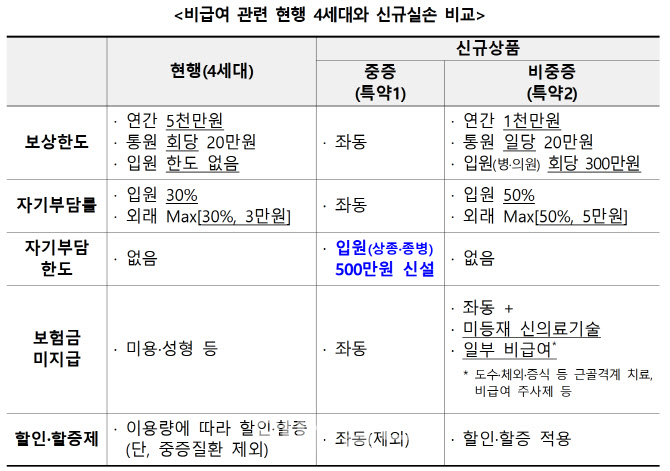
Before organizing old contracts and moving to a new product, you must definitely compare your current coverage with your future needs. If you blindly cancel a policy just because you hear from others that premiums have risen too much, it may become difficult to fill the same coverage gaps later. In particular, products enrolled in the past are often more advantageous in terms of outpatient treatment limits and hospitalization coverage amounts compared to products currently on sale. If you rarely visit the hospital and are generally healthy, you may seriously consider switching due to the burden of increasing renewal premiums. However, conversely, if you have chronic diseases or require periodic treatment, it is much more beneficial to maintain your existing conditions. You can easily see cases where people hastily switched based on advice from acquaintances and suffered disadvantages during the claim process for surgery or hospitalization costs. You should consult with your insurance agent or carefully review the terms and conditions and the details of the insurance money you have actually received. You must coldly calculate which product is more advantageous in defending against the medical expenses you will incur in the future, rather than simply comparing whether premiums are high or low. When remodeling your insurance, you need the wisdom to make a decision by comprehensively considering your current health status and anticipated future treatment plans.
Do not simply compare the monthly outlay; consider the advantages of your current contract and your frequency of hospital visits together.
3. Understanding Non-Critical Non-Covered Treatments and Out-of-Pocket Costs

Recently launched medical expense insurance products apply premium discounts or surcharges depending on how frequently non-critical non-covered treatments are used. Since the frequency of using non-covered items such as physical therapy and nutritional injections varies greatly depending on individual choice, institutional management is implemented. If you rarely receive non-critical non-covered treatments, switching to the latest product with lower premiums becomes a definite benefit. Conversely, if you frequently receive such treatments or visit the hospital regularly for disease management, it is much more economical to maintain your existing product. You must accurately know how out-of-pocket ratios differ by generation to prevent a medical bill bomb. In reality, there are many patients who are shocked to discover late that their out-of-pocket costs have increased significantly after receiving physical therapy dozens of times over a year. You must understand the structure where renewal premiums for the following year skyrocket as the number of treatments increases. If you do not receive any special non-covered treatments other than colds or minor injuries, the direction of saving on premiums is correct. However, if your profession or constitution requires regular orthopedic treatment, an unreasonable switch can actually be harmful.
The pros and cons of medical expense insurance change completely depending on the frequency of non-covered treatment usage, so you must analyze your hospital visit patterns.
4. How to File Medical Expense Insurance Claims Easily Without Documents
There are still many people who give up on insurance payouts because the process of separately collecting documents after paying hospital bills is cumbersome. In the past, it was very troublesome to issue receipts and detailed statements one by one and send them by mail or upload photos. Recently, with the expansion of claim systems directly linked to hospital computer networks, a path has opened for easy processing without documents. Of course, it will take more time for perfect linkage to extend not only to large hospitals but also to local clinics and pharmacies, but convenience has noticeably improved. Because claims can be completed with just a few touches through smartphone apps, it has been well received by busy office workers. Please recall the past memories of rushing to the pharmacy on your way home from work and often losing the paper receipt. Now, by using apps that support mobile simple claim functions, you can retrieve medical records and complete the application in a few seconds. You must develop the habit of using spare time to organize overdue details all at once before the 3-year insurance claim deadline passes. You will realize that consistently receiving even small amounts back provides a surprisingly helpful boost to your household budget.
Actively utilizing the mobile simple claim system allows you to receive insurance payouts quickly and easily without the hassle of preparing documents.
5. Combination with Other Insurance and Remodeling Strategies
Medical expense insurance is the most basic shield for covering medical costs, but since it does not directly cover diagnosis or surgery fees, coordination with comprehensive insurance is important. When organizing old insurance, you must look at the whole picture, including death benefits or injury coverage bundled as special clauses, not just medical expense insurance. You should boldly clean up unnecessary duplications or old special clauses that disrupt your payment pace, leaving only the essential coverage. When remodeling, you must maintain a payment level that you can afford monthly, considering your family’s lifestyle patterns and asset situation. It is good to receive an objective diagnosis from an expert, but ultimately, the final decision must be made according to your own economic standards. If your family’s total insurance premium expenditure occupies a large portion of your household income, you need to perform a major overhaul this time. Blindly holding onto old contracts can turn into a heavy burden when income decreases after retirement. Firmly protecting necessary coverage and stopping useless premium leakage is the starting point of wise asset management. Do not be swayed by recommendations from others; start by accurately grasping the fixed expenses that go out of your account every month.
You must check other coverage contracts in addition to medical expense insurance to rationally readjust your overall insurance premium expenditure.
6. Wise Selection of Medical Expense Insurance and Future Outlook
As the medical environment and systems change rapidly, medical expense insurance is also evolving in a direction that prevents moral hazard among policyholders and increases sustainability. In the future, a structure will be established where greater benefits are returned to policyholders who reduce unnecessary excessive treatment and focus on essential care. It is most important to judge with your own health status and economic situation at the center, rather than blindly following products that others say are good. Please take out the certificate of the product you are currently enrolled in today and carefully check the coverage content and out-of-pocket conditions. Small interest and accurate comparison are the most certain ways to protect your valuable assets from a massive medical bill bomb in the future. New generation products to be launched in the future are also highly likely to flow in a direction that induces rational medical usage habits among policyholders. You must exercise the wisdom to periodically check what conditions are most advantageous for you, keeping up with changing trends. Do not be anxious about rumors from your surroundings; coldly calculate the pros and cons based on your actual hospital usage records. The small decision you make now will become a sturdy prop that protects the stability of your household economy several years from now.
You must actively manage your medical expense insurance based on your health and economic situation amidst changing systems.
Frequently Asked Questions
=