The Individual Retirement Pension (IRP) account is an essential tool for retirement planning that offers substantial tax deduction benefits on annual contributions while allowing for the management of diverse investment assets. Mr. Kim, an office worker, was pleasantly surprised to receive a significant tax refund during his year-end settlement after making additional contributions to his IRP account last year. In the past, many people simply left their funds in principal-and-interest guaranteed products, but recently, more individuals are actively managing their accounts through securities firms and banks by investing in index funds and performance-linked products. Given that the scale of accumulated funds has grown significantly, it is now time to move beyond passive management and engage in careful asset management tailored to one’s personal preferences. This article explores the core structure of the IRP pension system and effective strategies to maximize actual returns. Let us examine the specific details to help you lead a financially savvy life.
=
IRP Pension Tax Deduction Limits and Practical Strategies to Boost Returns
1. Understanding the IRP Pension and Eligibility
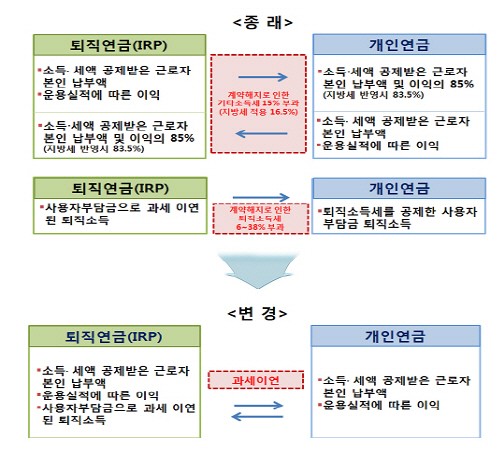
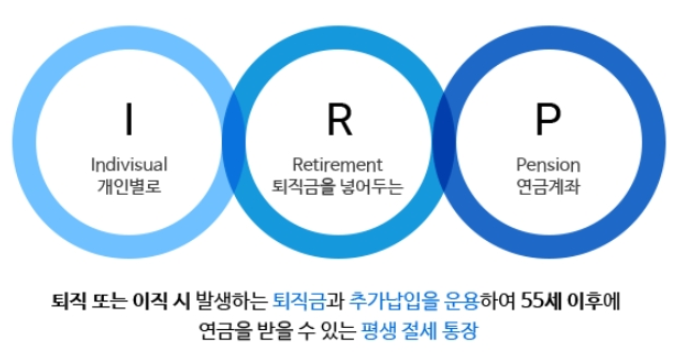
The IRP pension is a personal account that consolidates severance pay received upon changing jobs or retiring, allowing individuals to manage these funds for their retirement. It is not limited to corporate employees; anyone with income, including self-employed individuals and public officials, can freely open and utilize an account. While this money was previously only accessible upon retirement, the system has evolved to allow individuals to make additional contributions and actively grow their assets. The system has gained attention because it is a tax-qualified pension that offers tax deductions upon contribution and applies lower tax rates when withdrawn as a pension. If you have heard colleagues boasting about their year-end tax refunds, they are likely actively utilizing their IRP accounts. You can prepare for your retirement step by step by opening an account in your own name and either saving a fixed amount monthly or depositing surplus funds in a lump sum.
The IRP pension is a personal retirement account available to anyone with income, offering the dual benefits of securing retirement funds and enjoying tax advantages.
2. Maximizing Tax Deduction Benefits and Tax Savings

During the year-end settlement season, the primary concern for office workers is naturally how much tax they can get back. When you contribute to an IRP pension account, you can receive a direct refund of a certain percentage of your contribution from your taxes, up to the annual tax deduction limit. Although the deduction rate varies based on total income, consistent annual contributions provide significant benefits for employees. For example, Mr. Park, an employee who has diligently saved a fixed amount monthly, says he feels a sense of relief each year when he receives a substantial refund during his year-end settlement. Since the limits for pension savings and IRP accounts are calculated in combination, you can maximize your tax savings by strategically allocating funds between the two. Saving on taxes is equivalent to generating returns, making this a mandatory course for employees. However, if you terminate the account prematurely, you may be required to return the tax benefits previously received, so a long-term perspective is essential.
Contributions to an IRP account qualify for high tax deductions during year-end settlement, providing a tangible effect of asset growth.
3. Balancing Principal-and-Interest Guaranteed and Performance-Linked Products
In the past, retirement pension accounts were primarily managed with low-interest fixed deposits or principal-and-interest guaranteed products, which often struggled to keep up with inflation. However, recently, there has been an explosive increase in subscribers turning to performance-linked products such as index funds and mutual funds. Nevertheless, one cannot allocate all funds to risky equity assets; therefore, adjusting the ratio with safe, principal-and-interest guaranteed products is crucial. By utilizing various investment products from securities firms and banks, you can construct a portfolio that balances stability and profitability according to market conditions. In fact, guaranteed products that preserve a portion of the principal while aiming for additional returns are increasingly appearing for those approaching retirement. You should carefully consider whether your investment style is stable or aggressive, and allocate your assets by referring to expert advice and the latest financial product guidelines.
To achieve satisfactory returns, it is essential to appropriately mix stable principal-and-interest guaranteed products with high-yield performance-linked products.
4. Risk Asset Investment Limits and ETF Management Precautions
When investing in risk assets such as index funds or equity funds within a retirement pension account, it is important to note that only up to 70 percent of the total accumulated funds is allowed. The remaining 30 percent must be allocated to safe assets. Many novice investors struggle with account management because they fail to maintain this ratio. For instance, even if you want to aggressively fill your account with equity products, you may reach the legal limit and be unable to make further purchases. Therefore, it is wise to familiarize yourself with products classified as safe assets, such as bond index funds or maturity-matching products, and calculate the ratios accordingly. Additionally, you should frequently check the latest product classification standards provided on securities firm apps or websites to ensure compliance with regulations. Understanding and adhering to these rules allows you to avoid unnecessary trading restrictions and grow your assets efficiently.
Risk assets can only account for up to 70 percent of total accumulated funds, making it essential to manage the ratio by filling the remaining 30 percent with safe assets.
5. Utilizing Robo-Advisors and Latest Asset Management Services
Recently, robo-advisor discretionary services, which use artificial intelligence to manage assets according to individual preferences, have gained significant attention in the financial market. Since busy office workers find it difficult to monitor securities screens daily and switch stocks, this method allows expert-level algorithms to adjust the portfolio automatically. Major pension providers, such as Mirae Asset Securities, have introduced these hyper-personalized services to significantly enhance subscriber convenience. Both young professionals who lack confidence in asset management and middle-aged individuals nearing retirement can actively utilize these innovative financial services. Using various pension savings labs and customized solutions available in the market can greatly reduce the psychological anxiety associated with long-term investing. Trusting in technological advancements and managing your valuable retirement funds more smartly and conveniently is the modern approach to wealth management.
Utilizing AI-based robo-advisor discretionary services allows for systematic pension management, akin to expert care, even amidst a busy daily life.
6. Long-Term Investment and Outlook for Successful Retirement Preparation
The IRP pension is not a speculative tool for making quick money but rather a marathon aimed at securing a comfortable retirement decades in the future. If you check your account and react emotionally to every market dip or unsettling economic news, it will be difficult to complete the long-term investment race. The attitude of consistently accumulating funds monthly without being swayed by short-term market waves will ultimately return as a powerful compounding effect. Receiving a fixed monthly cash flow in the form of a pension, rather than a lump sum, at the time of retirement will completely change the quality of your life. Check your account status now, review your tax deduction limits and product composition, and design a secure future. Small, consistent actions will become the most powerful weapon in determining the abundance of your retirement.
The key to successful retirement preparation is to remain steady against short-term market fluctuations and consistently contribute and manage your assets from a long-term perspective.
Frequently Asked Questions
=