The key drivers of overseas stock markets in late September 2026 are being shaped by a combination of factors, primarily the slowdown in US inflation indicators. As recently released US inflation data came in below market expectations, major indices in the New York stock market shifted to an upward trend. In contrast, while the Japanese Nikkei index showed strength, the French CAC40 index fell by 0.9%, highlighting a clear regional divergence. Domestically, it is worth noting that securities settlement funds have reached 107 trillion won, significantly increasing the pressure for capital to move into overseas stocks and alternative investments. In particular, with the official announcement of the Alaska Liquefied Natural Gas (LNG) project, expectations for benefits in the steel and steel pipe industries have grown, making attention to energy infrastructure stocks essential. This article meticulously organizes the recent overseas market trends, changes in the domestic capital market, and specific foreign investment strategies to prepare for October.
=
Essential Checks for October Overseas Stock Investing! Strategies to Break Out of the Semiconductor Box Range Amidst Slowing US Inflation and Alaska LNG
1. New York Stocks Breathe Easier Amidst Slowing US Inflation: What is the Outlook for September’s Close?
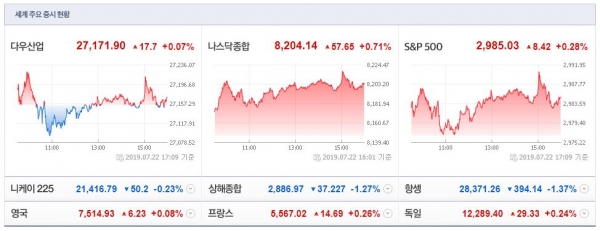
As the inflation rate perceived by US workers was reported lower than market forecasts, expectations rapidly spread on Wall Street that the Federal Reserve’s pace of monetary policy normalization might slow down. Due to this improved macro environment, the S&P 500 and Nasdaq, representative indices of the New York stock market, rose simultaneously, increasing the likelihood of a positive close for September. As the rate-cut scenario becomes more concrete, downward pressure on long-term interest rates emerges, and it is noticeable that the valuations of high-growth tech stocks and companies in the development stage are being re-adjusted. However, the medium-to-long-term burden of US long-term interest rates exceeding 5% remains, requiring caution to avoid excessive leverage investments. The buying timing that individual investors struggle with most is the volatility period formed after inflation indicator releases; historically, buying at the bottom strategy has been effective in such periods. Therefore, it is safer to approach from a perspective of split buying rather than fearing a sharp drop, and to maintain a medium-to-long-term holding perspective rather than seeking short-term profits from a surge.
On the other hand, major European and Asian stock markets during the same period showed independent trends driven by individual countries’ economic indicators and political situations, rather than a gentle simultaneous rise. While the French economy faced downward pressure on the CAC40 index due to weak domestic demand and social conflicts over energy costs, Japan recorded a satisfactory rise of 1.9% in the Nikkei 225 index amidst expectations for yen value stabilization and corporate reform. This regional disparity clearly shows that portfolios should be diversified according to each region’s independent economic cycle, rather than investing in a single index-tracking format. If you are focused only on the European market, you should not ride the current weak trend but need conservative management by increasing the cash ratio. Instead, it is wise to focus on sectors with structural growth potential in the Japanese market, such as semiconductor equipment or enterprise software. Ultimately, what has been confirmed as the last week of September passes is that the global economy is in a phase of “pluralistic stability,” moving at its own pace rather than unilaterally synchronizing.
The rise in the New York stock market has been strengthened by slowing US inflation, but Europe and Asia have shown differentiated trends, making a regional diversification strategy essential.
2. Domestic Securities Industry Loses 107 Trillion Won: Changes in Overseas Stock Supply and Demand and Responses
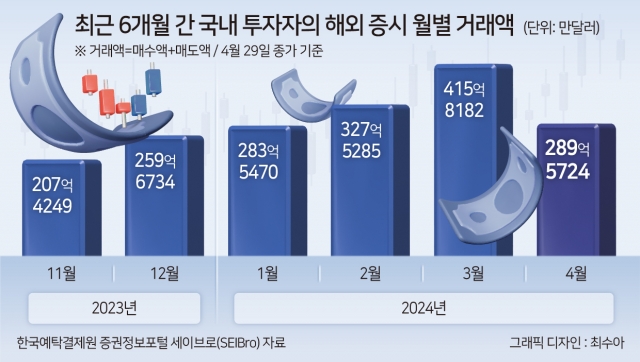
Customer deposits and short-term deposits (CMA balances) at domestic securities firms have recorded a historic figure, surpassing 107 trillion won. This is because, as securities firms failed to secure effective interest rate competitiveness, the phenomenon of customers temporarily withdrawing funds or moving them to other financial sectors has intensified. However, the fact that there is a clear movement to convert these funds into actual investment products, rather than simple withdrawals, is evidence that liquidity in the market remains abundant. The securities industry judges that this massive amount of waiting funds will flow not into bonds, but into new IPOs, wrapped accounts, and particularly overseas stock purchases. This is because the trend of customers turning their eyes to growing markets in the US and Japan is increasing compared to stocks previously considered undervalued in the domestic market.
This change in supply and demand immediately affects the behavior of foreign investors, becoming a catalyst for faster capital turnover between domestic and overseas stock markets. From the perspective of individual investors, this timing can be seen as the best opportunity to aim for differentiated returns through trading overseas stocks. As a specific example, a strategy of reallocating some funds from high-volatility domestic stocks to stable dividend stocks or tech stocks in the US market is effective. However, since exchange rate risk cannot be completely ignored, efforts to dilute exchange losses through split buying are necessary, given that the won-dollar exchange rate is fluctuating around the 1,350 won line. Additionally, it is good to develop the habit of using overseas stock savings investment services provided by securities firms to automatically buy in small amounts monthly. Ultimately, as important as understanding the flow of the large sum of 107 trillion won, the strategy of finding one’s own position within that flow is becoming crucial.
The shift of 107 trillion won in domestic short-term funds to overseas investment products is positive for the supply and demand of the overseas stock market, and split buying considering exchange rates is advantageous.
3. The Alaska LNG Project and the Revival After 15 Years of Silence: The Case of Ajinkatek
The $54 billion Alaska Liquefied Natural Gas (LNG) export project, officially announced as part of investment negotiations with Korea under the Trump administration, has caused a sharp ripple effect in the domestic capital market. The prevailing analysis is that this massive project goes beyond simple resource development and has explosively increased order volumes for the steel, steel pipe, and energy equipment industries for maritime transport and local infrastructure construction. The fact that some steel and steel pipe stocks showed strength in the domestic stock market on September 30 due to expectations for the Alaska LNG project corroborates the reality of the project. Investors should now pay attention not only to resource-holding companies but also to related equipment and parts manufacturers that can generate substantial revenue during the project’s construction and operation phases.
Along with this, the 15-year journey of Ajinkatek, which escaped court management and became a vanguard for group succession, holds symbolic meaning. The process of a company that suffered losses in the hundreds of billions of won due to failed overseas oil field development and faced delisting, then recovering through rehabilitation procedures, leaves a lesson on practical investing. The process of assets lost during the restructuring of large corporate groups being restored to value shows that while time is needed, it can bring certain returns. Currently, companies in overseas markets with expectations for recovery based on such structural lines are being evaluated by time value rather than gold price. This is why, in the case of the Alaska project, the benefits in the initial construction stage and the benefits in the medium-to-long-term operation stage must be distinguished. It should be judged that stable value based on grasping the timing of the project’s materialization is greater than a speculative approach aiming for short-term surges.
The Alaska LNG project is expected to benefit the steel and steel pipe industries, and long-term successful restructuring cases suggest medium-to-long-term value re-evaluation.
4. October’s Main Theme ‘Samjeon-Nix’: Will the Memory Supercycle Continue?
The securities industry points to semiconductors and power equipment as the core investment areas for the domestic stock market in October, emphasizing the sustainability of the so-called “Samjeon-Nix” theme. While the rise in memory prices showed signs of slowing, demand for HBM (High Bandwidth Memory) due to the construction of AI data centers still exceeds supply. In particular, overseas semiconductor interconnect solution company Credo Technology and electronics manufacturing services company Sanmina are attracting attention, indicating that overall system performance improvement requires not just individual chips but also high-density interconnect technology. It will be effective for domestic investors to adopt a diversification strategy that includes such overseas interconnect technology companies in their semiconductor portfolios centered on Samsung Electronics and SK Hynix. The power equipment sector is also expected to maintain robust growth due to data center cooling solutions and high-voltage transmission network improvements.
As the October conference season approaches, corporate guidance (estimates) and roadmap announcements are expected to be concentrated. What is important at this time is the change in actual revenue growth rates and margins. One must confirm the expansion of market share by companies holding an advantage in the competitive landscape between manufacturers, not just simple price increases. If signals emerge that the memory supercycle will end sooner than expected, an exit strategy should be prepared simultaneously. For example, it is important to develop the habit of monitoring the impact of changes in the DRAM and NAND ratio and checking quarterly earnings release dates. Ultimately, semiconductors can be seen as establishing themselves as a long-term economic defense and growth driver, rather than a one-off surge material.
The semiconductor and power equipment themes are expected to continue in October, requiring a diversified investment strategy for “Samjeon-Nix” and overseas interconnect solution companies.
5. Europe, the Fortress of Overseas Expansion, and the Essentialization of ESG: Attracting Foreign Capital
Under the headline “40-Year Fortress Europe, Knocking on the Door of K-Stocks,” the overseas expansion of the Korean capital market is trending toward securing market accessibility itself, going beyond simple export volumes. In the past, entry into the European market was nearly impossible due to high tariff barriers, strict regulations, and deeply rooted local supply chains, but now the door is opening through digital transformation and the expansion of ESG management. It has become clear that to attract large-scale foreign capital, one must have ESG indicators in place to resolve owner risk or governance issues. This means it is a mandatory task for Korean companies to build competitiveness on the global stage.
In particular, in a situation where ESG-related regulations and standards are continuously being strengthened, the value of consulting and certification service companies related to this is rising. As listing maintenance requirements from the Financial Supervisory Service or the Korea Exchange become more stringent, only companies that respond proactively will have an increased probability of being selected for the portfolios of foreign institutional investors. Conversely, companies with insufficient systematic disclosure systems or board structures lacking independence face a high risk of being ignored, no matter how good their financial condition is. We must place such governance elements as the first item on the checklist when evaluating stocks. Through the process of Korean companies entering the European market, domestic shareholders will ultimately demand higher transparency and regulatory compliance.
The background of K-Stocks’ expanded entry into Europe and improved ESG transparency have established themselves as essential conditions for attracting foreign capital.
6. October Investment Strategy: Portfolio Check and Scenario-Based Action Guide
Approaching October, it appears that investing in the overseas stock market is most stable when approached by scenario. First, if US inflation indicators continue to slow and expectations for Federal Reserve rate cuts strengthen, a strategy of increasing the weight of growth stocks leading tech stocks is effective. This reflects the additional upside potential of the Nasdaq index and is because the leverage effect can act significantly in an environment where interest rates are falling. On the other hand, if inflation rises again more than expected and the macroeconomic situation becomes unclear, funds should be shifted to defensive utility and energy infrastructure stocks. Steel stocks related to the Alaska LNG project and power equipment stocks are judged to be sectors that can enjoy structural benefits even amid such uncertainty.
What individual investors must remember is that overseas stock investment entails enduring the additional risk of exchange rate fluctuations. In a situation where the won-dollar exchange rate can move from the 1,350 won range to the 1,400 won range, it can be dangerous to accumulate only small-cap stocks indefinitely without exchange hedging. Even with small amounts, one should overcome the disadvantage of time through split buying and diversify using index or sector funds rather than going all-in on specific stocks. It is required to closely watch market reactions centered on the release timing of the US employment report and Consumer Price Index in early October. Ultimately, smart overseas stock investment consists of a process of adjusting hands and feet according to market conditions, not a single bomb-chasing buy.
Adjust the weight of growth and defensive stocks according to US inflation and Federal Reserve policy scenarios, and split buying and fund utilization are essential for exchange rate risk management.
Frequently Asked Questions
=