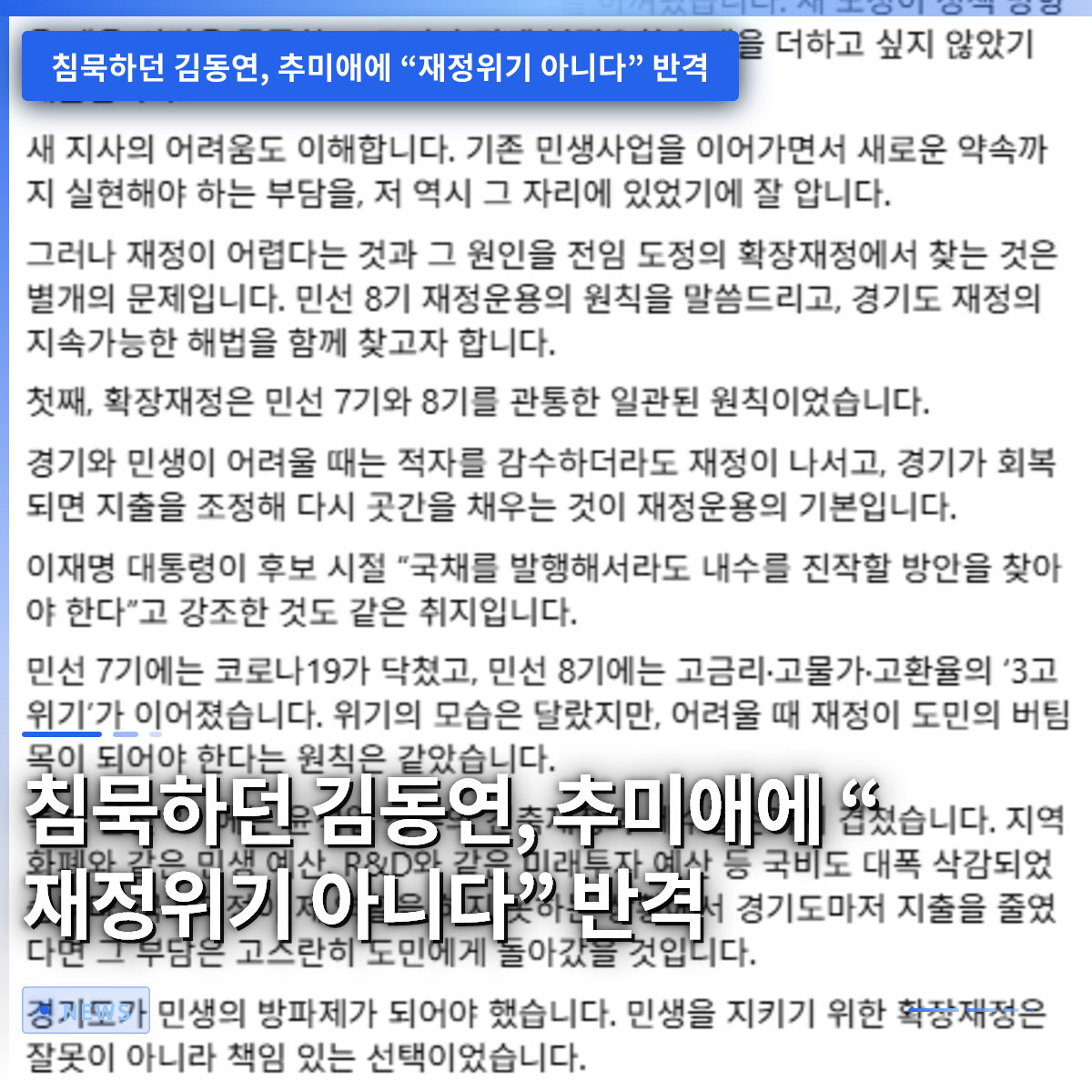
Former Governor Kim Dong-yeon has directly refuted current Governor Choo Mi-ae’s criticism regarding the province’s deteriorating finances, stating, “This is not a fiscal crisis,” causing significant commotion in local politics. This marks the first time in over 100 days that the former governor has broken his silence in response to Governor Choo’s strong criticism that the previous administration’s expansionary fiscal policies led to the current financial difficulties. His core argument is that while operating a country or local government inevitably involves various challenges in budget management, immediately defining these issues as a catastrophic crisis is an exaggeration. This conflict is expected to have considerable repercussions not only as a simple political dispute but also on future budget formulation and the direction of regional policy. We will carefully examine what both sides’ claims mean and how they will impact the lives of the citizens. Amidst this political confrontation, we will delve deeply into the essence of budget management and the hidden context that we should pay attention to.
=
Former Governor Kim Dong-yeon Breaks Silence to Counter Governor Choo Mi-ae: “This Is Not a Fiscal Crisis”
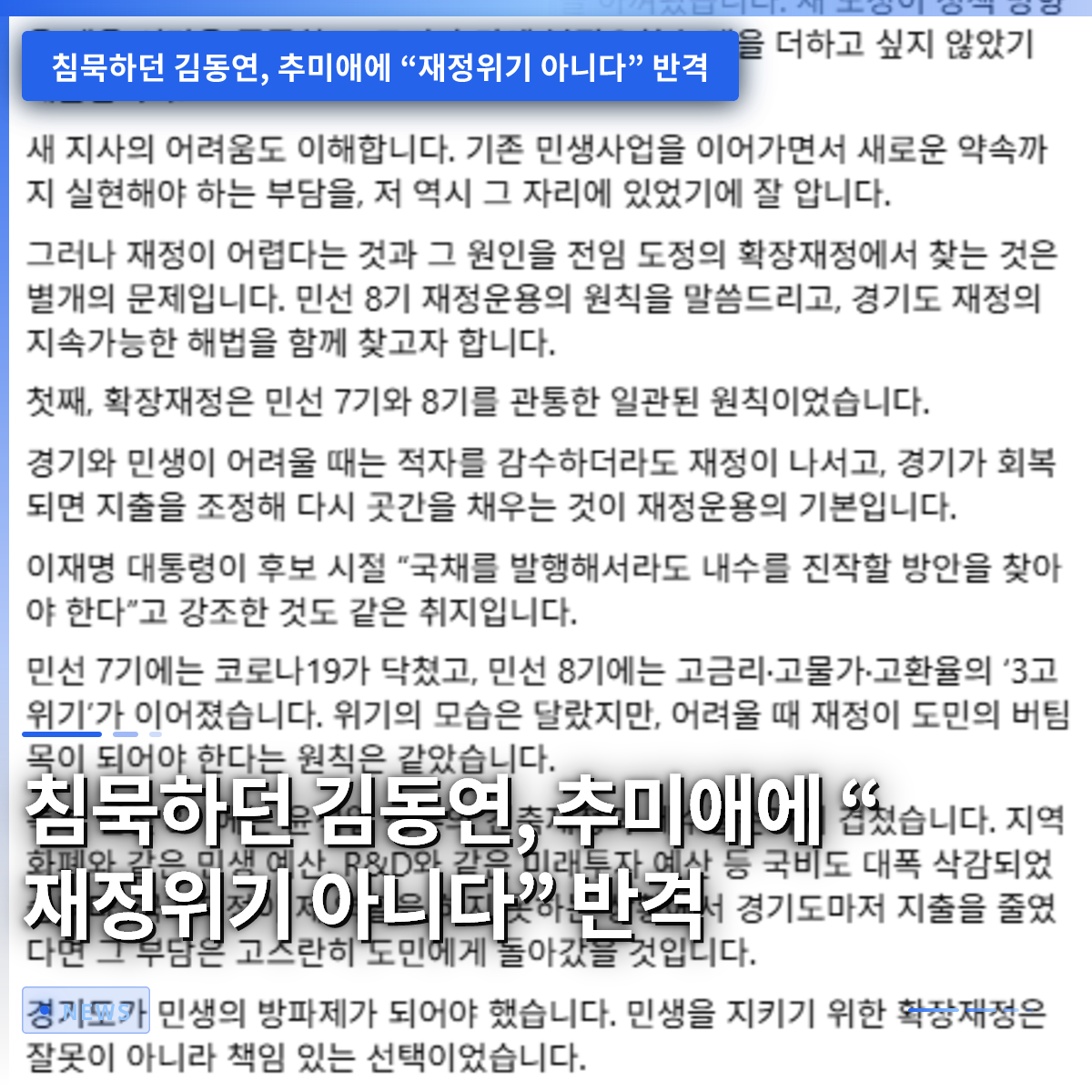
1. Background of Governor Choo Mi-ae’s Criticism of the Previous Administration

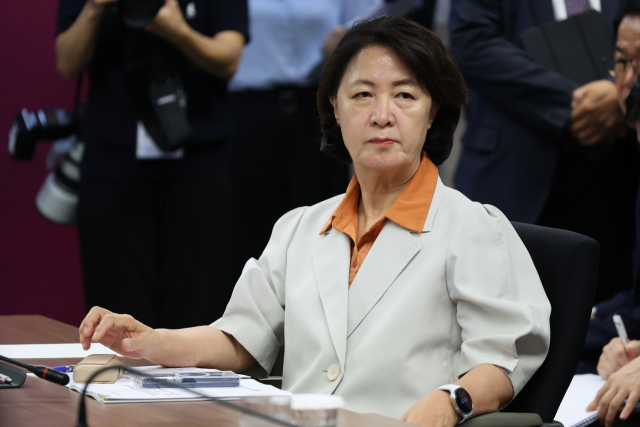
Governor Choo Mi-ae of Gyeonggi Province has repeatedly pointed out through provincial meetings and various official occasions that the root cause of the province’s current budget shortfall and financial deterioration lies in the excessive expansionary fiscal management during the 8th elected term. Her logic is that because the previous administration recklessly launched projects and increased debt, the current administration is left with insufficient resources. In fact, as the local government’s financial reserves have thinned out, major regional projects have faced disruptions or delays in budget execution. These criticisms have served not just as blame for the past, but as a justification to hinder various ongoing livelihood support projects and infrastructure construction. From the perspective of the current administration, this is interpreted not as an attempt to evade responsibility by blaming predecessors, but as a will to transparently inform citizens of the objective financial situation and to bring about renewal. However, there have been numerous arguments that such claims could be perceived as political retaliation or a shifting of blame.
This intense pressure from the current administration ultimately served as the spark that triggered the long-awaited counterattack from the former governor, who had remained silent for a long time. The atmosphere inside and outside the provincial government was filled with tense strain, to the point where even his aides and supporters were worried about how long he would keep his mouth shut. Eventually, unable to hold back any longer, former Governor Kim Dong-yeon directly announced his stance through his social media accounts, entering an active defensive battle.
The conflict between the two sides intensified as Governor Choo Mi-ae pointed to the previous administration’s expansionary fiscal policy as the cause of the financial difficulties.
2. Former Governor Kim Dong-yeon’s Counterattack and Core Arguments

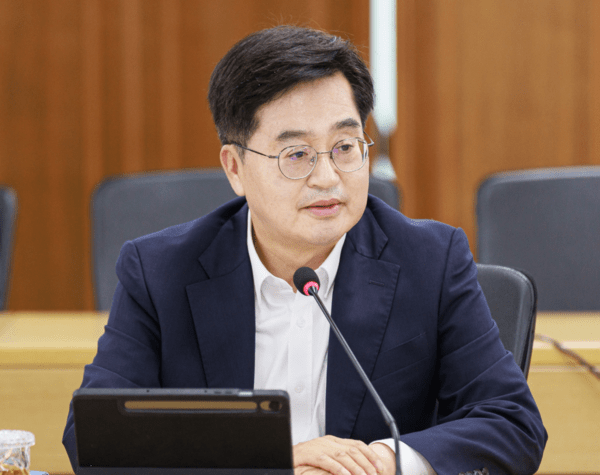
Former Governor Kim Dong-yeon’s counterattack, breaking his silence, was very resolute and clear, emphasizing that defining the current situation as a crisis is fundamentally wrong. He explained that temporary difficulties or periods of adjustment are natural phenomena that can always occur in the process of executing budgets and managing finances. Therefore, he countered that packaging the current financial state of Gyeonggi Province as a fiscal crisis, as if a major disaster had occurred, is an exaggeration for political purposes. He maintains that the expansionary fiscal policy implemented during the 8th elected term was a necessary choice to protect the lives of citizens and secure future growth drivers amidst a difficult economic situation. He added that they had managed finances based on the logic that money must be spent on essential areas, even if it means taking on debt, for the economy to circulate and to ease the burdens on ordinary people.
This rebuttal shows a strong will to defend the legitimacy of past policies, going beyond merely defending against political attacks aimed at himself. With the former governor personally taking the microphone to rebut, the power struggle between the two sides is intensifying, and the provincial assembly is in an uproar. From the perspective of citizens, it is inevitable that they feel confused about whose words are the truth while listening to the diverging claims of the two politicians.
Former Governor Kim Dong-yeon emphasized the legitimacy of expansionary fiscal policy, urging that difficulties in budget management should not be exaggerated as a crisis.
3. Differing Perspectives on Local Fiscal Soundness
At the core of this dispute lies a fundamental philosophical difference in how to view the fiscal soundness of local government organizations. Those who advocate for conservatism or austerity believe that debt should be minimized and reserves filled up to safely prepare for an economic crisis that could strike at any time. On the other hand, those who support active fiscal expansion argue that the government and local authorities should boldly spend their reserves rather than just holding onto them, as this is what revives the livelihood of the people. Criticisms arise that policy continuity is shaken as the fiscal philosophy clashes extremely each time the leader of the massive Gyeonggi Province organization changes. Budgets are like living things; it is difficult to judge them solely by the mistakes or achievements of a single year, and accurate judgments can only be made by observing trends over at least several years.
Nevertheless, the practice of interpreting indicators to suit political interests and highlighting only the opponent’s flaws is increasing citizens’ fatigue. In reality, even a slight shortage in local government budgets directly impacts the livelihoods of small business owners and young people who need immediate support. What is more important than watching politicians fight is the substantive improvement of quality of life, and there are strong voices of concern that administrative resources are being wasted due to these consumptive arguments.
The conflict arose from differing perspectives on fiscal soundness, and policy continuity is being shaken.
4. Reactions from the Provincial Assembly and Local Society
The Gyeonggi Provincial Assembly and local society, watching the sharp exchange between the current and former governors, are in an atmosphere of awkwardness while keeping a close watch. Voices supporting or criticizing the two sides are divided depending on the stance of the majority and minority parties, and harsh words are being exchanged even within the assembly. With the review of next year’s budget bill approaching, opinions are sharply divided between those who argue for significant cuts to the previous administration’s project budgets and those who claim they should be maintained as is for livelihood stability. Mayors and governors of city and county local governments are also experiencing confusion in coordinating budgets with the province, complaining that they do not know which side to follow. Regional business leaders and civic groups are also expressing deep concern that essential support projects may be omitted or delayed due to political fights.
There is a growing voice calling for restraint, as if this conflict is prolonged, the damage will inevitably fall on ordinary citizens. The media and public opinion should not focus solely on the verbal sparring between the two, but must thoroughly verify the facts regarding how sound the actual financial books of Gyeonggi Province are. It is widely pointed out that it is time to stop emotional slander and come together based on objective indicators to find solutions.
The provincial assembly and local society are closely watching the impact of the dispute that has arisen ahead of the budget review.
5. The Truth About Gyeonggi Province’s Finances According to Experts
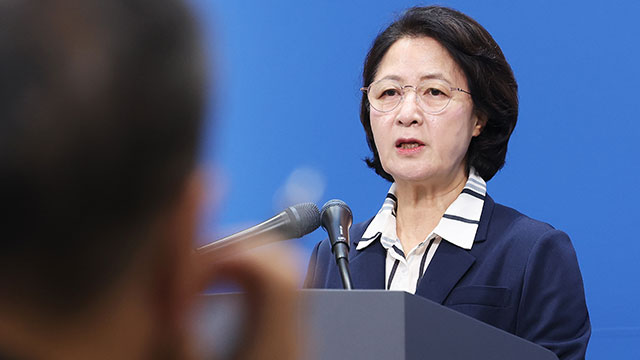
Economic experts and budget analysts diagnose that while Gyeonggi Province’s financial state has not collapsed, it is a phase where one cannot be complacent. It is true that the debt ratio has increased somewhat compared to the past, but the prevailing analysis is that it is an overstatement to immediately view this as a bankruptcy crisis or a severe fiscal crisis. Neutral opinions also emerge that while strict management is necessary when considering the scale of local bond issuance and the limits of available resources, it is not a matter that warrants such a fuss. However, due to changes in population structure and a surge in welfare demand, future expenditures are likely to increase while revenues may stagnate. Therefore, rather than focusing solely on debating whether the former governor’s policies were correct, effective measures must be established to maintain future fiscal soundness.
Experts advise abandoning the practice of distorting numbers based on political pros and cons and diagnosing the financial state transparently through independent bodies. Only when an objective report that citizens can directly accept is issued can unnecessary consumptive battles be ended and administrative trust be restored. Now is not the time to blame others and engage in disputes over responsibility, but a time when innovative ideas are desperately needed to pool wisdom and turn the crisis into an opportunity.
Experts advise that while the financial state is not at a crisis level, thorough management is necessary to prepare for future expenditure increases.
6. Future Outlook and What Citizens Want
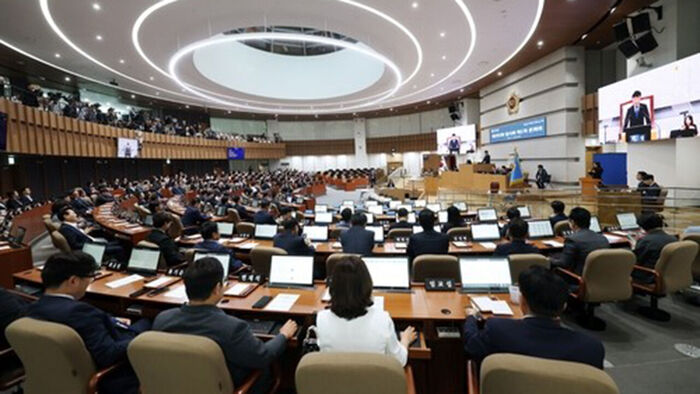
Due to former Governor Kim Dong-yeon’s sudden counterattack, the power struggle between the current and former authorities surrounding Gyeonggi Province’s administration is expected to remain unsettled for a while. As the support bases of both sides consolidate, the exchange through SNS and public opinion battles will become even fiercer, and it will have a significant impact on the upcoming election phase. However, what citizens truly want is not a “you did it” blame game, but safer streets in front of their homes and a slight improvement in their livelihoods. We must not forget that while politicians sharpen their words against each other, livelihoods are pushed to the back burner and the weight of life becomes heavier. Going forward, the Gyeonggi Province executive branch and the assembly must stop consumptive political disputes and demonstrate a model of cooperative governance solely for the happiness of citizens and regional economic development. I sincerely hope that this incident will serve as an opportunity to increase the transparency of local fiscal management and build a sound budget system prepared for the future.
It is urgent to stop consumptive political disputes and establish cooperative governance for livelihood stability and a transparent fiscal system.
Frequently Asked Questions
=