No matter how high your pre-tax annual salary is, the actual after-tax take-home pay deposited into your bank account each month often falls short of expectations, making it essential to check in advance using a Four Major Insurance calculator. When you receive your payslip, you’ll notice various deduction items ranging from the National Pension to Health Insurance. Trying to calculate these manually can give you a headache. Every office worker wonders exactly how much will land in their account this month, but many are confused by the complex rates and tax laws. In this article, we will thoroughly examine how to use a calculator that reflects the latest standards, as well as the reasons why take-home pay varies. We will thoroughly investigate why the amounts withheld at source on payday each month feel so substantial. Let’s go through step by step how anyone can easily understand the complex deduction structure and smartly protect their assets.
=
Four Major Insurance Calculator: How to Accurately Check Your After-Tax Monthly Take-Home Pay
1. Why Is a Four Major Insurance Calculator Essential?
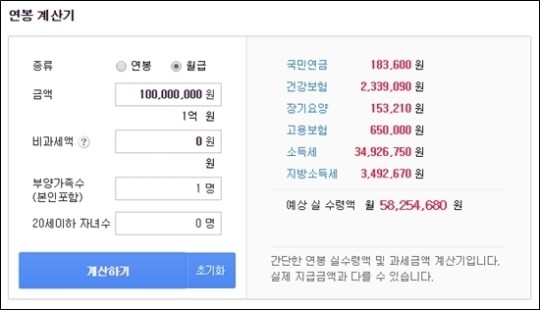
For an office worker with a monthly salary of 3 million won, the amount actually received in their bank account differs significantly from the pre-tax amount, making it crucial to grasp the exact deductions in advance. Every month, companies deduct Four Major Insurance premiums and income tax from salaries before payment; this process is known as withholding at source. If you plan your expenses based solely on the pre-tax amount, you may face the awkward situation of having insufficient balance when your credit card bill is due.
By utilizing internet portals or specialized tools, you can immediately check how much is deducted for the National Pension and Health Insurance with just a few clicks. Calculating manually by plugging numbers into formulas requires looking up rates and upper/lower limits that change every year, so it is wise to rely on specialized tools. Knowing the exact expected deductions in advance allows you to reduce unnecessary spending and build much more robust savings or loan repayment plans.
Using a calculator is essential to plan your finances by understanding the difference between pre-tax salary and actual take-home pay in advance.
2. Understanding the Deduction Structure of National Pension and Health Insurance

The National Pension is a mandatory social insurance paid monthly to prepare for old age, with a certain percentage of the standard monthly income deducted. As of 2026, the National Pension contribution rate is applied at a specific level of the standard monthly income, with the employer and employee sharing the burden equally. For example, for an employee with a monthly salary of 3 million won, approximately 140,000 won is deducted monthly as their personal contribution to the National Pension.
Health Insurance is also an unavoidable item for all employed subscribers, and it is billed together with the Long-Term Care Insurance premium. Since the Health Insurance rate also fluctuates slightly each year, applying past standards directly may result in discrepancies with the actual deduction amount. The premiums paid diligently each month serve as a significant safety net when you retire or visit the hospital.
National Pension and Health Insurance are deducted from monthly salaries at a certain rate, so you must carefully monitor the changes in the applicable rates each year.
3. Characteristics and Differences Between Employment Insurance and Workers’ Compensation Insurance

Employment Insurance is a valuable social safety net that supports re-employment and allows workers to receive job-seeking benefits when they become unemployed. It operates on a structure where the worker bears a certain percentage of their salary as the Employment Insurance premium, and the employer also contributes a portion. Thanks to this insurance, even if you suddenly leave your job, you can maintain your livelihood for a certain period while preparing for the next step.
Workers’ Compensation Insurance is a system established to provide compensation when an employee is injured or falls ill while working. However, a key feature is that Workers’ Compensation Insurance premiums are not deducted from the worker’s salary but are fully borne by the employer. Therefore, the Workers’ Compensation item is either not listed separately on the individual’s payslip or is shown as an employer-borne expense.
Employment Insurance is shared between the worker and the company, whereas Workers’ Compensation Insurance is fully borne by the employer, leading to differences in take-home pay calculations.
4. Common Mistakes When Calculating After-Tax Salary
Many people make the mistake of roughly estimating taxes and Four Major Insurance premiums when calculating their annual or monthly salary, only to face significant issues. The reason results vary slightly between calculators is often due to the application of outdated rates or incorrect deduction order. In particular, if non-taxable allowances are not properly reflected, a large discrepancy arises between the actual after-tax take-home pay and the calculated result.
Non-taxable salaries, such as meal allowances and self-driving assistance, are items not subject to taxation, so including them in calculations reduces accuracy. Therefore, you need the wisdom to carefully determine which parts of your salary composition are non-taxable first. Choosing a smart tool that automatically excludes non-taxable items when you input the pre-tax amount is the fastest way to minimize errors.
Be cautious, as using outdated rates or omitting non-taxable allowances can cause calculation results to differ from your actual payslip.
5. Tips for Using Calculators for Personal Financial Management
Once you have completed your salary calculation, do not stop at just checking the deductions; you should utilize this information for overall asset management. You must set the scale of your savings or deposits based on the actual amount deposited into your account each month to prevent budget overruns. Additionally, it is important to develop the habit of carefully checking whether the monthly principal and interest repayment amount for a loan is excessive relative to your take-home pay when taking out a loan.
These days, you can easily use various financial calculators anytime and anywhere through smartphone apps or internet portals. Simply tapping on your smartphone to review your expected income and expenses for the year while sitting in a cafe on the weekend can kickstart robust asset management. By utilizing various calculators comprehensively and conducting a diagnosis for post-retirement preparation, you can significantly reduce anxiety about the future.
You must build a gap-free savings and loan repayment plan based on the accurate take-home pay determined by the calculator.
6. Smart Strategies for Office Workers Amid Changing Systems
Insurance rates and tax law amendments announced each year directly impact office workers’ take-home pay, so you must always stay informed. Since deduction rates are adjusted slightly depending on government policies and economic conditions, a calculation that was correct last year may be wrong this year. In the future, more advanced practical tools will emerge, displaying customized deduction amounts that perfectly fit individual conditions in real-time.
The most reliable way to protect your wallet amid changing systems is to actively seek out relevant information and verify it yourself. Instead of relying on rumors or rough estimates, check your assets using trustworthy tools. From today, become a smart office worker by turning on your smartphone and directly calculating the expected deductions that match your conditions.
Accurately understanding the changing systems each year and actively using high-reliability calculators is the shortcut to asset management.
Frequently Asked Questions
=