Using a Four Major Insurances calculator allows you to see exactly how much National Pension and Health Insurance are deducted from your gross salary, making it easy to determine your precise take-home pay. We have all likely experienced the moment of confusion when the amount deposited into our bank account is less than expected, despite receiving our monthly payslip. The reason for the shock of finding a smaller amount than anticipated after believing a “3 million won salary” is that various taxes and insurance premiums are withheld at the source. Trying to calculate these recurring monthly deductions manually can be a headache due to complex rates. Recently, internet portals and dedicated calculators allow you to automatically calculate deductions and take-home pay simply by entering your gross amount. In this article, we will take a detailed look at how to accurately use the Four Major Insurances calculator and the latest information on insurance rates that change every year.
=
Four Major Insurances Calculator: How to Check Your Take-Home Pay, Gross Salary, Net Salary, and Deductions
1. What Are the Four Major Insurances and Why Are They Deducted Monthly?
This term collectively refers to the social security systems that the state mandates for workers to maintain a stable social life. When you start a job and receive your payslip, you will invariably see four items listed: National Pension, Health Insurance, Employment Insurance, and Industrial Accident Insurance. Notably, Industrial Accident Insurance is fully borne by the employer, so it is not directly deducted from the worker’s salary. The other three insurances, along with income tax and local income tax, are automatically deducted from the monthly salary to determine the take-home pay. Since these are essential deductions that every office worker cannot avoid, it is important to understand the structure accurately. While it may feel like a waste of money to see it deducted every month, it serves as a valuable safety net for preparing for retirement and the risk of unemployment. Young professionals starting their first job are often surprised to see a significant portion of their salary disappear. However, understanding why this system exists and why money is leaving your bank account helps greatly in making financial plans. The insurance premiums paid diligently during your employment will return as a solid support when you retire or get injured. Therefore, it is necessary to pay attention to how the monthly charges are calculated. Instead of simply complaining that too much tax is being taken, a shift in perspective is required to view these as essential costs for protecting your assets.
The Four Major Insurances are state-operated social security systems and are essential deductions for the worker’s future.
2. Understanding the Calculation Structure of National Pension and Health Insurance

National Pension is calculated by multiplying the subscriber’s standard monthly income by a certain rate, and the rate may be adjusted each year according to policy changes. Generally, the worker and the company share the burden equally, so the payslip lists half of the total amount. For example, if an office worker has a monthly salary of 3 million won, the National Pension deduction is calculated based on the prescribed rate and deducted from the salary. Since new insurance rates are applied whenever the calculation criteria change, it is safer to use tools that reflect the latest information. Health Insurance is also shared equally between the worker and the company, with Long-Term Care Insurance premiums added and charged on top. Health Insurance premiums cover not only medical benefits but also the costs of caring for long-term care recipients. Since all these items are automatically reflected when calculating the salary for office workers, it is easy to overlook the details if you do not check them carefully. Occasionally, results may vary slightly between different calculators due to the application of outdated rates or differences in the order of deductions. Therefore, it is essential to use a reliable, up-to-date program and compare it with your own salary. Knowing the exact calculation structure allows you to verify whether there are any errors in the statement issued by your company.
National Pension and Health Insurance are shared equally between the worker and the company, and the rates may change every year.
3. The Impact of Employment Insurance and Income Tax on Take-Home Pay

Employment Insurance is a system that helps with re-employment and vocational ability development in case of unemployment, and it is shared between the worker and the employer. Since Industrial Accident Insurance is fully borne by the employer, it is not deducted from the worker’s salary; only the Employment Insurance premium is deducted from the monthly salary. Once worker’s income tax and local income tax are added to these, the final take-home pay that we actually see in our bank account is determined. No matter how high the gross annual salary is, the actual amount in hand can differ significantly after all these deductions are made. Therefore, when preparing for a job change or negotiating a salary, you should base your decision on the net take-home pay rather than just the gross amount. It is common to see office workers who are happy about a salary raise but are disappointed to find that the actual increase in their bank balance is minimal. This is a natural phenomenon caused by the increase in income tax and Four Major Insurances deductions as the tax bracket changes. To prevent this optical illusion, it is a good habit to calculate your estimated take-home pay in advance. If you enter relevant keywords into an internet portal site, you will find tools that anyone can use easily. By entering your exact monthly salary or annual income and pressing a button, all deductions are clearly displayed by item.
The actual take-home pay deposited into your bank account is determined only after Employment Insurance and various income taxes are deducted.
4. Specific Methods for Using the Four Major Insurances Calculator
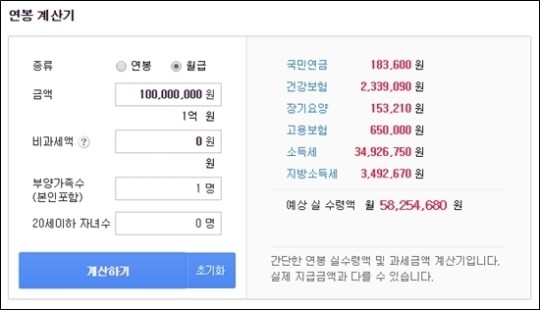
By searching for relevant calculators online, anyone can easily and free of charge check estimated deductions. The usage is very simple, allowing even non-experts to obtain necessary information in just a few seconds. First, enter relevant keywords into the search bar and navigate to a reliable tool’s screen. Next, accurately enter your monthly salary or annual income into the input fields. If you have dependents or children under the age of 20, you should check this section as well to calculate the income tax accurately. Once all information is entered and you press the “Calculate” button, the deductions for each item, from National Pension to income tax, are displayed at a glance. Through this result screen, you can check exactly how much is deducted from your salary for each item. For example, if an office worker with a 3 million won monthly salary uses the calculator, it clearly shows how much is deducted for National Pension, Health Insurance, and other items. If there is a significant difference between the actual monthly payslip and the calculation result, you can check whether non-taxable allowances or meal expenses were omitted. It serves as an excellent compass for freelancers and part-time workers to gauge the approximate scale of deductions as well. It allows you to check your financial status with just a few clicks without having to solve complex formulas yourself.
Anyone can easily check deductions and take-home pay by simply entering the gross amount and the number of dependents.
5. Why Calculator Results Differ from Actual Payslips
Even when the take-home pay matched when using the calculator, the amount on the actual statement may sometimes differ slightly. The biggest reason for this difference is that the scope of non-taxable allowances applied varies slightly from company to company. Non-taxable items such as meal expenses or self-driving allowances are excluded from the scope of tax and insurance premiums, thus affecting the take-home pay. Additionally, if there are variable amounts that change monthly, such as overtime pay or holiday work pay, there will be a difference from values calculated based on a fixed monthly salary. Therefore, for an accurate comparison, you must carefully verify whether non-taxable items are accurately reflected in addition to your fixed salary. Occasionally, using sites that apply outdated rates can lead to errors because they do not reflect the criteria revised each year. Therefore, it is most important to choose a trustworthy platform and perform calculations according to the latest criteria. If the discrepancy between the amount on the payslip and the estimated amount is too large, it is a good method to contact the HR department directly. This is because it is possible that a simple error occurred in the process of tax withholding or insurance premium calculation. When you take an interest in whether your hard-earned money is being securely protected, you can successfully take the first step in financial management.
There may be differences between calculation results and actual statements due to the presence of non-taxable allowances, variable allowances, or the application of outdated rates.
6. Essential Habits for Wise Asset Management
Accurately grasping the fixed deductions taken out every month is the most basic and important step for successful financial planning. If you make spending plans looking only at income, unexpected tax and insurance deductions may hinder your savings goals. Therefore, it is necessary to pay attention to rate changes revised each year and to periodically check your estimated take-home pay. This calculation ability will be a powerful weapon when changing jobs or negotiating salaries in the future. Do not rely solely on the amount deposited into your bank account; you must proactively manage where and how your money is moving. The habit of easily checking deductions using a smartphone or computer completely eliminates unnecessary financial anxiety. Sharing information about useful financial tools with colleagues is also a wise approach to office life. Small interests accumulate to lead to great results such as solid retirement preparation and successful asset formation. It is recommended that you start today by opening your payslip, comparing it with a calculator, and checking the exact deduction details. Thorough preparation and verification are the only secret to safely protecting your assets in a rapidly changing economic environment.
Periodic checks of deductions and verification of the latest rates are essential habits for successful asset management.
Frequently Asked Questions
=