The Ministry of Health and Welfare is set to intensify on-the-ground communication with young entrepreneurs to provide seamless support across the entire K-Beauty industry lifecycle, from the research and development stage to overseas exports. While our cosmetics industry has achieved remarkable growth on the global stage in recent years, young founders with innovative ideas still face significant hurdles in securing initial funding and opening up overseas markets. In fact, a young CEO who has been developing unique vegan cosmetics in a small shared office in Seoul revealed that they faced multiple near-failures due to the costs of prototype production and the complexity of overseas certification procedures. In this situation, where the voices from the field are urgently needed, the government’s decision to roll up its sleeves and gather the concerns of young entrepreneurs is a highly encouraging signal. This dialogue session is expected to serve as a cornerstone not only for listening to opinions but also for deriving practical measures, ranging from expanding R&D grants to building overseas logistics networks. To help our cosmetics industry take the next step forward, let us take a detailed look at how to address the realistic problems faced by young entrepreneurs.
=
From R&D to Export: Supporting the Full K-Beauty Lifecycle and Amplifying the Voices of Young Enterprises
1. The Reality and Limitations of Young Cosmetics Startups
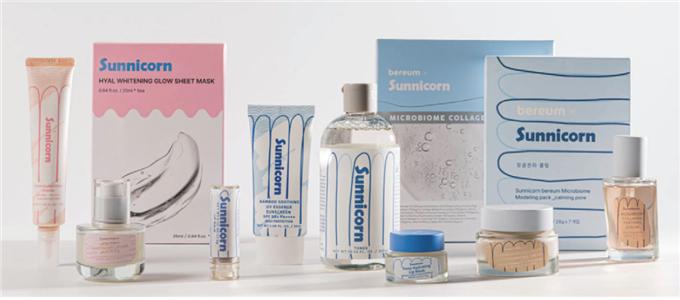
Countless young people are entering the cosmetics market with sparkling ideas as their weapon, but once they actually step onto the entrepreneurial front line, they often hit massive barriers. A young entrepreneur who jumped into natural cosmetics development immediately after graduating from university recalls that they frequently had to ask acquaintances for help due to a severe lack of basic research funding. Although their ideas are innovative, it is difficult to secure large-scale production facilities or specialized research personnel to back them up, making the initial entry barrier extremely high. To ensure independent survival in a market dominated by large corporations, differentiated quality is essential, yet the reality is that it is difficult even to afford the costs of clinical trials to verify this quality. Moreover, the complex licensing and permitting procedures required for manufacturing and selling cosmetics often feel like a giant maze to young people lacking relevant experience. It can take months just to prepare a single document, and with insufficient funds for legal advice, many entrepreneurs are becoming exhausted amid administrative friction. If these structural problems are not resolved, even young companies with outstanding technological capabilities risk disappearing without ever seeing the light of day. Therefore, it is now urgently necessary for the government and relevant agencies to step in and implement tailored measures to simplify administrative procedures and reduce initial startup costs.
Young cosmetics entrepreneurs face significant difficulties from the initial entry stage due to insufficient funding and complex licensing and permitting procedures.
2. Solutions to Eliminate Blind Spots in R&D Support
In the cosmetics industry, research and development is a core factor that determines future competitiveness, but small young enterprises are often stifled by the burden of securing research costs. It is not uncommon for companies to give up midway because converting original ingredients into mass-producible forms requires enormous capital. To address this issue, the government plans to significantly expand tailored R&D funding support that covers the entire process from basic research to commercialization. The system should be designed not merely as one-off support but in a way that facilitates joint research with universities and specialized research institutions to enhance technological capabilities. Additionally, concentrated investment in new technology fields considered future growth engines, such as eco-friendly ingredients and customized cosmetics, must be pursued in parallel to achieve effectiveness. Young researchers in the field unanimously appeal that there is a severe lack of infrastructure allowing them to share laboratory equipment. It is urgent to open regional research hubs and provide consulting by specialized personnel for young enterprises that find it difficult to purchase expensive analytical equipment directly. Only by lowering the barrier to entry for R&D can a virtuous cycle be created where innovative ideas are born as actual products.
Support is needed to reduce the R&D cost burden on small young enterprises and to expand advanced equipment and joint research infrastructure.
3. The Need to Pioneering Global Export Channels
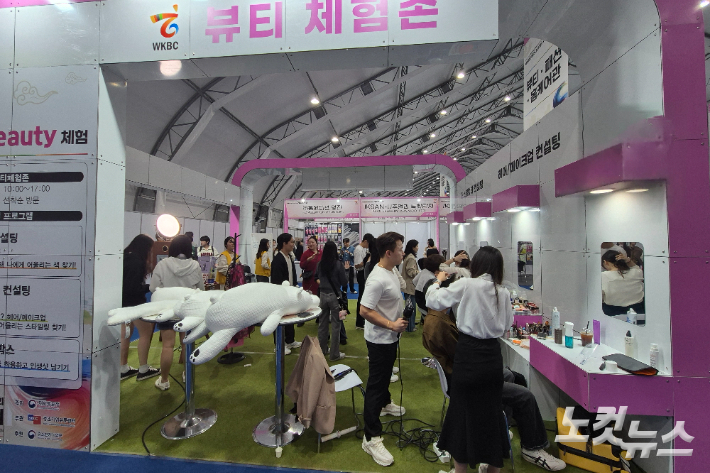
For young cosmetics companies aiming to leap from the domestic market to the global stage, overseas export is both a dream and a formidable mountain to climb. Although interest in K-Beauty has surged worldwide through social media, the process of identifying local buyers and concluding contracts remains daunting. A CEO running a small cosmetics brand in Busan shared that they have been hesitant to participate in overseas exhibitions due to participation costs and language barriers. Differing cosmetics regulations by country and stringent local certification procedures are cited as one of the biggest obstacles to export. While government-led export promotion missions and support programs for listing on overseas online shopping malls exist, there is still a lack of meticulous approaches that reflect the characteristics of young enterprises. Beyond simply providing exhibition booths, a partner is needed to analyze local consumer trends and collaboratively develop localization strategies. Furthermore, to alleviate the burden of logistics costs, benefits for utilizing shared warehouses should be increased, and the threshold for the export voucher system should be lowered. Support for producing English promotional materials to build trust with overseas buyers and interpretation/translation services are also practical measures that provide real help.
Tailored export support and alleviation of logistics cost burdens are essential for young enterprises facing stringent overseas certifications and language barriers.
4. The Effectiveness and Expected Outcomes of Listening to Field Voices
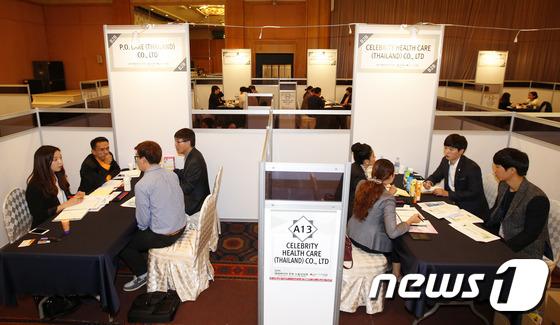
Direct dialogue between policy makers and young entrepreneurs working on the ground is the starting point for formulating effective measures. Policies drafted at a desk often fail to keep up with subtle changes in the field, resulting in a lack of effectiveness. This roundtable is expected to convey the detailed hardships and realistic demands faced by young entrepreneurs without filter. The voices emerging from the field, ranging from relaxing funding support conditions to abolishing unnecessary regulations, will serve as a compass for future K-Beauty policies. Based on the fresh opinions of young people, the government plans to supplement the shortcomings of existing support programs and establish detailed guidelines to rescue marginalized enterprises left in blind spots. Since policy beneficiaries are directly voicing their opinions to improve the system, this communication initiative will significantly enhance policy satisfaction. Young entrepreneurs will also gain a sense of stability in their business operations and be able to take more bold challenges as communication channels with the government widen. As this process of mutual communication repeats, the foundation of South Korea’s cosmetics industry will become more robust, and its global competitiveness will double.
Direct communication with young entrepreneurs in the field is a core driver for formulating effective policies and improving systems.
5. Strategies for Building a Sustainable K-Beauty Ecosystem
To ensure that young cosmetics companies develop self-sufficiency rather than relying on one-off support, the creation of a long-term and organic ecosystem must accompany it. A full-cycle support system must be established where all stages, from startup to growth, overseas expansion, and opportunities for re-challenge, are smoothly connected. To this end, it is necessary to actively consider activating co-growth programs where private large corporations and young startups can thrive together. If a mentoring system is established where young entrepreneurs receive know-how from senior companies and share distribution networks, the success rate of young startups will increase dramatically. Additionally, building a safety net for re-challenges that allows people to stand up again without fearing failure is an important task that the government and society must solve together. In an environment where a single failure leads to credit insolvency or makes recovery impossible, it is difficult for innovative challenges to continue. Strategies to enhance the overall credibility of K-Beauty by systematizing certifications for eco-friendly ingredient sourcing and transparent distribution processes should also be pursued in parallel. In this way, we must steadily prepare for a future where young enterprises nurtured in a robust ecosystem lead the global market.
A full-cycle support ecosystem must be created where all stages, from startup to re-challenge, are organically connected.
6. Future Outlook and Action Guidelines for Readers
The K-Beauty industry holds boundless growth potential in the future, and at its center are the activities of young entrepreneurs armed with new ideas. If the government’s full-cycle support policies are effectively established by reflecting the voices from the field, numerous star unicorn companies can be born. Aspiring entrepreneurs with original technology and passion should closely examine the flow of these policy changes and actively utilize the opportunities. The wisdom to regularly check government support program announcements and prepare necessary documents and requirements in advance is the first step toward a successful business. It is important to adopt an attitude of seeking practical advice by knocking on the doors of nearby startup incubation centers or expert groups, rather than letting ideas remain vague. Rather than trying to solve everything alone, it is a wise business strategy to actively utilize the government’s various support programs and networks. If you continuously refine and develop our unique value that can succeed in the global market, you too can become a protagonist of K-Beauty. The challenge of taking one step at a time in line with changing policies is the key to opening a bright tomorrow for South Korea’s cosmetics industry.
We must actively utilize government support policies and prepare thoroughly to achieve a new leap in the K-Beauty market.
Frequently Asked Questions
=