
As artificial intelligence technology advances rapidly, our welfare and care environments are facing a massive turning point. The government is actively gathering opinions from relevant experts to formulate effective measures that reflect the voices from the field. The core objective is not merely to introduce technology but to create a structure where vulnerable groups can receive substantial help. In this article, we will explore in detail why this transformation roadmap is necessary and how opinions are being collected. We hope this serves as an opportunity for readers to consider how our society’s care environment should change. We will examine ways to ensure that in the coming future society, no one is left behind and everyone can enjoy the benefits.
=
Gathering Expert Opinions on the Roadmap for the AI Transformation of Welfare and Care

1. Changes in the Welfare and Care Field and the Need for AI Transformation

Artificial intelligence, which has deeply penetrated our daily lives, now plays a central role in the welfare and care sectors as well. Tasks that previously required people to physically visit and verify, such as identifying crisis households or checking on well-being, can now be processed much faster with the help of technology. A representative example is a device installed in the home of an elderly person living alone that detects electricity usage or movement and immediately transmits abnormal signs to the local community center. This change contributes decisively not only to reducing workload but also to saving precious lives by not missing the golden hour. Welfare officials in the field also unanimously state that AI assistance is essential amidst increasing workloads. Therefore, this transformation being promoted by the government has become a necessity rather than an option, and a systematic blueprint is urgently needed. The existing welfare delivery system had clear structural limitations in completely eliminating blind spots due to limited personnel and budgets. The needs for health monitoring of the elderly and daily life support for people with disabilities are becoming increasingly diverse, making it impossible to keep up with them manually. This is where AI comes in; it can analyze vast amounts of information in real-time to accurately identify those in need. This creates an environment where field officials can step away from repetitive administrative tasks and focus on their core duty of directly visiting and counseling those who truly need help. Ultimately, a structure where technology and people harmoniously share their respective roles is the image of a true welfare advanced nation that we aspire to. To drive such positive changes, the government is steadily proceeding with efforts to gather the wisdom of experts from various fields.
AI technology reduces welfare blind spots and improves the efficiency of field workers, enabling truly customized support.
2. Specific Process of Gathering Opinions from Relevant Experts

Creating a successful roadmap requires more than just government effort; it necessitates listening equally to the voices of the field, academia, and industry experts. Relevant ministries, including the Ministry of Health and Welfare, are collaborating with authorities from various fields in the process of establishing this roadmap. Academic researchers analyze the latest technological trends, while field practitioners candidly share the vivid difficulties and improvement points they encounter in practice. Additionally, information security experts and AI ethicists are participating to meticulously examine issues such as protecting the personal information of vulnerable groups and preventing the misuse of technology. These collected opinions do not remain merely in meeting minutes but are reflected in actual policy documents, evolving into concrete execution plans. During the opinion-gathering process, rigorous verification is conducted on whether the solutions will actually work in the field. Because a technology that looks excellent in theory is useless if it is difficult for elderly people with mobility issues or people with disabilities who are unfamiliar with device operation to use. Accordingly, at roundtables and public hearings, the opinions of the actual beneficiaries and their caregivers are given significant weight. For instance, field feedback that voice-based communication is far more useful than touch-screen methods has led to revisions in the direction of technology development. Through this communication process, the quality of the roadmap is improving daily, moving toward a direction that resonates with all generations. The government plans to continue gathering fresh reactions from the field by keeping various channels open in the future.
We are formulating effective policy alternatives by equally reflecting the voices of academics, field experts, and actual beneficiaries.
3. Expected Effects and Key Challenges of Technology Introduction
With the full introduction of AI into the welfare sector, we will enjoy convenient and safe care services of a completely different level. It will become common for devices to automatically detect crises and contact emergency services without people manually pressing report buttons during emergencies. Furthermore, people with mobility issues will be able to receive remote health checks and medication reminders, significantly improving their independence in daily life. These changes will ultimately drastically reduce the caregiving burden on family members and contribute to improving the quality of life for the entire family. Moreover, welfare information, which has been operated separately by each local government, will be connected into a single system, ensuring that those in need can receive seamless support anytime and anywhere. However, we must not overlook that there are numerous challenges to be resolved behind these rosy prospects. The first major concern is the paradoxical situation where digitally vulnerable groups, who are not familiar with technology, may be left behind. Since not all elderly people can skillfully handle the latest smart devices, friendly education and assistive devices for them must accompany the technology. Additionally, it is paramount to establish a thorough security system to prevent personal health records or sensitive welfare counseling content from leaking or being misused. We must also listen to concerns that the warm human touch and interaction may disappear if we focus solely on technology development. Ultimately, we must not forget the philosophy that technology should function merely as a tool to help humans, with people always at the center.
While emergency response capabilities and quality of life improve, there are also challenges such as the exclusion of vulnerable groups and security issues that require careful resolution.
4. Current Status of Local Governments and the Field, and Future Plans

In line with the central government’s big picture, local governments across the country are quickly promoting AI care projects tailored to their respective regional characteristics. Some regions, considering the high population of elderly people living alone, have distributed doll-shaped devices with conversation partner functions, receiving a warm response. In other regions, a dense IoT network is being built to remotely control home appliances and check on the well-being of households with people with disabilities. These excellent cases from local governments serve as valuable groundwork for the central government when establishing the roadmap and act as a benchmark for gauging the potential for nationwide expansion. The government is refining detailed plans to selectively disseminate successful models verified in each region and to efficiently allocate budget and personnel. Over the remaining period, the government plans to raise the quality of the roadmap to its peak through continuous consultation with relevant agencies. Various opinions collected from expert forums and public hearings will be systematically classified and prioritized, with actionable tasks implemented step by step. The finalized roadmap will contain clear milestones for the direction of the welfare and care sector in Korea for the next few years. It will not stop at merely making plans; a feedback system will also be established to check annual implementation results and supplement any deficiencies. With such systematic efforts, Korea can turn the crisis faced by a super-aged society into an opportunity for technological innovation. We hope that this roadmap, which fully incorporates the voices from the field, will become a warm light that brightly illuminates the shadowed corners of our society.
We are refining detailed action plans based on excellent cases from local governments and plan to finalize a high-quality roadmap through a systematic review process.
5. Recommendations for Creating a Sustainable Welfare Ecosystem
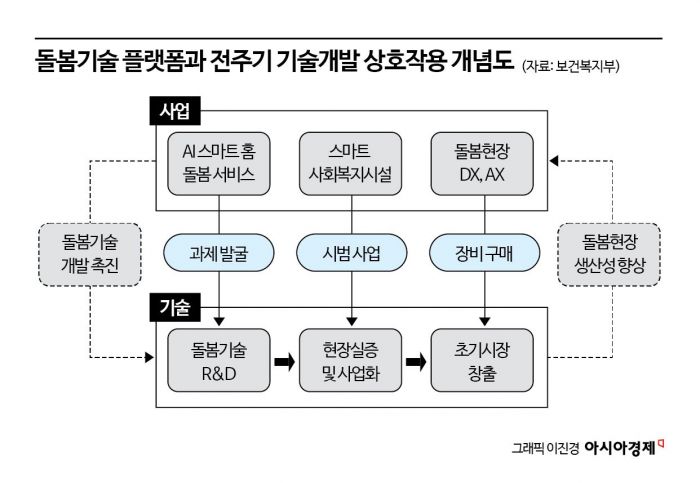
For the AI transformation to be successfully established, it is essential to build a sustainable welfare ecosystem that goes beyond one-time budget investment. Since technology evolves daily, it is crucial to have a flexible upgrade structure so that devices and systems created today do not become obsolete in a few years. To this end, private companies with excellent technological capabilities and the public sector must collaborate closely to continuously develop field-tailored solutions. A symbiotic structure must be established where companies supply technology at reasonable prices considering public interest, and the government supports this with institutional foundations and budget. Furthermore, specialized training programs must be operated on a regular basis so that welfare field practitioners and social workers can skillfully utilize these new tools. In addition, communication channels where citizens, who are the beneficiaries of welfare services, become the masters of technology and actively voice their opinions must become the norm. The success or failure of a policy depends not on experts sitting at their desks, but on the evaluation of those who actually use the services, wiping away tears and smiling. Only when a flexible administrative process is supported that allows for regular satisfaction surveys and immediate reflection of field complaints can a trustworthy policy be completed. We must not forget the fundamental principle that AI should be used in a direction that preserves human dignity and enhances the value of life, rather than a world where technology dominates humans. If relevant experts, the government, and citizens all pool their wisdom with one heart, Korea can leap forward to become a true smart welfare powerhouse.
Sustainable welfare is possible only with close cooperation between the public and private sectors, along with practitioner training and a beneficiary-centric, ongoing communication system.
6. Future Outlook and the Direction for Readers
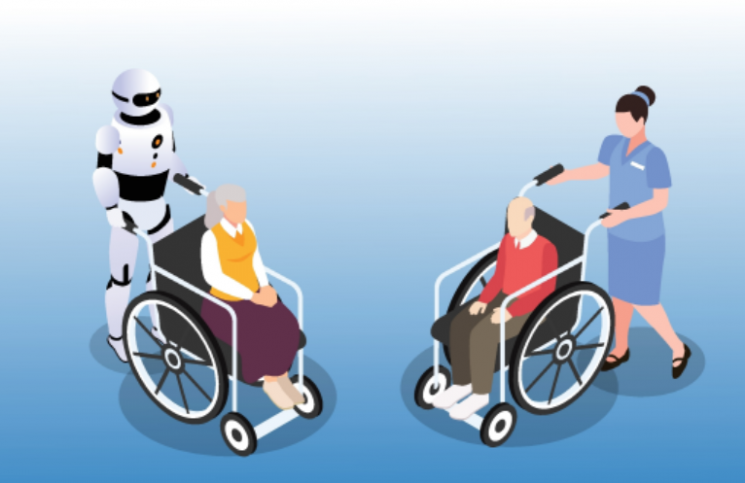
So far, we have examined the process of establishing the AI transformation roadmap for welfare and care promoted by the Ministry of Health and Welfare, along with its key issues, from multiple angles. In the future, our society will form a more dense and safe welfare network as AI takes over care tasks in more areas. If institutions and awareness levels mature in step with the pace of technological development, creating a warm society without blind spots is not impossible. We hope readers will look around with warm eyes to see if there are any neighbors with mobility issues or elderly people struggling with digital devices. Only when the warm interest and consideration of individual citizens are added to the government’s policy efforts can a perfect welfare ecosystem bloom. Please continue to pay attention to the process of future policy changes so that in the coming future society, no one is left behind and everyone can enjoy a happy life. It is time for us all to voice our opinions not just as beneficiaries of technology, but as subjects creating a better world together. Actively participating in public hearings or opinion-gathering processes hosted by local governments or the government to convey fresh voices from the field is also a good method. I firmly believe that small interests and participation can gather to become a huge driving force that elevates the welfare level of the entire nation. I urge you to listen to the content of the final roadmap to be released and continuously watch how the care environment in your neighborhood is changing. I look forward to your warm companionship on this journey toward a future filled with the warmth of technology and human affection. I sincerely wish you a healthy and happy daily life, and I will conclude this article here.
A high-quality future welfare is realized only when the development of technology and institutions is combined with the warm interest and active participation of citizens.
Frequently Asked Questions
=