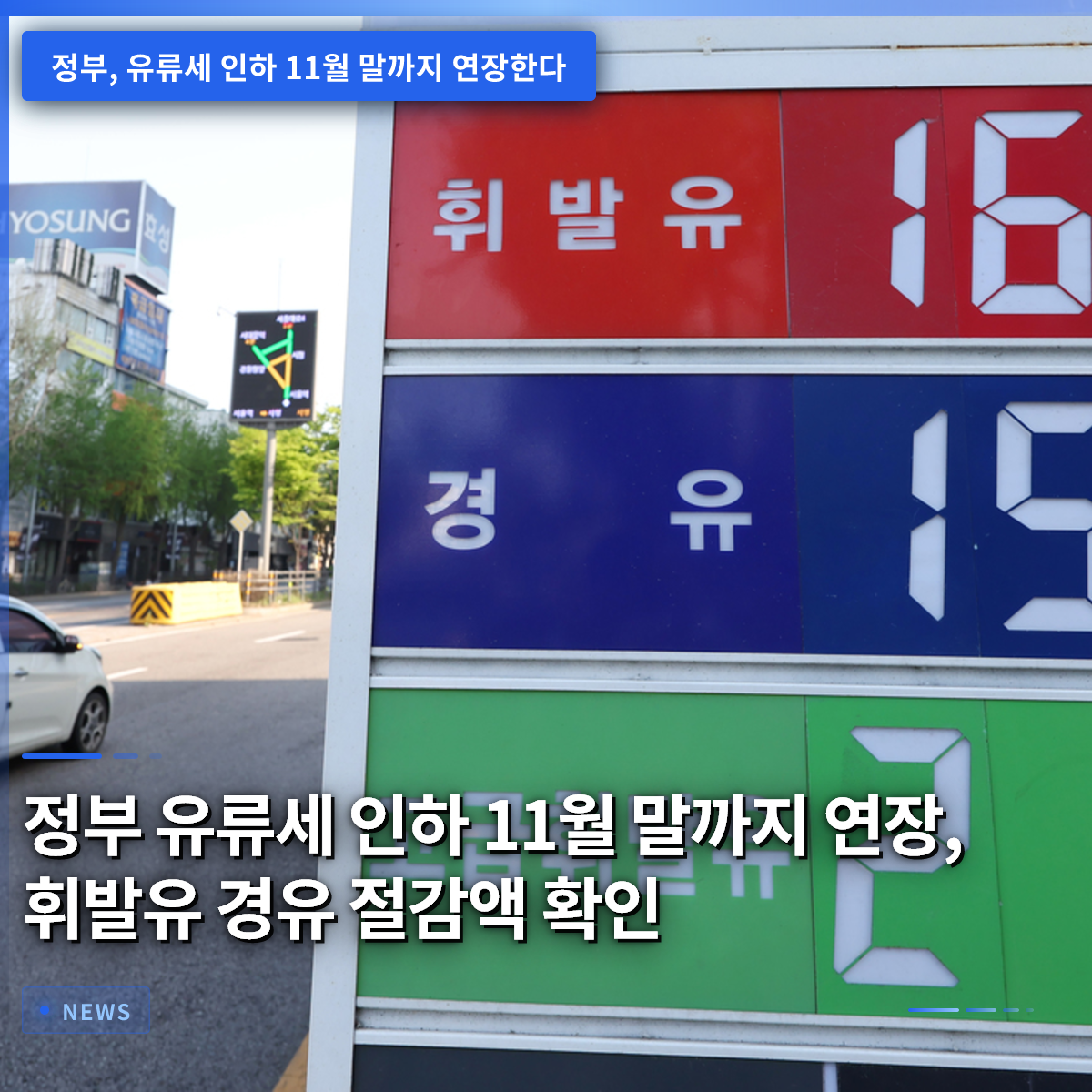
The government has made the final decision to extend the fuel tax reduction measures, which were scheduled to end at the close of this month, by an additional two months until the end of November. This is truly welcome news for office workers who drive to work every day. The government’s policy aims to preemptively block the risk of increased volatility in international oil prices as the geopolitical situation in the Middle East becomes unstable again. It is expected that the financial burden on drivers who have been sighing every time they stop at a gas station will be somewhat alleviated. Due to this measure, the perceived burden of refueling with gasoline and diesel is expected to remain stable for the time being. Let’s take a detailed look at what changes this extension will bring to our household economies.
=
Government Extends Fuel Tax Cuts Until End of November: Check Gasoline and Diesel Savings
1. Background of the Fuel Tax Cut Extension Until End of November
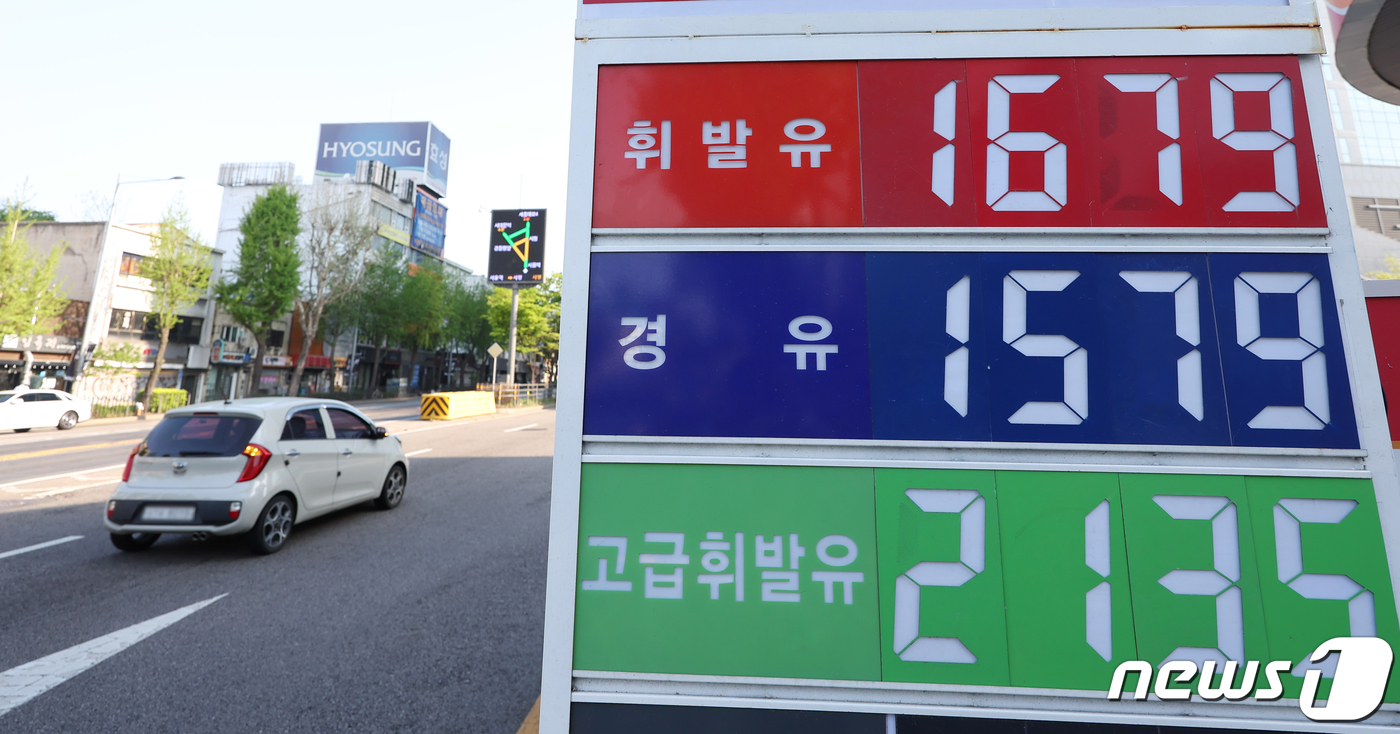
The primary reason for the government’s decision to extend the temporary fuel tax reduction measures by two months until the end of November is the instability of the geopolitical situation in the Middle East. Given the extreme volatility in international crude oil prices, there is a risk of significant shocks to domestic prices overall. Consensus was formed at the Emergency Economic Headquarters meeting, chaired by Vice Prime Minister and Minister of Finance and Economy Koo Yun-cheol, that these risk factors must be thoroughly defended against. The strategy is to directly alleviate the burden of living costs for citizens while also securing fiscal capacity to prepare for potential spikes in international oil prices. It was a cautious conclusion reached because abruptly ending the reduction measures could exacerbate the already difficult price situation. The government has prioritized price stability and officially formalized the fuel tax extension through this meeting of economic ministers. For low-income households who rely on private vehicles because public transportation is difficult to use, this decision is like a ray of hope. Indeed, citizens who grab the gas pump on their morning commute are breathing a sigh of relief upon hearing the news of the extension. The government has repeatedly emphasized its stance of monitoring international oil price movements in real-time and responding flexibly. Attention is now turning to whether this measure, aimed at protecting the foundation of the livelihood economy, will yield tangible results in the field.
The government has extended fuel tax cuts until the end of November to address Middle East geopolitical instability and international oil price volatility.
2. Analysis of Actual Savings on Gasoline and Diesel
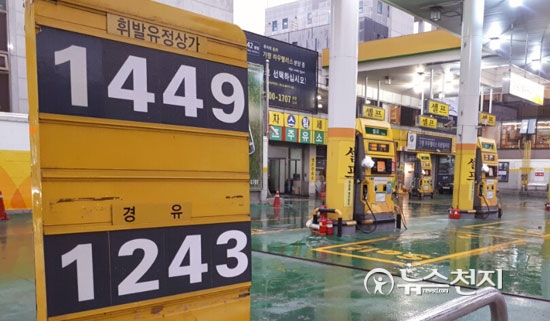
The fuel tax reduction rates currently applied by the government vary slightly by item. The reduction rate is maintained at 15% for gasoline, 25% for diesel, and 25% for butane. The calculation becomes clearer when converted into the actual amount felt at the pump, including Value Added Tax (VAT). This results in a discount effect of 122 won per liter for gasoline, 145 won per liter for diesel, and 51 won per liter for butane. Since drivers can save anywhere from a few thousand to nearly 10,000 won each time they fill up, it represents a considerable saving. Drivers of diesel vehicles, who receive a 145 won per liter discount, report particularly high satisfaction. For small business owners who drive trucks or must be behind the wheel all day to make a living, this amount is by no means small. Calculating the amount of fuel consumed in a month, it amounts to saving tens of thousands to hundreds of thousands of won in fixed expenses. Only if the burden of fuel costs is reduced, even slightly, can overall logistics costs stabilize and the burden of grocery prices for citizens be lowered. This nuanced differential reduction policy plays a significant role in promoting substantive livelihood stability.
The actual reduction effect of 122 won per liter for gasoline and 145 won per liter for diesel will continue until the end of November.
3. Absolute Fuel Tax Amounts Being Maintained
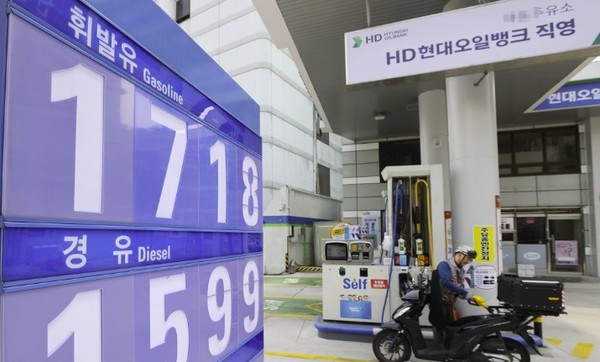
It is also necessary to accurately understand the absolute fuel tax amounts that will actually be applied at gas stations due to this extension measure. The final fuel tax rates reflecting the reductions have been set at 698 won per liter for gasoline, 436 won per liter for diesel, and 152 won per liter for butane. Knowing the specific tax imposition criteria allows drivers to intuitively grasp how much benefit they are currently receiving when they receive a gas receipt. Compared to the period when fuel taxes were fully imposed, it is evident that a significant amount is being reduced as a tax benefit. Drivers visiting regular gas stations can be free from the fear of sudden price hikes for the time being thanks to these fixed tax standards. Of course, because international crude oil prices fluctuate frequently, the final per-liter price sold at each gas station may vary slightly. However, since the basic framework of the tax itself has been lowered, it is effectively serving as a baseline. The government plans to swiftly submit the revised Enforcement Decree of the Transport, Energy, and Environment Tax Act and the Enforcement Decree of the Individual Consumption Tax Act to the State Council. It is making every effort to complete the follow-up procedures without issue so that the measures can be applied seamlessly starting from the 1st of next month.
The reduced fuel tax is fixed at 698 won per liter for gasoline, 436 won per liter for diesel, and 152 won per liter for butane.
4. Highway Gas Station Discounts for the Chuseok Holiday
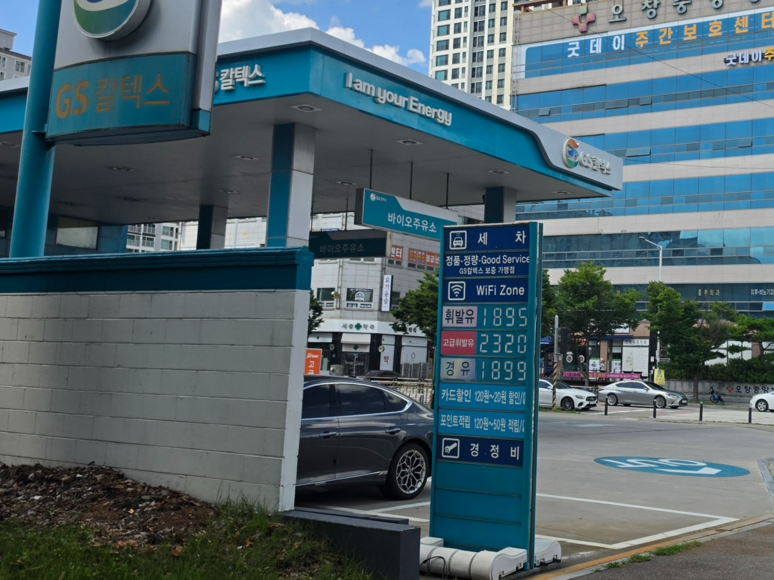
Coinciding with the announcement of the fuel tax extension, special additional discount benefits have also been previewed for the upcoming holiday period. The government and related agencies have agreed to significantly reduce the economic burden on travelers returning to their hometowns for the holidays. In particular, an additional discount of 100 won per liter will be provided when using gas stations on national highways managed by the Korea Expressway Corporation. For drivers preparing for long-distance trips, this will be a prime opportunity to save significantly on fuel costs. It is expected that drivers will flock to highway rest area gas stations to fill up their tanks amidst the holiday atmosphere. The perceived discount is maximized when the additional discount at highway gas stations is applied compared to regular urban gas stations. It is a solid support measure that alleviates fuel cost concerns for those taking a rare outing with family. The government is implementing these on-the-ground measures in an organic manner, prioritizing livelihood stability. If you are planning a drive home for the holidays, it is advisable to check the locations of highway gas stations and the discount application period in advance.
An additional discount of 100 won per liter will be applied at national highway gas stations during the holiday period, reducing the burden.
5. Impact on the Industrial Sector and Logistics Sites
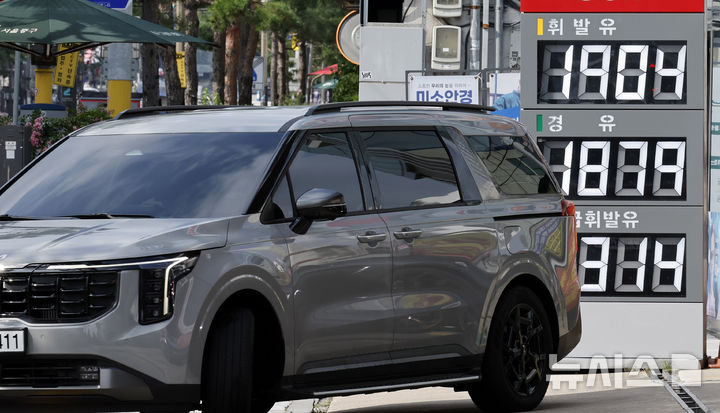
The extension of the fuel tax reduction measures is not a policy solely for general passenger car drivers but is deeply connected to the industry and logistics as a whole. In particular, for workers in the freight transport and courier industries, tax reductions on diesel and butane are issues directly related to their livelihoods. In logistics sites that primarily use trucks or commercial vehicles, fuel costs account for a very high proportion of total expenses. By maintaining the diesel reduction rate at 25%, this measure serves as a defensive line that alleviates the pressure of rising logistics costs to some extent. If the fuel tax reduction had ended as scheduled, there was a high risk of a chain reaction where freight transport costs would skyrocket on top of already rising prices. This would lead to soaring producer prices and ultimately a sequential increase in the prices of goods purchased by final consumers, creating a vicious cycle. The government’s foresight in predicting these macroeconomic repercussions and maintaining a higher reduction rate for diesel and butane is a very wise measure. Businesses and small business owners are also breathing a sigh of relief at the news of the extension and are calmly readjusting their business plans through the end of the year. It is making a decisive contribution to maintaining the logistics and distribution network, known as the main artery of the national economy, in a stable state.
Maintaining high reduction rates for diesel and butane prevents rising logistics costs and reduces cost burdens across the industry.
6. Future Outlook and Drivers’ Refueling Strategies
Although the fuel tax reduction has been extended until the end of November, drivers should formulate refueling strategies while keeping in mind the scenarios that follow. As the year-end approaches, it is necessary to closely monitor the supply and demand situation in the international crude oil market and changes in the geopolitical situation in the Middle East. If the fuel tax reduction measures are completely terminated at the end of November, a significant price increase could occur all at once. Therefore, it is wise to periodically check for additional government announcements and international oil price trends. Drivers should develop the habit of observing price fluctuation trends at their regular gas stations to prepare for periods of rising oil prices. Thoroughly maintaining vehicle maintenance and practicing economical driving habits to improve fuel efficiency is also an excellent way to indirectly save on fuel costs. It is prudent for individual drivers to adopt smart consumption patterns rather than relying solely on government policy support. We hope you will use the stability of the next two months to manage your household budget wisely and prepare for the coming winter.
To prepare for policy changes after the end of November, one should monitor international oil price trends and maintain frugal refueling habits.
Frequently Asked Questions
=