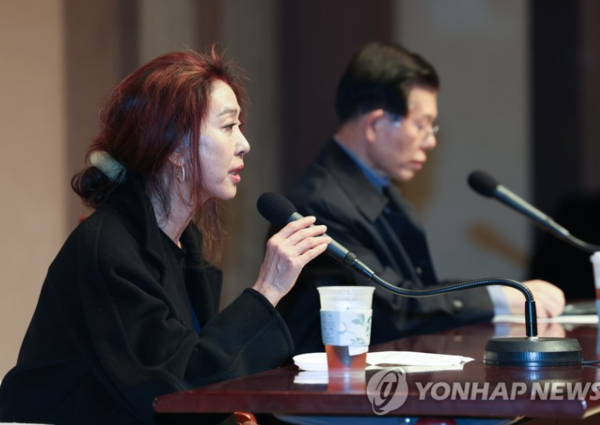
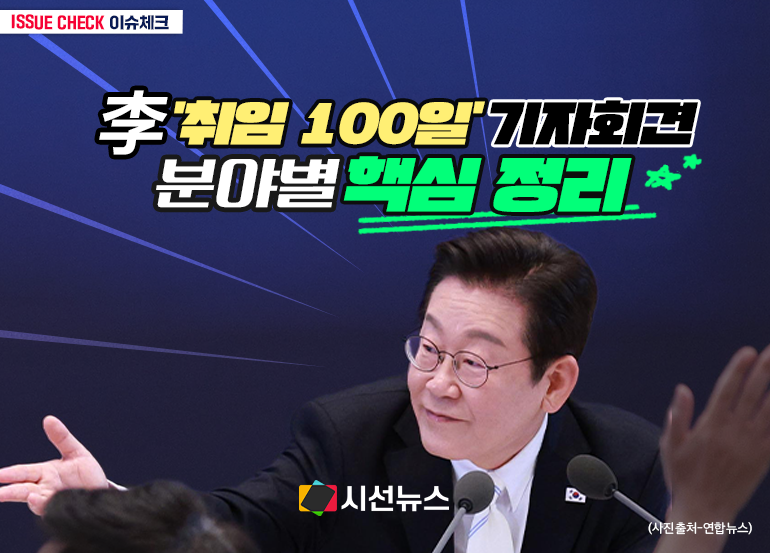
The seventh press conference held by President Lee Jae-myung since taking office, conducted on September 18 at the Blue House Guest House, drew significant attention amid a record low approval rating of 37%. During the approximately 90-minute session, the President attributed the decline in his approval rating to his own shortcomings, emphasizing the need to focus on people’s livelihoods and improve communication. When we suffer from rising prices or increased loan interest rates in our daily lives, and the government fails to present tangible measures that we can feel, dissatisfaction naturally accumulates. It is a positive sign that the President has expressed a willingness to reflect on whether the financial situation of the citizens has actually improved, rather than merely claiming that economic indicators have gotten better. In this article, we will examine in detail the key issues and poll results discussed in this press conference. We encourage our readers to join us in observing where the current trends in our society are heading.
=
President Lee Jae-myung’s Press Conference: A Comprehensive Summary of Key Points on Approval Ratings
1. Background and Format of the Presidential Press Conference
1. Background and Format of the Presidential Press Conference
The press conference was conducted in an intense Q&A format lasting approximately 90 minutes, with the attendance of about 150 domestic and foreign journalists. In his opening remarks, President Lee Jae-myung bowed his head, acknowledging the sharp disappointment and concern of the people that emerged after the local elections. In particular, he reflected on the fact that he had failed to communicate sufficiently with stakeholders and had pushed policies through unilaterally. This is very similar to the logic that if you introduce a new work method at your job without listening to your team’s complaints in advance, you will face backlash. The President promised to listen more carefully to the voices of citizens affected by future policies and to approach his duties with a humble attitude. We must watch to see if this commitment goes beyond mere rhetoric and is actually reflected in the administration’s operations. The attending journalists also fired sharp questions centered on issues that citizens can feel in their bones, such as economic recovery and real estate stabilization. The President answered all questions calmly without dodging, showing his will to confront the current crisis head-on.
💡 Key Point President Lee Jae-myung reflected on his lack of communication during his seventh post-inauguration press conference, stating he would focus on people’s livelihoods with a humble attitude.
2. The 37% Approval Rating by Korea Gallup and Its Significance
2. The 37% Approval Rating by Korea Gallup and Its Significance
In a survey conducted by Korea Gallup over a week starting September 15, targeting 1,002 adults nationwide, the President’s positive evaluation was recorded at 37%. This figure, down 1 percentage point from the previous week, marked a fourth consecutive week of decline and set a new low since his inauguration. Conversely, negative evaluations soared to 56%, fully reflecting the cold gaze of public opinion. It is as if the sighs we feel when gathering with acquaintances to discuss how hard life has become are directly reflected in these numbers. By region, support was relatively high at 61% in Gwangju and the Jeolla region, but it was only 30% in Seoul and 26% in Daegu and Gyeongbuk. By age group, support was relatively higher among those in their 40s and 50s, but it received low evaluations of around 30% among the youth in their 30s and those under 30. This decline in approval rating is analyzed as the result of accumulated dissatisfaction with the difficult economic situation, going beyond simple partisan conflict. Since public opinion can fluctuate at any time, there may be an opportunity for a rebound depending on what results the government shows in the future.
💡 Key Point President Lee Jae-myung’s approval rating hit a post-inauguration low of 37%, with negative public opinion exceeding the majority.
3. The President’s Direct Response to the Causes of the Approval Rating Decline
3. The President’s Direct Response to the Causes of the Approval Rating Decline
The most eye-catching moment at the press conference was the President’s direct explanation in response to a journalist’s question about why his approval rating had dropped. The President did not blame external factors but attributed the decline entirely to his own shortcomings. He candidly admitted that there was a lack of detail in policy execution and a lack of respect and meticulous consideration for the people. It is similar to how, when running a business or a company, if you do not take customer complaints as your own fault and merely make excuses, you will eventually fail. The President added that he deeply reflects on the fact that he failed to anticipate the pain of marginalized groups who suffer due to policies. This attitude can be considered fresh when compared to the image of past leaders who consistently made excuses. However, reflection that ends with words is not enough; it must lead to actual policy changes to win back the turned-away public opinion. Citizens now want visible, substantial changes rather than flashy rhetoric.
💡 Key Point The President reflected on the causes of the approval rating decline, attributing them to his lack of communication and absence of detail.
4. Real Estate Policy and Plans for Livelihood Economic Recovery
4. Real Estate Policy and Plans for Livelihood Economic Recovery
To stabilize the real estate market, the government declared it would push forward with supply expansion, regulatory adjustments, and tax system reforms with greater speed. To break the distorted structure where all resources are concentrated in the metropolitan area, the administration is determined to strongly promote the relocation of the administrative capital and balanced national development. It also reaffirmed its vision of completing a “dual capital” system, growing Seoul into a global economic hub and Sejong into an administrative center. When we dream of owning a home but sigh over soaring housing prices and loan regulations, the government must provide a reliable housing ladder. Since real estate policy was cited as a major cause of negative evaluations in this survey, attention is focused on how effective the upcoming measures will be. The top priority is to create an environment where actual homebuyers can purchase homes, moving beyond simply strengthening regulations. To revitalize the livelihood economy, the President pledged to pour all efforts into stabilizing prices and creating jobs.
💡 Key Point The President announced plans to implement rapid supply and regulatory policies to stabilize metropolitan housing prices and to open an era of dual capitals for economy and administration.
5. Stance Against Re-election and Directions for Constitutional Amendment and Prosecution Reform
5. Stance Against Re-election and Directions for Constitutional Amendment and Prosecution Reform
Regarding the hot-button issue of re-election in the political sphere, President Lee drew a clear line, stating that it is impossible under the current constitution and that he has no intention of seeking re-election at all. On the discussion of constitutional amendment, he emphasized that it is not a matter to be led by the President alone but a major issue that requires consensus between the National Assembly and the people. He agreed to shed the outdated clothes of the 1987 system and create a new constitution suited to the changes of the times, but stated that there would be no unilateral push. Regarding prosecution reform, while reminding that he had been a victim in the past, he pledged that the essence of the reform would not waver. However, he explained that he would focus on producing fair and substantial results that citizens can feel, rather than just swinging the sword. He expressed regret over the harsh words and hate speech within the political sphere and said he would be more cautious in personnel appointments for the sake of unity. This is an expression of his will to end politics that stirs up conflict and practice politics of unity that binds the people together.
💡 Key Point The President stated there is no re-election, that constitutional amendment should be pursued through national consensus, and that prosecution reform would shift to a focus on substantial results.
6. Diplomatic and Security Issues and Future Outlook
6. Diplomatic and Security Issues and Future Outlook
Regarding the issue of troop deployment, which attracted the most attention in the fields of diplomacy and security, President Lee firmly stated that he would never intervene in unnecessary wars. He explained that even amidst complex international situations, he would focus diplomatic efforts on protecting the peace of the Korean Peninsula, prioritizing national interests. It is the same logic as when we travel abroad or engage in global trade; we can only feel at ease if the country’s diplomatic power is strong. This press conference was a venue that dealt with all major state issues, from economy and livelihood to real estate, reform, and diplomacy, without holding back. Attention is focused on whether the President, who has received a serious report card of a 37% approval rating, can regain national momentum through this reflection. How well he revives the people’s livelihoods by using the people’s sharp criticism as medicine during the remaining term will determine the fate of the administration. We encourage our readers to keep a close eye not only on the numbers in the media but also on how our actual lives are improving.
💡 Key Point The President clearly stated his opposition to troop deployment and emphasized maintaining a pragmatic, national-interest-centric line in diplomacy and security.
Frequently Asked Questions
When was this press conference held?
It was held on September 18, 2026, at the Blue House Guest House, as the seventh press conference since inauguration. It lasted approximately 90 minutes.
What is President Lee Jae-myung’s approval rating?
According to a Korea Gallup survey, the positive evaluation was 37% and the negative evaluation was 56%. It recorded a post-inauguration low after four consecutive weeks of decline.
What stance did the President take regarding the decline in approval ratings?
He reflected on the issue, directly citing his own shortcomings, lack of communication, and lack of meticulous policy execution as the causes, rather than blaming external factors.
What measures were announced regarding real estate policy?
He announced plans to rapidly execute supply expansion and regulatory/tax policies to stabilize metropolitan housing prices and to promote the dual capital system.