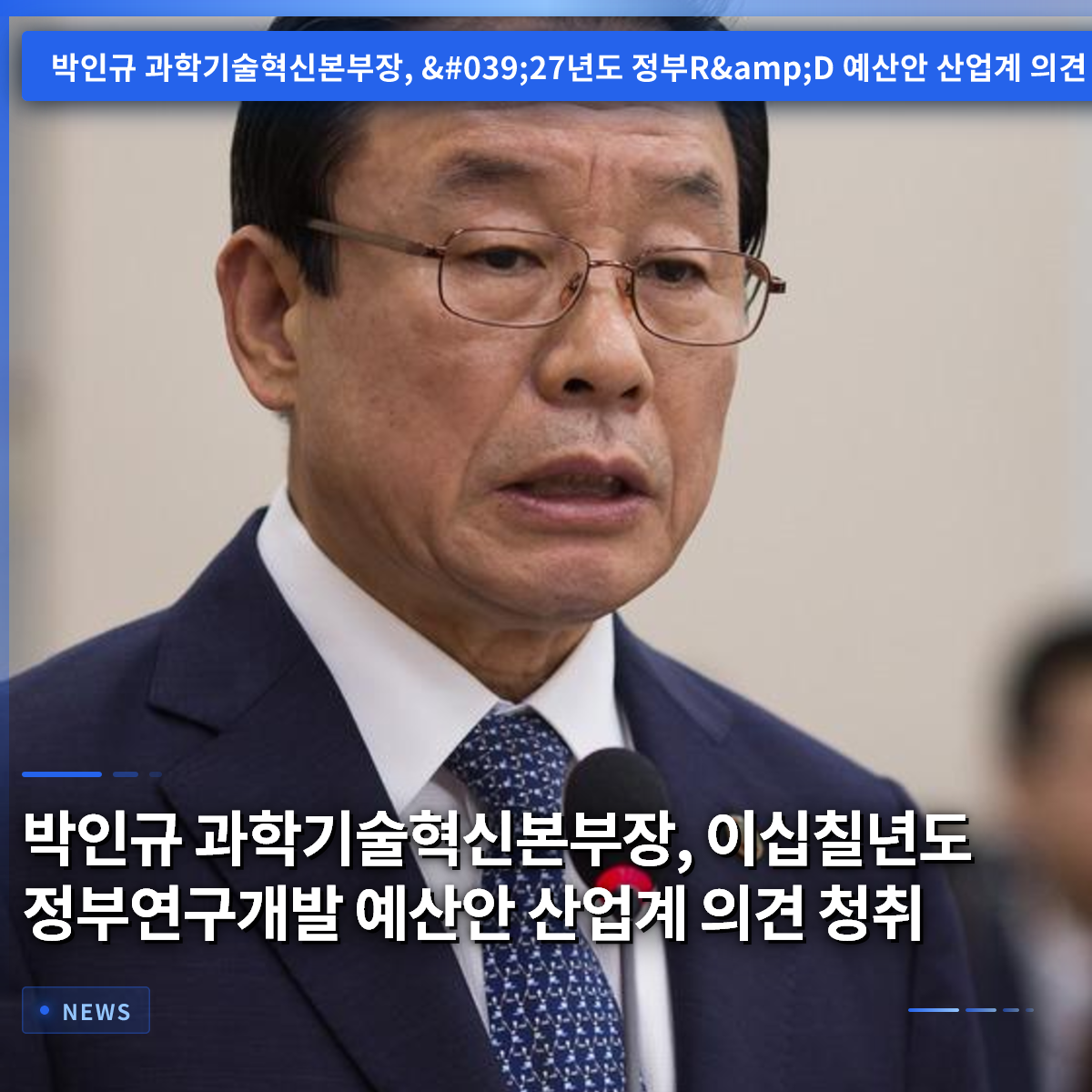
Park In-gyu, Head of the Science and Technology Innovation Agency (STIA), is actively soliciting diverse opinions from the industry to formulate the FY2027 government research and development (R&D) budget. This initiative aims to incorporate the voices of businesses as part of the effort to determine how national budgets should be utilized effectively in actual technology fields. While budget allocation in the past often relied on theoretical approaches, there is now a notable effort to directly reflect the challenges faced by practitioners in the field. For instance, small and medium-sized enterprises (SMEs) and companies in emerging industries often face difficulties due to the gap between the nature of the research funding they immediately need and the support provided by the government. It is highly encouraging that the government is taking the first step to listen to these on-the-ground voices to resolve such issues. In this article, we will examine the significance of Head Park’s actions and the direction of the FY2027 R&D budget in detail. We hope this serves as an opportunity for readers to consider the impact of the national budget on our economy and technological development.
=
Head of STIA, Park In-gyu, Solicits Industry Feedback on the FY2027 Government R&D Budget
1. Background of the FY2027 Government R&D Budget Formulation
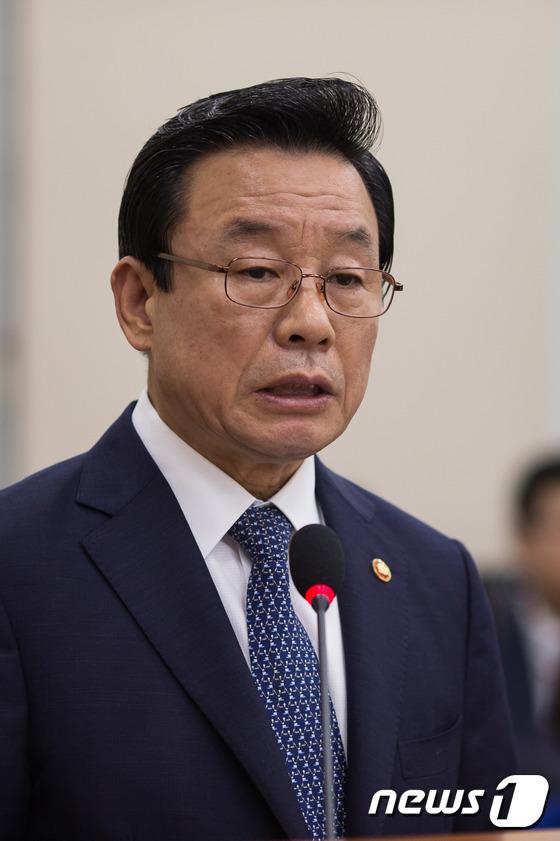
As the FY2027 government R&D budget is being prepared, calls are growing to reflect field-centric voices. Although massive national budgets amounting to tens of trillions of won are invested annually, voices of dissatisfaction have persisted in the field where technology is actually developed and commercialized. To address these issues, the Ministry of Science and ICT has adopted a strategy of communicating closely with private companies from the budget planning stage. In an era of intense competition for technological supremacy, government financial support should aim for long-term ecosystem building rather than short-term results. The core task of this budget is to ensure that R&D funds are not wasted on irrelevant areas but are directed to innovative companies that truly need them.
Head Park In-gyu has repeatedly emphasized the need to move beyond discussions centered on academia and research institutes to grasp the practical demands of the industry. This is because companies know best which technologies they must invest in to survive in the global market. There is a trend toward strengthening a bottom-up support system where the private sector leads and the government supports, moving away from the government-led top-down approach. In this process, there have been consistent calls from the field to simultaneously improve the efficiency and transparency of the budget. It is expected that a high-quality budget plan will be derived through thorough opinion gathering during the remaining period.
The FY2027 budget is being formulated based on field-centric communication to actively reflect private sector demands.
2. Head Park In-gyu’s On-Site Communication Efforts

Since taking office, Head Park In-gyu has consistently prioritized communication with the field, demonstrating a hands-on administrative approach. At the recent industry feedback session, he listened attentively to the stories of corporate representatives and research institute directors. It was impressive that he sought to thoroughly understand the regulations and difficulties felt by companies, rather than limiting the session to a formal exchange. He also expressed deep empathy for the appeal to improve the reality where field researchers are bogged down by paperwork and cannot focus on actual research.
He revealed his will to carefully examine how government support translates into actual results and to boldly simplify unnecessary procedures. Companies are responding positively to the government’s initiative to approach them and listen to their voices. In particular, for companies that urgently need swift support in a rapidly changing technological environment, this communication channel is like a timely rain in a drought. Under Head Park’s leadership, a practical and flexible atmosphere is spreading throughout the science and technology sector. We hope that this field-centric communication will not end as a one-time event but will be established as a sustainable policy.
Head Park In-gyu is making efforts to listen to companies’ practical difficulties beyond formal meetings and reflect them in policy.
3. Key Challenges in R&D Budgeting from the Industry’s Perspective
The industry wants the FY2027 R&D budget to focus on areas of high effectiveness, rather than simply expanding in scale. SMEs and startups lack research infrastructure compared to large corporations, making the government’s role as a catalyst absolutely essential. However, due to strict selection criteria and complex administrative procedures, many companies with excellent technological capabilities often fail to receive support. Systems must be improved to lower these barriers to entry so that entities with truly innovative ideas can benefit.
There are also strong voices calling for the budget to be used to foster a research culture that tolerates failure. If only research with a high probability of success is supported, innovative challenges will disappear, leaving only conservative projects. A budget structure that supports research so that data and experience gained from failure become valuable assets is urgently needed. Companies expect bold and long-term investments in future growth areas such as artificial intelligence and advanced biotechnology. It remains to be seen how well these industry demands are incorporated into this budget.
The industry is demanding the simplification of complex procedures and investment in challenging research that does not fear failure.
4. Strengthening Technological Competitiveness through Government-Private Sector Cooperation
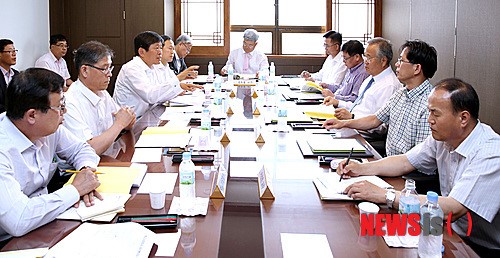
To maximize the efficiency of the national R&D budget, it is essential to build a governance structure where the government and the private sector cooperate closely. Since government budgets alone are insufficient to gain an advantage in the global competition for technological supremacy, strategies to induce private investment are crucial. At the recent feedback session, in-depth discussions took place on cooperation models where the private sector leads and the government supports. A representative cooperation model is one where the government matches funds or provides tax incentives for R&D led by companies.
For such cooperation to work properly, a system must be established that eliminates silos between government ministries and facilitates organic communication. This is because, in an era where technology convergence is the norm, the number of complex issues that cannot be handled by a single ministry’s budget is increasing. This is precisely why the STIA must play the role of a control tower to smoothly coordinate between ministries. This will also create an environment where private companies can boldly invest in equipment and hire researchers, trusting the direction of government policy. Only when the government and the private sector work in perfect harmony can South Korea’s scientific and technological competitiveness leap to the next level.
The government and the private sector must cooperate organically to create an integrated support system that transcends inter-ministerial silos.
5. Direction of Budget Allocation for Securing Future Technologies
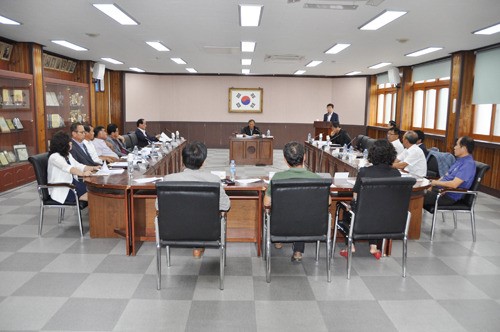
The FY2027 government R&D budget focuses on how to allocate limited resources to the most valuable future technologies. Concentrated investment is inevitable in strategic technology fields that will determine the nation’s fate, such as artificial intelligence, semiconductors, secondary batteries, and advanced biotechnology. It is time to move away from the past practice of arbitrarily dividing the budget and to achieve definite results through selection and concentration. Head Park In-gyu also deeply agrees that the budget should be concentrated on game-changing technologies that will change the future.
However, wisdom is also needed to maintain balance so that basic science and fundamental technology research are not neglected. While applied technology and commercialization research yield immediate results, basic research serves as the solid foundation for preparing the nation’s future growth engines. A clever strategy is needed to prevent the concentration of budget allocation while successfully completing large-scale, national mission-oriented projects. Industry experts are unanimously requesting that this balanced perspective be reflected in the budget. A system must also be established to block factors of waste through thorough performance evaluation and feedback.
Limited resources should be concentrated on national strategic technologies while maintaining balance between basic science and applied technology.
6. Future Challenges and Outlook for Finalizing a Successful Budget
Head Park In-gyu’s solicitation of industry feedback is an important first step toward the success of the FY2027 government R&D budget. Going forward, the various opinions collected will be carefully analyzed and coordinated with relevant ministries, such as the Ministry of Economy and Finance. Continuous monitoring must be supported to ensure that voices from the field are not overlooked until the budget formulation is completed. Since the precious taxes of the people are being used, the value of the budget must be proven through transparent and fair procedures.
For South Korea to firmly establish itself as a technological powerhouse, government policy and industry execution must be in perfect harmony. We hope that this communication effort will break down the long-standing wall between government offices and companies, transforming them into true partners. We ask readers to continue paying attention to the government’s upcoming R&D policies and budget plans. We sincerely support the birth of a substantial budget that fully reflects the voices of the field, injecting vitality into our economy.
A transparent and fair budget must be completed based on the collected opinions to enhance South Korea’s technological competitiveness.
Frequently Asked Questions
=