Everyone has likely experienced the shock of seeing a salary slip that says 3 million won, only to find that the amount actually deposited into their bank account is less. Many employees are curious about how the National Pension, Health Insurance, and Employment Insurance deductions are calculated every time they receive their monthly pay stub. Manually calculating or mentally estimating these complex deductions is incredibly cumbersome for busy professionals living in modern society. Fortunately, by using calculators easily found online, you can check the exact taxes and insurance premiums deducted from your salary in just a few seconds. In this article, we will examine in detail the principles and usage of this essential tool for employees, and carefully look into the insurance premium rates that change every year. If you want to understand your exact salary structure and start wise asset management, please read this article to the end.
=
How to Accurately Check Your Net Monthly Salary Using the Four Major Insurance Calculator
1. What are the Four Major Insurances and Why Are They Deducted?
When you open your monthly paycheck after starting a job, you will find that in addition to taxes, four mandatory social insurance premiums are withheld at the source. The National Pension is a basic social security system operated by the state to ensure a stable retirement when income stops due to old age. Health Insurance is a very grateful system that reduces the burden of excessive medical costs incurred when visiting large hospitals for sudden illnesses or injuries. Long-term Care Insurance is collected in addition to health insurance premiums to provide support such as bathing and nursing for elderly people who have difficulty living independently due to age-related diseases. Employment Insurance acts as a sturdy fence by helping those who lose their jobs receive unemployment benefits, job-seeking support, and vocational training. These four systems are legally mandated for all citizens of the Republic of Korea to prepare for social risks and are automatically deducted from monthly salaries at a certain percentage.
While many employees feel a sense of loss when a significant amount is deducted from their monthly salary, it is actually savings and insurance for their future selves and families. For example, health insurance involves small regular payments but significantly reduces hospital bills that can reach several million won during major surgeries, preventing household bankruptcy. Similarly, Employment Insurance provides a lifeline to maintain a minimum standard of living until a new job is found in the event of unexpected layoffs or constructive dismissal. Thus, the insurance premiums we pay monthly are an essential safety device created by the state as a massive community to protect the basic quality of life of its citizens. Once you realize that your company shares half of this burden, the money leaving your account each month may start to look a bit different. Understanding this background makes it much easier to accept why the numbers appear as they do when using the calculator.
The Four Major Insurances refer to the National Pension, Health Insurance, Employment Insurance, and Industrial Accident Insurance. They are social security systems that must be paid monthly to prepare for future risks.
2. How to Calculate Your Net Monthly Salary Using the Calculator

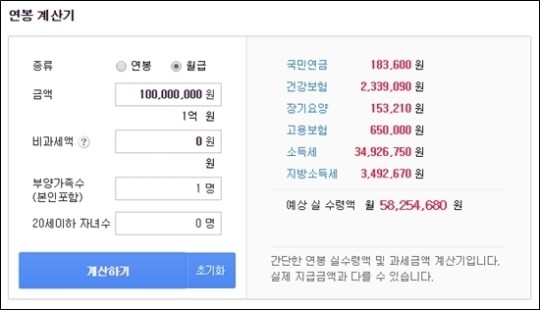
If you want to know the actual net amount deposited into your bank account each month, you must first accurately enter your pre-tax monthly salary or annual salary. Open a calculator provided by an internet portal site or various financial applications and enter your base salary, excluding non-taxable allowances. For example, non-taxable items such as meal allowances or self-driving assistance are not subject to tax, so you must distinguish and enter these parts accurately to avoid errors. Once you enter all the information and press the calculate button, deductions are carefully applied in order, from the National Pension and Employment Insurance to income tax and local income tax. After summing up all deductions and subtracting them from the pre-tax amount, your actual net monthly salary is neatly displayed on the screen. Remember that even if you and a friend have the same annual salary of 50 million won, your actual bank balances may differ due to differences in the number of dependents or non-taxable allowances.
To explain with a real example, a junior employee named Kim, who receives an annual salary of 30 million won, receives a pre-tax salary of about 2.5 million won per month. After roughly deducting the National Pension and health insurance premiums, the amount actually deposited into the bank account decreases to around 2.1 million won. While this difference may be surprising at first, using the calculator to estimate it in advance can help reduce major mistakes when planning savings. If you use a website that applies old rates or incorrect deduction orders, the amounts may differ from the actual pay stub, causing trouble. Therefore, it is beneficial for mental health and asset management to use a reliable calculator that is always updated with the latest standards. Although small differences may seem insignificant, they accumulate into large amounts over time, so it is necessary to develop the habit of checking your cash flow in advance using the calculator.
By accurately entering your pre-tax salary and non-taxable amounts into the calculator, you can easily and quickly determine your actual net salary after deductions for the National Pension and taxes.
3. Understanding Changing Insurance Premium Rates and Latest Standards

National systems are not fixed; they are revised slightly every year in response to inflation or policy changes, so they must be examined carefully. In particular, since the National Pension and Health Insurance premium rates are fine-tuned numerically each year, using the same calculation method as last year can lead to trouble. For example, if the National Pension rate increases from the previous level, the amount deducted from your bank account will increase accordingly, reducing your net salary. Therefore, it is very important to pay attention to the exact rates applicable this year through economic news or government announcements. Using outdated calculators that do not reflect the latest standards can result in after-tax amounts differing from actual pay stubs by several hundred thousand won, disrupting budget planning. To prevent such mishaps, reliable financial information websites refresh their calculators to match the rates changed each year.
One common mistake made by junior employees is estimating this year’s salary negotiation results based on the approximate deduction ratios told to them by seniors last year. However, since tax laws and insurance premium assessment criteria change according to the revised tax laws each year, you must always use the calculator based on the current year for accuracy. In particular, freelancers and self-employed individuals are subject to different rates than regular employees, so it is essential to choose a calculation method that matches their employment status. Local income tax also moves in tandem with a certain percentage of income tax, which greatly helps in understanding the overall tax structure. Simply reading the flow of these constantly changing systems accurately can prevent unnecessary financial leaks and allow you to continue smart financial management. At the beginning of each year, please exercise the wisdom to check whether the calculator you use has been updated with the latest information.
Since rates for the National Pension, Health Insurance, etc., change every year, you must use a calculator updated with the latest standards to avoid discrepancies with your actual salary.
4. How to Use Customized Calculators for Employees and Business Owners
There is a significant difference in how regular employees and self-employed business owners calculate and pay the Four Major Insurances. For employees, the company bears half the cost, and the remainder is withheld from the salary, but since business owners must bear the full amount themselves, the perceived burden is large. Therefore, calculators for regular employees and those for self-employed individuals or freelancers need to be clearly distinguished in terms of input items and result calculation methods. In the case of freelancers, business income tax is deducted (often referred to as the 3.3% pro rate in Korea), and they must later file comprehensive income tax, so a completely different calculation method is applied compared to regular salaried workers. For this reason, choosing and using a dedicated calculator that matches your employment status is the shortcut to accurately grasping your financial balance. When entering related keywords into an internet search bar, you must carefully check whether you are entering only salary or business income.
I often see friends who work as freelancers initially happy because they thought less tax was being withheld, only to regret it later when they face a comprehensive income tax bomb. On the other hand, meticulous people wisely cope by using a business calculator in advance and saving a fixed amount each month in a separate account. Thus, calculators are not just for employees but are essential customized financial planning tools for all economic agents who earn income. In special industries like construction, separate professional calculation tools are sometimes used for the labor management of on-site workers. If you find and use a tool that perfectly matches your profession and income generation type, you can safely protect your assets even without complex tax knowledge. The small practice of checking which calculator you should use today and adding it to your bookmarks can create great luck in the future.
Since regular employees and freelancers/business owners have different payment methods and rates, you must choose a customized calculator that matches your employment status.
5. Common Mistakes and Precautions When Calculating Net Salary
The most common mistake made when using the calculator is including non-taxable allowances in taxable income, which leads to incorrect results. Items such as meal allowances and childcare allowances are non-taxable within a certain limit, but adding them to the total taxable amount results in a lower net salary. Also, it is very common to confuse the amount written in the annual salary contract with the concept of the base salary actually deposited into the bank account each month, leading to the entry of wrong numbers. Deductions differ between months with performance bonuses or allowances and those without, so averaging them and thinking simply can cause large errors. Since income tax deductions vary depending on the number of dependents or the presence of children under 18, this personal information must also be entered accurately. To prevent these minor input errors, the safest method is to cross-check the items on the pay stub one by one and transfer them to the calculator.
Mr. Park, an employee who changed jobs last year, admits that he was greatly shocked when the calculator result differed from his actual salary despite a salary increase. It turned out that the company had aggregated his income from his previous job for year-end tax settlement or health insurance settlement, causing additional amounts to be temporarily deducted. As such, while calculators are excellent for estimating general monthly situations, there are differences in months with special settlements or retroactive applications. Therefore, calculator results should be treated as estimates and reference indicators, and one must develop the habit of carefully cross-checking them with actual pay stubs. You must always review the input stage with ample time so that a single wrong number does not disrupt your overall financial plan. Simply being well-versed in these precautions can instantly eliminate the numerous trial-and-error experiences and stress encountered in handling money.
If you mistakenly enter non-taxable items as taxable or omit bonuses, there will be a discrepancy between the calculation result and your actual salary, so you must carefully cross-check the pay stub.
6. Start Easy Asset Management with Your Smartphone
These days, with just a smartphone, you can easily use the calculator anytime, anywhere to grasp your expected income and expenses at a glance. In the past, you had to visit banks or tax offices in person or look at complex tables, but the world has become truly convenient now. More employees are opening their smartphones on the subway on their way to work to check their expected net salary for the month and adjust their savings goals. The ability to actively utilize these convenient tools is a powerful weapon for navigating modern society wisely. Tax laws and social insurance systems will continue to change, and calculator technology will also evolve to keep pace. As a first step to keeping up with changing trends and firmly protecting your assets with your own hands, please turn on the calculator today.
Healthy financial planning does not start with grand investment plans but with accurately knowing the flow of money coming into your bank account every month. You must know how much tax and insurance premiums are deducted from your earnings and how much money you can actually use to balance savings and consumption. Just as small habits accumulate to form great wealth, the small attention paid to comparing monthly pay stubs with the calculator promises a solid future. It is also a very good method to widely share useful calculator usage tips with family and colleagues around you to share economic wisdom together. Instead of sighing at your paycheck, I encourage you to confidently grasp the initiative of your life by using a smart calculator. Right now, pick up your phone, search for the necessary calculator, and start your valuable asset management journey anew.
Using a smartphone allows you to easily access the calculator anytime, anywhere to check your net salary and practice efficient asset management.
Frequently Asked Questions
=