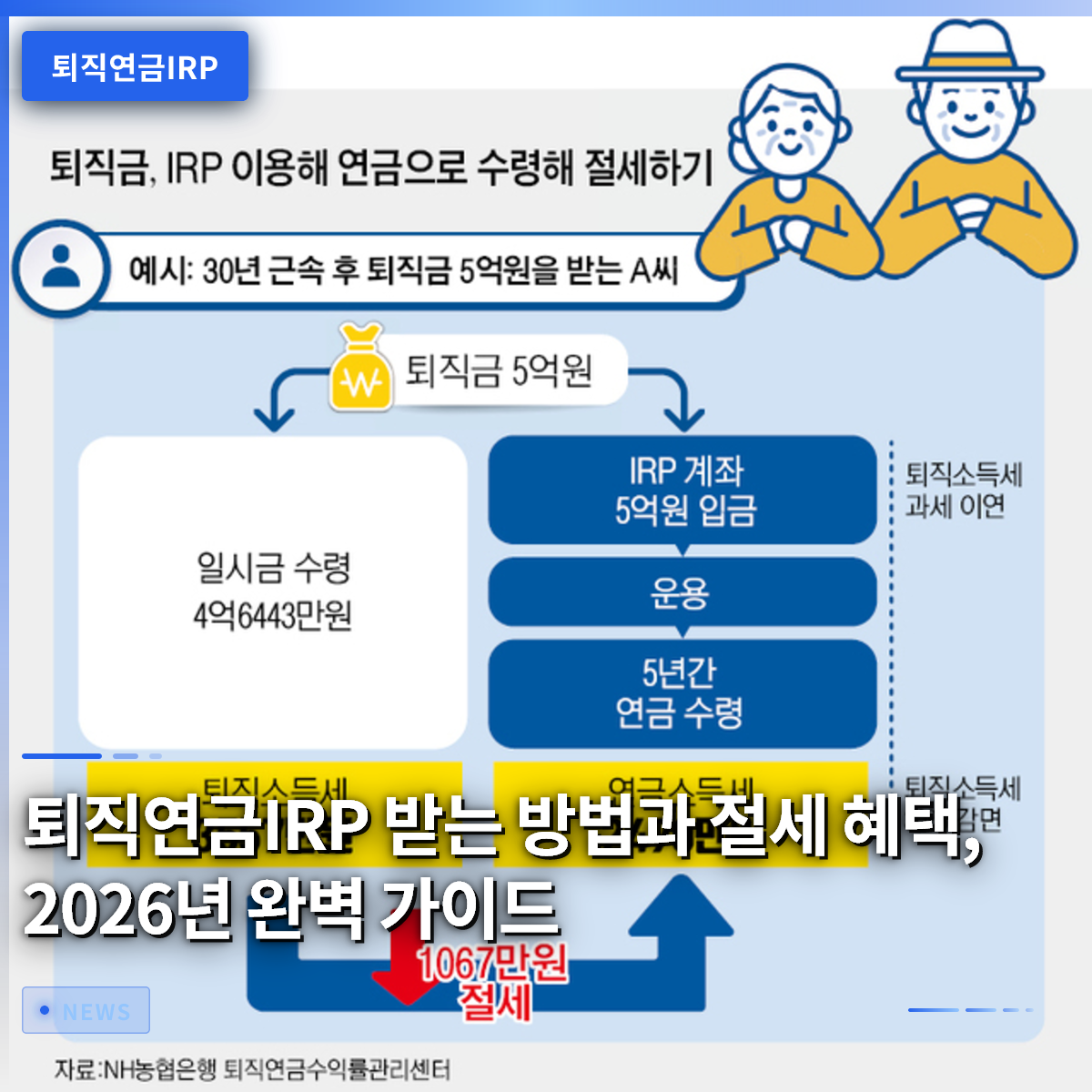
Have you heard that receiving your severance pay into an IRP account is more tax-efficient than depositing it directly into your bank account? As of 2026, the Individual Retirement Pension (IRP) is becoming an all-in-one solution that an increasing number of people need to access. In particular, if you prepare an IRP account in advance for your retirement, you can significantly enjoy tax deduction benefits when converting it into a pension. IRP is not just about tax reduction; it is a crucial financial tool that minimizes retirement income tax costs and ensures stable living expenses after retirement. In this article, we will provide concrete tips on how to open an IRP account, tax-saving strategies, and safe asset allocation that you can apply immediately in real life. Additionally, considering the recent market situation where IRP cancellation amounts are high, we will also examine how important management methods and investment strategies are.
=
How to Receive Your Retirement Pension in an IRP and Tax Benefits: The Complete 2026 Guide
1. What is an IRP Retirement Pension?

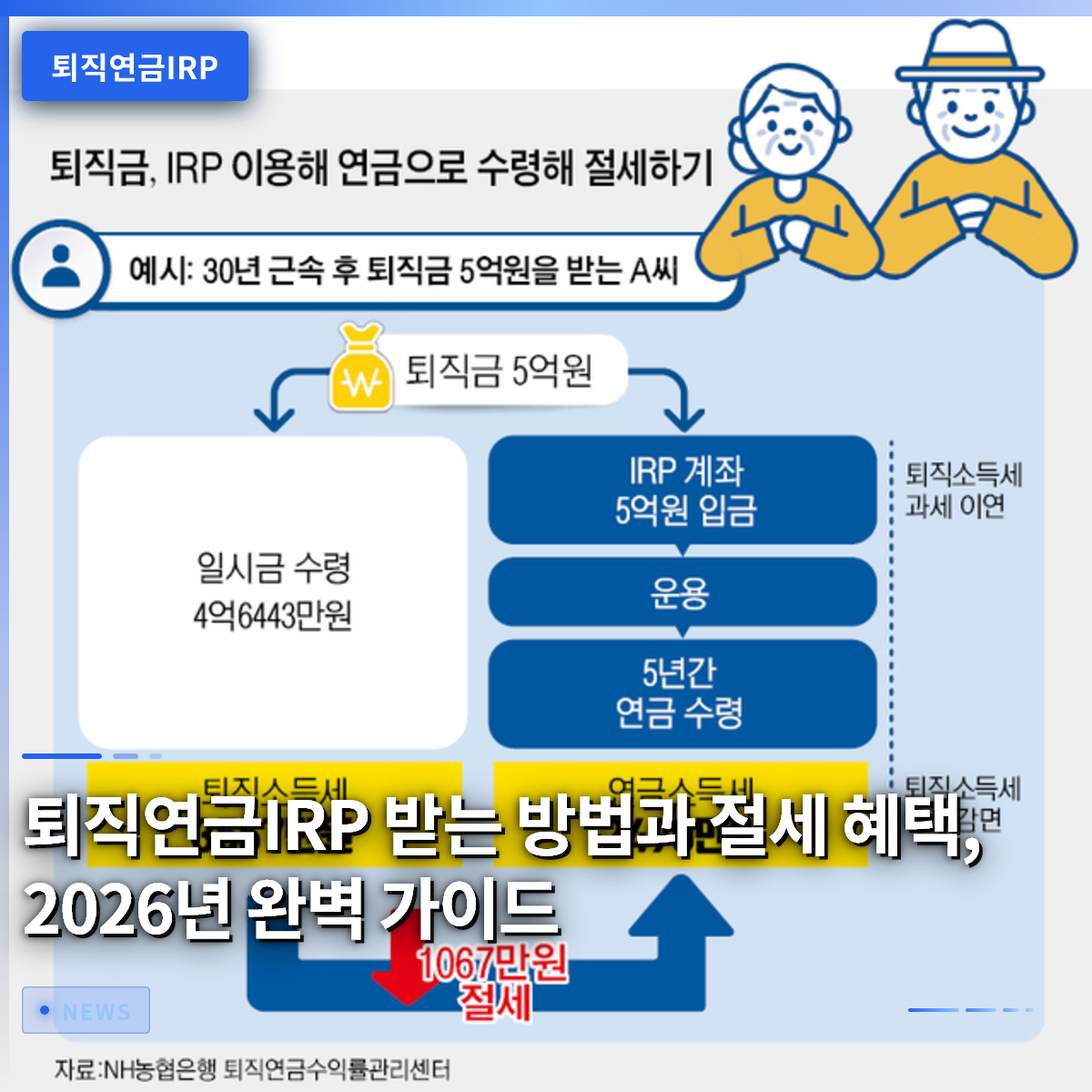
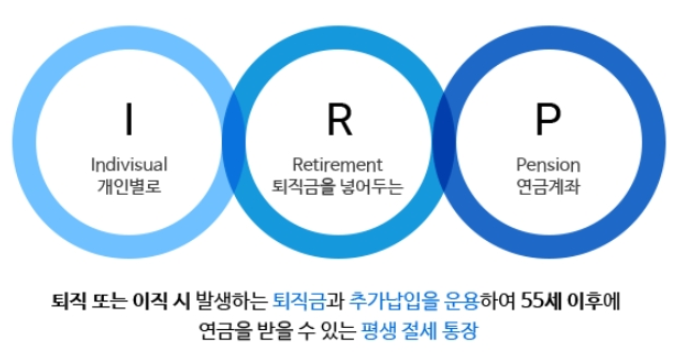
The IRP retirement pension is a system where employees convert all or part of their severance pay, received upon job change or retirement, into a savings-type pension to enjoy the benefits of a savings-based pension scheme. In this case, the severance pay is paid directly to the IRP account designated by the individual, creating a structure that lowers retirement income tax. In particular, as of 2026, the IRP tax deduction limit has been expanded to 6 million KRW per year, leading many office workers to recognize the IRP as an essential item for tax savings. IRPs are categorized into Defined Contribution (DC) type and Individual-focused type, with the latter offering the significant advantage of allowing individuals to choose and manage investment products. Receiving severance pay via IRP is not just about tax reduction; it is a strategic decision that can increase potential pension returns. Therefore, the trend of the times is no longer to receive severance pay in a bank account but to establish the so-called “IRP essential item” strategy.
To open an IRP account, you can visit a designated financial institution or apply online. The opening procedure is available at various financial institutions, including banks, securities firms, and fintech companies, and the convenience lies in the fact that it can be processed quickly once identity verification is completed. Recently, many financial institutions have started supporting non-face-to-face IRP account transfers, allowing you to easily start opening and managing an account with just a smartphone. Once you open an IRP account, you simply need to request that your severance pay be automatically paid to the designated account when you receive it. To do this, contact the relevant financial institution to switch the payment method. Some banks, such as KB Kookmin Bank, offer benefits like reducing the management fee from 0.25% to 0.1% for balances under 50 million KRW when converting to a non-face-to-face account.
The core strategy of the IRP retirement pension is to receive severance pay into a designated account, considering tax benefits and pension profitability.
2. IRP Tax Benefits: Deduction of Up to 6 Million KRW Annually
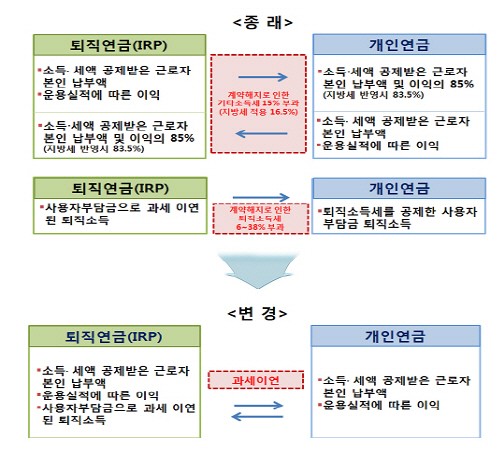
Using an IRP, you can receive a tax credit of up to 13 million KRW during year-end tax settlement. This applies to the amount deposited into the Individual Retirement Pension annually, and the major appeal is that a tax credit of 15% to 30% of the prepaid amount is possible. For example, if you deposit 5 million KRW into an IRP annually, you can receive a tax credit of up to 1.5 million KRW. Additionally, if the amount deposited into the IRP is invested in Defined Contribution type or high-yield funds above a certain ratio, the actual tax credit limit can increase to 6 million KRW. This is a strategic choice that goes beyond simple tax deductions, leading to significant financial benefits in the long term, even at the time of pension receipt.
To practically utilize IRP tax benefits, it is important to deposit a certain amount consistently every year. In particular, if you delay large deposits until the year-end tax settlement, you may miss out on tax benefits, so it is recommended to make regular deposits monthly or quarterly. Also, since IRPs are linked to the stock market and have high volatility, depositing a fixed amount annually allows you to enjoy regular tax benefits without needing to consider timing. Recently, financial institutions have strengthened automatic accumulation features, so actively utilizing these allows you to easily execute tax-saving strategies without separate management.
IRPs offer tax credits of up to 6 million KRW annually, significantly reducing the actual tax burden during year-end tax settlement.
3. IRP Investment Strategy: Securing 30% in Safe Assets
Recently, there have been moves in the National Assembly to implement a regulation requiring a minimum of 30% in safe assets for IRP investment portfolios. In response, many financial institutions are proposing bond-hybrid ETFs or TDFs (Target Date Funds) and providing cautious advice on individual portfolio composition. For example, products like the ACE US S&P 500 US Bond Hybrid 50 Active have a structure that balances safe and growth assets, standing out for providing both stability and profitability to long-term investors. Therefore, when investing in IRPs, it is important to recognize that a diversified strategy including safe assets is crucial, rather than focusing solely on high-yield funds.
When purchasing ETFs in an IRP, there may be cases where orders are blocked even if there is a remaining balance. This phenomenon often occurs when the purchase of equity ETFs is restricted in DC-type retirement pensions or IRPs. To prevent this, it is advisable to secure sufficient safe assets in advance or choose composite products like TDFs. Also, cases where orders are blocked when trying to put the entire retirement pension into ETFs are due to insufficient consideration of safe asset allocation. Therefore, securing the “30% safe assets” performance record is important. Since strategic portfolios offered by each financial institution may differ, you must choose based on your investment goals and risk tolerance.
IRPs should be composed of a portfolio with 30% in safe assets to reduce the risk of excessive losses.
4. IRP Combination Strategy: Synergy with Pension Savings
The IRP is an Individual Retirement Pension that provides separate tax benefits from Pension Savings. However, combining the two can create a synergy effect that not only increases tax credits but also allows for greater returns at the time of potential pension receipt. For example, if you receive a tax credit of 2 million KRW annually from Pension Savings, you can additionally deduct 6 million KRW from the IRP, resulting in a total tax credit effect of 8 million KRW. It is not just about increasing the amount; properly utilizing both systems becomes a strategy to maximize the tax-saving limit during year-end tax settlement.
When managing IRPs and Pension Savings simultaneously, you must clearly understand the deposit limits and tax credit limits. Pension Savings allows for a tax credit of up to 10 million KRW annually, and IRPs allow for an additional 6 million KRW deduction separately. Therefore, you can utilize a total tax-saving limit of 16 million KRW annually, but this is not simply about depositing a large amount of money; it can be a strategy for efficient savings and pension preparation. Additionally, when managing both systems simultaneously, you should diversify your portfolio considering your investment style and risk tolerance level.
Combining IRPs and Pension Savings can raise the tax-saving limit to 16 million KRW, expanding financial flexibility.
5. IRP Non-Face-to-Face Transfer: Tips for Reducing Fees
Recently, many financial institutions have expanded services for transferring physical IRP retirement pensions to non-face-to-face accounts. This change is not just about increasing convenience but has become an important means to significantly lower management fees. For example, if the fee for balances under 50 million KRW drops from 0.25% to 0.1%, it can save tens of thousands of won in costs over the long term. Additionally, converting to a non-face-to-face account allows for easy asset transfer without the burden of tariffs or fees, making preparation for post-retirement life much smoother.
To implement a non-face-to-face IRP transfer, you must first check the management status of your current IRP account. If the management fee is high, it is advisable to apply for a non-face-to-face transfer or consider transferring to another financial institution. Also, if you prepare your account information in advance to match the timing of your severance pay payment, a smooth transfer is possible without additional fees. KISA (Korea Internet & Security Agency) or the Financial Supervisory Service provide information, and private communities also share such information.
IRPs allow for non-face-to-face transfers, significantly reducing management fees and increasing long-term investment returns.
6. The Future of IRP: Strategies for Financial Independence
In the future, IRPs will emerge as a core financial tool for securing steady income after retirement, going beyond being just a tax credit means. In particular, as long-term interest rates are expected to rise in the 2030s, bond-type IRP products are projected to gain increasing popularity, and choosing products like bond-hybrid ETFs or TDFs will make a significant difference. Additionally, due to the impact of the government’s strengthened safe asset regulations, the proportion of safe assets within IRPs will be secured, creating an environment that supports pension receipt without excessive volatility. Therefore, it is important to strategically utilize IRPs for long-term financial independence, rather than simply aiming for tax deductions.
To utilize IRPs more effectively, it is advisable to first simulate your retirement timing and living expense level. For example, after estimating the amount needed at the time of pension receipt, you can set up a corresponding monthly deposit amount and investment strategy. It is also recommended to actively utilize financial institutions that offer annual discount benefits. In particular, recently launched government bond (IRP) accounts allow for the purchase of 10-year and 20-year government bonds, which is a significant benefit for investors seeking long-term stable returns.
IRPs are expected to become a core strategy for financial independence as long-term investment tools linked to safe assets.
Frequently Asked Questions
=