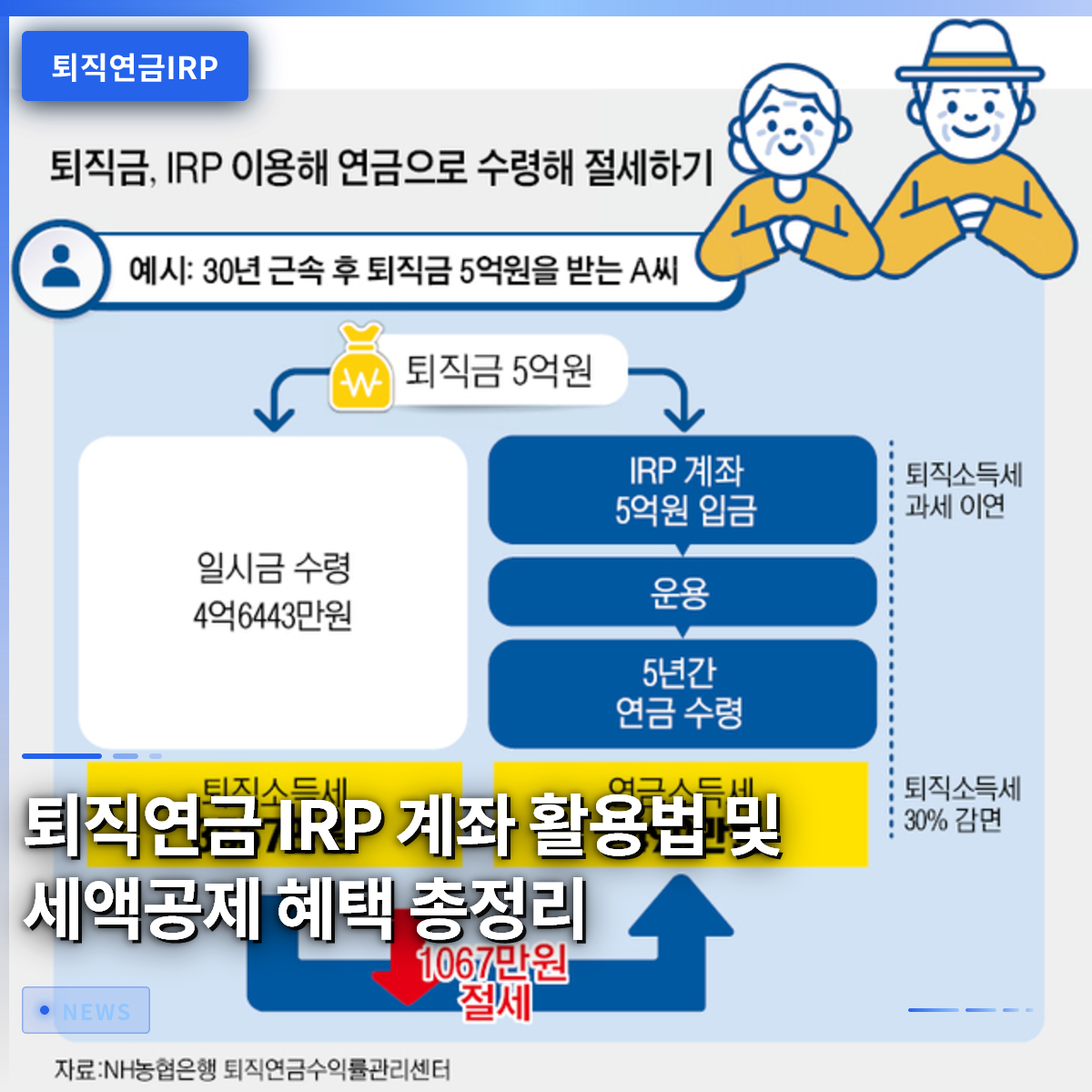
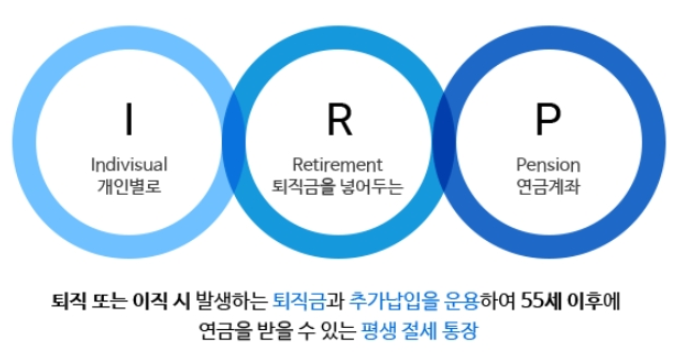
If you carelessly receive your severance pay in a regular bank account, you will end up losing millions of won in taxes. Therefore, it is essential to route the funds through an Individual Retirement Pension (IRP) account. Many employees choose to terminate their retirement pensions early due to a need for cash during job changes or resignation, but this is a shortcut that leads to significant long-term losses. In fact, despite the massive amount of funds transferred in recent years, the early termination rate remains unacceptably high, which is quite regrettable. To protect and grow the valuable severance pay you have earned through years of hard work, a structural understanding is essential. In this article, we will thoroughly examine practical methods for saving on taxes and tips for reducing unnecessary costs.
=
How to Use Your IRP Account for Retirement Pensions and a Complete Guide to Tax Deduction Benefits
1. The Decisive Reasons to Receive Your Severance Pay via IRP

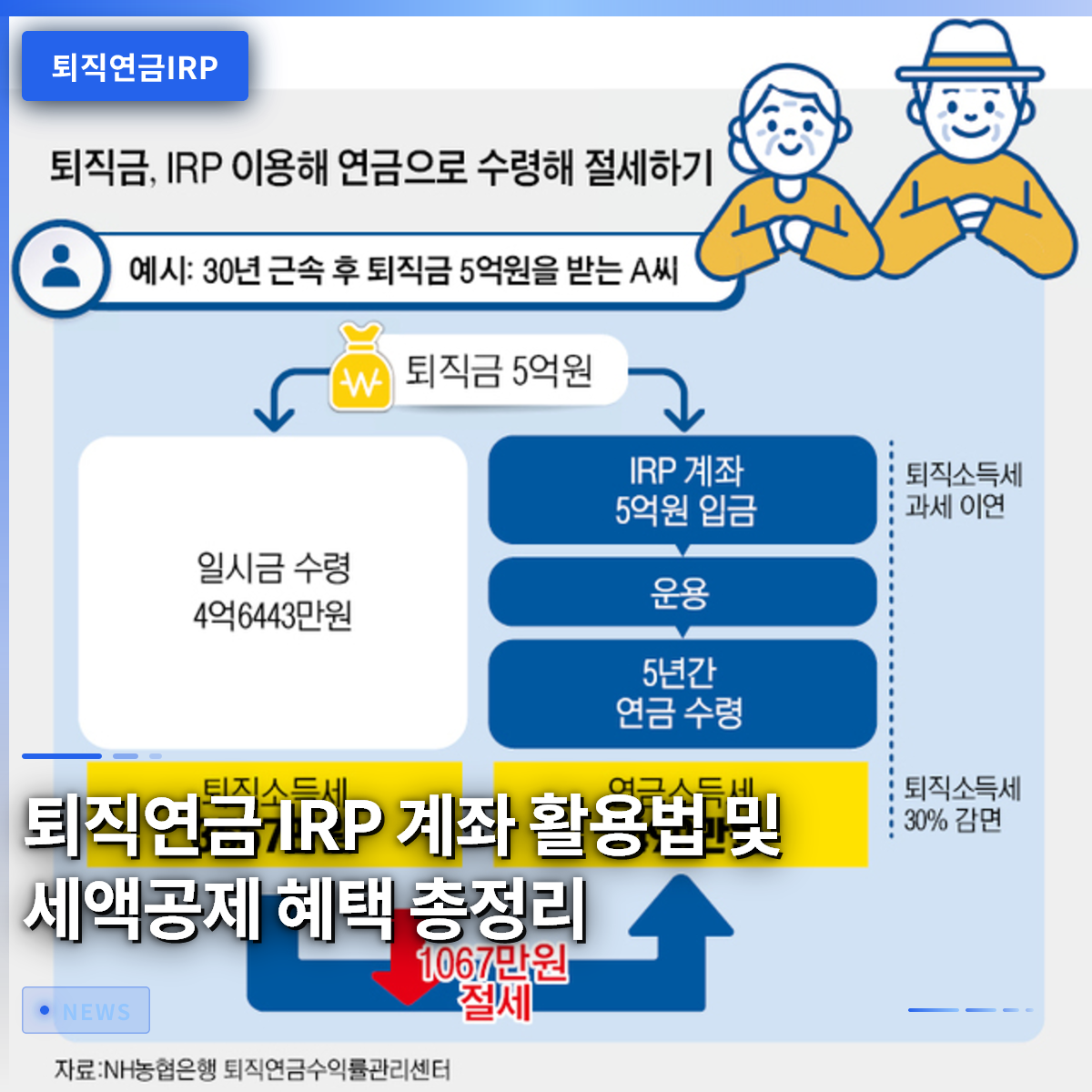
When a typical employee retires, the company is generally required to deposit the severance pay into the Individual Retirement Pension (IRP) account designated by the employee. If you receive the funds directly into a regular checking account because you need cash immediately, severance income tax is withheld at source, significantly reducing the amount you actually receive. On the other hand, if you receive it into an IRP account, taxation is deferred, allowing you to invest a larger principal. The key is to maximize the effect of compound interest by managing this money within the account through various financial products until retirement. Simply deferring the tax payment increases the principal for compound investment, leading to a massive difference in the size of your retirement assets. Therefore, the first golden rule when a company pays out severance is to open an account first and submit the account number.
Receiving your severance pay in an IRP account allows you to grow your principal fully by leveraging the tax deferral effect.
2. Tax Deduction Limits and Strategies to Maximize Year-End Settlement
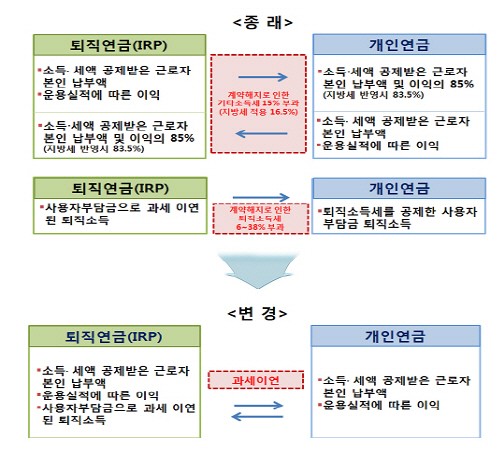
Every year during the year-end tax settlement season, the biggest concern for employees is undoubtedly tax-saving strategies to get money back. By combining a pension savings fund with an IRP account, you can enjoy tax deduction benefits on contributions of up to 9 million won. While the limit for pension savings alone is 6 million won, adding contributions to an IRP significantly increases the total limit. An employee with a total annual salary of 50 million won who maxes out this limit can receive a refund ranging from several hundred thousand to over 1 million won. This small, regular investment, similar to a savings account, serves as a powerhouse that achieves two goals: preparing for retirement and saving on taxes right now. Instead of just envying colleagues who got big refunds during their year-end settlement, you should check your own contribution limits immediately.
Using pension savings and IRP together allows you to maximize tax deduction benefits up to 9 million won.
3. Significantly Reducing Fee Burden Through Non-Face-to-Face Transfers
Management fees paid to financial institutions are a hidden culprit that quietly erodes returns during long-term investments. In the past, many people opened accounts by visiting branches in person, which resulted in higher fee rates, but the environment has changed significantly recently. Many institutions offer fee reductions of more than half if you switch to a non-face-to-face account or open a new one using a smartphone app. For example, when managing assets under 50 million won, fees are significantly lower compared to branch transactions, leading to a substantial difference over the long term. What may seem like a small difference of 500,000 or 1 million won can snowball over 10 or 20 years, eating away at your assets. Don’t put it off because it’s a hassle; open your main bank or securities app today to check your account’s fee conditions and switch to a non-face-to-face account.
Switching to a non-face-to-face account significantly saves on management and administrative fees, helping to protect long-term returns.
4. Safe Asset Ratios and Investment Portfolio Diversification
When managing assets in an IRP account, you are legally required to hold a certain percentage of safe assets. Since at least 30% of your total assets must be in safe assets, you cannot focus solely on aggressive investments. Recently, hybrid products that track U.S. indices have gained significant popularity as they allow investors to ride the growth of the stock market while meeting these regulatory requirements. For example, choosing a product that mixes U.S. representative indices and bonds allows you to fill the safe asset quota while balancing stability and profitability. Additionally, starting this year, it has become possible to directly purchase individual investment government bonds, such as 10-year or 20-year bonds, in Defined Contribution (DC) or IRP accounts. For retirement assets, it is more important than ever to build a balanced portfolio that remains stable against volatility rather than putting everything into a single product.
You must maintain a 30% safe asset ratio while using U.S. index hybrid products or government bonds to build a balanced portfolio.
5. The Traps of Early Termination and Preventing Fatal Losses
If you break into your retirement assets midway due to an urgent need for cash, you will face a disaster where you must return all the tax benefits you have received so far. You will be hit with a tax of over 15% under the category of miscellaneous income, calculated on the total of previously deducted tax amounts and investment returns. It is frustrating enough that the money you worked hard to save evaporates in taxes, but it also means your safety net for old age disappears entirely. In fact, over the past few years, an enormous amount of money—trillions of won—has been terminated early, prompting the government and the National Assembly to deliberate on various measures to lower the termination rate. Unless you have an exceptional reason allowed by law, such as purchasing a home as a non-homeowner, it is wise to maintain your account. If you urgently need living expenses, it is far more beneficial to look for alternatives like home equity loans or other funding options rather than terminating the account early.
Early termination requires returning tax deduction benefits and paying high tax rates, so it should be avoided at all costs.
6. Timing of Pension Receipt and Preparing for the Income Gap in Old Age
Since there is a gap period where income completely stops after retirement until you start receiving the National Pension, thorough preparation for this is essential. Local governments, such as Gyeongnam Province, carry out separate pension support programs to fill this income gap and facilitate linkage with IRP accounts. If you receive your severance pay in the form of a pension rather than a lump sum, you can receive a substantial tax reduction of 30% to 40% on severance income tax. The monthly pension payments deposited into your account, similar to a salary, serve as the most reliable pillar determining your quality of life after retirement. You must wisely divide the severance pay, which embodies your hard work in your younger days, and transform it into a solid cash flow for your old age. If you start managing your account and refining your portfolio step by step now, your twilight years will be far more abundant than worrying.
Receive your funds as a pension to enjoy tax reductions and wisely prepare for the post-retirement income gap.
Frequently Asked Questions
=