
If you want to safely grow a lump sum of money, failing to consult a deposit interest calculator first could lead to significant regret later. Many people are disappointed when they open an account based solely on the interest rates displayed on bank signage, only to find that the actual amount they receive is less than expected. In this article, we will carefully examine the differences between time deposits and savings plans, how to calculate after-tax interest, and the break-even point for switching products after early withdrawal. If you thoroughly understand this content before starting to save, you will be able to protect your valuable assets much more wisely. Let us now unravel the secrets of complex interest calculations in a very simple and friendly manner.
=
How to Use a Deposit Interest Calculator: Calculating After-Tax Interest and Tips for Switching Products

1. The Difference Between Time Deposits and Savings Plans

A time deposit is a product where you entrust a lump sum of money you have already saved for a fixed period. On the other hand, a savings plan is a product where you gradually accumulate money by saving a little each month. Many people mistakenly believe that savings plans are always more advantageous because their interest rates are higher than those of time deposits. However, when you actually run the numbers, time deposits, where you deposit a lump sum all at once, are often much more favorable in terms of interest calculation than savings plans, where money is deposited in installments. Since interest on savings plans is calculated only from the date of deposit until maturity, there is a significant difference in total interest compared to time deposits, where the principal remains intact for a longer period. Therefore, the first step in saving is to determine whether your assets are a lump sum or small, regular amounts. You must accurately understand these structural differences to prevent unnecessary interest losses. When visiting a bank branch or opening a mobile app, first consider the nature of your money. If you have a lump sum, it is wise to look toward time deposits without hesitation. If you are a young professional with surplus funds coming in every month, it is better to build a habit with a savings plan. Simply choosing a product that fits your situation can significantly improve the efficiency of your financial management.
It is advantageous to put lump sums into time deposits and small, regular amounts into savings plans. You should understand the interest calculation methods in advance.
2. The Difference Between Pre-Tax and After-Tax Interest

It often happens that people open accounts based solely on the high interest rates advertised by banks, only to be shocked when they see the actual amount deposited. Taxes are applied to interest, so the money we actually receive is always less than the amount stated in promotional materials. A total of 15.4% is withheld from deposit interest, consisting of a 14% interest income tax and a 1.4% local income tax. For example, if you earn 100,000 won in interest over a year, 15,400 won is deducted as tax, and that is the amount credited to your account. Therefore, when using a deposit interest calculator, you must always calculate based on the after-tax take-home amount to know your exact profit. If you skip this tax deduction process and rely only on simple calculations, you may fall short of your expected savings goals. Especially as the amount increases, the weight of the 15.4% tax becomes significant, so extra caution is needed. It is advisable to actively use the features of mobile calculators or financial platforms that accurately calculate after-tax interest. Knowing exactly how much money will truly land in your account after taxes is the beginning of genuine asset management. Try to cultivate the meticulous habit of not being swayed by pre-tax figures.
A total of 15.4% tax is applied to interest, so you must always check the after-tax take-home amount using a deposit interest calculator.
3. The Truth About Switching to High-Interest Products
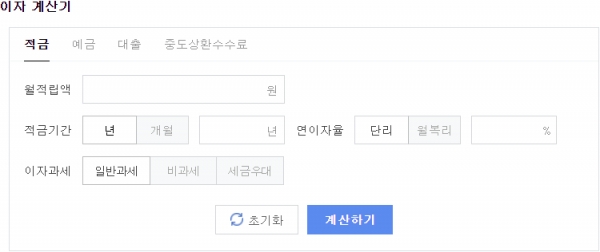
When you happen to discover a product with a much higher interest rate than your current deposit while out and about, it is natural to feel anxious. The urge to immediately break your existing deposit and switch to the new product fills your mind. However, before blindly pressing the cancellation button, you must first run the numbers. If you withdraw your existing deposit early, most of the interest accumulated so far will be lost, or you will receive only a very small early withdrawal interest. Switching only makes sense if the additional interest you would receive from the new product is definitely greater than the interest you forfeit by breaking the existing deposit. If you switch emotionally without performing this profit-and-loss calculation, you may actually incur a loss. It is essential to carefully compare the remaining deposit period and the difference in applicable interest rates. Even if you hear rumors about higher interest rates from others, you must develop the ability to objectively analyze the current state of your account. The wisdom to calmly assess the actual benefit is the core of successful financial management. The moment you calm your impatience and start calculating, you can protect your wallet.
When breaking an existing deposit to switch, it is essential to calculate and compare the interest you forfeit with the new interest you gain.
4. Understanding the Deposit Insurance System
When entrusting money to a bank, it is important to find a place that offers high interest, but confirming the safety of your principal is the top priority. In South Korea, the Deposit Insurance System protects up to 100 million won per person, covering the principal and a small amount of interest, at each financial institution. Even when diversifying savings across multiple savings banks or commercial banks, you should allocate your funds keeping this protection limit in mind. If you put all your assets in one place and the bank encounters problems, it may be difficult to recover amounts exceeding the protection limit. Therefore, when managing a lump sum, it is safer to check if the safety mechanisms are robust rather than just chasing interest rates. This system is a very sturdy fence designed to allow financial consumers to save without anxiety and with peace of mind. Try to develop the habit of always checking if an institution is covered by deposit insurance when signing up for special savings bank products or high-interest deposit products. Safely growing interest within the 100 million won limit is most important for long-term asset formation. It is much wiser to secure a definite safety net than to spend sleepless nights worrying. Smart saving is completed by finding high interest rates while thoroughly protecting your money.
You can be protected up to 100 million won per financial institution, so you should ensure safety through diversified savings.
5. Utilizing Mileage and Special Benefit Deposits
Recently, unique deposit products that accrue airline miles, such as those from Korean Air, instead of cash interest have appeared and gained popularity. The structure allows you to receive a significant amount of miles instead of cash interest by entrusting a lump sum of 100 million won for a certain period. This is a very attractive option for people who frequently plan long-distance trips or aim to accumulate miles for business class tickets. However, when signing up for such products, you need a calculator to carefully compare the value of the miles you gain with the cash interest from a regular deposit. You must weigh which is more beneficial: receiving cash interest and paying taxes, or receiving miles to save on travel costs. These unique financial products bring both small joys and practical benefits to ordinary savings life. If you have a lifestyle pattern of frequent travel, mileage-based deposits can deliver much greater value. On the other hand, if you are only interested in growing cash, a regular time deposit is much more comfortable and advantageous. Weighing various benefits according to your spending habits and lifestyle is a trend in modern financial management. Instead of blindly following what others say is good, think about what benefits are truly necessary for you.
Deposit products that offer miles instead of cash interest should be chosen by comparing them with your individual travel habits and the value of the miles.
6. Mindset for Wise Deposit Life
To protect and grow your assets in a complex interest rate environment, you must always develop the habit of checking objective figures. You need the attitude of actively using calculator tools provided by bank apps or financial platforms to preview after-tax interest. Try to exercise the wisdom to calmly crunch the numbers instead of impulsively breaking deposits or being swayed by baseless rumors. Even small differences in interest, when accumulated over a long period, return as a great magic that changes the size of your assets. From today, we hope you will keep a deposit interest calculator close, like a good friend, and plan your savings. Interest rates will continue to fluctuate in the future, and numerous attractive products will wait for our choice. Each time, if you stay centered and accurately calculate the state of your wallet and after-tax profits, you will not suffer losses in any situation. Only those who manage their money with a proactive attitude earn the qualification to face a prosperous future. Your wise savings habits will come together to complete a solid and unshakable economic freedom. Right now, turn on the calculator for your lump sum and take the first step.
Only thorough calculation and proactive asset management habits guarantee successful financial management and the future.
Frequently Asked Questions
=