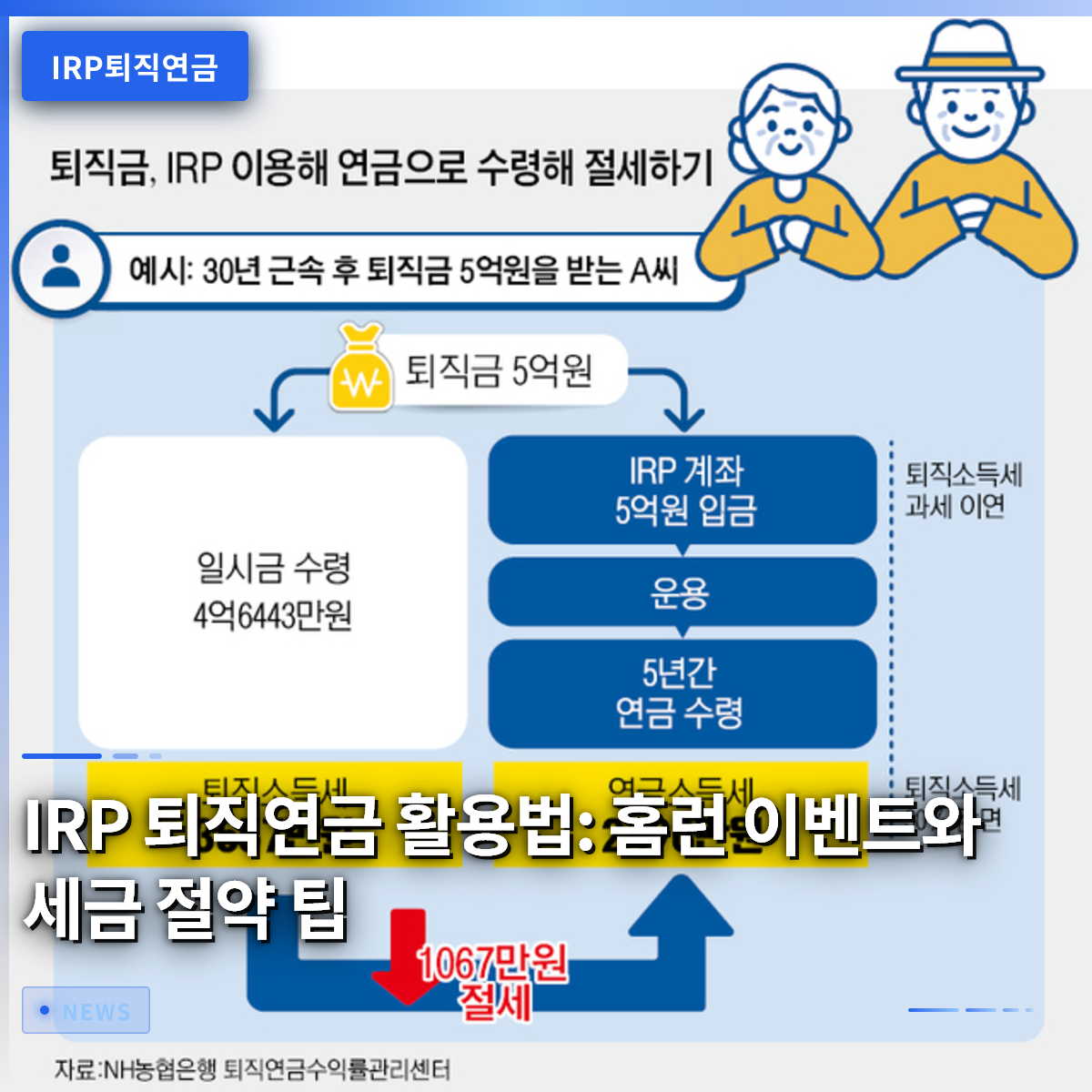
The IRP (Individual Retirement Pension) is a system where employees voluntarily contribute or accumulate retirement benefits paid by their employer to receive a pension after retirement. Today, we will first outline the core advantages of this system and then introduce practical utilization strategies step by step. We will start by identifying who is eligible to join an IRP and the contribution limits, and then examine the benefits available through tax deductions. Next, we will provide specific details on the “Home Run Event” currently being held by BNK Bank and how to participate. Following that, we will present asset management know-how using Exchange-Traded Funds (ETFs) within an IRP account and recommended rebalancing cycles. We will then compare the conditions under which early withdrawal is possible and the tax implications of different pension receipt options. Finally, we will offer tips on properly receiving tax deductions during year-end settlement, along with future policy outlooks and a checklist for immediate action.
=
How to Use IRP Retirement Pensions: Home Run Event and Tax Saving Tips
1. Introduction and Basic Advantages

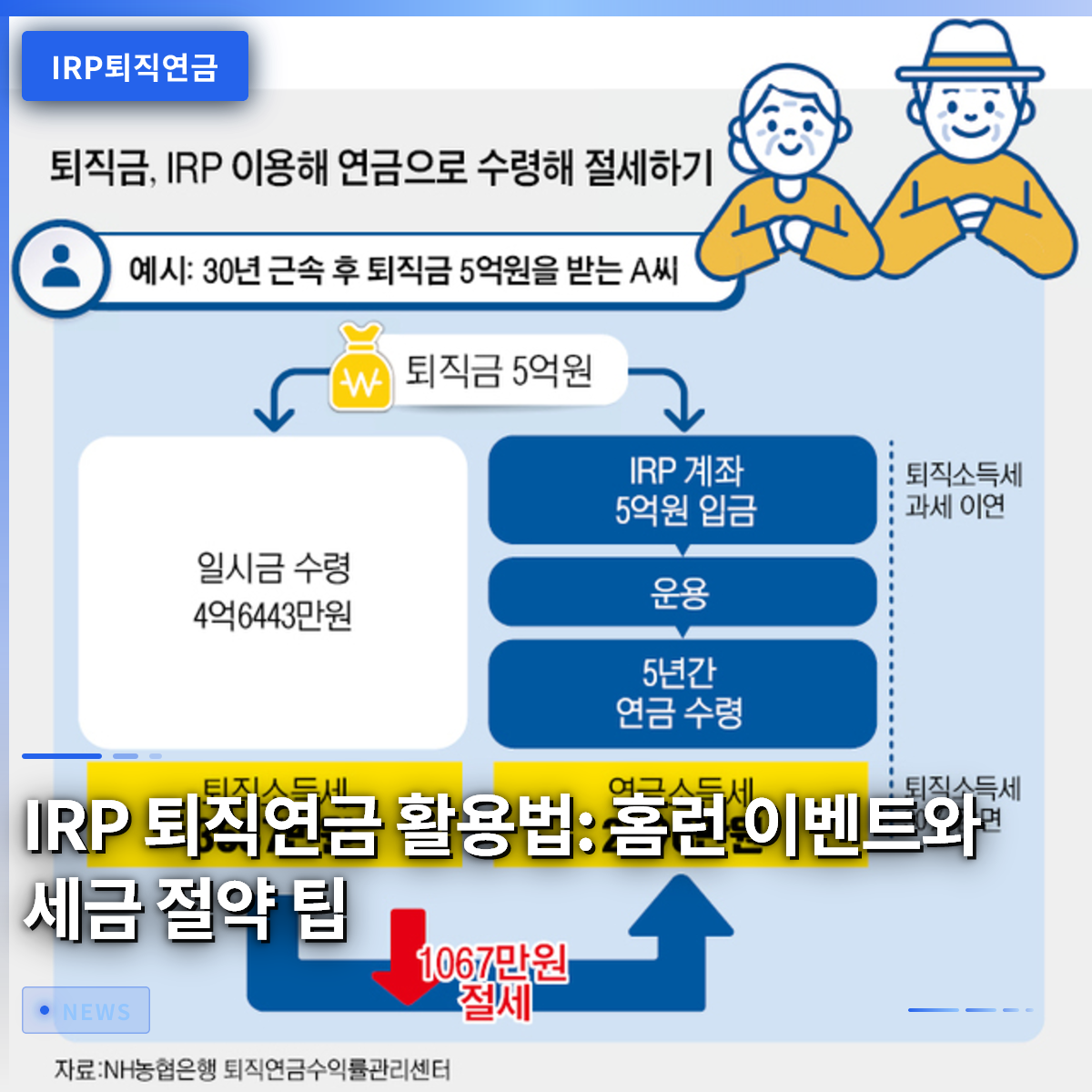
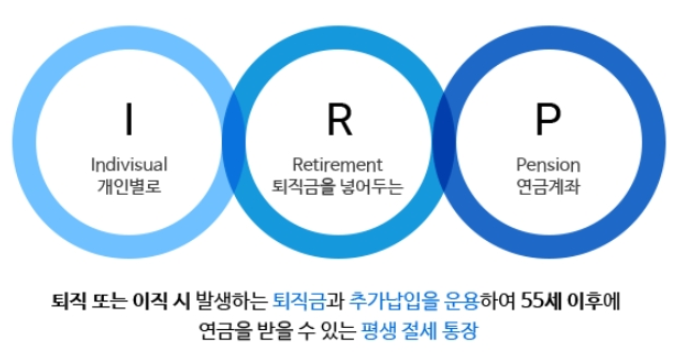
IRP stands for Individual Retirement Pension. It is an account where employees can freely contribute while earning income or accumulate retirement benefits received from their workplace. Unlike regular bank savings, amounts deposited into an IRP are subject to tax deferral, meaning no immediate income tax is charged. In other words, you do not pay taxes on the amount contributed now; taxation only occurs when you withdraw the funds in the form of a pension later. This tax deferral effect significantly boosts compound interest returns over long-term investments. Additionally, you can receive a full tax deduction on contributions within the annual limit, making it a practical tool for reducing income tax. Finally, IRP accounts allow for flexible withdrawals as a lump sum or pension upon retirement, providing great freedom in planning for your later years.
The IRP is a system that simultaneously offers tax deferral and tax deductions, enabling both income tax reduction and long-term asset growth.
2. BNK Bank Home Run Event Guide
BNK Bank is running a “Home Run Event” for Individual Retirement Pension (IRP) customers until the end of November 2026. The event targets not only new subscribers but also all existing customers who hold an IRP account and are managing funds or ETFs. The participation conditions are simple: you are automatically entered into the draw if you complete a new subscription or additional contribution during the event period. Winners will receive mobile gift certificates worth up to 30,000 KRW, with payment instructions sent individually via text message after the announcement. During the event period, you only need to follow simple procedures to check your IRP account balance and receive the gift certificate. To participate, fill out an IRP subscription or new contribution application form via the BNK Bank mobile app or at a branch, and click the event entry button.
The BNK Bank Home Run Event provides mobile gift certificate benefits to new and existing customers, enhancing motivation to utilize IRPs.
3. ETF Utilization and Management Strategy
Choosing Exchange-Traded Funds (ETFs) within your IRP account allows you to enjoy both diversification and a low-cost structure. Since ETFs track specific indices, they reduce the volatility associated with selecting individual stocks and effectively capture overall market returns. In particular, when managing long-term retirement assets, broad market index funds with low volatility are suitable. For example, combining a fund tracking the KOSPI 200 with a fund following the US S&P 500 can provide balanced coverage of domestic and overseas markets. When managing your portfolio, check your asset allocation ratios every six months and rebalance any deviations back to the target ratios. During the rebalancing process, it is advisable to execute adjustments in small increments rather than large swings to minimize transaction costs incurred from buying and selling.
Using ETFs in an IRP allows you to track broad market returns at low costs while managing risk through rebalancing.
4. Early Withdrawal and Pension Receipt Methods
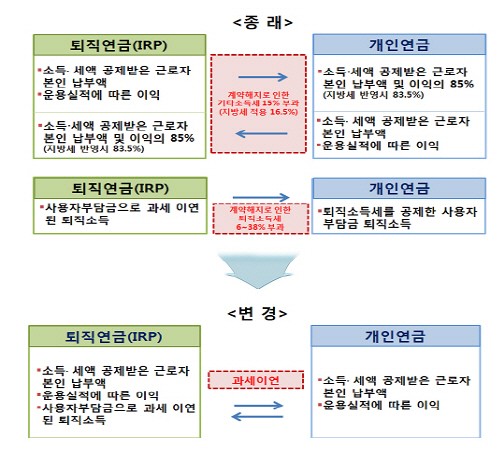
Amounts accumulated in an IRP account can be withdrawn early if certain conditions are met. Representative reasons include purchasing a home if you do not own one, returning a deposit for a rental lease, paying for major illness or medical expenses, or maintaining livelihood due to bankruptcy or natural disasters. When making an early withdrawal, retirement income tax is applied to the withdrawn amount, using cumulative tax rates based on income brackets. On the other hand, once you are 55 years or older and have maintained the account for a certain period, you can receive the funds as a pension. You can choose between a defined benefit (fixed amount) and variable benefit (return-linked) pension receipt method; since the tax treatment differs for each, prior verification is necessary. If received as a pension, pension income tax applies, but the advantage is that the tax burden can be spread over a longer receipt period.
Early withdrawal from an IRP is allowed only in special circumstances, and receiving funds as a pension allows for stable retirement income planning through tax dispersion effects.
5. Tax Deduction Application and Year-End Settlement Utilization
Employees with earned income can apply for a tax deduction on their IRP contributions during year-end settlement. The deduction limit is 7 million KRW annually, and any contributions exceeding this amount are not eligible for deduction. To apply, find the “Individual Retirement Pension” item in the simplified year-end settlement service provided by your company and submit the contribution proof. You can use a contribution confirmation certificate issued by the financial institution or an automatic transfer receipt as proof. To avoid missing the deduction, check your contribution history in advance and consider additional contributions if there are any shortfalls. A common mistake is missing the deduction proof when closing an account midway or transferring it to another financial product; therefore, it is essential to keep relevant documents even when moving accounts.
To directly reduce income tax through tax deductions on IRP contributions during year-end settlement, accurate submission of proof and management within the limit are essential.
6. Future Outlook and Call to Action
The government is continuously promoting the expansion of the retirement pension system to address an aging society, with discussions underway regarding raising tax deduction limits or expanding mandatory enrollment. These policy changes will provide individuals with more opportunities for retirement preparation while emphasizing the importance of account management. Therefore, it is advisable to carefully monitor current system changes and develop the habit of checking options that are beneficial to you in advance. First, check if your employer provides an IRP; if not, opening an individual account is the first step. Second, set up automatic transfers for a fixed monthly amount to ensure consistent saving. Third, construct a portfolio by combining ETFs or bond funds and perform rebalancing every six months. Finally, systematically record your annual contribution history to ensure you do not miss the tax deduction application process during year-end settlement, thereby preventing any disadvantages.
To prepare for future expansions in retirement pension policies, you should establish routines for account opening, automatic contributions, portfolio management, and tax deduction checks starting now.
Frequently Asked Questions
=