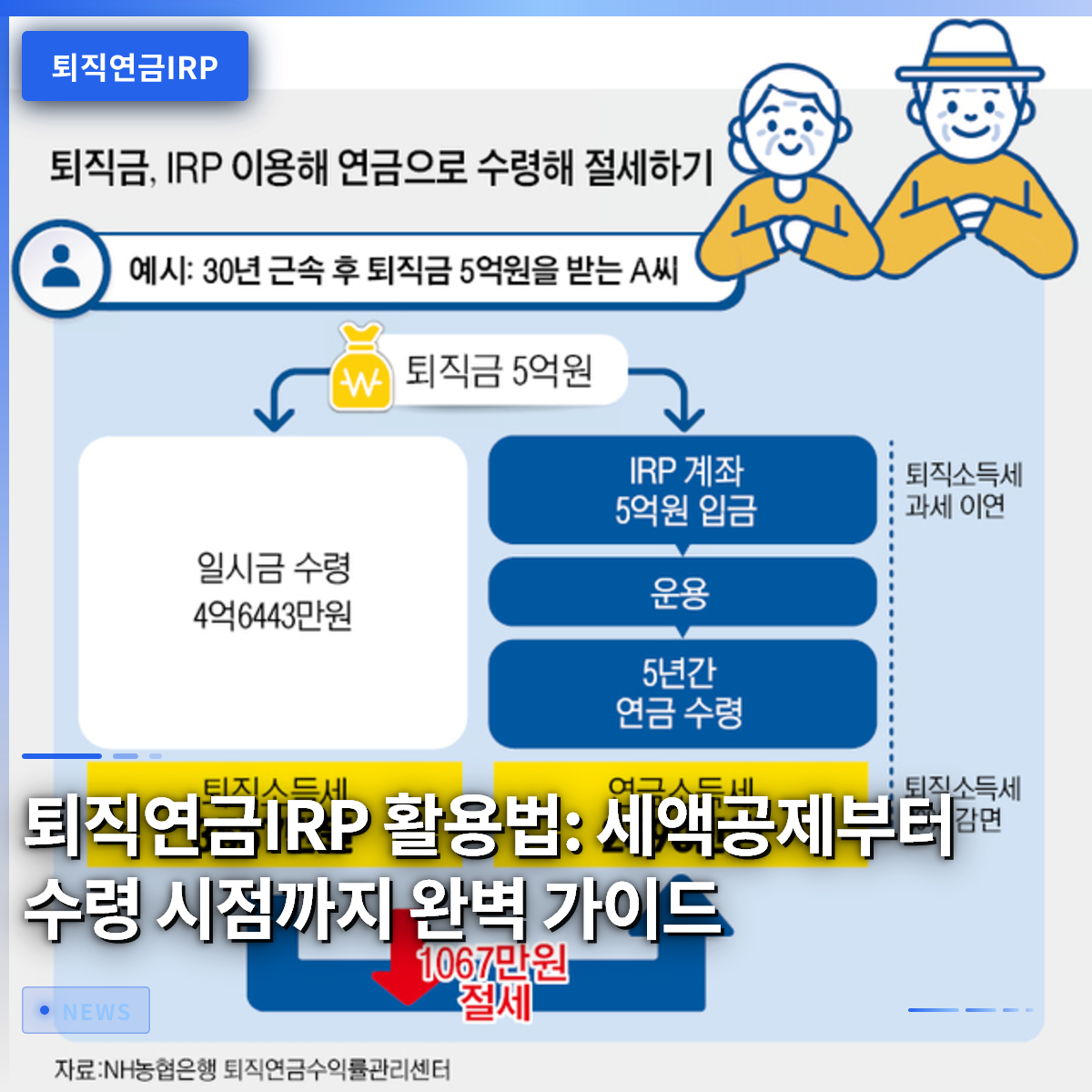
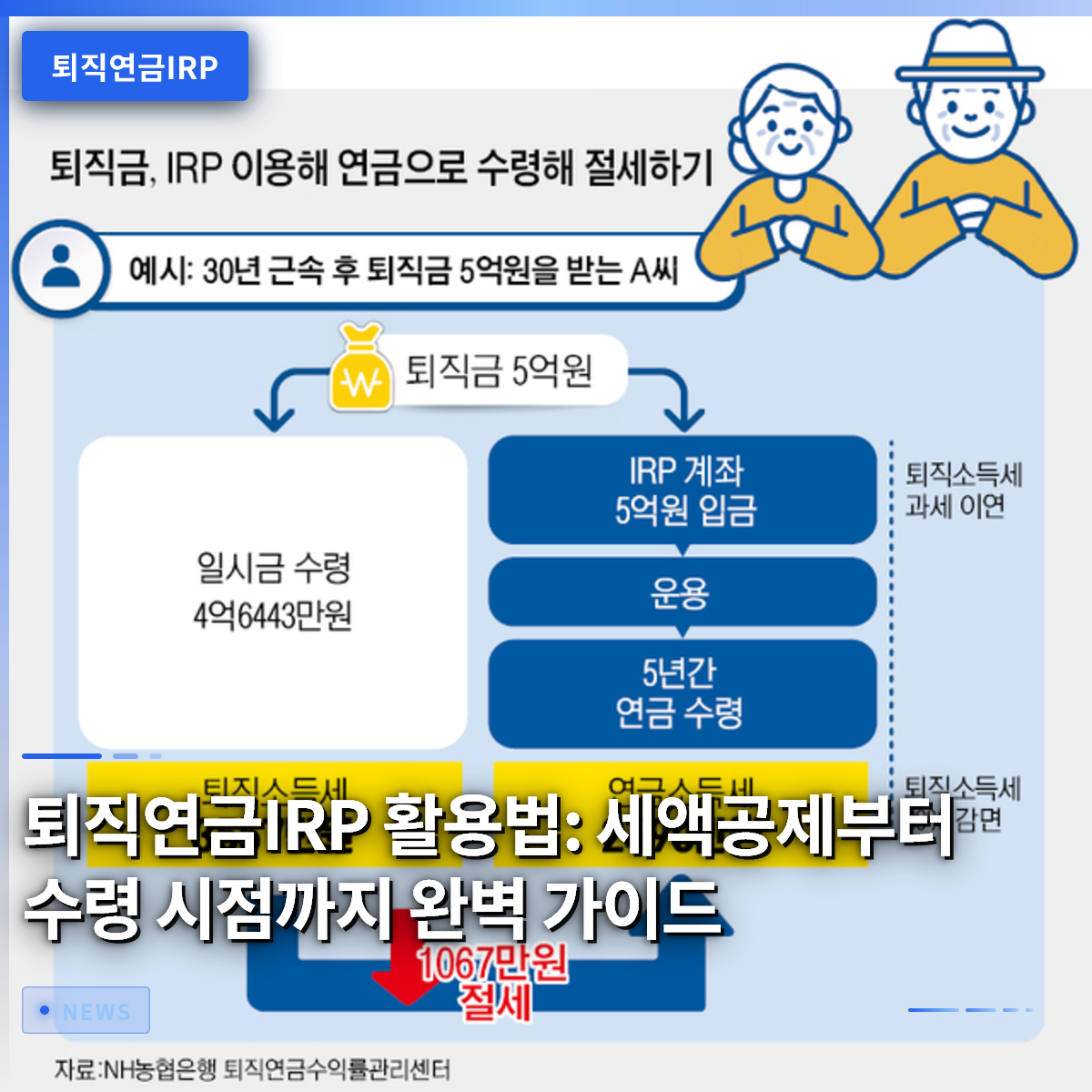
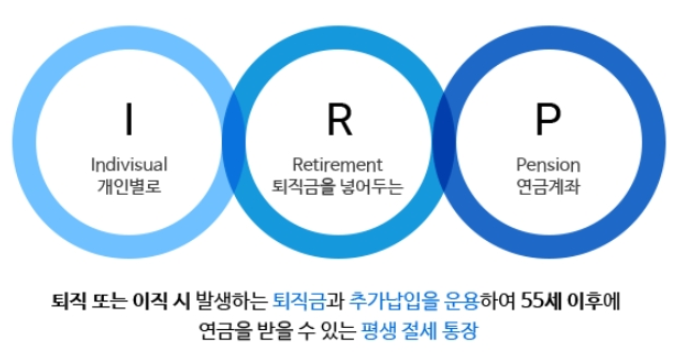
Choosing an Individual Retirement Pension (IRP) account allows you to achieve both tax savings and effective management of your retirement funds. Many employees are unaware of the significant tax deduction benefits they miss by simply depositing their severance pay into a regular bank account. Today, based on real-world examples, I will guide you step by step on how to open an IRP account and which products to invest in. First, we will cover the account opening procedures and required documents. Next, I will explain how to maximize your tax deduction limits and what to watch out for during investment management. Finally, we will discuss the penalties associated with early withdrawal and strategies for the timing of your pension payouts. By reading this article to the end, you will be able to use your IRP wisely to prepare for a more secure retirement.
=
How to Use Your IRP: A Complete Guide from Tax Deductions to Payout Timing
1. IRP Account Opening Procedure and Required Documents

First, you can start the account opening application by visiting a nearby bank or securities firm branch or accessing the institution’s website. You will typically need a valid ID, a resident registration certificate, and a certificate of employment issued within the last three months. If you are currently employed, prepare the certificate of employment from your workplace; if you have already retired, a certificate of retirement will suffice. For non-face-to-face applications, you can simplify the document submission process by completing mobile phone identity verification and uploading a photo of your ID. When filling out the account opening application, it is helpful to include your expected pension payout timing along with your account holder information for easier future management. Once all documents are submitted, the account is usually opened within 1 to 2 business days, and you will receive a completion notification via text message or email. Immediately after opening, you can deposit funds to begin selecting investment products.
Opening an account is easy via the internet or a branch with just an ID and basic documents. Non-face-to-face applications can also help reduce fees.
2. Tax Deduction Limits and Utilization Strategies
The annual tax deduction limit for an Individual Retirement Pension (IRP) is 6 million KRW, and you can receive deductions of up to 9 million KRW for pension savings funds. For example, if an employee with an annual salary of 50 million KRW deposits 4 million KRW into an IRP and 2 million KRW into a pension savings fund, a total tax deduction of 6 million KRW is applied, significantly reducing their tax burden during the year-end tax settlement. To maximize tax deductions, it is advisable to develop the habit of depositing a fixed amount via automatic monthly transfers. Transferring funds on your payday ensures consistent contributions without the burden of gathering a large sum at year-end. If you have a large lump sum of cash available mid-year, you can make a lump-sum deposit, but remember that only amounts within the limit are deductible, so it is essential to check your remaining limit. Deposits exceeding the limit do not qualify for tax deductions, so you must always check your usage status on the National Tax Service’s Hometax website before the year-end settlement. By contributing in this planned manner, you can reduce your tax burden while systematically building your retirement funds.
Fill the annual 6 million KRW tax deduction limit with monthly automatic transfers, and check your remaining limit before making lump-sum deposits to avoid over-contributing and maximize tax savings.
3. Tips for Selecting Investment Products: The 30% Safe Asset Rule
When managing your IRP, you must maintain a safe asset ratio of at least 30% to minimize the risk of principal loss. Typical safe assets include government bonds, public bonds, high-grade corporate bonds, and bond-mixed funds. For instance, choosing a fund that mixes US S&P 500 and US Treasuries, or a domestic high-grade corporate bond fund, allows you to meet the safe asset requirement while still expecting a certain level of return. The remaining 70% can be allocated to growth assets such as equity funds or Exchange-Traded Funds (ETFs) to enhance long-term returns. When selecting products, you should compare not only past returns but also management fees and the fund’s risk rating. Index funds or ETFs with low management fees offer high cost efficiency for long-term holding, making them suitable for growing retirement funds. Additionally, it is important to regularly rebalance your portfolio to ensure the safe asset ratio does not fall below 30%. By adhering to these rules, you can manage your assets relatively stably even during market fluctuations.
Use bond-mixed funds that meet the 30% safe asset rule as your core, and allocate to growth assets to pursue long-term returns while reducing risk.
4. Penalties and Procedures for Early Withdrawal
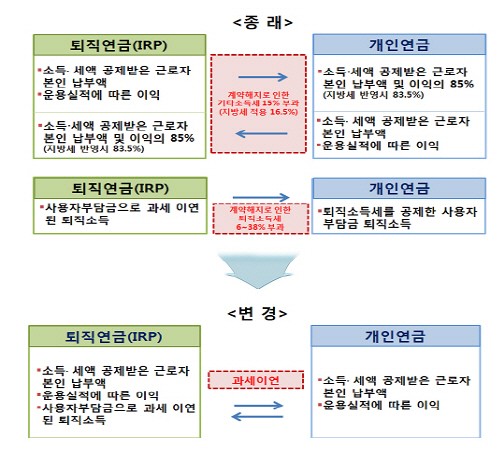
If you close your IRP account early, you will be subject to additional taxes on the amounts for which you received tax deductions, and the tax rate varies depending on the timing of the withdrawal. For example, if you withdraw within 5 years, 16.5% of the withdrawn amount is taxed as miscellaneous income, while a rate of 11% applies if the account has been held for 5 to 10 years. If you have held the account for more than 10 years, the tax burden is significantly higher compared to receiving it as a pension, so it is generally more advantageous to maintain the account long-term. The withdrawal process involves submitting a withdrawal application to the financial institution, completing identity verification, and receiving approval. After approval, the withdrawal amount is deposited into your designated account, with taxes automatically deducted, so you receive the net amount. Before withdrawing early, consider transferring your account to another financial institution, which allows you to continue managing your funds without tax penalties. Therefore, if you need cash urgently, it is wise to explore loans or other savings products first and consider early withdrawal only as a last resort.
Early withdrawal triggers additional taxes on deducted amounts, with rates varying by holding period. It is best to prioritize maintaining the account and consider transferring it to avoid tax penalties.
5. Payout Timing and Pension Conversion Methods
Pension payouts can begin from age 55, with two options: a lump-sum payout or pension payments. Receiving a lump sum makes the amount subject to comprehensive income tax, which can result in a higher tax burden, whereas receiving it as a pension applies pension income tax rates, generally resulting in a lower tax burden. For example, receiving 500,000 KRW monthly for 5 years keeps the annual taxable base small, lowering the applicable tax bracket. If you decide to receive pension payments, you must first submit a pension commencement application to the financial institution and specify the payment frequency and amount. Choosing a frequency that matches your cash flow, such as monthly, quarterly, or semi-annually, makes planning for living expenses easier. Additionally, adjusting your remaining assets to meet the safe asset ratio before starting payouts can mitigate the impact of market fluctuations. While additional deposits are not possible during the payout phase, you can freely switch funds within your existing assets, allowing for continued portfolio management. By carefully designing your payout method, you can significantly contribute to the stability of your retirement life.
Receiving pension payments in monthly installments reduces the tax burden, and setting the frequency and amount at the time of application simplifies life planning.
6. Future Outlook and Action Guide for Readers
With the expansion of the employee retirement pension system, the number of IRP account holders is expected to continue growing. The government is discussing raising tax deduction limits and strengthening support measures for employees of small and medium-sized enterprises, which is expected to benefit more workers. Furthermore, as competition among financial institutions intensifies, non-face-to-face account opening fees are expected to decrease, and a wider variety of fund and ETF options will become available. This means investors can reduce management fees and easily diversify their portfolios. Therefore, it is advisable to review your IRP account now and plan monthly contributions to meet the tax deduction limit. Regularly check the safe asset ratio in your account and rebalance into safe assets like bond-mixed funds or government bonds if necessary. Also, remember that transferring your account to another financial institution instead of withdrawing early can help you avoid tax penalties. Finally, if you are approaching your pension payout age, simulate different payout methods and tax scenarios in advance to make the best choice.
As institutional support expands and financial competition increases, the environment for using IRPs is expected to improve. It is wise to start preparing now by reviewing your account, planning monthly contributions, and strategizing your payouts.
Frequently Asked Questions
=