The South Korean government has once again elevated its status as a nuclear powerhouse by presenting a new blueprint for nuclear technology on the global stage. The Ministry of Science and ICT (MSIT) participated in the 70th General Conference of the International Atomic Energy Agency (IAEA) held in Vienna, Austria, generously sharing the country’s accumulated achievements in nuclear research and development as well as its future directions. While the perception of nuclear energy was once limited to stable energy supply, it is now being viewed as a core driving force that simultaneously leads environmental protection and advanced industries. This participation in the conference was not merely about showing up; it served as a crucial opportunity for South Korea to lead international standards in the nuclear field and expand its diplomatic horizons. Particularly at a time when the world is grappling with climate change and energy security issues, the innovative vision presented by South Korea naturally drew significant attention. We encourage readers to take this opportunity to examine in detail how South Korea is shaping the future of nuclear energy. We will carefully explore the future development directions of nuclear technology and how our role in the international community will bring positive changes to our lives.
=
MSIT Presents South Korea’s Future Nuclear Innovation Vision at the 70th IAEA General Conference
1. Opening of the 70th IAEA General Conference and Background of South Korea’s Participation

The 70th IAEA General Conference, recently held, is the most authoritative forum where representatives from numerous member countries around the world gather to discuss the peaceful use of nuclear energy and safety regulations. The Ministry of Science and ICT made thorough preparations to inform countries worldwide of South Korea’s various nuclear policies and technological innovation achievements through this conference. In this massive annual meeting, South Korea has grown from a mere listener to a position where it actively voices its opinions and leads discussions. In particular, the international trend of increasing the importance of nuclear energy as a realistic alternative to fossil fuels in the era of carbon neutrality was the biggest background for this participation. At a gathering of ministerial-level officials and experts from around the world, South Korea confidently showcased its unique nuclear power plant construction and operation technology accumulated over several decades. In the process, it also offered practical solutions based on its know-how regarding technical challenges faced by other countries. This proactive approach served as a decisive moment to imprint on the international community that South Korea is a true advanced nuclear country. In modern society, the combination of international diplomacy and science and technology has become a very important factor determining a nation’s status. In the past, nuclear energy was often associated with vague concerns about safety and waste disposal. However, recently, thanks to the leap in technology, efforts have continued to dispel these concerns and create cleaner and safer energy. The MSIT delegation dominated the atmosphere of the conference by emphasizing that South Korea is at the center of these changes. Representatives from various countries gathered on site showed great interest in the specific blueprint presented by South Korea and inquired about cooperation. This confident recognition of our technological capabilities on the intense international stage was enough to instill a great sense of pride in domestic citizens.
Participation in the 70th IAEA General Conference was an important opportunity to showcase South Korea’s excellent nuclear technology to the world and strengthen international cooperation.
2. Core Contents of the Nuclear Innovation Vision Presented by South Korea
The core of the innovation vision revealed by the Ministry of Science and ICT through its speech at this conference is the perfect harmony between sustainability and safety. It embodies the will to build an energy system that future generations can enjoy with peace of mind without polluting the environment, going beyond simply generating large amounts of electricity. To this end, the vision is built on accelerating the development of next-generation nuclear technologies such as Small Modular Reactors (SMRs) and maximizing the safety of nuclear power plant operations by integrating artificial intelligence and big data. Alongside this, a plan to provide customized nuclear solutions that can be flexibly applied to various industrial sites, moving away from the past operation model centered on large-scale nuclear power plants, was also announced. This vision emerged as an attractive alternative to both developing and developed countries seeking a new way out amid global pressure to respond to the climate crisis. Additionally, the vision placed significant emphasis on strengthening international solidarity for reducing and safely disposing of nuclear waste. This is because safely managing by-products generated during the peaceful use of nuclear energy is a common task that all of humanity must solve. Based on the trust built on its rigorous safety management capabilities, South Korea expressed its will to jointly lead waste treatment technology research with the international community. This proactive attitude demonstrates sincerity in contributing to the common prosperity of humanity, going beyond simply pursuing national interests. Representatives from other countries attending the conference also expressed generous praise and support for Korea’s responsible stance.
South Korea’s nuclear innovation vision, centered on sustainability and safety, drew great response from countries around the world.
3. Development of Next-Generation Nuclear Technology and the Future of Small Modular Reactors
One of the topics that received the most attention at this conference was undoubtedly next-generation nuclear technologies, including Small Modular Reactors (SMRs). The Ministry of Science and ICT specifically presented a blueprint for leading the global market in this field by combining South Korea’s excellent manufacturing capabilities with information and communication technology. Unlike existing massive power plants, SMRs can be mass-produced in modular form in factories and have an innovative structure that fundamentally blocks the risk of accidents. This technology can be directly connected and used not only in remote areas or islands with inadequate power grids but also in eco-friendly hydrogen production plants that require massive amounts of electricity. South Korea has already secured independent design technology and is not sparing national support to accelerate commercialization through the demonstration phase. Nuclear experts from around the world gave high marks to the SMR development roadmap presented by Korea, noting it was very realistic and specific. This was because it did not remain at the level of theoretical concepts but included meticulous plans for producing prototypes applicable to actual industrial sites and verifying safety. This technological advantage will become a weapon that gives South Korea strong leadership in the global nuclear market in the future. It is inspiring to imagine that SMRs or related technologies made by us will be exported to various parts of the world to resolve global power shortages. The Ministry of Science and ICT clearly demonstrated at this conference that this future is not a story of a distant country but a reality approaching us.
Next-generation nuclear technology centered on Small Modular Reactors is a powerful weapon for South Korea to lead the global market.
4. Strengthening Cooperation with the International Community and Achievements in Nuclear Diplomacy
For a country’s science and technology capabilities to leap to a world-class level, active joint research and diplomatic efforts crossing national borders are essential. During the IAEA General Conference, the Ministry of Science and ICT held successive bilateral meetings with ministers and vice ministers of nuclear-related departments from several major countries. Through this, it engaged in sales diplomacy by actively promoting South Korea’s excellent technology and construction capabilities to countries considering the introduction of new nuclear power plants. On the other hand, with developed countries that actively use nuclear energy, it signed memorandums of understanding for strengthening safety regulations and joint research on fusion energy, broadening the scope of cooperation. These diplomatic achievements will not remain merely as promises between governments but will serve as a sturdy bridgehead for domestic related companies and research institutes to expand into a wider global stage. Deep discussions also took place regarding Official Development Assistance (ODA) projects that support training specialized personnel and providing education programs so that developing countries can safely introduce nuclear technology. Just as we grew our nuclear technology with the help of developed countries in the past, we aim to create a virtuous cycle by generously sharing our know-how with countries in need. This humanitarian and mutually beneficial approach contributed significantly to imprinting a very positive image of South Korea in the international community. A senior IAEA official attending the meeting also highly evaluated Korea’s contributions and expressed the intention to continue a close partnership in the future.
Through bilateral meetings and technical support cooperation, South Korea has established itself as a central country in global nuclear diplomacy.
5. Building Public Trust Based on Safety and Transparency
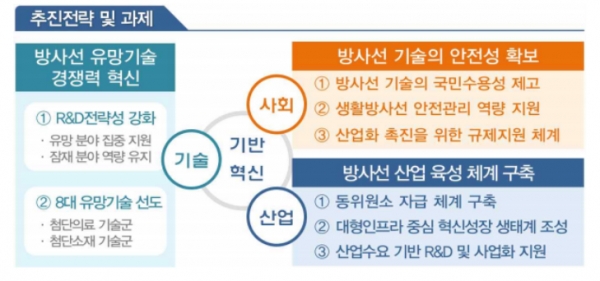
No matter how excellent and future-oriented nuclear technology is, it cannot succeed without gaining the trust of its own citizens. Taking the occasion of this conference’s vision presentation, the Ministry of Science and ICT repeatedly pledged to further enhance transparency in all processes of domestic nuclear policy. To alleviate concerns of residents in areas surrounding nuclear power plants, it is promoting plans to upgrade real-time radiation monitoring systems and make related data transparently accessible to anyone. Additionally, it is strengthening technical safety devices to thoroughly protect nuclear power plants from natural disasters or unexpected accidents by introducing AI-based earthquake detection and emergency response systems. These efforts are focused on resolving public anxiety about nuclear energy and creating an environment where people can live their daily lives with peace of mind. While the past method was for the government or companies to unilaterally claim safety, two-way communication and thorough verification have now become the mainstream. It is establishing a system that significantly grants authority to monitoring bodies composed of civil society groups and independent experts, allowing for objective external oversight of nuclear power plant operations. This transparent operation method is cited as a model case not only domestically but also internationally, becoming a benchmark for other countries. The Ministry of Science and ICT does not forget that the greatest strength enabling it to confidently proclaim its innovation vision on the world stage came from the support of the people and a rigorous domestic safety system. It plans to continue technological development by prioritizing safety policies that meet the standards of the people.
By promoting transparent information disclosure and introducing advanced safety devices, a nuclear environment where citizens can feel at ease is being created.
6. The Bright Future and Challenges of South Korea’s Nuclear Energy
Having successfully concluded the 70th IAEA General Conference, the Ministry of Science and ICT is rushing to prepare for the full implementation of follow-up measures. It plans to devote all its efforts to ensure that the future vision presented this time does not remain a mere slogan but becomes a practical stepping stone for South Korea to leap as a leading carbon-neutral country. In addition to the efficient allocation of research and development budgets, long-term talent development programs to cultivate creative and excellent young scientists who will lead the nuclear field must proceed without fail. Since technology is ultimately created by people, creating a work environment where researchers and engineers who silently sweat on the front lines can work with pride is also one of the important challenges. We ask readers to pay affectionate attention to the clean and safe nuclear future that our country is creating. The world is currently facing the huge wave of the energy transition, and the role of nuclear energy has become more important than ever. If South Korea’s world-class technology and unwavering safety consciousness are combined, we can become a confident game changer in the global energy market. The status imprinted on the world through this conference will serve as a reliable catalyst injecting new vitality into the South Korean economy in the future. If the government, research institutes, and the people unite their strength, the clean and abundant future we dream of is not far away. Please continue to watch how South Korea’s nuclear energy will leave a great legacy, keeping pace with the Ministry of Science and ICT’s movements.
Through the implementation of follow-up measures and talent development, South Korea will become a key player leading innovation in the global energy market.
Frequently Asked Questions
=