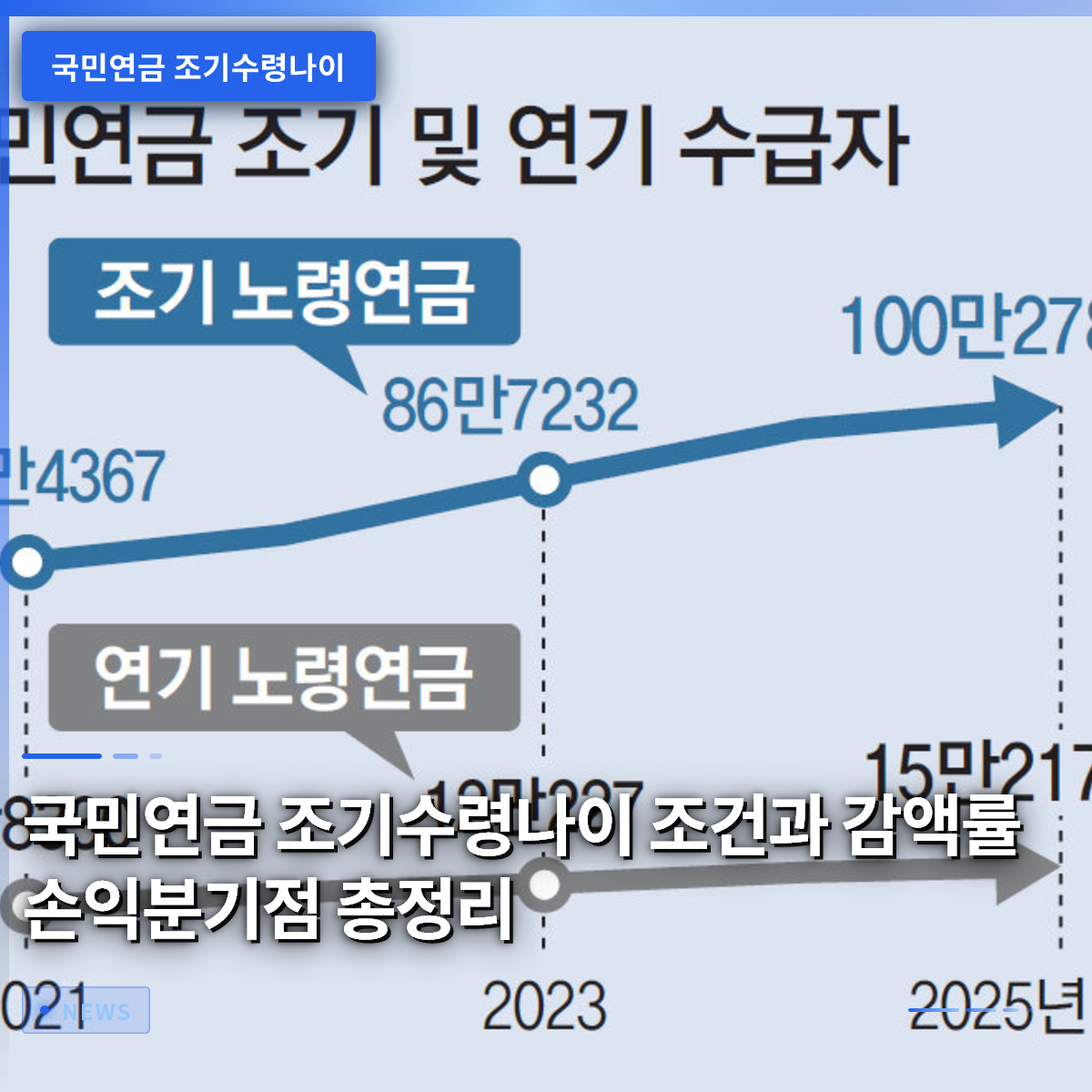
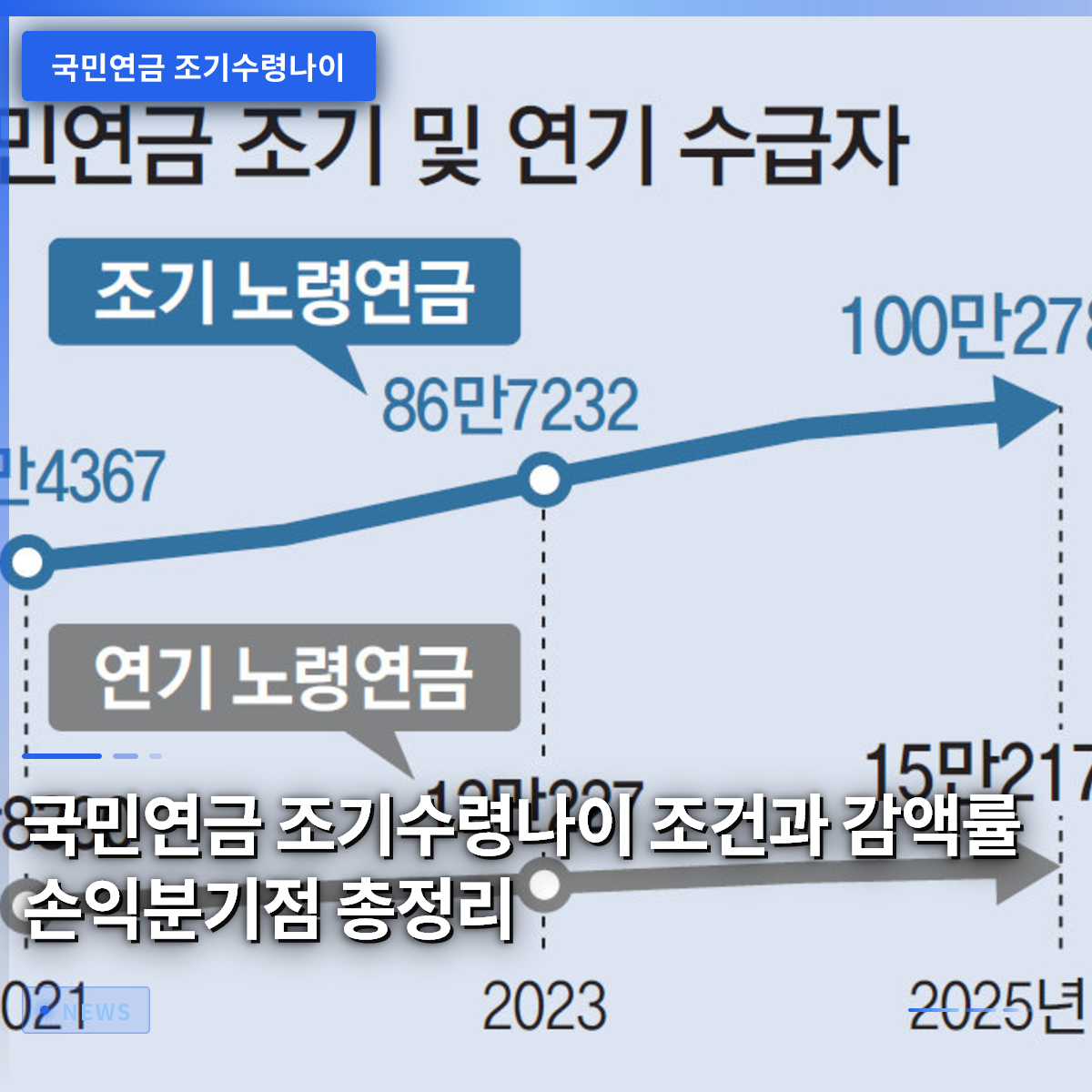
The early receipt age for the National Pension is a system that allows you to receive benefits up to five years earlier than the standard eligibility age. It acts as a lifeline when your income suddenly stops after retirement and living expenses become a source of anxiety. If you leave your job before the mandatory retirement age, your monthly salary disappears, leaving you to face a significant income gap for the several years leading up to the standard pension age of 65. In reality, it is not uncommon to see people struggling to cover their immediate living costs after retirement. While applying for early old-age pension can provide immediate financial relief, there is a critical drawback: the total amount you receive for the rest of your life is reduced. Therefore, before applying impulsively, it is wise to carefully weigh the age requirements, reduction rates, your health status, and other sources of income. In this article, we will examine the specific age criteria for early receipt, the extent of the reductions, and when the break-even point occurs.
=
National Pension Early Retirement: Age Requirements, Reduction Rates, and Break-Even Point
1. Early Receipt Age Criteria by Year of Birth

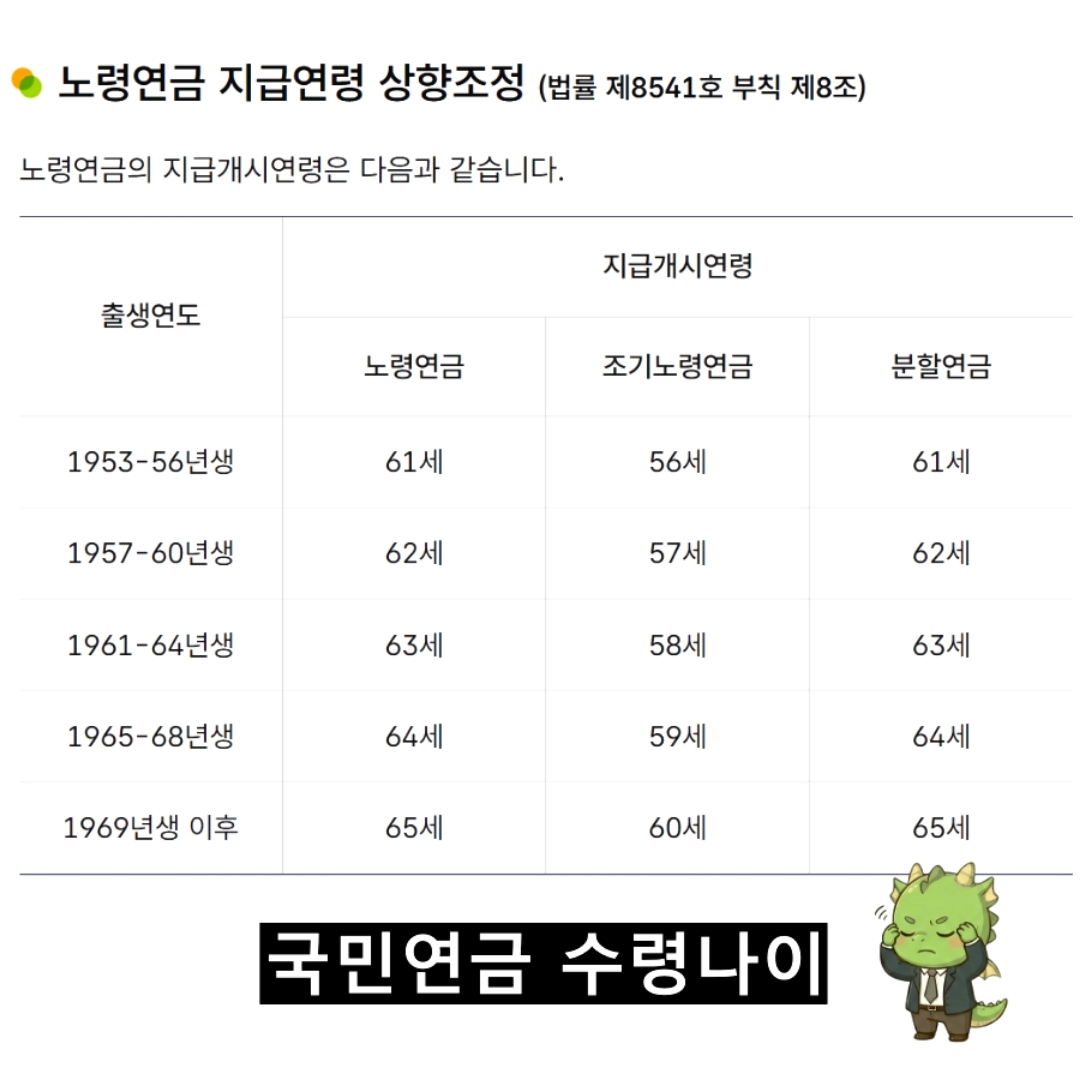
The age at which you can receive the National Pension earlier than the standard age is determined precisely by your year of birth. While it was previously possible to receive benefits from age 60 without exception, the system has been reformed, and the overall receipt age is being gradually delayed. For example, those born between 1953 and 1956 had to reach a specific age to qualify, while those born in the 1960s and later are seeing their standard receipt age gradually shift from 63 to 65.
Therefore, the most accurate way to determine your specific early receipt age is to check your enrollment history directly through the National Pension Service website or application. It is surprisingly common for people to apply based solely on the age at which their acquaintances received benefits, only to be turned away because they are not yet eligible. Thus, you should first confirm your standard receipt age based on your year of birth; the age at which you can apply for early receipt is up to five years prior to that standard age.
The standard receipt age varies by year of birth, and the early receipt age is up to five years before that standard age.
2. Essential Conditions for Early Receipt

Not everyone can apply for the early old-age pension; there are strict enrollment conditions that must be met. First, you must have a total National Pension enrollment period of at least 10 years (120 months) to qualify. If your working history is too short or you have not met the 10-year contribution requirement, you cannot use the early receipt system at all, so it is crucial to remember this.
Additionally, a key condition is that you must not be engaged in gainful employment at the time of application. “Gainful employment” refers to earning labor or business income above a certain threshold. If you are still actively earning a substantial income, you cannot receive your pension early. Even if you start a part-time job after retirement, if your income exceeds the specified limit, early receipt may be restricted. Therefore, you must accurately assess your current income status.
You must have been enrolled in the National Pension for at least 10 years and must not be engaged in income-generating activities above a certain threshold at the time of application.
3. Reduction Rate for Each Year of Early Receipt
The biggest cost of the early receipt system is the permanent reduction in your pension amount. For every year you receive the pension early, the amount is reduced by 6 percent. If you receive it up to the maximum allowed period of five years early, you will receive a total of 30 percent less than the standard pension amount for the rest of your life.
For instance, if a person eligible for 1 million won per month chooses to receive it five years early, they will only receive 700,000 won monthly. This leads to concerns about whether it is a financial loss in the long run. Since a difference of 300,000 won per month is significant over a lifetime, it can be quite regrettable if your immediate living expenses are not urgent. Therefore, if you have other resources such as a retirement bonus or personal pension that can sustain you for the first five years after retirement, it is advisable to consider early receipt more carefully.
The pension amount is reduced by 6 percent for each year of early receipt, resulting in a total reduction of 30 percent if received five years early.
4. Pros and Cons Based on the Break-Even Point
To determine when early receipt becomes financially disadvantageous, you must understand the concept of the break-even point. The point at which the total amount received from early (reduced) payments is overtaken by the total amount received from standard (full) payments is generally around age 80.
For example, if your health is poor or you have no immediate income and need to cover living expenses starting at age 60, receiving the pension early may be more beneficial. Conversely, if you are healthy and expect to live a long life, and have other assets to sustain you in the early years of retirement, waiting for the full pension amount is more advantageous in the long term. I often see acquaintances who chose early receipt due to health concerns later express regret upon seeing that they are still healthy and active well past the age of 80.
The break-even point for total pension receipts between early and standard receipt is around age 80, so the decision should be made by considering both health and assets.
5. Alternatives for Bridging the Income Gap
The income gap between age 60 (typical retirement) and age 65 (standard pension receipt) is the biggest financial crisis for retirees. Instead of automatically choosing early National Pension receipt, it is necessary to adopt a strategy of utilizing other assets first, such as retirement bonuses or individual retirement pensions.
These days, local governments and the central government offer various support programs to help retirees bridge this income gap, so it is a good idea to look into them actively. Additionally, using a reverse mortgage (housing pension) to secure monthly funds from your home while waiting for the National Pension receipt age is an excellent alternative. Before choosing early receipt and accepting the reduced amount, it is essential to organize the flow of all your assets and plan the most advantageous order of utilization.
Besides early receipt, a strategy to bridge the income gap using other assets like retirement bonuses, personal pensions, and housing pensions is necessary.
6. Advice for Wise Retirement Planning
The early receipt age for the National Pension is a major issue that should be decided carefully in connection with your life plan for the remainder of your life, rather than simply applying because you have reached a certain age. It requires the wisdom to balance the regret of seeing a smaller amount deposited in your account each month with the urgency of covering immediate living expenses.
Since retirement life will become even longer in the future, you need a perspective that looks beyond just the early 60s to include life in your 70s and 80s. Please use the National Pension Service’s estimated pension amount inquiry service to run specific reduction simulations and discuss it thoroughly with your family. Check your enrollment period and estimated receipt amount now, and complete the most comfortable retirement scenario that perfectly fits your health status and financial situation.
Do not focus solely on the loss from the reduction; the decision on early receipt should be made from the perspective of your entire long-term retirement life.
Frequently Asked Questions
=