
Because significant disparities in support benefits still exist within the National Pension system depending on a contributor’s occupation and income level, it is essential to accurately verify your contribution type and proactively supplement any shortfalls in your retirement funds. Take Mr. Kim’s father, who is seventy this year; he drives his truck for logistics deliveries every day. Because he worked as a freelancer in his youth and did not pay pension premiums, he has dangerously little money for his old age, sighing deeply every morning. Many people who worked diligently their entire lives find themselves in the blind spots of the system, failing to receive proper pension benefits. Although the government has recently expanded various support networks for vulnerable groups and young people, individualized preparation remains mandatory. Many are likely feeling overwhelmed, wondering how much will actually end up in their pension accounts later and what they need to prepare for right now. In this article, we will examine the current reality of the National Pension, newly implemented support systems, and specific action guidelines that ordinary office workers and self-employed individuals must take immediately to prevent retirement bankruptcy. Only by accurately reading the trends of these institutional changes and moving one step ahead of others can you face a comfortable and leisurely post-retirement life.
=
National Pension Reform and Support System Changes: Key Strategies for Your Retirement Preparation

1. Occupational Support Disparities and Reality

There are significant differences in National Pension premium support benefits among agricultural and fishery workers, artists, and special employment workers. For example, Mrs. Park, who runs a small farm in the countryside, receives a modest premium subsidy from the government, but she is always anxious due to the time limits on the support. On the other hand, those working in the cultural and arts sectors receive support for only one year, which is grossly insufficient to serve as a practical safety net for old age. While hundreds of thousands of special employment workers may receive some employment insurance benefits, they are completely excluded from National Pension premium support programs. Because the scope of support varies so widely by occupation, the risk of poverty in old age for marginalized groups is growing compared to high-income professionals and regular employees. The fact that blind spots exist even within the social safety net established by the state is a reason why individual contributors must be more vigilant. While urgent additional policy supplements from the government are needed to overcome these structural limitations, individuals cannot simply blame the system. If you work in a profession where support is insufficient or you are excluded entirely, you must actively utilize voluntary enrollment or the subsequent payment system. Among acquaintances, there are many cases of freelancers who experienced pension gaps and later found relief by extending their contribution periods through the subsequent payment system. It is required to carefully assess whether your profession falls into a support blind spot and to use your wisdom to fill any missing periods yourself. Ultimately, rather than relying entirely on state support, the most reliable defense is to check your own contribution status and open an additional payment account.
Due to occupational support disparities and blind spots, contributors must check their status and actively utilize additional payment systems.
2. The Pros and Cons of Working Seniors and Old-Age Poverty

South Korea has become a massive workplace where over two million senior workers remain on the front lines of livelihoods even after turning seventy. Grandpa Choi, who works as a security guard in an apartment complex in Seoul, endures pain all over his body every morning to go to work. He says he cannot stop working to eat because he did not enroll in the National Pension in his youth. Many elderly people around us are forced to endure high-intensity labor because their National Pension benefits are not even enough to cover basic food, clothing, and shelter. Statistics show that a significant number of seniors are entering survival-oriented jobs, hitting physical and mental limits because they missed their retirement timing or were underprepared. This is a painful cross-section showing how drastically quality of life plummets when the pension system, which should be responsible for basic livelihood in old age, fails to function. The sight of seniors who should be resting comfortably instead driving hundreds of kilometers daily or carrying heavy loads is a dark portrait of our society. The fundamental reason they remain in the labor market for so long is that their National Pension contribution periods were grossly insufficient during their asset formation process. Late regrets are erupting everywhere: if they had paid a little more attention in their youth, they could be enjoying leisure while receiving a stable monthly pension. They desperately hold on to avoid burdening their children, but a vicious cycle repeats where they worry about hospital bills only after their bodies have broken down. Therefore, generations currently in their economic prime must take the hardships of their predecessors as a lesson and begin thorough preparation in advance.
Many seniors are forced into survival-oriented labor past age seventy due to insufficient pension preparation, making thorough advance preparation essential.
3. The Role of Institutional Investors and Pension Fund Stability
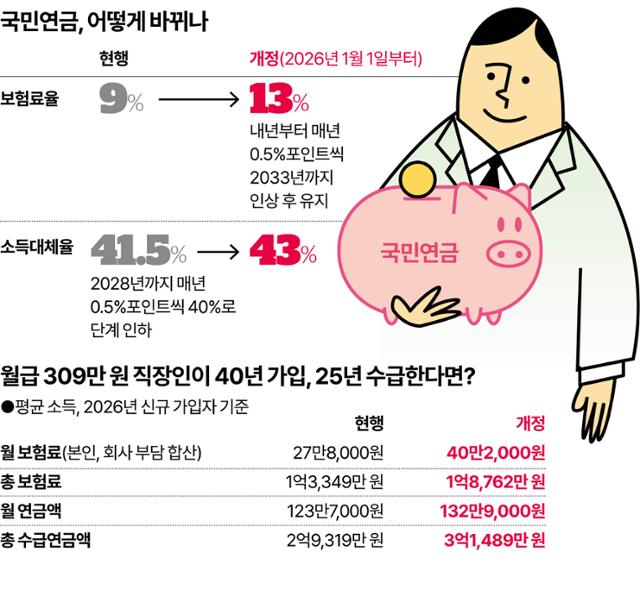
The National Pension Fund serves not just as a piggy bank for contributors’ retirement funds, but as a massive pillar supporting South Korea’s capital market. This is why financial authorities and market experts recently emphasized the monitoring function of institutional investors to improve corporate governance and ensure transparency. When the management of large corporations makes misguided decisions, the entity that can most strongly apply the brakes from the outside is a large pension fund like the National Pension, which manages enormous assets. In fact, actively exercising shareholder rights to prevent corporate mismanagement and induce long-term stock price stability is ultimately the way to protect the assets of all National Pension contributors, including us. Only if the fund is operated transparently and soundly can we prevent a situation where there is not enough money when we become old and try to use our pensions. Monitoring to ensure that massive assets are not misused and grow safely is a critical issue involving the future of the entire nation. While ordinary citizens may find it difficult to deeply understand capital market movements or fund management returns, they must remember that this money is their retirement fund that will eventually enter their pockets. Public opinion must maintain continuous interest so that the government and management entities can operate the fund based solely on profitability and stability, without being swayed by political logic. If the fund’s return rate rises or falls by just one percent, the pension amount returned to us decades later will differ vastly. Therefore, ensuring that the National Pension allocates funds to sound investment destinations and maintains competitiveness in the global market must be a common concern for all contributors.
As a pillar of the massive capital market, the National Pension Fund must protect contributors’ future assets through thorough management and monitoring.
4. Multi-Layered Long-Term Investment Lineup and Life Cycle Design
The government and financial sector are completing a life-cycle long-term investment lineup centered on the National Pension, encompassing the Our Children’s Independence Fund, Individual Asset Management Accounts (iPAS), and retirement pensions. Mr. Lee, an office worker, recently received an interim check on his company’s retirement pension and gained great insight by learning how the assets he had steadily accumulated since childhood would combine at retirement. A ladder of asset formation is gradually taking shape, connecting seamlessly from birth to adulthood, through active economic activity, and into post-retirement life. It is as if a comprehensive board for retirement preparation is being set up, with the National Pension as the sturdy framework and retirement pensions and personal accounts adding the flesh. Those who properly understand this multi-layered structure and utilize each account according to their own tendencies will become true winners in asset management. Because the retirement period has become so long, it is not enough to simply rely on one thing and neglect it; one must organically link the various investment products and systems provided by the state. It is important to build up lump sums while enjoying tax-free benefits through iPAS from a young age and to develop the habit of managing retirement pension returns at work. And the final destination of all this asset formation, serving as the safest breakwater, is the National Pension, which is paid consistently every month. If you understand the virtuous cycle where these systems support each other from a long-term investment perspective, much of the economic anxiety after retirement can be alleviated. You must not forget that even if the government’s policy lineup is well-established, it is useless if individuals do not take an interest and care for their own accounts.
The National Pension is the central axis of a multi-layered long-term investment lineup that covers all life stages when combined with retirement pensions and personal accounts.
5. Youth First-Time Premium Support System
Starting from January 2027, a groundbreaking system will be fully implemented where the state directly supports the first-time pension premiums of young people taking their first steps into society. Young Mr. Park, who graduated from university and is preparing for employment or has just entered society after completing military service, had not even considered enrolling in the pension due to unstable income, but he breathed a sigh of relief upon hearing this news. The government is providing a catalyst to help the youth, who lack financial leeway due to studies and job hunting, join the National Pension system early. Starting pension payments in youth significantly increases the contribution period, resulting in a visibly larger pension amount later on. This is a highly timely policy that helps young people realize the importance of retirement preparation early and lay the foundation for a stable economic life using state support as a stepping stone. It is only natural that for those just starting their careers, long-term savings systems like the National Pension do not catch their eye because their salaries are immediately consumed by living expenses. However, utilizing this youth support system provides a crucial opportunity to secure early contribution history while significantly reducing personal financial burden. As voices grow louder that young people must start retirement preparation earlier after witnessing the hardships their parents faced in old age, this is truly welcome news. Since the state is helping with the first button, young people should actively utilize this system to start writing the history of their own pension accounts early. The magic of compound interest from early enrollment will create enormous differences over time, supporting a splendid life in old age.
The Youth First-Time Premium Support System, implemented from 2027, encourages early enrollment among the youth and lays the foundation for their retirement.
6. Final Action Guidelines for a Successful Retirement
As we have seen, the National Pension system is constantly changing, and the only entity that can protect your assets within it is yourself. Mr. Kim, an ordinary office worker, recalled the contents of this article, checked his estimated National Pension benefit amount, and began looking into additional personal pensions to fill the shortfall. No matter how many diverse support programs and youth benefits the government offers, individuals are easily left in blind spots if they do not regularly check their contribution records. The future of old age is no longer an era where one can rely entirely on the state or children; it must be designed thoroughly by one’s own power. You need the action power to immediately open a smartphone app or access the public corporation’s website to check your contribution history and carefully verify if there are any missing periods. Never forget that small concerns and actions accumulate to become the most powerful weapon determining the abundance of your old age ten or twenty years later. To cross the massive mountain of retirement, you must firmly hold the sturdy rope of the National Pension and hold retirement pensions and personal assets in both hands to be safe. Regardless of what others do, you must formulate the optimal pension payment strategy suitable for your income level and occupation type and stick to it consistently. You might feel that the premiums deducted monthly are a waste, but you will feel the value of that deeply when you face an account with a fixed income at retirement. From today, take an active stance by checking your pension status and filling in any gaps through subsequent payments or voluntary enrollment. Only those who wisely prepare in line with changing systems can become the protagonists of a dazzlingly peaceful and happy old age.
Contributors must regularly check their pension status and actively supplement any gaps to prepare for retirement.
Frequently Asked Questions
=