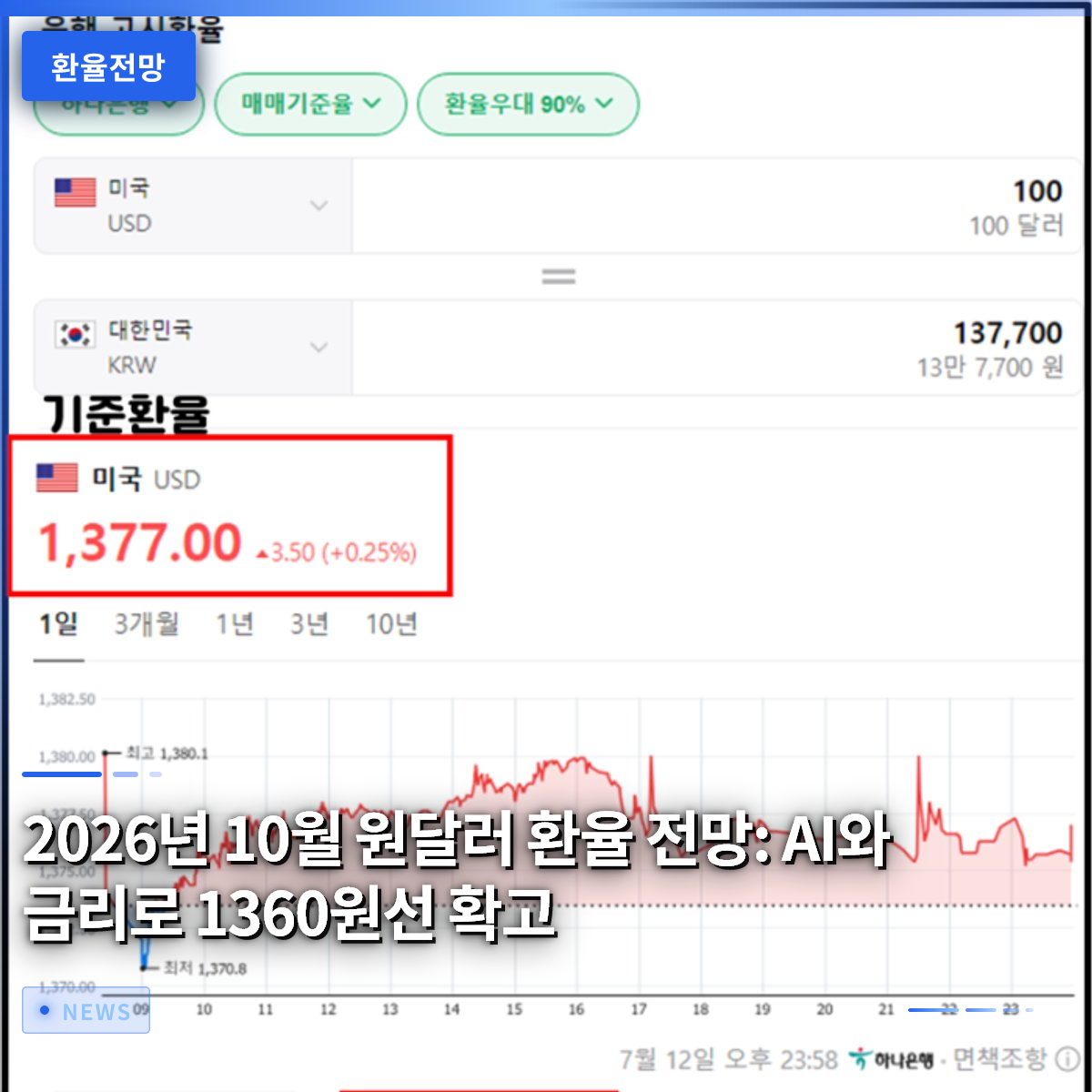
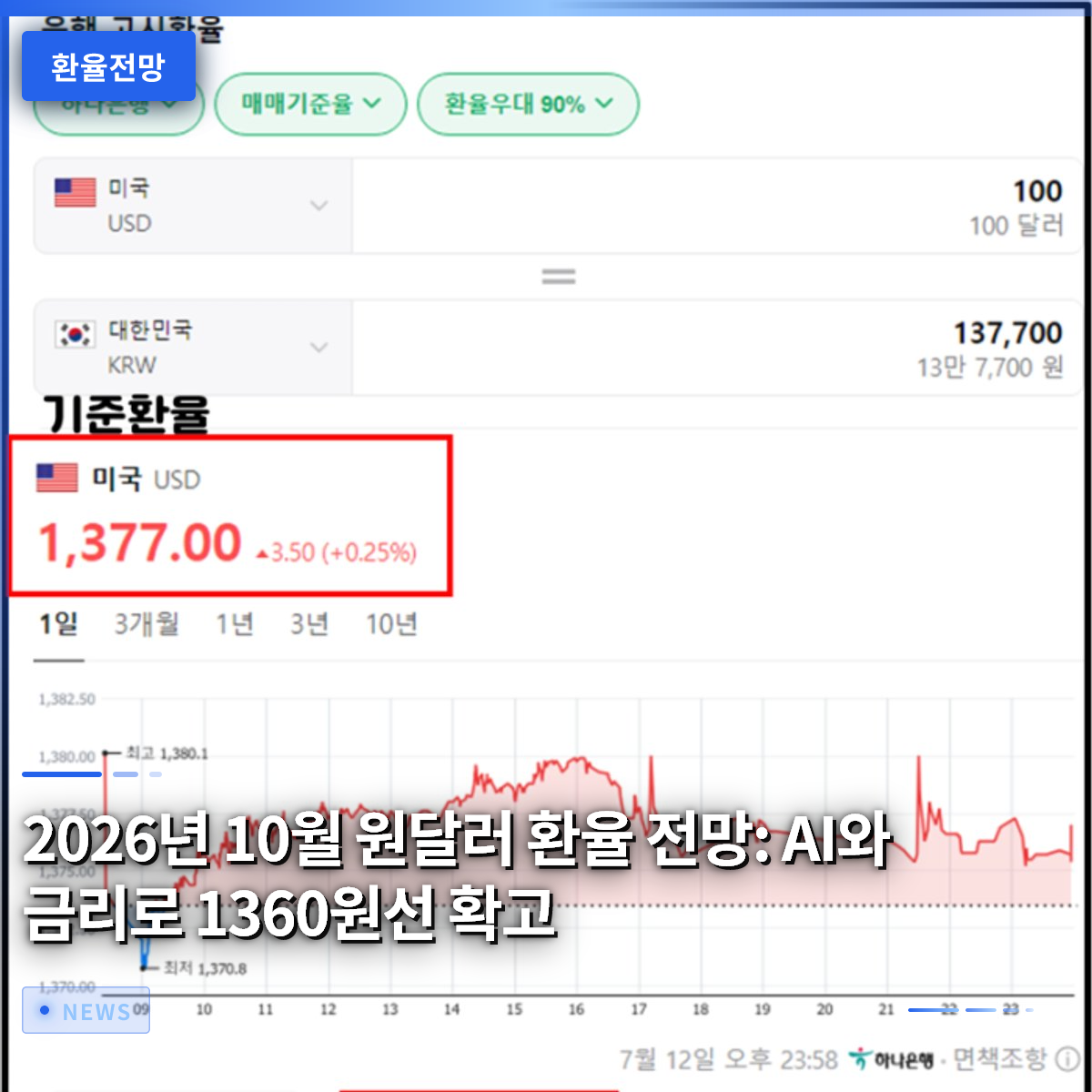
The daily average USD/KRW exchange rate closed at 1,358.4 won on October 1, 2026. The US dollar remains firm as expectations grow that the US will maintain high interest rates for an extended period. Simultaneously, the global semiconductor market continues to boom, heightening expectations for improved earnings among export companies. Exchange rate volatility is no longer just a game of numbers; it is a graveyard directly tied to your cash flow. Here are the key points on how to respond at this juncture.
=
October 2026 USD/KRW Exchange Rate Outlook: The 1,360 Won Level Holds Firm Amid AI and Interest Rates
1. Why the Dollar Is Not Easing

There are no signs that the US long-term high-interest-rate regime will be lifted anytime soon. It is too soon to shift capital flows that are driven by interest rate differentials. Coupled with rising international oil prices, the preference for safe-haven assets remains strong. The weakness of the Japanese yen is also a factor behind the dollar’s strength, as the Bank of Japan’s policy rate hikes are expected to slow down more than anticipated, reducing the yen’s appeal. Given these factors, the dollar’s position is expected to remain solid for the time being.
2. Semiconductor Boom Supports the Exchange Rate
Outlooks for the operating profits of Samsung Electronics and SK Hynix are bright. With both memory prices and volumes improving, corporate earnings are expected to improve significantly. An analyst from Hana Securities has revised earnings estimates upward, taking exchange rate factors into account. The foreign currency assets earned by semiconductor companies should play a role in stabilizing market sentiment if they are immediately repatriated to Korea. However, the actual amount of inflow depends on real export volumes and settlement timing.
Strong corporate earnings are a supporting factor for the won, but they hold more significance in terms of structural inventory accumulation than short-term trading volumes.
3. Is It a Loss to Exchange Currency Now?
If you are planning to exchange currency for travel or other purposes, simply waiting could actually result in a loss. The current high level of around 1,360 won is likely to persist for the time being. Exchanging currency in advance to lock in travel costs helps reduce psychological burden. It is even more advantageous if you utilize dollars accumulated in deposit-type assets. Rather than forcing a market timing strategy, it is safer to hold a dollar amount that matches your usage timing.
4. How Should Import-Export Companies Prepare?
Export companies see increased profits but also face greater foreign exchange loss risks. Import companies face rising cost burdens and shrinking margins. Without utilizing hedging instruments, the predictability of earnings itself collapses. Whether through futures, swaps, or options, determining an accurate hedge ratio is the top priority. Rather than relying on simple intuition, companies must prepare in advance according to the actual dollar settlement schedules on their orders.
Exchange rate volatility can be a risk, but planning for guaranteed fixed returns through appropriate hedging strategies is a condition for corporate survival.
5. Cash Flow Management for Individual Investors
Investors holding dollar deposit accounts are beneficiaries of the current cycle. The higher US Treasury yields are, the greater the value of holding dollars. Conversely, portfolios with a high proportion of won-denominated assets risk losing real value due to inflation and rising exchange rates. Increasing currency diversification in asset allocation is safer. The key is not the amount, but the habit of calculating real returns by considering inflation and exchange rate increases.
6. Signals to Watch Going Forward
The release of US employment indicators could be a turning point for the exchange rate. Strong employment data could push back expectations for rate cuts, causing the dollar to rise further. Conversely, weak employment data could highlight expectations for rate cuts, providing room for the won to recover. For market participants, the speed at which they interpret the meaning behind the numbers is more important than the numbers themselves. Develop the habit of checking the details of economic indicators directly, rather than just reading news headlines.
Volatility is maximized just before macro indicator releases, so diversifying buy and sell timing is psychologically stabilizing.
Frequently Asked Questions
=