
If you have only about 900 million won in spare cash, it feels awkward to even knock on the door of a bank’s wealth management center, as the standards in the financial sector have recently risen to an excessively high level. However, despite raising the bar so significantly, wealth management centers across the country are overflowing with people eager to grow their assets, creating a daily bustle. While ordinary citizens sigh at soaring inflation and loan regulations, a minority of the wealthy are managing enormous sums of money, further solidifying their exclusive league. We will take a close look at what is happening on the front lines of today’s financial market. We will also examine the background behind why banks are suddenly setting strict conditions and becoming selective with their customers. Furthermore, we will delve into the cause of the phenomenon where the number of wealthy individuals is surging rather than decreasing, despite the higher entry barriers. Based on realistic cases, we will reveal just how extreme the temperature difference is in the asset market as seen by ordinary office workers.
=
Only 900 Million Won in Spare Cash? The Rising Barriers of Bank Wealth Management Centers and the Realities of the Wealthy

1. The Raised Threshold of Bank Wealth Management Centers

Recently, the eligibility criteria for the dedicated wealth management counters operated by major commercial banks have become incomparably more stringent than in the past. In the past, having several hundred million won in spare cash was enough to receive close management from a dedicated employee, but now that barrier is much higher. In fact, to use programs like Woori Bank’s “To Chears” or KB Kookmin Bank’s general wealth management centers, one must comfortably exceed the required balance threshold. From the banks’ perspective, they maintain that this is an unavoidable choice to provide efficient asset management with limited professional personnel. However, this change also acts as a primary factor causing a sense of deprivation among the general public who feel left out. As banks focus solely on competing to attract high-net-worth individuals who offer high profitability, ordinary transaction customers are naturally being pushed to the sidelines. Consequently, even those with a decent amount of lump-sum funds often hesitate and find it difficult to easily open the doors of wealth management centers. Although tens of millions of won is by no means a small amount, it is often treated as cold rice by banks. Tellers at bank branches now check the scale of a customer’s assets first and determine their eligibility for consultation based on much colder criteria than before. This trend is a bitter reality that proves wealth polarization is blatantly exposed even in the process of utilizing financial services.
Banks have significantly raised the eligibility criteria for wealth management centers, citing the efficient operation of professional staff, which has greatly increased the barrier to entry for general customers.
2. Why the Wealthy Are Still Overwhelming Despite Higher Standards
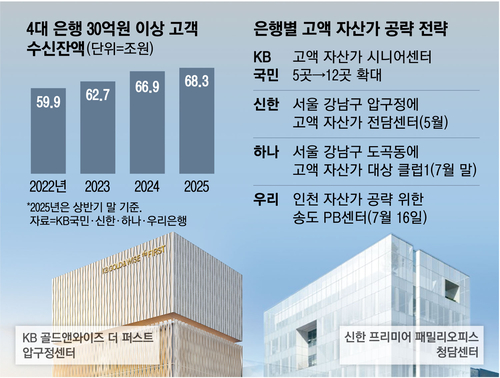
Despite banks raising the threshold in this manner, a phenomenon is occurring where the number of eligible customers at wealth management centers across the country is actually exploding. According to statistics, the number of dedicated high-net-worth clients at major commercial banks has surged, drawing a consistent upward curve over the past few years. This is not only because the overall pie of assets held by wealthy individuals has grown, but also because they are actively seeking out specialized institutions for diversified investments and tax-saving strategies. A significant cause is also the constant influx of newly wealthy individuals who have made substantial profits in various investment markets such as stocks and real estate. While the wealthy of the past simply accumulated money through savings, today’s wealthy are rapidly growing their assets through active investing and the utilization of financial products. As a result, the raised threshold of banks has not prevented the entry of the wealthy but has instead produced a counter-effect of reinforcing the premium of it being a special space exclusively for them. Customers visiting wealth management centers express high satisfaction as they receive premium information and customized investment solutions differentiated from general branches. Banks can also expect higher fee income from them, creating a structure where their interests align perfectly. The financial barrier, which feels infinitely high and cold to ordinary people, has become a door to privilege for the wealthy, allowing them to enjoy more benefits. This trend is likely to continue for the time being, and the concentration of wealth appears to be deepening further.
Despite the stricter conditions, the number of customers at wealth management centers is increasing sharply due to the surge in newly wealthy individuals who have grown their assets through investments.
3. The Real Purpose Behind Wealthy Individuals Seeking Bank Dedicated Counters
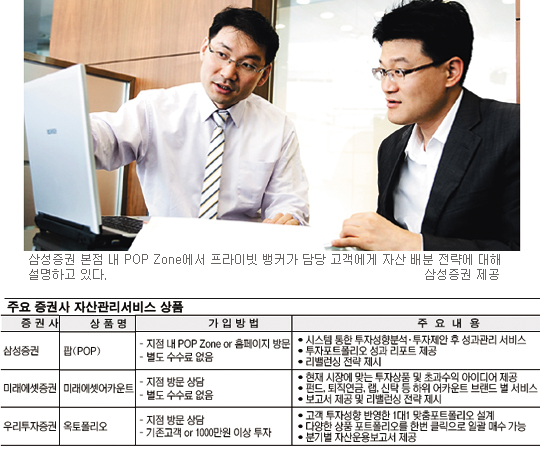
The reason the wealthy line up to visit bank wealth management centers is not simply to lock their money in deposits, but for sophisticated asset defense strategies. They are highly interested in responding to constantly changing tax laws and legally reducing taxes that may arise during inheritance or gift processes. This is because it is far more advantageous to seek help from experts such as tax accountants and lawyers amidst complex financial regulations that are difficult to handle alone. In fact, the experts stationed at wealth management centers design bond or derivative investments that perfectly match the customer’s profile, safely protecting their assets. It is about creating long-term, family-unit plans to pass on assets fully to their children, not just increasing returns. Additionally, these centers offer the opportunity to access private investment information and special products that are not disclosed to the general public. The ability to invest in promising opportunities one step ahead of others acts as a particularly attractive element for the wealthy. The psychological drive to minimize risk through close expert management becomes even stronger when economic crises hit or markets become unstable. Ultimately, wealth management centers are not just counters for depositing money but serve as a crucial base camp for the inheritance and growth of wealth.
The wealthy actively utilize wealth management centers not just for simple deposits, but for tax savings, inheritance planning, and gaining exclusive investment information.
4. The Widening Financial Gap and Sense of Deprivation Among the General Public

While banks are staking everything on attracting high-net-worth individuals, ordinary customers are relatively feeling a serious sense of alienation and financial deprivation. With strengthened loan regulations and deposit/savings interest rates failing to keep up with inflation, ordinary citizens find it difficult to find appropriate means to grow their assets. In the past, one could receive friendly asset consultations at general branch counters, but now most of these have been replaced by non-face-to-face app services, making the cold wall of finance palpable. It may be natural in capitalist logic for banks to focus their sales efforts on premium customers who bring in high fees rather than general customers with lower profitability. However, this has led to a stark class-based division in the quality of financial services, accelerating social polarization through the medium of finance. There is a structural contradiction where the higher the threshold of wealth management centers, the more the relative sense of deprivation felt by ordinary office workers snowballs. The reality that money earned through hard work cannot even cross the bank’s threshold acts as a negative signal that dampens the work ethic of diligent employees. It leaves a bitter aftertaste to see financial institutions proclaiming public interest while actually throwing their doors wide open only to customers who generate profit. It is time to seriously consider what ripples this financial polarization will cause across society. There are concerns about a vicious cycle where practical financial safety nets and asset formation opportunities for ordinary citizens are decreasing, while the assets of the wealthy are accelerating further.
Banks’ intensified focus on high-net-worth customers is causing serious financial deprivation among the general public and further fueling social polarization.
5. Future Financial Market Outlook and the Movements of the Wealthy
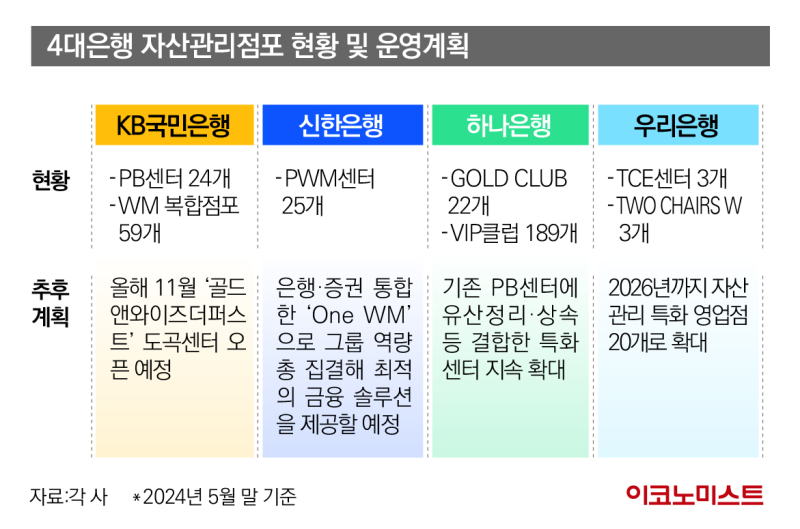
The competition among commercial banks to capture high-net-worth individuals is expected to become even fiercer in the future, with standards becoming stricter. As we enter the era of super-aging, the issue of safely managing and transferring assets has become the biggest topic for the wealthy, just as important as growing their asset size. Accordingly, banks are competitively introducing top-tier services in the form of family offices that manage family assets, going beyond simple asset management. The wealthy are also keeping pace with this trend, turning their eyes to promising assets overseas as well as domestically, and hastening global diversified investments. The more market uncertainty grows, the sharper the survival instinct of wealthy individuals who move quickly based on expert advice will become. Amidst this wave of change, ordinary investors should focus on solid asset management suitable for their reality rather than blindly following the wealthy. Instead of being swayed by rumors of where others made big money, wisdom is needed to check one’s financial status and thoroughly manage risk. No matter how high the bank’s threshold becomes, what ultimately matters is the fundamental strength of the precious assets that you protect and grow with your own hands. Only those who maintain their center and adhere to their own investment principles in a rapidly changing financial environment can build unshakable assets. The most necessary virtue for us now is to make thorough plans and respond wisely to the economic changes that lie ahead.
As the competition for expert-led premium services intensifies, ordinary investors must strengthen their own financial status without being swayed by others’ investments.
6. Final Advice for Wise Asset Management

The news that bank wealth management centers are raising their thresholds is a representative case that shows us the harsh reality of the capital market without any embellishment. In a structure where money begets money, the asset gap is not easily closed, and financial institutions are also riding this trend. Therefore, rather than being elated or depressed by others’ glamorous investment success stories, we must face our current asset status and build a solid foundation. Even if we cannot become VIP customers of a wealth management center immediately, it is important to establish an independent economic base through consistent savings and sound investments. In a rapidly changing economic situation, cultivating the ability to study and judge for oneself is the first step toward becoming truly wealthy. Time does not wait for us even in this moment, and only thorough preparation and execution will serve as the only shield to protect our assets. I recommend that you shake off vague anxieties and carefully rebuild a specific and realistic asset plan starting from today.
In the harsh financial reality, one should not be intimidated by others’ standards but must practice thorough planning and investment suited to one’s own financial situation.
Frequently Asked Questions
=