The core of retirement pension withdrawal methods is not to take everything out as a lump sum, but to transfer the funds to an Individual Retirement Pension (IRP) account and receive them as a pension, which significantly reduces taxes. Recently, Manager Kim, who had just left a job he loved, was so happy about having a large sum of money that he received his severance pay directly into his regular checking account. He later deeply regretted this after paying several million won in taxes. If Manager Kim had chosen to receive his funds as a pension through an IRP account, he could have received a tax reduction of up to 30% on his retirement income tax, making his current situation even more regrettable. Since this is a significant amount of money that determines your life after retirement, it is essential to accurately understand and prepare for the withdrawal procedures and tax standards. Knowing how to combine the National Pension with personal pensions to create a stable cash flow is also a crucial part of retirement planning. In this article, we will guide you through every step of the retirement pension withdrawal process in a way that is easy for anyone to follow.
=
Retirement Pension Withdrawal Methods: Key Procedures to Save on Taxes and Boost Your Retirement Funds
1. Basic Principles and Procedures for Retirement Pension Withdrawal
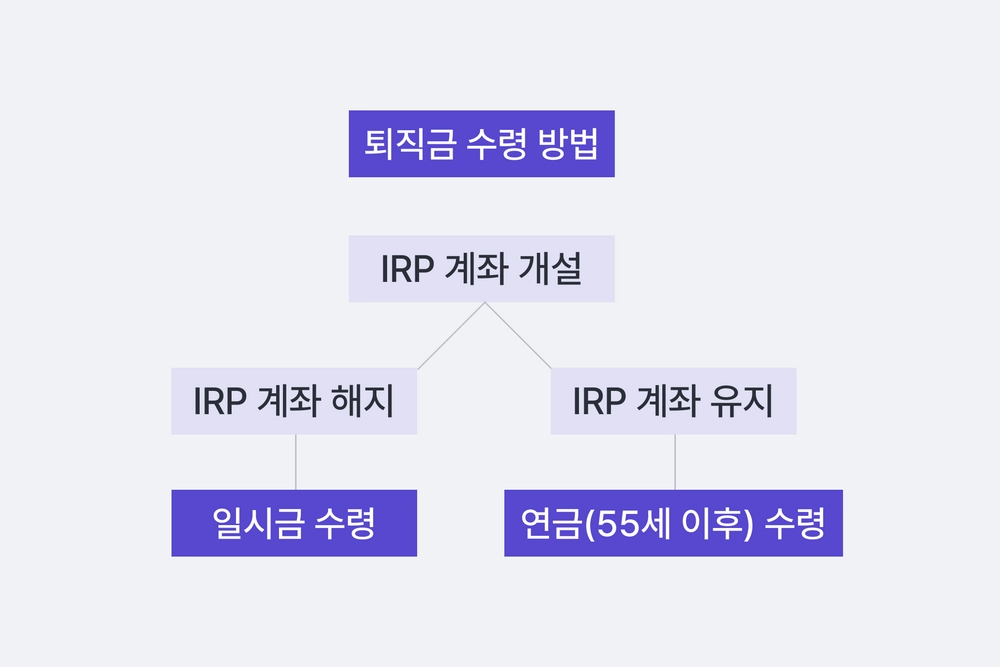
The standard procedure for withdrawing a retirement pension begins with transferring the funds to an Individual Retirement Pension (IRP) account in your own name, rather than the company depositing the money directly into your general account. The company must pay the retirement benefits to the account designated by the employee within a specified period after the date of retirement. To avoid delays in this process, you should prepare the necessary documents in advance. While you can receive the funds as a lump sum by immediately terminating the account, it is far more advantageous to maintain the pension account status to fully enjoy tax benefits. You can only apply to start receiving the pension once you are at least 55 years old, allowing you to receive payments regularly according to your preferred date and frequency. Ignoring these procedures and arbitrarily cashing out or skipping steps can lead to unexpected disadvantages, so caution is required. If you do not immediately need a large sum of money right after retirement, you should seriously consider keeping the account open to manage your retirement funds stably. It is also a good idea to check your enrolled products and estimated withdrawal amounts in advance through the dedicated customer service centers of financial institutions such as banks or securities firms. Communicating smoothly with the person in charge at your company and carefully checking for any missing documents is the first step in protecting your valuable assets.
Retirement pensions must be transferred to an Individual Retirement Pension (IRP) account, after which you should choose between a lump sum and a pension based on your purpose.
2. Tax Differences Between Lump Sum and Pension Withdrawals
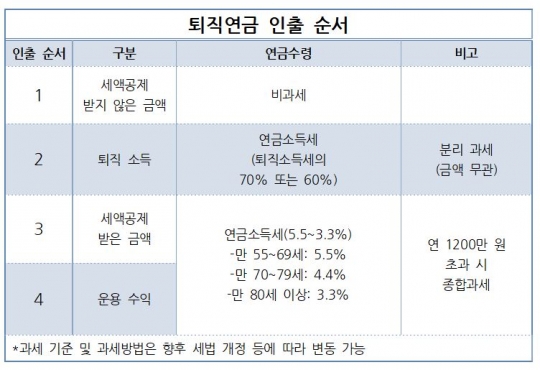
The tax burden varies significantly depending on the retirement pension withdrawal method, so making a wise choice that fits your financial situation is paramount. Receiving the funds as a lump sum allows you to use a large amount of money freely, but it comes with the risk of a “tax bomb” due to the full application of retirement income tax. On the other hand, if you receive the funds as a pension over a period of five years or more through an IRP account, you can receive a tax reduction of up to 30% on retirement income tax, resulting in significant tax savings. In reality, it is common to see office workers who chose a lump sum because they urgently needed living expenses, only to lose out on valuable tax savings. The longer the pension withdrawal period, the lower the applicable tax rate, making it a powerful tool for protecting retirement assets from a long-term perspective. Additionally, the pension income tax rate decreases with age; those aged 70 to 79 are subject to a 4% rate, while those aged 80 and older are subject to only 3%. Furthermore, if you adjust your annual withdrawal amount to stay below a certain limit, you can be excluded from comprehensive income tax, making it even more advantageous. Simply carefully considering the tax benefits and planning accordingly can significantly increase your actual disposable income after retirement.
Receiving funds as a pension can reduce taxes by up to 30%, making it economically much more beneficial than a lump sum.
3. Understanding Enrollment Period and Withdrawal Age Conditions
To properly utilize retirement pension withdrawal methods, you must accurately understand the withdrawal age and enrollment period conditions stipulated by law. Generally, pension withdrawals are possible from age 55, and the enrollment period must be maintained for at least five years for regular pension payments to be made. For those who retired early, a strategy could be to maintain the account until age 55 or continue making additional contributions to grow their assets. In some exceptional cases, it is possible to receive the pension immediately regardless of age restrictions, so it is advisable to check the relevant regulations in advance. For example, if you meet statutory grounds such as natural disasters, a bankruptcy declaration, or the onset of a disease requiring long-term treatment, you can withdraw funds without age restrictions. Knowing these various exception clauses well allows you to safely withdraw and utilize your valuable retirement funds even in unexpected crises. When calculating the enrollment period, the period carried over from previous employers is included, so it is crucial to manage it so that there are no breaks in continuity. As retirement approaches, you need to accurately check your enrollment history and make efforts to meet any missing conditions.
You must be at least 55 years old and have a 5-year enrollment period to qualify for formal pension withdrawals, though exceptions exist.
4. Comprehensive Planning with National and Personal Pensions
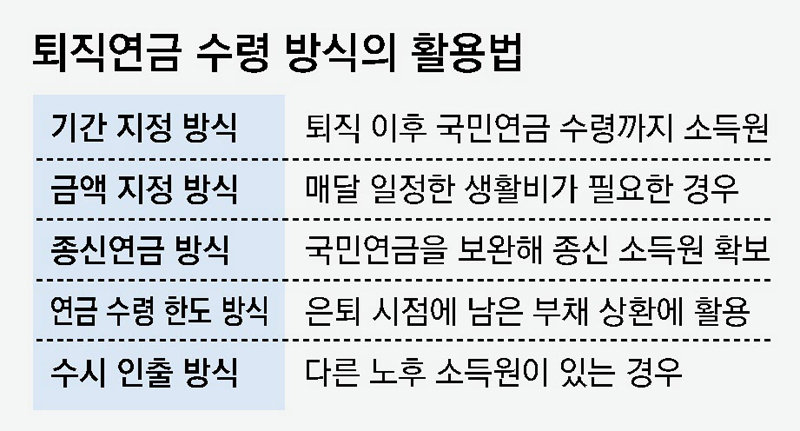
When considering retirement pension withdrawal methods, you should not focus solely on the retirement pension but should combine it with the National Pension and personal pensions to structure a lifelong income. As experts unanimously emphasize, retirement funds are safest when prepared as multiple stages of cash flow rather than a single account. For example, delaying the start of National Pension benefits can increase the monthly pension amount, effectively coping with inflation. Simultaneously, managing an IRP and personal pension savings harmoniously ensures a fixed monthly living expense without gaps after retirement. Actively utilizing lifelong income design programs offered by banks and financial institutions allows you to review your expected cash flow at a glance. Adjusting the withdrawal timing of each pension by comparing it with expected post-retirement expenses is a core competency for successful retirement preparation. If you own a house, combining a reverse mortgage to complete a four-tier pension system is a model of asset management in modern society. Rather than being swayed by others’ stories, you should gradually build a customized pension portfolio that fits your asset size.
You should combine the National Pension and personal pensions with your retirement pension to create a multi-layered lifelong income flow.
5. Safe and Efficient Management of Retirement Pension Assets
Just as important as the withdrawal method is the strategy for managing and growing the money within the pension account. If stocks act as the engine that boosts returns, bonds and safe assets act as the anchor that keeps the ship steady amidst market volatility. For retirees who feel burdened by the responsibility of protecting their assets as retirement approaches, stable alternatives such as guaranteed performance-linked products can be chosen. Various products are available on the market that allow you to start receiving pension payments immediately upon enrollment while protecting your principal to a certain extent. Actively utilizing products like individual investment government bonds can provide both additional tax benefits and stability if held until maturity. Rather than recklessly chasing high returns and risking the loss of principal, you need the wisdom to diversify your portfolio at an appropriate ratio that matches your risk tolerance. It is essential to periodically check returns and adjust your portfolio according to market conditions through visits to financial institutions or mobile apps. Only those who actively manage their assets, rather than leaving them unattended, can enjoy abundant economic freedom after retirement.
You should wisely grow your pension assets by appropriately adjusting the ratio of stocks and bonds and utilizing stable financial products.
6. Final Checks and Outlook for Preventing Mistakes
Before executing the retirement pension withdrawal, you must carefully check for any omissions in documents and procedures to prevent fatal mistakes. If there is an error in the tax calculation when the company pays the severance or if there is a mistake in entering your account number, the withdrawal date may be delayed. You should coldly compare your immediate need for funds after retirement with your long-term retirement living expense plan to finally determine the most advantageous method. In the future, as AI-based asset management solutions become more widespread, services that automatically design personalized pension withdrawal cycles are expected to increase. Being able to quickly grasp and respond to changing systems and tax law amendments is the most reliable way to protect your lifelong assets. Based on the procedures and tax-saving tips learned today, try to take the initiative to check your retirement account right now. Small acts of interest and preparation will serve as a sturdy support that makes your post-retirement life more comfortable and happy.
You should prevent mistakes and prepare for a successful retirement through thorough pre-checks and an understanding of the latest systems.
Frequently Asked Questions
=