
The South Korean men’s modern pentathlon team showcased their overwhelming prowess to win the gold medal in the team event at the 2026 Aichi-Nagoya Asian Games. In this competition, athletes Jeon Woong-tae, Lee Jong-hyun, and Seo Chang-wan displayed perfect synergy, achieving the great feat of a two-peat in the team event, following their victory at the Hangzhou Games. They also secured individual silver and bronze medals, elevating the prestige of the South Korean delegation. It was a moment where the sweat the athletes shed to replicate the glory of Hangzhou finally bore fruit. In this article, we will carefully examine the emotional journey of the team’s gold medal win and the changes in the competition format. Readers will surely be deeply moved by the fighting spirit demonstrated by the national team athletes.
=
Modern Pentathlon Team Gold Medal: Summary of Jeon Woong-tae, Lee Jong-hyun, and Seo Chang-wan’s Performance in Men’s Asian Games Two-Peat

1. The Triumph of Winning the Team Gold Medal at the Nagoya Asian Games

The South Korean men’s modern pentathlon team confidently took the top spot with a final total score of 4,779 points in the match held on September 20 at Anjo Sports Park in Aichi Prefecture, Japan. The victory was all the more precious as they defeated their rivals, China, by a significant margin. This gold medal was the second victory announcement for the entire South Korean delegation. Athletes Jeon Woong-tae, Lee Jong-hyun, and Seo Chang-wan led the team to victory by demonstrating their best skills in their respective positions. It was a moment that provided unforgettable joy to the cheering crowd on-site and the citizens watching from behind their screens. The modern pentathlon team event is not conducted as a separate competition; instead, rankings are determined by summing the scores of the top three athletes from each country who participated in the individual event. Therefore, a good result cannot be achieved with just one or two outstanding athletes; all three must perform consistently to enter the medal contention. In this competition, South Korea proved its perfect teamwork by having all three athletes rank in the top tier. It is expected that this organizational strength will continue to shine in upcoming international competitions.
The South Korean men’s modern pentathlon team achieved a two-peat in the Asian Games team event with a total score of 4,779 points.
2. Jeon Woong-tae’s Fighting Spirit and Individual Silver Medal
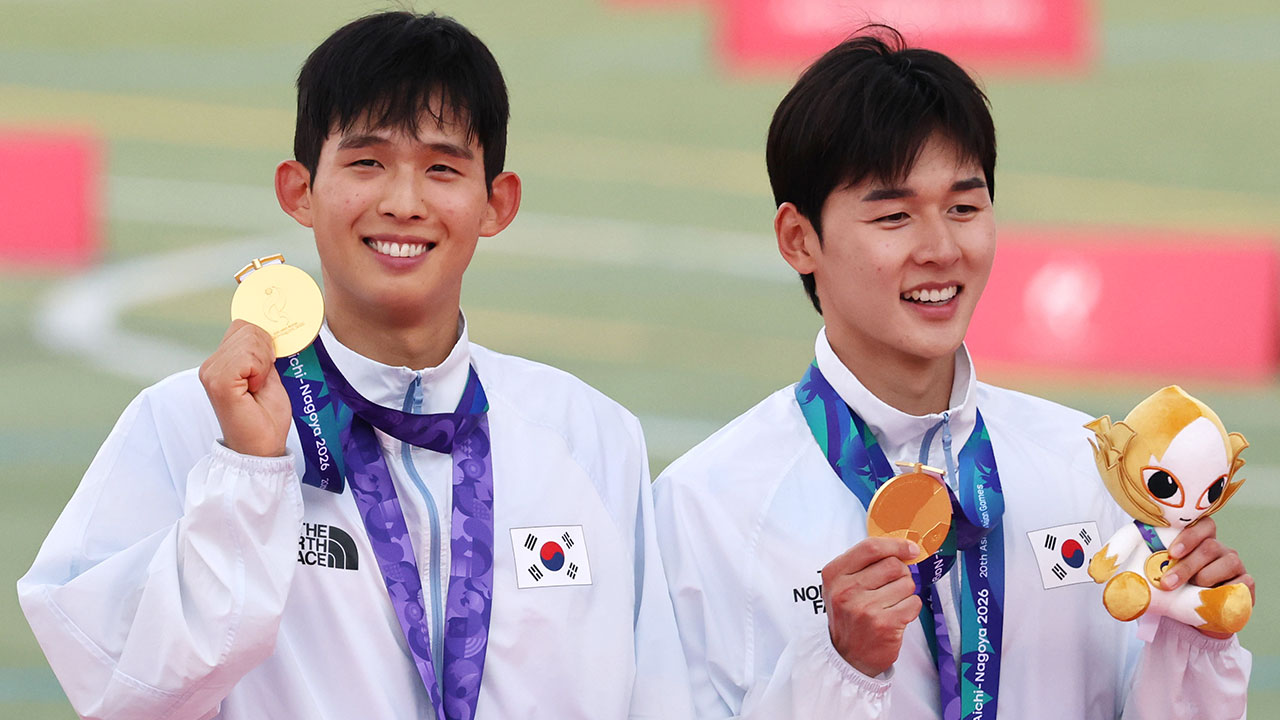
Although athlete Jeon Woong-tae missed the gold medal in the individual event at this competition, he proved his status as the team’s core by winning the silver medal. When he entered the final discipline, the laser run, he was initially far from the medal zone, but he dramatically climbed the rankings with his indomitable spirit of never giving up. His explosive sprint and precise shooting in the laser run segment, which combines shooting and running, were enough to draw cheers from the audience. Ultimately, he received a brilliant report card of second place in the individual event, re-proving his potential. Jeon Woong-tae has already established himself as the strongest on the Asian Games stage through the Jakarta-Palembang and Hangzhou Games. At the Hangzhou Games, he dominated both the individual and team events, becoming a multi-medalist. In this competition, by collecting an individual silver and a team gold, he etched another great record into the history of the Asian Games. The sense of responsibility he showed as a reliable captain leading his juniors was the biggest driving force behind this gold medal. His performance as the flagship star of South Korean modern pentathlon on the world stage is even more anticipated in the future.
Jeon Woong-tae secured both an individual silver medal and a team gold medal through a dramatic comeback in the laser run.
3. Lee Jong-hyun’s Stable Performance and Bronze Medal

Athlete Lee Jong-hyun had his best day at this Asian Games, winning both an individual bronze medal and a team gold medal. He had been on an upward trend, rising to second place in Group A from the semifinals, and maintained unwavering concentration on the final stage. Based on the points accumulated through fencing, swimming, and the obstacle course, he firmly held his position in the top ranks until the end. His third-place finish in the individual event was a result that proved the sweat he had shed was not in vain. In the team total score as well, Lee Jong-hyun confidently made the list of the top three, contributing significantly to the gold medal win. He embraced two medals, adding a team gold to the glory of standing on the individual podium. His calm game management and excellent crisis management skills shown throughout the match gave his teammates great peace of mind. Lee Jong-hyun, who has fully emerged as a world-class athlete through this competition, is highly anticipated for his future career.
Lee Jong-hyun demonstrated outstanding concentration to win both an individual bronze medal and a team gold medal.
4. Seo Chang-wan’s Steady Contribution and Team Gold Medal

Although athlete Seo Chang-wan unfortunately finished fifth in the individual event, he shone brightly as a key figure in the team gold medal. Before the competition, he received high expectations by taking first place overall with an overwhelming record of 31 wins and 4 losses in the fencing seeding round. He was considered a top medal contender after advancing to the final as the top seed in Group A in the semifinals, so his individual ranking might have been seen as slightly disappointing. However, he maintained his focus until the end and played a decisive role in the sum of the top three team scores. Seo Chang-wan, who proved his world-class skills by sweeping a bronze medal and a mixed team gold at the World Championships, shone even more brightly in the team event. It was his camaraderie, running to the finish for the team even behind his brilliant individual records, that made the precious result of a gold medal possible. This victory, achieved by encouraging one another, will remain one of the most precious memories of his career. The diligence to quietly fulfill his role is Seo Chang-wan’s greatest weapon.
Although Seo Chang-wan finished fifth in the individual event, he played a crucial role in co-creating the team gold medal with stable records.
5. New Event Changes and Adaptation to the Obstacle Course
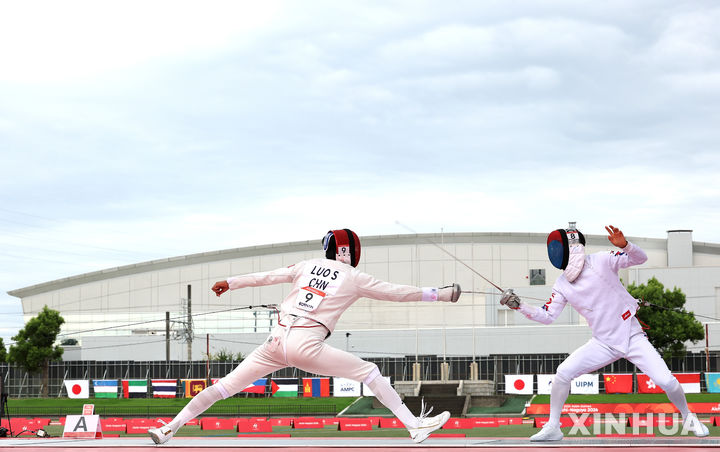
This Asian Games was a very important turning point in the history of modern pentathlon. This is because equestrian, which was previously included in the events, was excluded from the Olympic and Asian Games stages, and a new obstacle course was introduced. The rules that changed starting from the 2024 Paris Olympics were applied as-is to this Asian Games, requiring new adaptation from all athletes. The obstacle course requires completely different quick reflexes and stamina compared to the traditional equestrian event, as it involves quickly passing through various structures. Despite these sudden rule changes, the South Korean team prepared perfectly for the competition through thorough analysis and training. By approaching the unfamiliar event with the mindset of a new challenge rather than fear, they were able to defend their position at the top of Asia once again. The obstacle course, which successfully filled the void left by equestrian, provided the audience with even more dynamic and thrilling entertainment. The successful hosting of this competition will serve as an opportunity for modern pentathlon to become more familiar to the general public.
The South Korean team showed perfect adaptability at the first Asian Games where the obstacle course was introduced instead of equestrian.
6. The Brilliant Future and Prospects of South Korean Modern Pentathlon
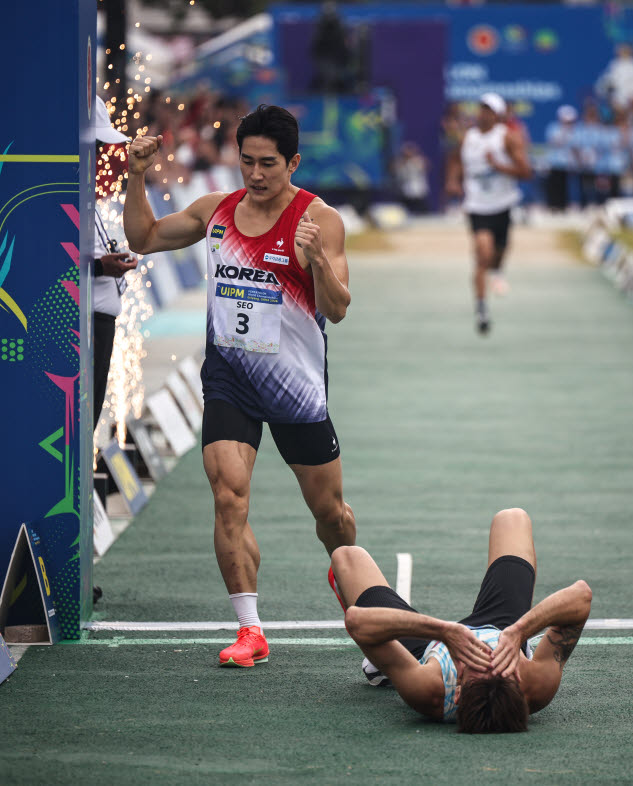
The team victory at the Aichi-Nagoya Asian Games is a great achievement that once again proved that South Korean modern pentathlon is the strongest in the world, surpassing Asia. The fighting spirit and cooperation shown by Jeon Woong-tae, Lee Jong-hyun, and Seo Chang-wan indicated the direction the South Korean sports community should head in the future. It was a precious gold medal that would have been impossible without the balanced performance and strong teamwork of the three athletes. Although there was regret over missing the individual gold, the great record of a team two-peat completely washed away that regret. Sports fans are giving their full applause to the mental strength of never giving up shown by our national team. Continuous attention is needed so that our athletes can perform at their best without injury in upcoming international competitions. We hope that this competition will serve as a stepping stone to create a virtuous cycle where more promising athletes become interested in and challenge modern pentathlon. The golden age of the South Korean men’s modern pentathlon is just beginning, and we have great expectations for the new history they will write.
The South Korean men’s modern pentathlon team, which proved perfect teamwork, will continue its brilliant performance in upcoming international competitions.
Frequently Asked Questions
=