
The government has made a final decision to invest a total of 230.8 billion won in recovery costs to facilitate the swift return to normalcy in areas severely affected by the concentrated heavy rains that lasted from August 15 to 18. This rainfall caused devastating impacts on the livelihoods of our neighbors, ranging from damaged houses to flooded farmlands, due to the sudden surge of water and fierce outflow of soil and debris. For instance, a Mr. Kim, a floriculture farmer in Paju, Gyeonggi Province, suffered the pain of losing his crops, which he had cultivated over several months, in an instant when his entire greenhouse was submerged. Reflecting these desperate voices from the field, the government is making every effort to ensure that affected residents can return to their livelihoods as soon as possible. In this article, we will take a detailed look at the specific allocation plan and support direction for the 230.8 billion won invested in this rainfall damage recovery. We will also carefully examine support for displaced residents and future disaster prevention measures.
=
Support Details and Scale of the 230.8 Billion Won Investment in Mid-August Rainfall Damage Recovery

1. Background and Scale of the 230.8 Billion Won Investment in Rainfall Damage Recovery

The concentrated heavy rains that struck the Korean Peninsula in mid-August left indelible scars across the country, causing massive property damage. The suffering of residents reached its peak as roads were severed and houses collapsed due to the torrential rain that poured down in an instant. To accurately assess the scale of the damage and carry out swift support, the government dispatched a Central Joint Investigation Team to thoroughly examine the scene. Based on the final damage scale tallied as a result, a national-level financial support plan was formulated. The substantial sum of 230.8 billion won to be invested this time is a core resource for achieving substantive recovery, going beyond a mere temporary remedy.
Recalling past large-scale flood sites, it is not uncommon for the sighs of displaced residents to deepen as the recovery process is delayed. However, this time, relevant agencies, including the Ministry of the Interior and Safety, have cooperated closely to significantly accelerate the speed of budget allocation. Residents on the scene unanimously state that the government’s swift decision is a great help in overcoming the crisis. In particular, priority funding is being executed for the livelihood stability of households whose residences were completely destroyed or washed away. This massive financial investment is a strong expression of the state’s will to take responsibility for the safety and daily lives of its citizens, going beyond a simple monetary issue.
The government is investing a total of 230.8 billion won in recovery costs to swiftly support the overcoming of the mid-August concentrated heavy rain damage.
2. Allocation and Use of Damage Recovery Budgets by Local Government
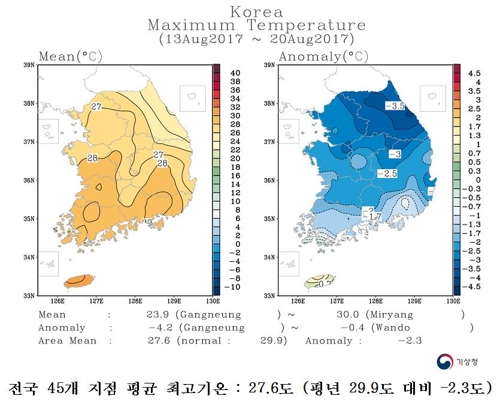
The 230.8 billion won in recovery budget secured this time will be swiftly delivered to each local government where damage was concentrated and used for tailored projects. Budgets are scheduled to be evenly allocated not only to the capital region, including Seoul and Gyeonggi, but also to large and small damage sites in the Chungcheong and southern regions. Local governments will immediately commence civil engineering works, such as rebuilding collapsed embankments and repairing washed-away roads, using the allocated funds. In fact, in a village in Wonju, Gangwon Province, construction is currently underway to completely clear the traces of landslides on the village entrance road using this budget.
Not limited to simple restoration to the original state, the proportion of improved recovery aimed at minimizing damage in the event of similar heavy rains in the future has also significantly increased. For example, for low-lying roads that repeatedly flooded due to poor drainage, the installation of structures to significantly enhance drainage capacity is being carried out simultaneously. Local government officials are holding public hearings to carefully gather opinions from residents on the scene before proceeding with construction. This meticulous budget execution process serves as a reliable shield to ensure that taxes are not wasted and are used where truly needed. Residents are welcoming this budget allocation, stating that they can feel more at ease during the upcoming rainy season or typhoons.
The invested budget is divided according to the scale of damage by local government and is intensively used for civil engineering maintenance and improved recovery for enhanced drainage capacity.
3. Measures for Housing Stability and Livelihood Support for Displaced Residents
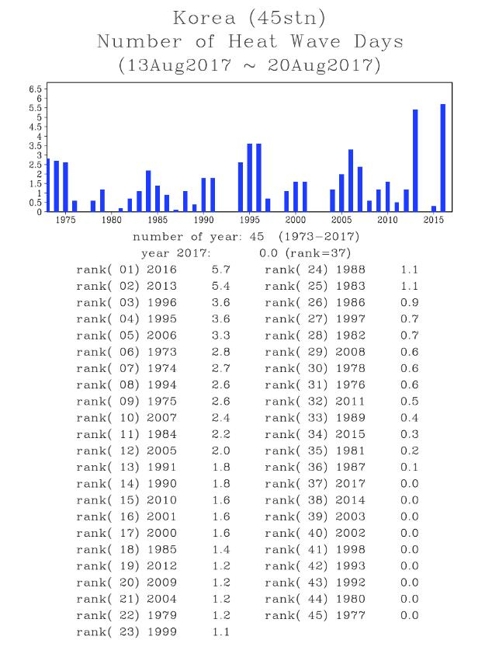
For displaced residents who lost their homes and were suddenly pushed into gymnasiums or temporary shelters, the most urgent needs are a place to stay and funds to maintain their livelihood. The government has concentrated a significant portion of this recovery budget on helping with the housing stability and early resettlement of displaced residents. It is helping displaced residents live in a somewhat comfortable environment by providing temporary prefabricated houses or arranging leasehold rental housing. A Mr. Park, whose house in Cheongju, Chungbuk, suffered flood damage, reported that he was able to regain stability with his children thanks to the temporary shelter provided by the government.
In addition to housing support, relief funds and disaster support payments are being made simultaneously for small business owners and farmers/fishers who have suffered direct blows to their livelihoods. For farms that have suffered agricultural losses, support for seed costs or pesticide costs is provided to establish a minimal foothold for preparing the next season’s farming. Furthermore, for low-income households facing difficulties in maintaining their livelihood, the Emergency Welfare Support System is linked to generously invest in daily necessities and medical expenses. These multi-faceted support policies provide displaced residents with a strong motivation to rise again rather than sit in despair. Relevant agencies are continuously conducting thorough status investigations to ensure that not a single resident is left in a blind spot.
To facilitate the prompt return to daily life for displaced residents, the provision of temporary housing facilities and support for compensation of agricultural and livelihood losses are being carried out together.
4. Relief Measures for Agriculture, Fisheries, Livestock, and Small Business Owners
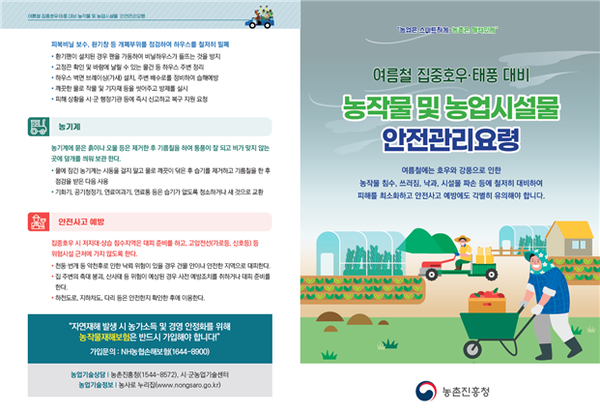
Farmlands, livestock sheds, and small business owners in neighborhood commercial districts that were devastated by the heavy rains are the core targets that must be most protected in this recovery process. The crops that rotted in the rainwater and the livestock that died are the fruits of farmers’ blood and sweat, so the sense of loss cannot be fully expressed in words. The government is calculating the scale of damage per farm, swiftly paying disaster recovery costs, and promptly providing agricultural machinery repair support services. A fruit orchard farmer in Gurye, South Jeolla Province, said that while he wept looking at the fallen fruits, he was able to hold onto hope thanks to the government’s swift support funds.
For small business owners who suffered flood damage while doing business in neighborhood commercial districts, low-interest funding loans and special guarantee support are being provided simultaneously. This is to alleviate the financial burden of redoing the interior of the shop and replacing damaged refrigerators and equipment. Warm gestures of solidarity, such as local governments and merchants’ associations joining hands to conduct cleaning volunteer activities for shops in flooded areas, have also continued. These multi-faceted relief measures are playing a significant role as a catalyst to prevent the regional economy from completely collapsing and to quickly regain vitality. Thanks to effective support that reflects the voices on the scene, merchants are gaining the courage to start their businesses again.
To minimize the economic impact on farms and small business owners, substantive support such as the payment of disaster recovery costs and low-interest funding loans is being provided.
5. Expansion of Disaster Prevention Infrastructure and Permanent Measures
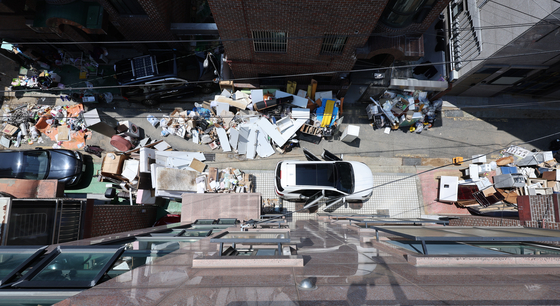
Taking this rainfall damage as an opportunity, voices are growing that fundamental disaster prevention infrastructure must be built to cope with climate change, rather than stopping at post-event recovery. As extreme rainfall that cannot be handled by past design standards becomes frequent, the level of disaster prevention facilities must be comprehensively raised. The government is simultaneously promoting structural improvement works, such as the expansion of drainage pump stations and river maintenance, in the process of executing the 230.8 billion won recovery budget. Large-scale storage facilities are planned to be additionally installed in chronic flooding areas, including the Anyangcheon riverbank in Gyeonggi Province, to effectively disperse the “water bomb.”
Additionally, work is underway to comprehensively upgrade real-time river water level monitoring systems and disaster warning systems utilizing artificial intelligence technology. This helps residents recognize dangerous situations several minutes earlier than others through smartphone apps or village broadcasts and evacuate accordingly. Residents on the scene agreed on the necessity of advanced prevention systems, stating that unlike in the past, evacuation guidance was carried out swiftly, preventing loss of life. The establishment of these permanent measures will serve as a reliable fence to protect the lives and property of citizens from the more powerful natural disasters that will come in the future. The government plans to work closely with local governments to constantly inspect vulnerable areas and fill in the safety net more tightly.
To respond to climate change, fundamental disaster prevention infrastructure, such as the expansion of drainage pump stations and AI-based warning systems, is being expanded.
6. Future Outlook and Recommendations for Thorough Recovery Execution

This rainfall damage recovery work, which involves a massive budget of 230.8 billion won, will unfold breathlessly across the country for the next several months. What is important is not the scale of the budget itself, but how transparently and swiftly it is reflected on the scene. Continuous management and supervision by relevant agencies are essential to prevent residents from suffering twice due to construction delays or cumbersome administrative procedures. A village head in North Gyeongsang Province urged that the government should not stop at allocating the budget but frequently visit the scene to inspect until the construction is completed.
We also ask our readers to extend warm comfort and concern to neighbors who are suffering due to this rainfall. Furthermore, wisdom is needed to check for drainage ditches or danger factors around our neighborhoods in advance and actively report them through channels such as the Safety Report Box. In the era of climate crisis, disasters can find us anywhere at any time, so thorough preparation in daily life and solidarity among neighbors are more important than ever. We sincerely hope that all disaster recovery sites across the country will safely and quickly return to their original state, taking this 230.8 billion won investment as an opportunity. We will continue to convey the progress of the government’s recovery and related news, cheering for the safe daily lives of our readers.
Based on the transparent and rapid execution of the invested budget, we must achieve perfect recovery and thoroughly prepare for disasters in daily life.
Frequently Asked Questions
=